
Best Ceiling Fan for Low Ceilings 2026: Buying Guide
Disclosure: We may earn a commission when you buy through links on this page, at no extra cost to you. As an Amazon Associate I earn from qualifying purchases. Learn more

Check total drop, airflow and light output first when shopping for the best ceiling fan for low ceilings and 8 foot rooms.
A standard ceiling fan on a downrod can eat up headroom fast in a room with an 8 foot ceiling, and the blades can end up uncomfortably close to anyone walking underneath. Choosing the best ceiling fan for low ceilings starts with a flush mount design that hugs the ceiling, then adds the right blade span, motor strength, and light for the room. The product table below puts the main types side by side on drop height, brightness, and controls.
This guide explains how total drop, blade pitch, and airflow ratings affect comfort when you cannot give up inches, and why an integrated light and a remote solve problems that a hanging light kit or a pull chain would create. If other rooms in your house have taller ceilings, our broader best ceiling fan guide covers the downrod models that do not suit the rooms discussed here.


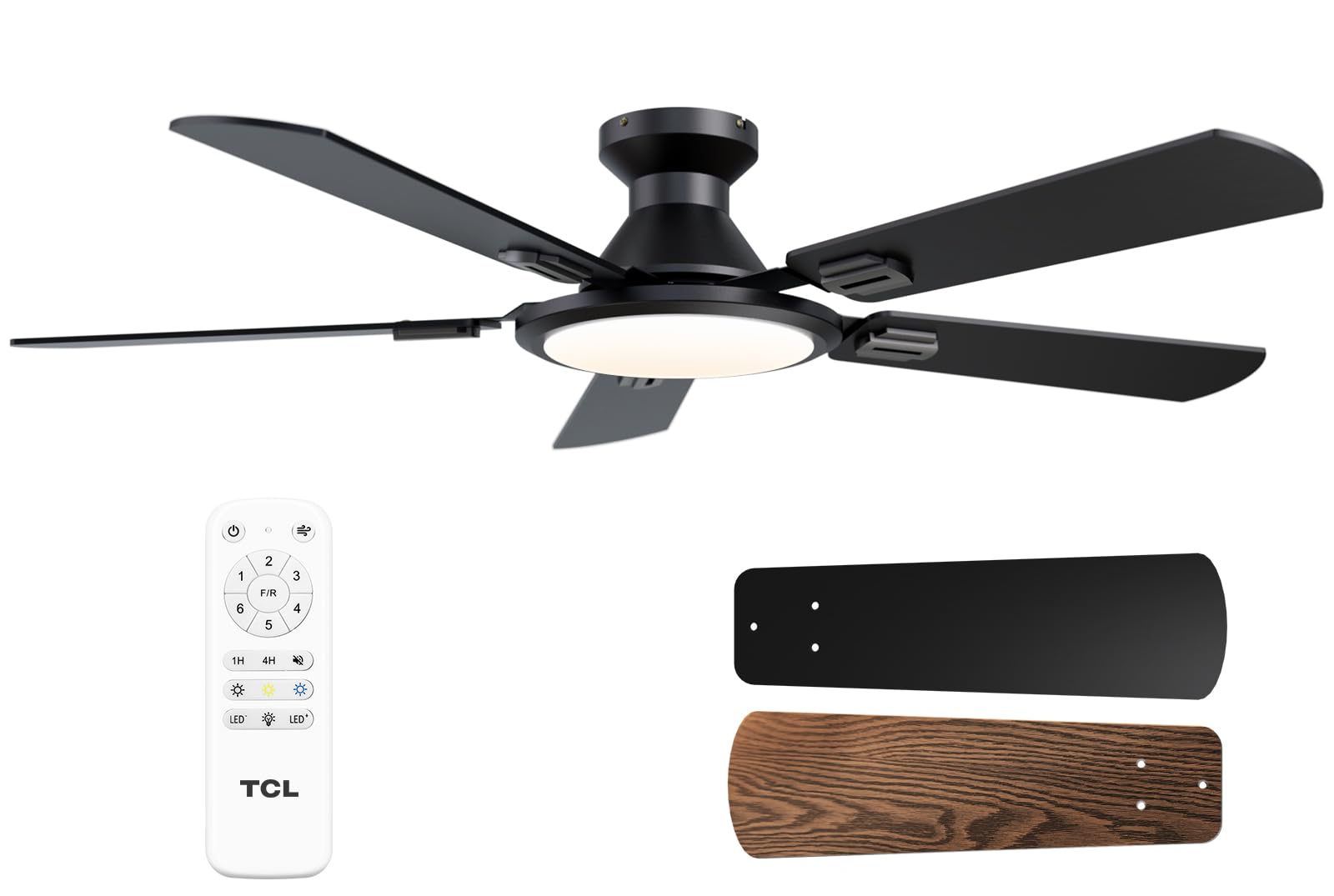
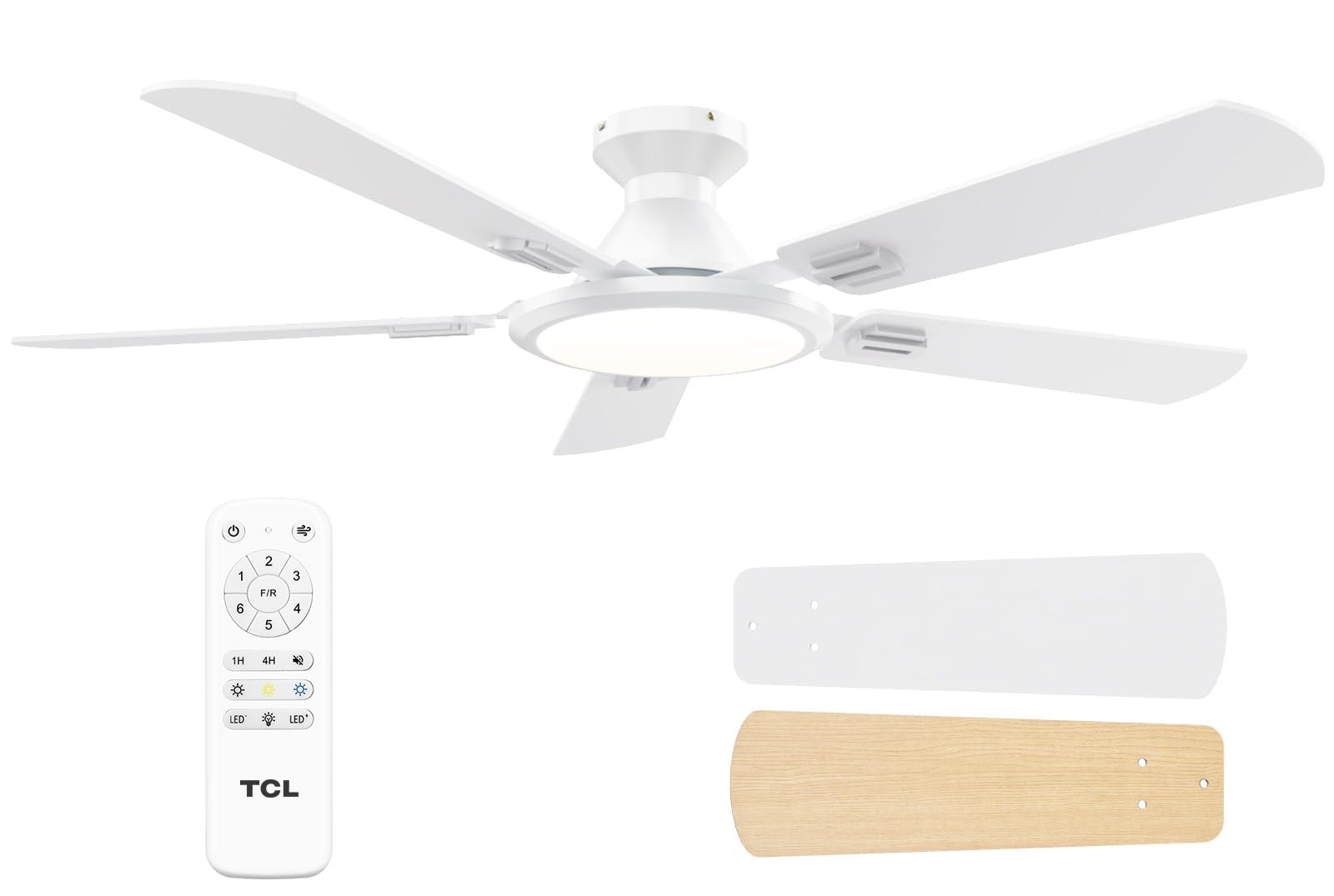
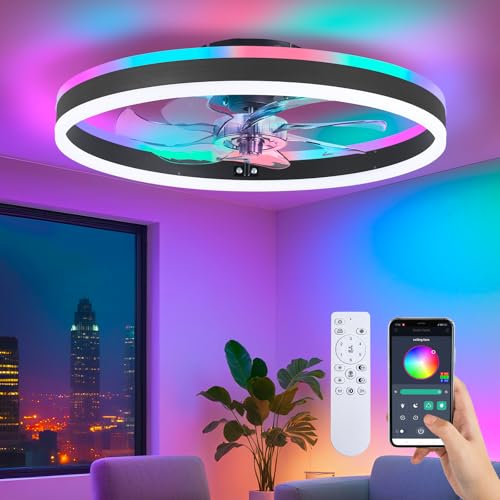


Types Compared for Low Ceilings
Instead of ranking individual models, it helps to compare the three flush mount types that fit a low ceiling. They differ mainly in blade span, how the light is built in, and how much air the motor can move while sitting close to the ceiling.
Compact Flush Mount Fans for Small Rooms
Compact flush mount fans usually span 42 to 44 inches and suit bedrooms, home offices, and nurseries up to about 144 square feet. Their total drop is often the smallest of any type, which makes them the safest pick for ceilings under 8 feet. Because the blades sit close to the ceiling, airflow can feel weaker than the span suggests, so look for a steeper blade pitch and a motor rated for the full room size rather than choosing by diameter alone.
Low Profile Fans With an Integrated Light
These fans replace a ceiling light fitting, so the light has to do real work. A flat LED panel sits almost flush with the motor housing and adds almost no extra drop, unlike a bowl light or a stem light kit that hangs below the blades. Check the lumen output against the room, and pick a model with a remote so you can adjust the fan and the light from bed. For sleeping spaces, our best ceiling fan for bedroom guide goes deeper on noise levels and timers that shut the fan off after you fall asleep.
Larger Flush Mount Fans for Bigger Rooms
Spans of 52 inches and above can still work on a low ceiling as long as the mount stays flush and the motor is strong enough to move air across a wide room. More blades do not automatically mean more airflow, so compare the airflow rating in cubic feet per minute rather than counting blades. These fans suit open living areas and large bedrooms where a compact model would leave the corners still.
How We Chose the Best Ceiling Fans for Low Ceilings
We compared flush mount and low profile fans on the figures manufacturers publish, starting with total drop from the ceiling to the lowest point of the fan, since that number decides whether a fan is safe in your room at all. We then weighed airflow ratings, motor type, light output in lumens, color temperature, and the range of styles and finishes, alongside installation requirements and value at each price tier.
Motor type shaped several comparisons, because DC motors tend to run quieter and use less energy than AC motors at the same speed. Our dc vs ac ceiling fan explainer breaks down the differences in speed control and running cost. We also weighed repeated buyer complaints about wobble and hum.
How to Choose the Right Ceiling Fan for Low Ceilings
The checks below run in the order that matters, from the measurements that rule fans out to the features and price decisions that come last.
Size and Form Factor
Measure your ceiling height first, then work out a drop budget. Blades should sit at least 7 feet above the floor, so on an 8 foot ceiling the fan can drop no more than about 12 inches to the blades, and any light below the blades eats into the headroom under it. Match span to room size next: 42 to 44 inches for small rooms, 52 inches for medium rooms, and 60 inches or more only where the room is wide enough for the longer blades.
Type and Style
True flush mount fans bolt directly to the ceiling with no rod at all, while semi flush designs use a very short rod that can still break your clearance on a ceiling under 8 feet, so always check the total drop figure rather than the type name. Style choices include modern, farmhouse, industrial, and caged designs, and finishes range from white that blends into the ceiling to dark wood tones. In a kids room with bunk beds, a caged design or extra clearance above the top bunk deserves serious thought.
Features Worth Paying For
A remote control is close to essential on a low ceiling fan, because a pull chain hangs down into the room and sits within easy reach of children. A reversible motor earns its cost in winter, when slow upward rotation pushes warm air down the walls without a draft. Multiple speeds, a sleep timer, and a wall control that works when the remote goes missing all add everyday convenience. Features you can skip include decorative blade patterns and novelty lighting effects, since neither changes airflow or brightness.
Lumens and Color Temperature
Because the fan often replaces the only ceiling light, brightness deserves the same attention as airflow. A small bedroom may need only about 800 lumens, while a kitchen or large living space can call for 1600 lumens or more, backed up by other lamps. Color temperature shapes how the room feels: 2700 to 3000 kelvin gives a warm glow for relaxing, about 4000 kelvin looks neutral for work areas, and 5000 kelvin reads as bright daylight.
Fixture Size and Placement
Mount the fan at the center of the room or over the main seating or sleeping area, and keep at least 18 to 24 inches between the blade tips and the nearest wall so airflow is not choked off. Check door swing and tall furniture as well, since a wardrobe door opening near the fan changes where people stand. For wide open spaces, our best ceiling fan for living room guide covers placement when one fan serves several seating zones.
Dimmable and Smart Options
Dimming only works well when the fan light and your wall dimmer are compatible, so confirm that the LED panel is listed as dimmable and check whether a standard dimmer will cause flicker or buzzing. Fan motors and lights need separate controls, and a dimmer meant only for lights can make a motor hum. Smart fans add app and voice control plus scheduling, which helps in rooms you use at set times.
Installation
A ceiling fan must hang from an electrical box rated to support a fan, not a standard light box, and the box should be braced to framing or fitted with a rated brace between joists. Turn the power off at the breaker before you start, and support the motor while you connect the wires, since flush mount fans give you little room to work. Our how to install a ceiling fan guide walks through the full process. If the existing box or wiring looks doubtful, hire a licensed electrician.
How Much Should You Spend?
Basic flush mount fans cost under $100 and cover a small room with a simple remote and a modest light, though motors and finishes at this tier feel plainer. Most households land at about $100 to $250, where you get quieter motors, brighter dimmable lights, and better blade balance. Spending about $250 to $500 buys larger spans, DC motors, and smart controls, while prices above that mostly reflect designer finishes.
What Matters Most in a Ceiling Fan for Low Ceilings
Clearance comes first, before style, smart features, or price. A fan that looks perfect but leaves the blades below 7 feet is a hazard for tall occupants and for anyone carrying a child or climbing onto a bed. Measure the total drop on the specification sheet, including the light, and keep a sensible margin above the head of the tallest person in the household. Compared with a standard downrod fan, a flush mount model gives up a little airflow efficiency because the blades spin close to the ceiling, and it gains back the headroom that makes the room usable.
Airflow per inch of drop is the fairest way to compare the fans that pass your clearance test. Two fans with the same span can move very different amounts of air, and the rating in cubic feet per minute tells you more than blade count or motor claims. Controls matter more than usual at this height too, since everything sits within reach, and a wall switch that cuts power cleanly helps when you need the fan fully off.
FAQ
What is the best ceiling fan for low ceilings?
The best choice is the flush mount fan that fits your drop budget, matches your room size, and still delivers a strong airflow rating. Check the total height figure on the specification sheet rather than trusting product photos, because photos often show a taller downrod version of the same fan. Start from the types in the product table above, then confirm the light and controls suit the room.
What should I look for in a ceiling fan for low ceilings?
Look for a verified total drop, a span matched to the room, a safety listing from a recognized certification body, and an airflow rating you can compare across brands. A long motor warranty and available spare remotes are practical extras that listings rarely highlight. If two fans look identical on paper, pick the one whose manufacturer publishes full measurements, since clear documentation usually signals better support after the sale as well.
How long does a ceiling fan last?
A well made ceiling fan can run for a decade or longer, and many motors carry warranties that reflect that expectation. Lifespan drops when a fan runs with a persistent wobble, works against a sagging or unsuitable mount, or spends years in a damp room it was never rated for. Tightening loose screws once a year and fixing a wobble early protects the motor bearings and keeps a good fan quiet for far longer.
Is a ceiling fan worth it?
Yes, for most rooms, because moving air makes you feel cooler without chilling the whole room, which can let you set the thermostat a few degrees higher in summer. Fans cool people rather than air, so switch the fan off when the room is empty to avoid wasting electricity. In a low ceiling room the comfort gain is the same as anywhere else, as long as the clearance rules in this guide are respected.
How do you clean a ceiling fan?
Turn the fan off and let the blades stop fully before you start. Slide an old pillowcase over each blade and pull it back slowly, so the dust stays inside the fabric instead of falling onto the bed or floor. Wipe the motor housing and light cover with a slightly damp cloth, and use a sturdy step stool rather than standing on furniture, even though the fan sits lower than usual.
What is the most reliable ceiling fan brand?
No single brand wins for every room, and reliability depends more on the individual model than the badge on the box. Judge a brand by its motor warranty length, how easily you can buy replacement remotes and receivers, and whether support answers with real documentation. Keep your model number somewhere safe after fitting, because replacement controls usually pair with specific models and are much easier to order with that number at hand.
Final Thoughts
Choosing the best ceiling fan for low ceilings comes down to respecting your measurements: flush mount, blades at a safe height, enough airflow for the room, and a light that does not steal headroom. Work through the product table above with your ceiling height and room size written down, and the shortlist will shrink fast. For the full measuring routine behind these checks, see our how to choose a ceiling fan guide before you order.


