
Best Cd Printers: Our 2026 Checklist and Guide
Disclosure: We may earn a commission when you buy through links on this page, at no extra cost to you. As an Amazon Associate I earn from qualifying purchases. Learn more
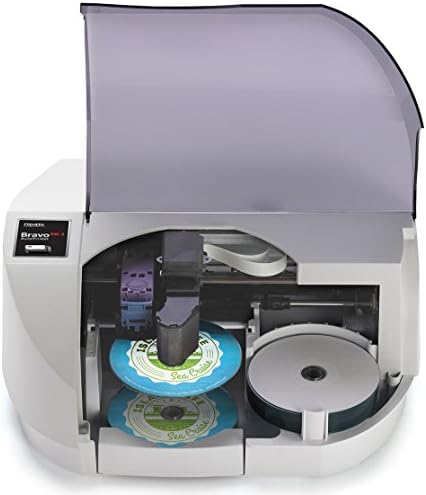
Run this checklist before you buy the best cd printers, covering disc tray design, ink systems, print quality, software support, and running costs.
A printer that handles paper beautifully can still be useless for discs if it lacks a disc tray, and that single detail decides this whole category. This checklist helps you judge the best cd printers by the tray, the ink system, and the software you will live with, rather than by paper specs that say nothing about disc work.
Score each candidate against the criteria below, check it against the comparison table below, and you will have a short list built on the things that actually affect a finished disc: alignment, color, drying, and cost.


How We Evaluate Disc Printers
Printer Type and the Disc Tray
Every true CD printer is an inkjet with a dedicated tray that carries the disc on a straight path under the print head. That is the first scoring point, and it is pass or fail. Laser machines cannot print on discs, and paper only inkjets cannot be adapted with accessories or clever settings.
Score the tray itself next. Sturdy plastic, clear centering guides, and smooth loading all predict clean results. A tray that flexes or sits loosely tends to produce off center artwork and blurred hub text. If spare trays are sold for the model, count that as a strength, because the tray is the part most likely to wear or get lost. For models that handle both disc sizes, see our guide to the best cd dvd printers for a combined view.
Ease of Setup and Calibration
Setup should be simple: install the ink, load the design software, print a test disc, and nudge alignment if the artwork sits off center. Good software makes that calibration a guided step with a printable test pattern. Poor software hides the setting or lacks it entirely.
Allow about half an hour for a careful first setup, including a nozzle check and one practice disc on a cheap blank. Save your alignment values and a sample design file, so a later reinstall does not force you to start over. A printer that a family member can set up without help usually has the clearer software, and that clarity pays off on every job.
Footprint and Noise
Measure the working footprint, not the closed box. The tray extends forward during printing, and many models also need rear clearance for thick media. A compact unit fits a shared desk, while a wide photo model may need its own stand in a studio corner.
Inkjet disc printing is quiet, mostly soft tray and carriage sounds, so noise rarely rules a model out for home use. Stability matters more. A light printer on a hollow desk can vibrate enough to soften fine lines, so place it on a solid surface and keep the tray path free of cables and clutter.
Reliability and Support
Score support as seriously as hardware. Current drivers for your operating system, a design app that still receives updates, and a maker page where trays and ink are easy to order all signal a model with a future. A discontinued printer can become unusable the day your computer updates and the old driver stops working.
Check the warranty length and whether the print head is covered or treated as a consumable. Look for an active owner community as well, because practical disc settings, such as ink density for a given disc brand, are often documented by users long before they appear in any manual.
Print Quality and Resolution
High resolution helps small text and thin lines stay sharp on the small canvas of a disc face. Still, ink behavior on the printable coating decides the final look. Smooth color blends, solid blacks, and even coverage at the outer edge are the marks of a well tuned disc mode.
Use the dedicated disc media setting for every print, because it meters ink for the coating rather than for paper. Give each disc a few minutes of drying time before handling the face, and longer on humid days. Judge quality on a test disc with your own artwork, including tiny text near the hub ring, where weak printers fail first. Broader paper quality benchmarks appear in our guide to the best quality printers.
Connectivity and Mobile Printing
Disc layout work belongs on a computer screen, where you can place text, mask the center hole, and preview the round crop. A USB link remains the most dependable route for that work, and some models only enable disc printing over USB even when paper printing works over WiFi.
Wireless still earns points for shared paper tasks and for printing covers from a phone. Just confirm which connection the disc function needs before you place the printer across the room from the computer. A long USB cable run or a printer that must move for every disc job gets old quickly in a busy office.
Price Tiers That Pass Our Checklist
Midrange Tier
Expect to pay about $200 to $400 for the tier that scores well across tray build, color quality, and software support. These machines use separate ink cartridges for each color, print strong disc faces, and handle daily paper work without complaint, which suits a home office or a small creative studio.
Pick this tier if discs are a regular part of your work, such as client deliverables, band demos, or a family video archive project that will run for months. The higher purchase price is mainly repaid in fewer failed discs and less time spent on alignment.
Value Tier
Value models at about $120 to $200 pass the core checks with simpler parts: a lighter tray, combined or smaller cartridges, and basic design software. For a handful of discs each month, such as gifts, school projects, or personal backups, the results can look very good.
The savings come with homework. Confirm driver support and spare tray supply before you buy, because this tier includes many older designs. If the software for a value model no longer supports your system, the low price is not a bargain at any level.
Heavy Use Tier
Heavy use means either a premium photo printer with a durable tray at about $400 to $700, or a dedicated disc publisher that loads and prints many discs in sequence. The premium printer suits artists who sell discs alongside prints. The publisher suits offices, schools, and worship teams producing regular runs.
Score this tier on cost per disc, duty guidance from the maker, and service access. A publisher that jams mid run wastes discs and time, so a strong warranty and available parts matter more here than a small edge in rated speed.
Quick Buyer Checklist
- Does the model include a disc tray and state direct disc printing clearly in its own listing?
- Will you use inkjet printable discs whose coating is made to hold this kind of ink?
- Does the design software run on your current operating system without workarounds?
- Can you order a spare tray and the correct ink set today, from more than one seller?
- Have you measured space for the tray path and any rear media support?
- Does the ink setup, separate cartridges or a supported tank, fit your monthly volume?
- Is the print head covered under warranty, and for how long?
Red Flags to Watch For
Vague media language is the top red flag. If a listing says the printer handles many formats but never names a disc tray, it cannot print your discs. Sellers sometimes blur this by showing adhesive labels near the printer, but glued labels can peel, unbalance a disc, and damage a player, so they are not an equal option.
Other warnings include software that has not been updated in years, ink that is already hard to find, print samples that only show paper, and a warranty so short it ends before a tray would normally wear. Treat missing alignment controls in the software as a flaw as well, because small centering errors are common and you need a way to correct them. For tray specific comparisons, our guide to the best cd dvd inkjet printer models is a useful cross check.
Choosing a Printer for Your Situation
Best Inkjet Cd Printers
The phrase best inkjet cd printers describes the entire working category, since inkjet is the only home technology that prints directly on a disc. Within it, choose by ink layout. Separate cartridges suit color heavy artwork because you replace only the empty color. A refillable tank suits high paper volume, but confirm the tank model truly includes the disc tray, because many do not. Either way, the disc mode setting and a rigid tray matter more than the ink delivery style.
Care and Maintenance Tips
Print at least one page or disc each week so ink keeps moving and nozzles stay clear. Run the built in nozzle check when lines appear in solid color areas, and clean only with the utility the maker provides. Keep the tray wiped and stored flat, handle printable discs by the edges, and let every printed face dry fully before stacking. Use genuine ink or a reputable alternative with consistent color, because bargain ink is the most common cause of clogged heads and dull disc artwork.
FAQs
What does cost per page mean?
Cost per page divides the price of an ink set by the number of pages it yields, giving a simple running cost for paper. For discs, translate the idea into cost per disc: a full color design uses far more ink than a light design with open white space. Shoppers comparing listings for disc printers often mean exactly this running cost question, so estimate it with your own artwork style, not a best case yield figure.
Which kind of disc printer is easiest for beginners?
A mainstream inkjet model with guided alignment in its software is the easiest starting point. The setup flow prints a test pattern, you pick the best match, and the software stores the correction. Avoid obscure or discontinued models as a first printer, because community help and spare trays are thin. A practice pack of cheap printable discs will teach you more in one afternoon than any spec sheet.
Are ink tank printers worth it?
They are worth it for high paper volume, provided the model includes a disc tray and current software. Many tank models skip the tray entirely, so the disc check comes first. If you print discs weekly and paper daily, a supported tank design can cut ink spending sharply. If you print a few discs a month, a cartridge model usually costs less overall once purchase price is counted.
Inkjet or laser: which is cheaper long term?
For paper text, laser usually wins on cost per page and speed. For discs, the comparison ends early because laser printers cannot print on disc media at all. A household that needs both cheap text and disc faces often keeps an inkjet for discs and photos, and it still costs less than replacing a laser plus adding a separate disc unit later.
Our Verdict
Score the tray first, the software second, and the ink economics third. A model that passes those three checks will produce discs you are glad to hand to someone, month after month. Compare your finalists in the product table above, and the best cd printers for your desk will stand out as the ones with a solid tray, living software support, and a running cost that matches how much you print.


