Best Cat Tree With Scratching Post in 2026: Sisal, Stability and Fit
Disclosure: We may earn a commission when you buy through links on this page, at no extra cost to you. As an Amazon Associate I earn from qualifying purchases. Learn more

Choose the best cat tree with scratching post by sisal quality, post height, base stability and platform fit.
A cat tree earns its place in your home only if your cat actually uses it, and the scratching post is usually the part that decides that. Choosing the best cat tree with scratching post means matching the post height, the perch layout, and the footprint to your cat and your room, not just picking the tallest tower you can find. Our broader guide to the best cat tree covers general towers, while this page focuses on models built around serious scratching.
Below, we compare the main types by size and fit, durability, and materials, then walk through the buying factors that matter most. The comparison table below sums up the type differences at a glance.
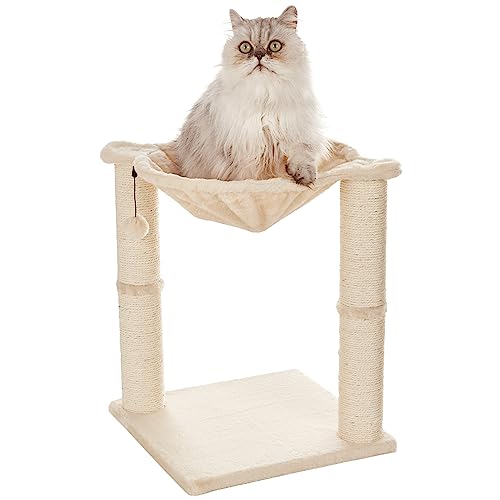


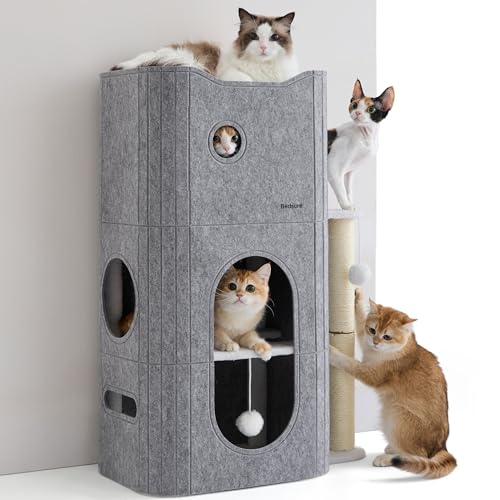

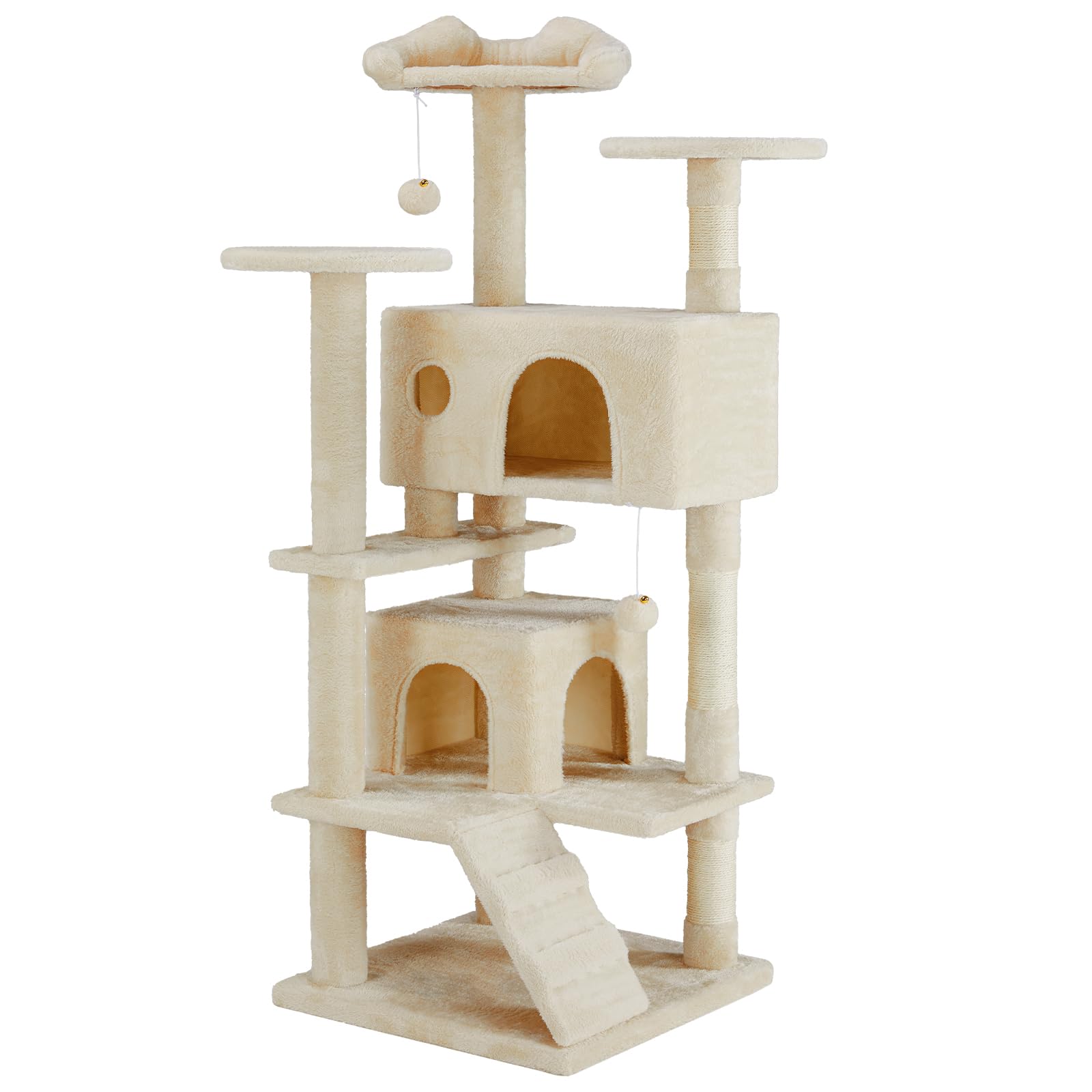

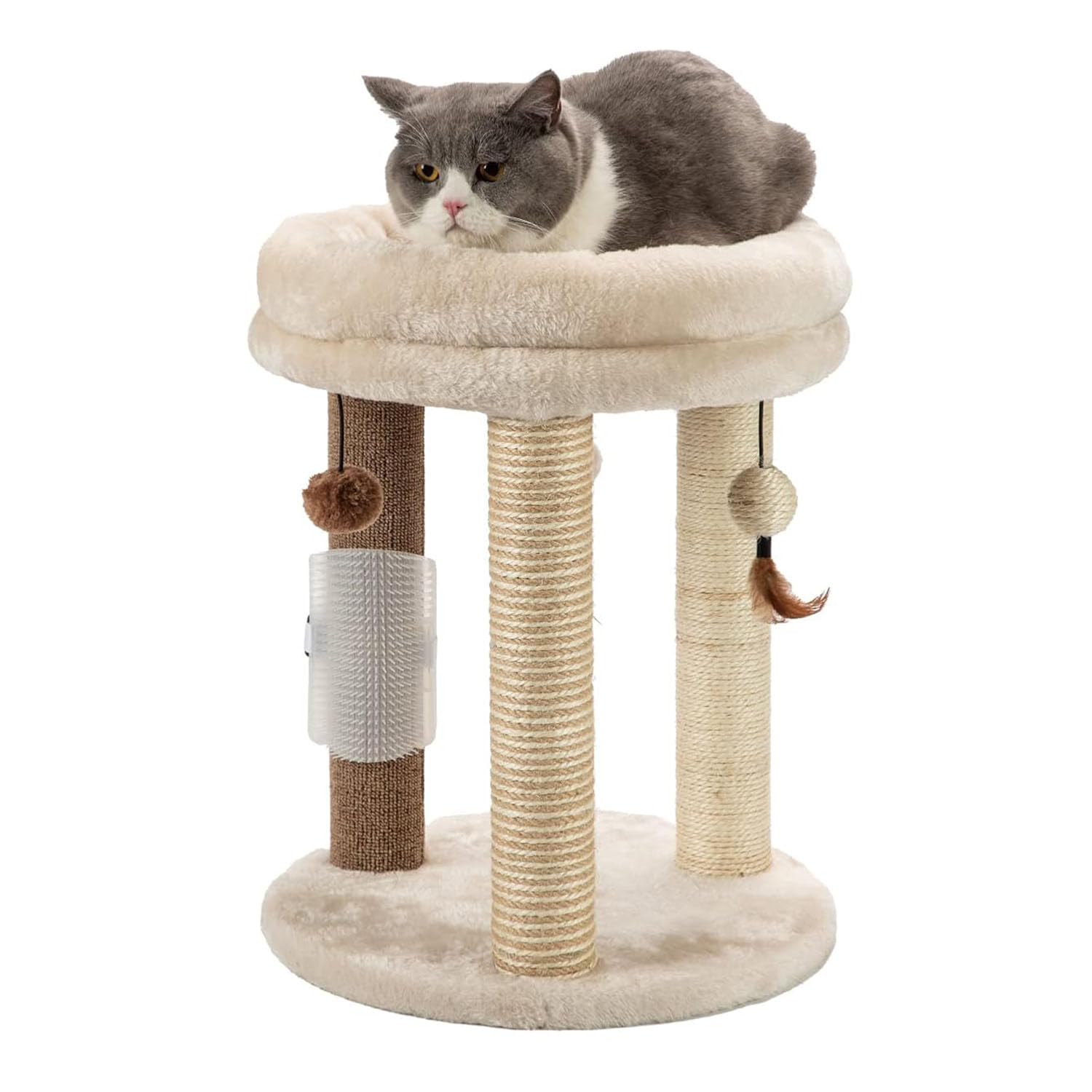


Types Compared at a Glance
The best cat tree with scratching post for your home will be one of three broad types, and the right one depends on your floor space and how your cat likes to climb and scratch.
- Compact apartment trees. These stand roughly 24 to 40 inches tall with one or two posts and a single perch or small condo. They suit one cat in a small room and cost the least, but the short posts limit full body stretching.
- Tall tower trees. These rise to about 60 to 72 inches with several wrapped posts, stacked platforms, and a high lookout perch. They reward cats that love height, yet they need a wide base and more floor space to stay steady.
- Wide multi level trees. These spread outward instead of upward, with ramps, multiple condos, and posts at several heights. They give several cats room to pass each other without a standoff, but they claim the most floor area of any type.
Who Should Buy Which Type?
Owners of one cat in a small home
A compact tree usually covers your needs. One wrapped post beside a perch and a small condo gives your cat a place to scratch, nap, and watch the room without crowding your furniture. Measure your corner first, because even a small tree needs clearance for the base.
Homes with several cats
Shared trees need more than one route up and more than one good perch, or the boldest cat will claim the top and block the rest. Look at the best cat tree for multiple cats if your household has three or more cats, and favor wide designs with posts on different sides so two cats can scratch at once without crowding.
Owners of large or heavy cats
Big cats need wider platforms, thicker posts, and a base that will not rock when a heavy cat lands from a jump. Standard perches often measure too small for a large cat to curl up on, so check platform dimensions rather than overall height. A shorter, sturdier tree usually serves a heavy cat better than a tall, narrow one.
How to Compare Cat Trees With Scratching Posts
When judging the best cat tree with scratching post for your home, compare trees on five criteria: size and fit for your room and your cat, durability of the frame and post wrapping, safety and materials, ease of cleaning, and value for the height and features offered. Our comparisons draw on manufacturer specifications and patterns in verified buyer reviews, such as repeated reports of wobbling or frayed sisal. Treat the criteria here as a checklist for judging any model you consider.
How to Choose the Right Cat Tree
Size and form factor
Start with the footprint, because a tree that blocks a walkway or crowds a doorway will annoy you daily no matter how much your cat loves it. Tall designs around 60 to 72 inches satisfy climbers and give a true lookout spot, and our guide to the best tall cat tree explains when that extra height is worth it. Floor to ceiling models tension against the ceiling and suit renters who cannot drill, while corner designs tuck into unused space. Always leave a few inches between the tree and nearby furniture so your cat can jump on and off safely.
Type and layout
Layout shapes how the tree gets used. Modern wooden trees show plain plywood or laminate surfaces that wipe clean and blend with furniture, while carpet covered trees feel softer and grip better under paws. Wall mounted sets free up floor space but demand solid studs and confident jumpers. Window designs add a sill level perch for watching birds, and corner units trade perch width for a smaller footprint. Pick the layout that matches how your cat already spends the day, not the one that looks most impressive in photos.
Features worth paying for
The scratching post itself is the core feature, and posts wrapped fully in sisal rope outlast posts with only a short wrapped band. Beyond that, a condo gives shy cats a hiding spot, and a hammock suits cats that like a slight sway while napping. Ramps help kittens and older cats reach the first level without a big jump. Toys on elastic cords entertain some cats but wear out fast, so treat them as a bonus rather than a reason to buy. A litter box enclosure version hides the box inside the base, which helps in small homes but needs frequent cleaning access.
Sizing for your pet
Perch size matters more than total height for comfort. A platform should be wide enough for your cat to lie down fully stretched or curled, with a raised edge helping some cats feel secure. For big breeds and heavy cats, see our guide to the best cat tree for large cats and favor posts with a wider diameter, since thin posts flex under heavy scratching. Condo openings should let your cat enter without squeezing, and the interior should fit the cat plus a small cushion. Kittens need lower first levels, ideally under 18 inches, so early falls stay short.
Materials and scratch resistance
Most frames use engineered wood under carpet, plush fabric, or a wood finish. Engineered wood is strong enough for everyday use when the panels are thick, while solid wood frames cost more and handle heavy cats with less flex. Sisal rope is the standard post wrapping because claws grip it well and it frays slowly; sisal fabric wraps give a flatter surface that some cats prefer. Carpet covered posts wear faster and can loop around a claw, so sisal is the safer default. Check that platform covers sit flat with no loose staples or peeling edges your cat could chew or catch a claw on.
Cleaning and odor control
Fur collects fast on carpet and plush surfaces, so removable cushions and pads you can wash are a real advantage. Vacuum the platforms weekly with a brush attachment, and spot clean soiled areas promptly before odors soak into the padding below. Our walkthrough on how to clean a cat tree covers deep cleaning steps in detail. Trees placed near a litter box pick up more odor, so keep some distance between the two when your space allows. A smooth wood finish resists odor best of all, though it shows dust more clearly.
Safety and stability
A tree must not tip when your cat lands on the top perch from the side. A wide, heavy base is the main defense, and tall models should include a wall strap you actually install. After assembly, push the top platform from several directions; any rocking means you should tighten the bolts or add the strap before letting your cat climb. Keep the tree away from windows with blind cords, which pose a strangling risk to a playing cat. If a platform cracks or a post splits, take the tree out of use until you repair or replace that part.
How much should you spend?
Compact trees often cost under $50 and cover one cat in a small space, though post wrapping tends to be thinner at this level. The middle band of about $50 to $100 brings taller frames, fuller sisal coverage, and a condo. Spending about $100 to $200 usually buys thicker panels, wider perches, and better stability for large cats. Over $200, you are paying for solid wood, furniture grade finishes, and replaceable parts rather than more levels. Money spent on stability and post quality serves you better than money spent on extra toys and tunnels.
Do You Really Need a Cat Tree With a Scratching Post?
Scratching is not bad behavior; it maintains claw condition, marks territory with scent glands in the paws, and stretches the shoulders and back. A combined tree gives your cat one approved place for scratching, climbing, and resting, which makes it easier to redirect scratching away from your sofa than a post alone in a corner. A separate scratching post costs less and fits tight spaces, and flat cardboard scratchers suit cats that scratch horizontally on rugs. Choose the combined tree if your cat also climbs and perches on furniture; choose a standalone post or pad if your cat ignores heights and only scratches. Many homes do best with the tree plus one flat scratcher in the room where the cat scratches most.
FAQ
How tall should the scratching post on a cat tree be?
For vertical scratching, the wrapped section should let your cat stretch fully upright with front paws extended, which usually means about 28 to 32 inches of usable post height for an average adult cat. Large breeds need more. Many tall trees fail here because each level interrupts the post, so check the longest unbroken wrapped stretch rather than the total tree height. A cat that scratches only the lower half of a post often finds the upper levels awkward to reach.
Can a cat tree with a scratching post replace a separate scratching post?
For most vertical scratchers, yes, provided the post is tall and sturdy enough. The exception is a cat that clearly prefers horizontal scratching on carpets or flat cardboard; that cat may ignore every post on the tree. Watch where your cat scratches now before deciding. If the tree alone does not cover the habit, add one flat scratcher rather than a second post, and place it where the unwanted scratching happens.
How long does sisal wrapping on a scratching post last?
With daily use by one cat, tightly wound sisal often lasts about one to two years before strands loosen and snag. Loose loops are your cue to act, because a claw can catch and panic the cat. Many posts can be wrapped again with fresh sisal rope and hot glue, which costs far less than a new tree. If the post itself wobbles at its mounting bolt, tightening or replacing the hardware matters more than the rope.
Where should you place a cat tree so your cat uses it?
Place it where your cat already likes to be, usually near a window or beside the seat you use most, since cats want height near social activity rather than in an empty spare room. A tree near the usual sleeping spot also catches the scratch that many cats do right after waking. Keep it a short distance from the sofa arm your cat targets, so the approved option is the closest one at the moment the urge strikes.
What should you check if a cat tree starts to wobble?
Start at the base and work upward, tightening every bolt you can reach, since joints loosen gradually under repeated landings. Check whether the floor is uneven, and whether carpet padding under the base lets the tree rock. Inspect the lowest post connection most closely, because it carries the most stress. If the base panel is cracked or a connector is stripped, stop using the upper levels until you fit a sound part; a strap alone cannot fix a failed joint.
Final Thoughts
The right choice comes down to fit: enough post height for a full stretch, perches your cat can actually lie on, and a base that stays planted under real use. Compare the types in the product table above against your room measurements and your cat habits, and revisit our notes on how to choose a cat tree if you are torn between sizes. Pick the best cat tree with scratching post for the cat in front of you, and it will earn its floor space every day. Prices and availability can change, so check the product page before ordering.