Best Cat Tree for Large Cats in 2026: Buying Guide and Sizing Checklist
Disclosure: We may earn a commission when you buy through links on this page, at no extra cost to you. As an Amazon Associate I earn from qualifying purchases. Learn more

Choose the best cat tree for large cats with sizing, stability and material checks for wider platforms and stronger posts.
A standard tree that wobbles, flexes, or offers tiny perches will not work for a Maine Coon, a Ragdoll, or any cat over about 12 pounds. Choosing the best cat tree for large cats means checking platform size, post thickness, base stability, and weight limits before you look at color or extra toys. A tree built for an average cat often leaves a large cat hanging over the edge or avoiding the top level entirely.
This guide walks you through the sizes, layouts, and materials that actually support a heavier cat through daily climbing, scratching, and sleeping. The comparison table below sums up the key specs to compare, and the sections that follow explain how to match those specs to your cat, your room, and your budget.
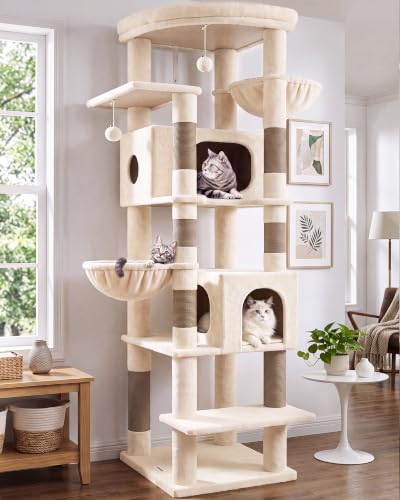


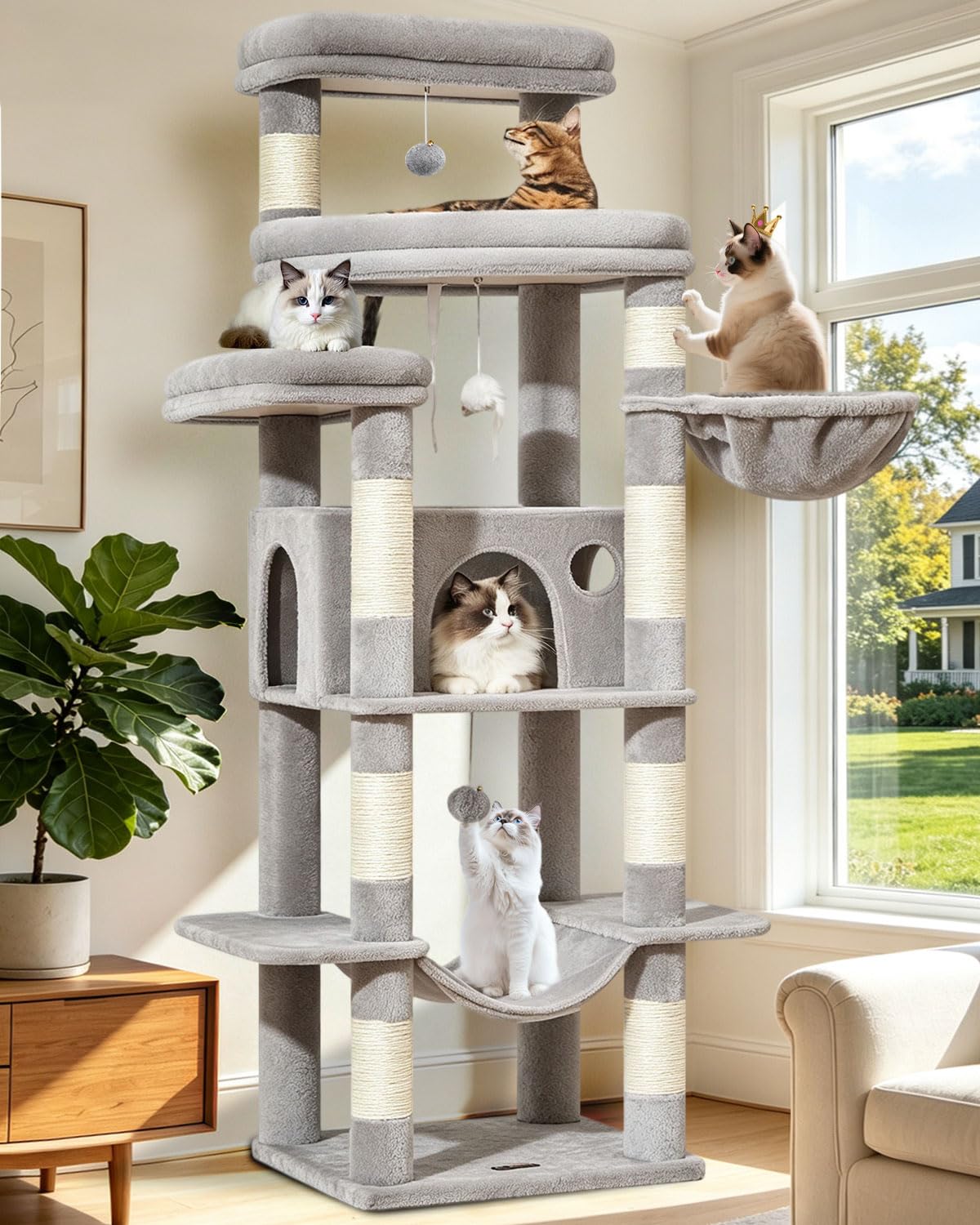
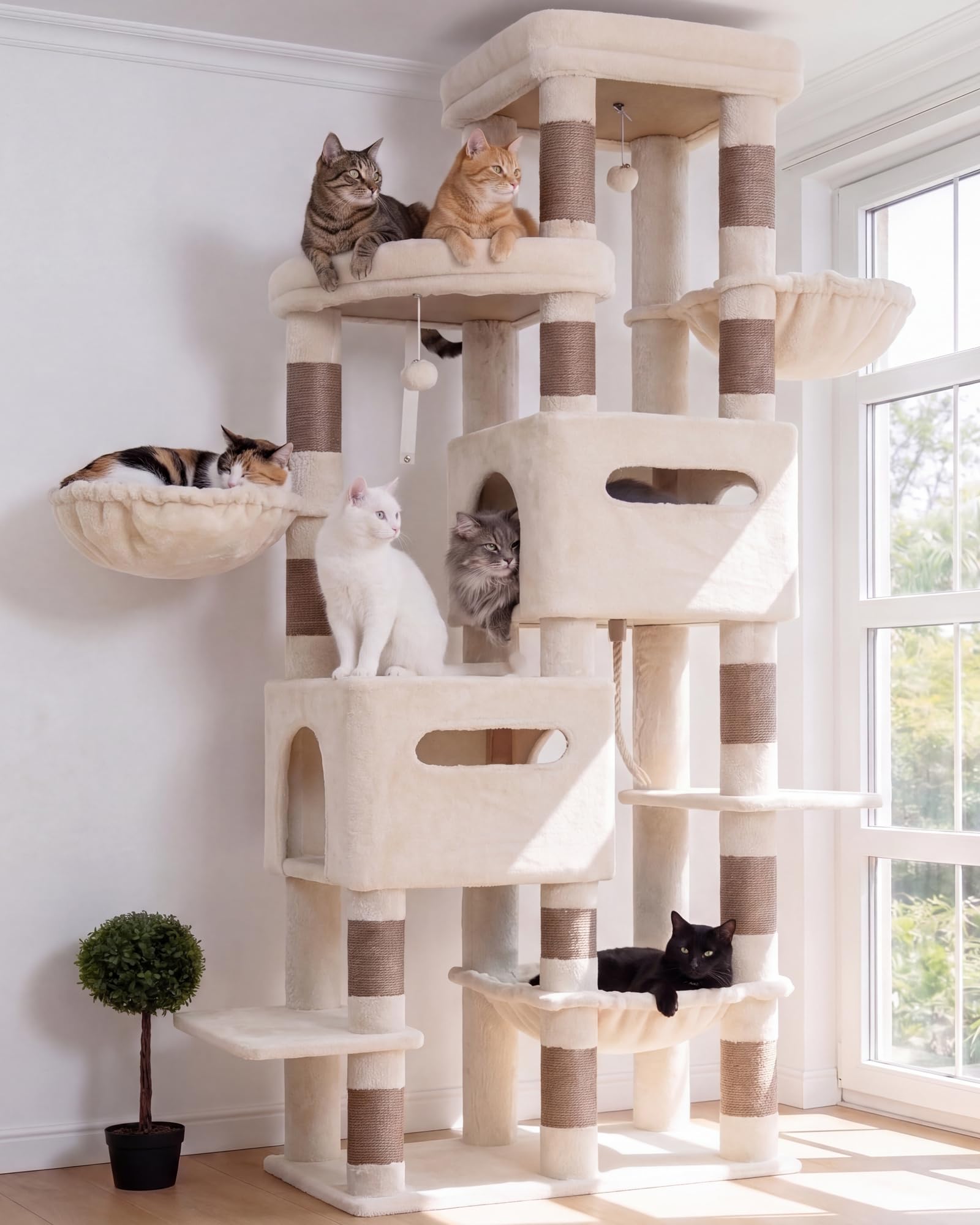


Three Buying Profiles and What to Prioritise
Large cats do not all use a tree in the same way, so start with how your cat moves and rests. The profile that fits tells you whether to spend on height, strength, or easy access.
Confident Climbers Who Want the Highest Perch
If your cat heads for the top of bookcases and doors, height and a stable top perch come first. Look for a top platform at least 20 inches wide in one direction, with a raised edge or cushion that helps a large body settle safely. The base should be wider than the top platform and heavy enough that a jump to the top does not rock the frame. If height is the main draw, compare your shortlist with the options in our guide to the best tall cat tree.
Heavy Scratchers and Strong Jumpers
Active large cats put real force through scratching posts and landing platforms every day. Prioritise thick posts, ideally 4 inches or more in diameter, wrapped in sisal rope from top to bottom so your cat can stretch fully while scratching. Platforms should feel solid with no flex when you press down hard in the center. Tight, sturdy joints and a low center of gravity help the tree absorb repeated jumps without loosening over a few months.
Older or Less Mobile Large Cats
A senior large cat or a cat with stiff joints needs a different layout, with shorter gaps between levels and an easy way up. Steps, ramps, or closely spaced platforms let your cat climb without a big leap, and the main sleeping spot should sit low enough to reach in one gentle step. A roomy ground level condo or a low, wide bed gives your cat a place to rest even on days when climbing feels like too much. In multi cat homes where cats share levels, our guide to the best cat tree for multiple cats covers spacing and duplicate perches in more detail.
How to Evaluate a Cat Tree for Large Cats
Judge every model on the same five points so you can compare fairly. Check size and fit first, then strength and durability, then safety and materials, then how easy the surfaces are to clean, and finally value for the space it takes up. If a listing does not state a weight limit, platform sizes, or post diameter, treat that missing detail as a warning sign rather than a minor gap.
Manufacturer spec sheets and verified buyer comments about wobble and broken perches are the most useful sources here. You can also start from our broader guide to the best cat tree for average size cats, then apply the stricter checks in this article. For a step by step overview, see our notes on how to choose a cat tree.
How to Choose the Right Cat Tree for Your Large Cat
Size and Form Factor
Form factor decides whether the tree fits both your cat and your room. A tall narrow tree saves floor space but needs a very solid base and, for large cats, a wall anchor for extra security. A wider, shorter tree feels more stable and often suits heavy cats better, even if it looks less dramatic. Measure your floor space and ceiling height first, leave room to walk around the base, and check that doors and drawers nearby can still open fully once the tree is in place.
Type and Layout
Layouts range from simple post and perch designs to large structures with condos, hammocks, and ramps. A condo only counts if the entry and inside floor fit an adult body, so look for openings around 8 inches or wider and an interior your cat can turn around in. Hammocks must list a weight limit well above your cat weight, or you should skip them. A good cat tower for large cats spreads sleeping, scratching, and lookout spots across levels instead of stacking everything at the top.
Features Worth Paying For
Pay first for the features your cat will use daily: tall scratching posts, at least one oversized sleeping platform, and a stable base. A second scratching surface, such as a ramp covered in sisal or carpet, adds value for heavy scratchers. Toys on elastic cords, small balls, and decorative extras add little for a large cat and can break off, so treat them as a bonus rather than a reason to buy. A removable, washable cushion on the main perch is worth more than an extra dangling toy.
Sizing for Your Pet
Weigh your cat and measure your cat stretched out asleep, then compare those numbers with every platform and condo. A sleeping platform should be longer than your cat body length without the tail, so a cat that measures 18 inches needs a perch closer to 20 to 22 inches in at least one direction. Check the stated weight limit and leave a margin of at least 5 pounds above your cat current weight, since large breeds can keep filling out until age three or four. If two large cats will share one level at the same time, add their weights together for that level.
Materials and Build Strength
Solid wood and thick plywood frames handle heavy use better than thin particle board, which can crack around screws under a jumping cat. Carpet gives grip and a familiar scratching texture, while plush fabric feels softer but can pull loose and trap more hair. Sisal rope is the most durable scratching wrap for strong cats. Press on posts and platforms after assembly, and retighten every bolt after the first week as parts settle.
Cleaning and Odor Control
Large cats shed a lot of hair onto a large surface, so easy cleaning keeps the tree in use. Removable cushions and pads that you can wash beat fixed plush that you can only vacuum. Carpet and plush hold odor more than smooth wood shelves, which you can wipe down in minutes. For a full routine on hair, stains, and smells, follow our guide on how to clean a cat tree and vacuum the main perch at least once a week.
Safety Checks That Matter for Heavy Cats
Safety for a large cat is mostly about stability under real weight. Set the tree on a hard, level floor rather than thick carpet when you can, push firmly on the top level from several sides, and use the supplied wall anchor strap on any tree over about 48 inches tall. Check for exposed staples, loose cords, and small detachable toys that a strong cat could pull free and swallow. If your cat shows a sudden change in mobility, appetite, or litter habits, talk with your veterinarian rather than assuming a new tree layout will solve the problem.
How Much Should You Spend?
Price follows size, materials, and build strength more than brand name. Simple posts and small trees often sit under $100, but they rarely offer a perch big enough for a full stretch sleep. Most sturdy trees sized for large cats fall in the range of about $100 to $200, with thicker posts and larger condos. Larger solid wood structures with several oversized levels can run about $200 to $300, which can be worth it if the frame lasts for years.
What Matters Most for Large Cats
The modifier in this search changes almost every buying decision. An average cat can curl onto a 14 inch perch and use a slim post, while a large cat needs room to stretch, a post that does not bend under a full body scratch, and joints that survive landings from above. A tree merely labelled for large cats but built with standard platform sizes will disappoint you within weeks.
Weight limits, platform measurements, and post diameter are the three numbers to trust over marketing labels. If those three fit your cat with room to spare, layout and fabric become a matter of taste and room size. If any one falls short, keep looking, even if the tree looks appealing in photos.
Common Mistakes to Avoid
- Buying by total height alone, while the top perch is too small for your cat to lie on safely.
- Ignoring the stated weight limit, so platforms crack or joints loosen under a heavier cat.
- Choosing thin posts that flex during scratching, which teaches your cat to scratch furniture instead.
- Placing a tall tree on thick carpet without a wall anchor, so the whole tree can tip when your cat jumps.
- Picking a condo with a small entry hole that a broad cat cannot enter without squeezing.
- Skipping measurements of your room, then finding the base blocks a door, vent, or walkway.
How to Make a Cat Tree for Large Cats Last Longer
Care for a large cat tree focuses on joints, wraps, and surfaces that take daily force. Tighten bolts and screws every few months, and sooner if you hear creaking or see a platform shift when your cat lands. Replace worn sisal rope on the main post before it frays through, since a fresh wrap keeps your cat using the post. Rotate or wash cushions, vacuum hair from corners where it packs down, and move the tree away from direct sun and radiators so fabrics and rope dry out more slowly.
Watch how your cat uses the tree with age. A low step or sturdy box beside the tree can extend its life for a senior cat that no longer wants to jump to the first level. If a platform cracks or a post splits, block that level until you repair or replace the part, since a partial break can fail fully under a heavy landing.
FAQs
What is the best cat tree for large cats?
The best option is the one whose weight limit, platform size, and post thickness fit your cat with room to spare. No single layout suits every large cat, since climbers need height while older cats need low steps. Use the product table above to compare those three numbers first, then choose the layout your cat will actually use daily.
What should I look for in a cat tree for large cats?
Look for a wide, heavy base, posts around 4 inches thick, and sleeping platforms at least 20 inches in one direction. A clear weight limit at least 5 pounds above your cat weight is essential. Prioritise those structural points over extra toys or colours, since strength and fit decide whether your cat trusts and uses the tree.
How long does a cat tree for large cats last?
A well built cat tree for large cats often lasts about two to four years in daily use before wraps or cushions need work. The frame can last much longer if you retighten joints and replace sisal rope when it wears thin. Heavy daily scratching shortens wrap life, so budget for one rope replacement as normal upkeep rather than a defect.
Is a cat tree worth it for a large indoor cat?
Yes, a cat tree is worth it for most large indoor cats because it gives them vertical territory and a legal place to scratch. Large cats have fewer furniture options that support their size, so a sturdy tree can reduce stress and sofa damage. It earns its floor space fastest when you place it near a window or a room where you spend time.
How do you clean a cat tree used by a large cat?
Vacuum every level with a brush tool, then wash removable cushions and wipe smooth shelves with a damp cloth. A lint roller between deep cleans lifts the heavy layer of hair large cats leave on favourite perches. Spot clean stains promptly and let fabrics dry fully before your cat uses them again, which helps control odor in carpeted condos.
What is the most reliable cat tree brand for large cats?
No single brand is the most reliable for every large cat, so judge the specific design rather than the label. Check the stated weight limit, frame material, post diameter, and whether replacement posts and cushions are sold for that design. A seller that lists full measurements and spare parts clearly is a safer bet than a famous name with vague specs.
Final Thoughts
For most homes, the best cat tree for large cats is a sturdy, honestly sized tree that matches your cat habits, whether that means a high lookout, strong scratching posts, or low easy steps. Use the product table above to check weight limits, platform sizes, and post thickness side by side before you decide. Measure your cat and your room, leave a safety margin on every key number, and you will end up with a tree your large cat uses every day for years.