Best Cat Tree for Multiple Cats in 2026: Space, Strength and Buying Guide
Disclosure: We may earn a commission when you buy through links on this page, at no extra cost to you. As an Amazon Associate I earn from qualifying purchases. Learn more

Choose the best cat tree for multiple cats by platform count, base stability, sturdy posts and room for every cat.
Sharing one small perch rarely works when you have two or more cats. One cat claims the top spot, another gets blocked on the ramp, and the whole tower wobbles when both climb at once. The best cat tree for multiple cats solves that with enough separate resting spots, a stable base, and more than one route up and down. This guide compares three types by size and fit, durability, and safety so you can match a design to your cats and your room.
Use the comparison table below to see the main types side by side, then read the sections that follow for sizing, materials, and cleaning details. If you want the broader single cat view first, our guide to the best cat tree covers the basic styles that this guide builds on for homes with several cats.
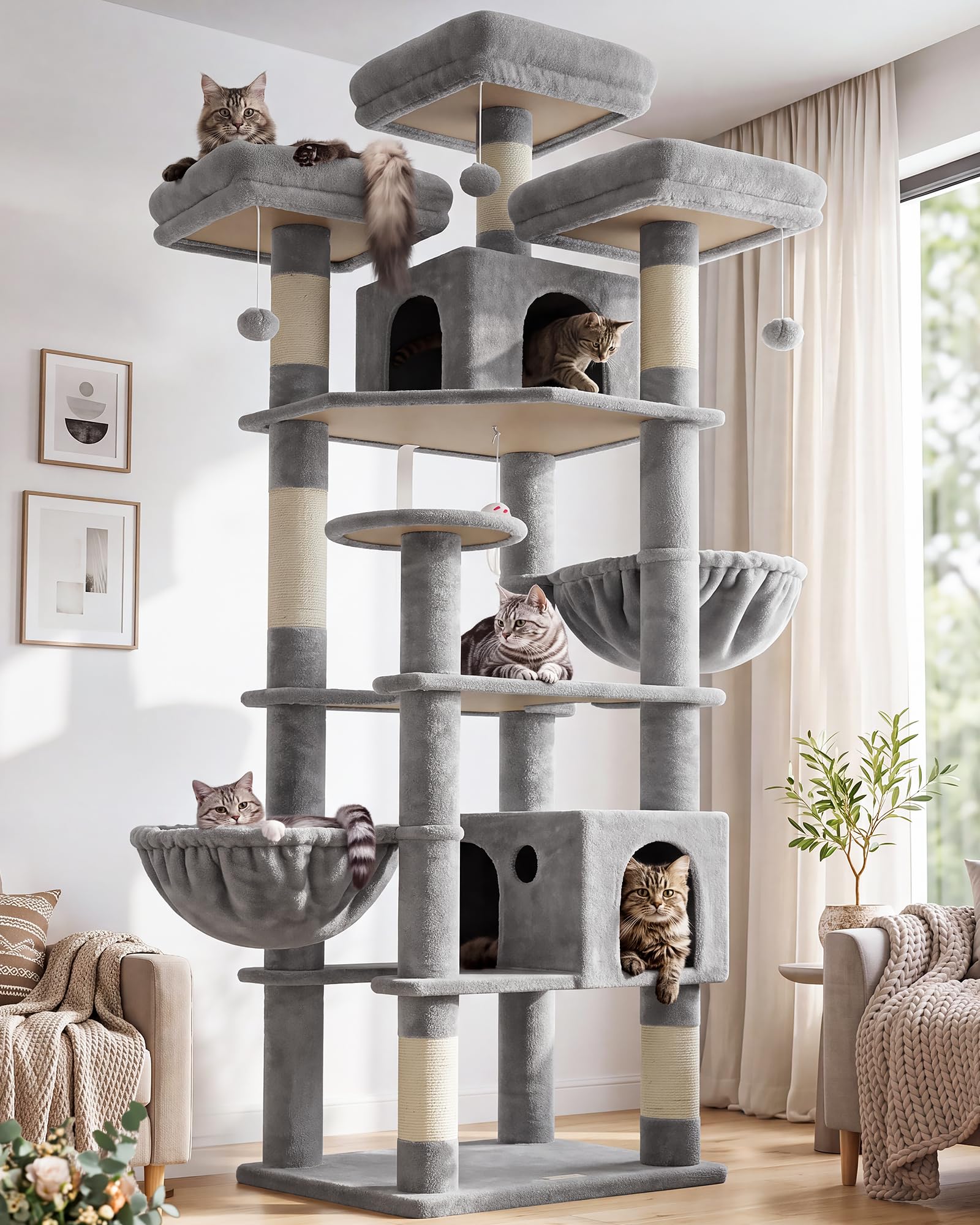

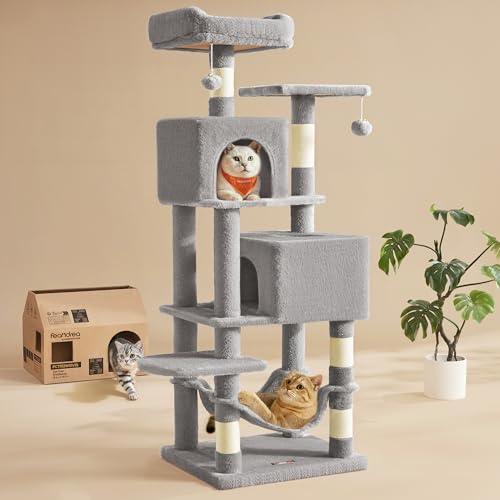
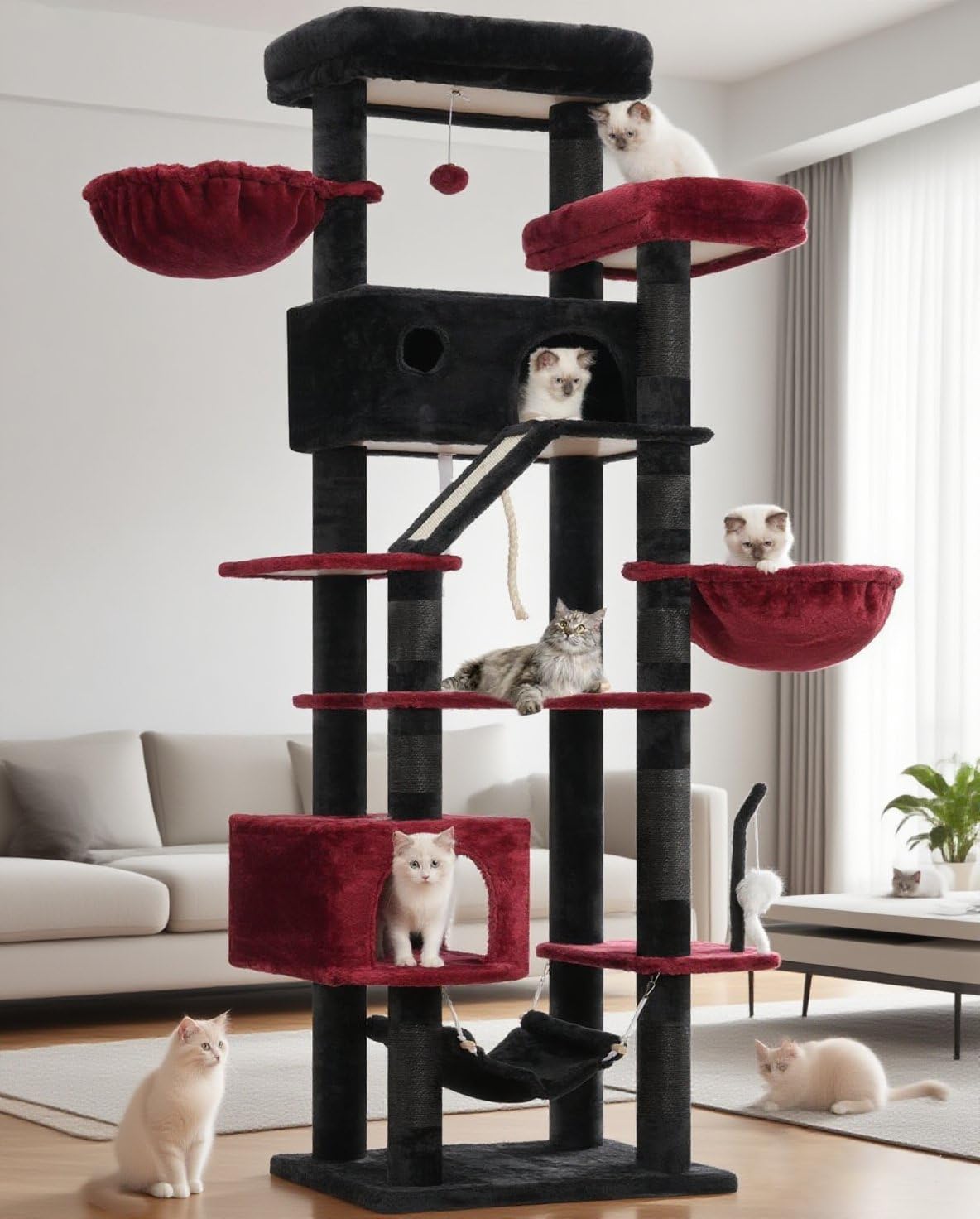
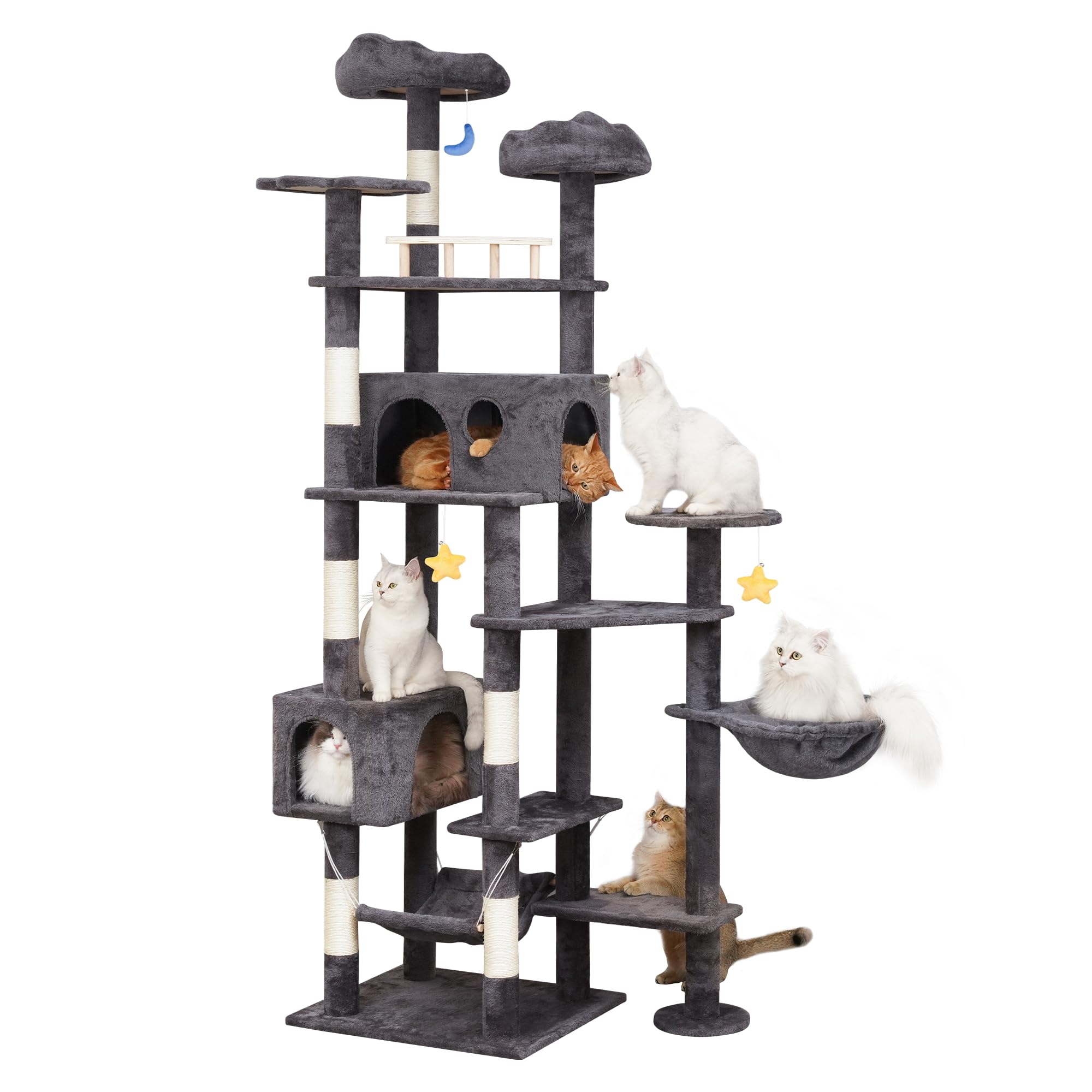

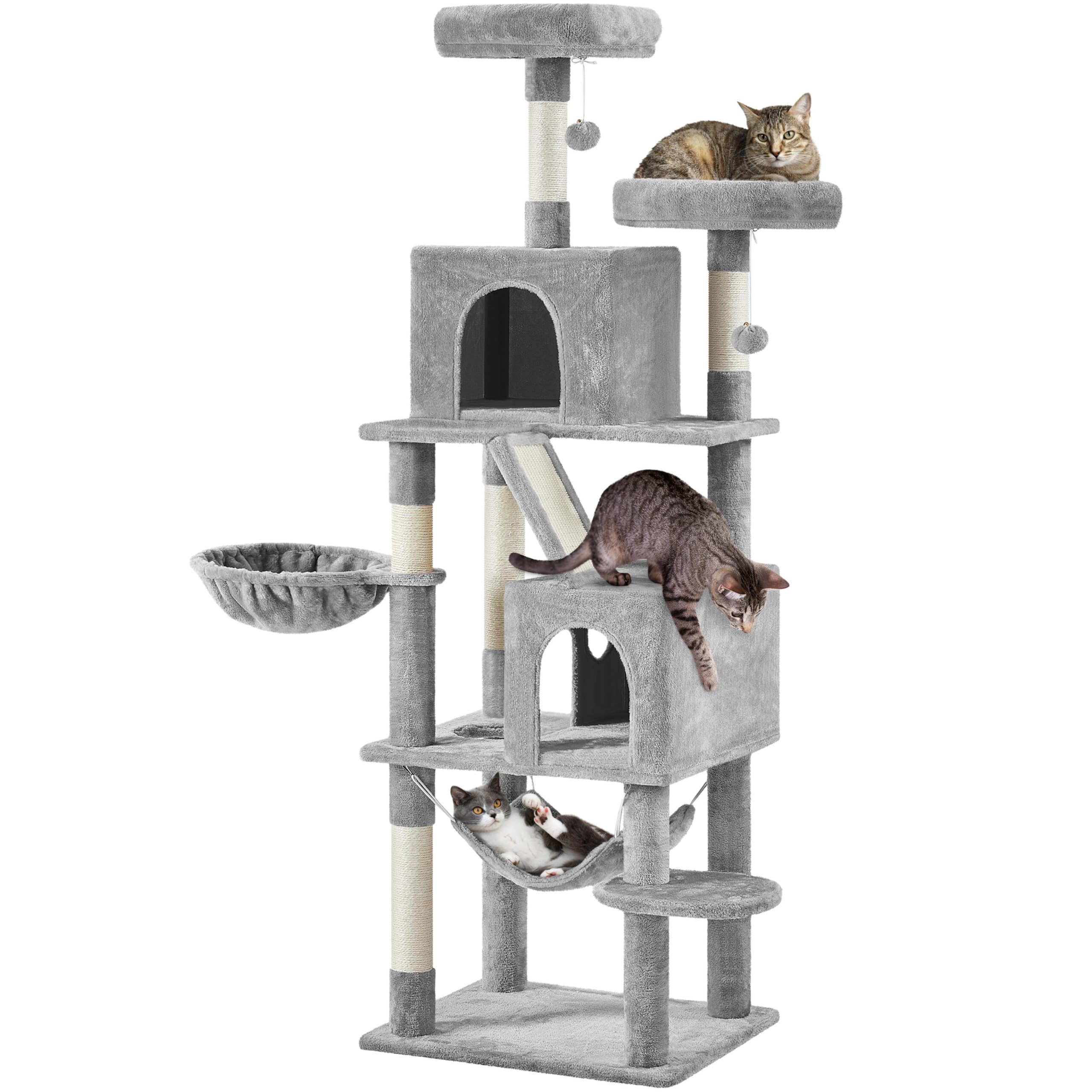
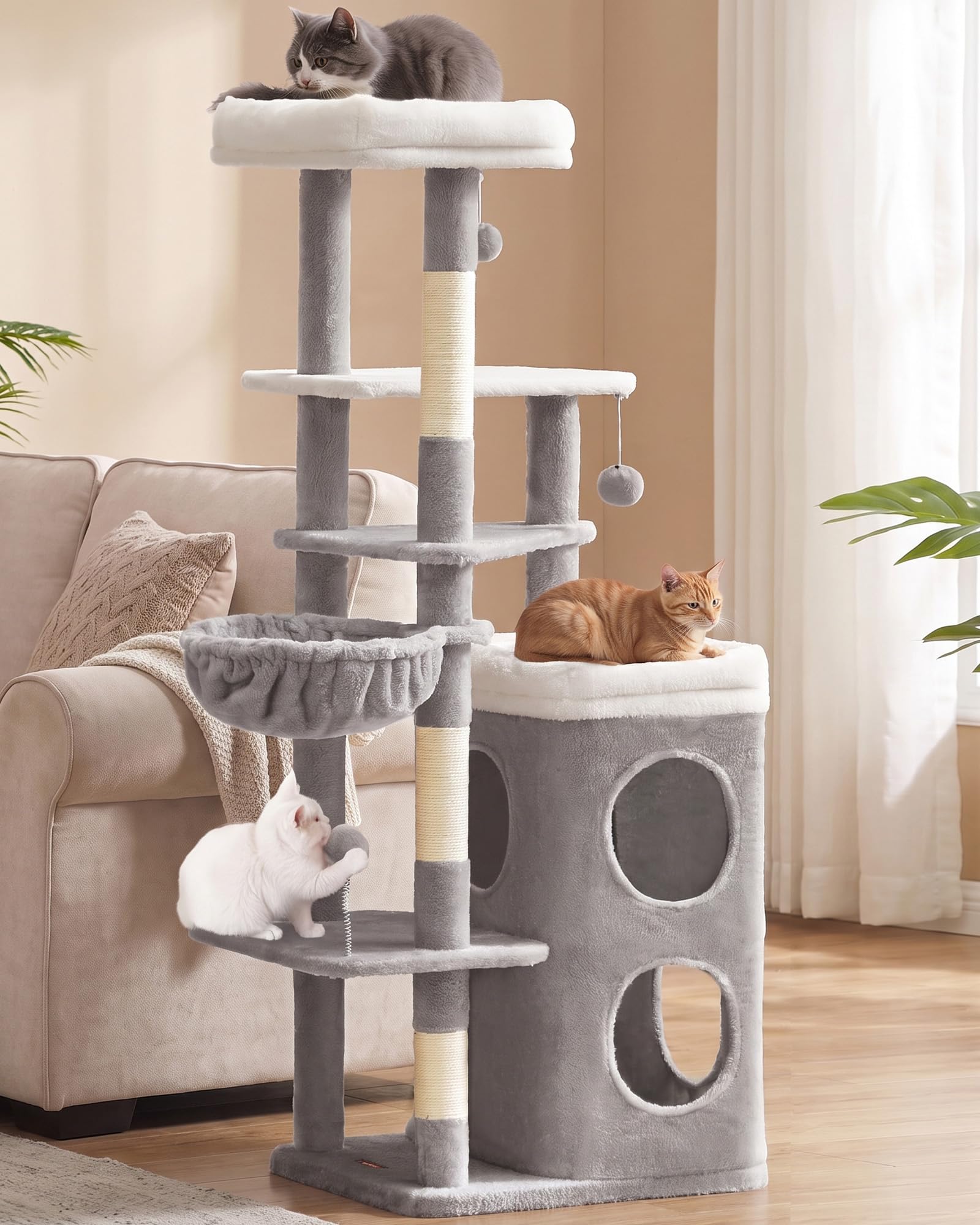
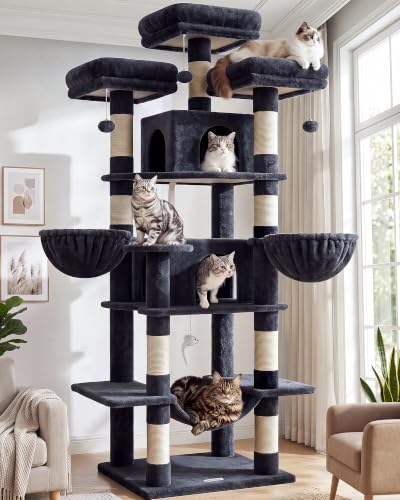

Three Tower Types at a Glance
For multiple cats, the three useful shapes are a wide base multi level tower, a tall vertical tower, and a low sprawling condo style. The wide base type gives the most shared space. The tall type saves floor space while adding height. The low type suits older cats and kittens who should not jump far.
None wins for every home. Count your cats, weigh the largest one, and measure your floor space first. A tower with only one high perch will still cause competition, even if the build is strong.
Three Types of Cat Trees for Multiple Cats
These are tower types, not single models, so you can shop any brand that matches the specs.
Wide Base Multi Level Tower
This type has a broad footprint, three or more levels, two condos or one condo plus open beds, and at least two scratching posts. It gives each cat a separate level and lets one cat pass another without a face to face meeting on a narrow platform.
- Separate perches at different heights reduce competition for the top spot
- Wide base resists wobbling when two cats climb together
- Two routes up and down prevent a cat from feeling trapped
- Trade off: it takes the most floor space of the three types
Suits homes with two or three adult cats who are out in the room together for much of the day.
Compact Multi Perch Tower
This smaller type stacks two or three perches and one condo in a narrow footprint, often for under $100. It suits a pair of cats who already get along well and take turns, rather than cats who each demand a private level at the same time.
- Lower price and smaller footprint suit apartments and spare rooms
- Two perches still give each cat a choice of height
- Shorter height makes assembly and moving easier
- Trade off: thin posts and light platforms wear faster under shared daily use
Suits two small or calm cats, or as a second tower in another room rather than the only tower in the home.
Tall Heavy Build Tower
This type uses thicker posts, denser boards, and replaceable sisal sections, and it often rises above 60 inches. The extra build strength matters when combined cat weight is high or when large cats launch themselves at the top perch.
- Thick posts and heavy boards handle combined weight with less flex
- Tall layout adds vertical territory without a wide footprint
- Replaceable parts extend the useful life of the whole tower
- Trade off: higher price, heavier boxes, and longer assembly time
Suits three or more cats, large breeds, and homes that want one long lasting main tower. For height focused options, see our guide to the best tall cat tree for taller layouts and ceiling clearance advice.
How to Judge a Cat Tree for Multiple Cats
Judge every design on size and fit, durability under shared use, safety and materials, ease of cleaning, and value. Maker specs for dimensions and weight limits, plus buyer comments about wobbling, sisal wear, and broken platforms, are the best sources. A tower needs enough perches, a stable base, and surfaces you can clean. For the full method, our guide on how to choose a cat tree walks through measuring your cat and your room.
How to Choose the Right Cat Tree for Multiple Cats
Size and form factor
Start with perch count. Plan one resting spot per cat, plus one extra, so a cat can move without displacing another. Small towers under 36 inches suit kittens. Large towers from 50 to 72 inches give adult cats real separation. In a narrow room, a vertical or corner design uses height instead of width.
Check base size as carefully as height. A tall tower on a small base will sway. Look for a base wide in both directions and heavy enough to stay planted when a cat jumps from the side.
Type
Modern and wooden types use flat platforms that wipe down easily. Wall mounted types free floor space but need solid studs and careful spacing between levels. Window types add a viewing perch, while heavy duty types use thicker boards for large or active cats.
Form should follow habits. Climbers need height and posts. Loungers need wide beds and condos. Nervous cats need a low enclosed condo where they can rest without being watched from above.
Features worth paying for
A scratching post on more than one level is worth paying for, because cats scratch where they wake up and pass through. A hammock adds a popular spot, but check its weight limit and stitching, since a sagging hammock will be ignored. A condo gives privacy during conflict.
Skip extras that reduce usable space. Dangling toys are cheap to replace, and a built in litter box enclosure only helps if you need hidden litter space, since it adds cleaning work and can trap odor near resting areas.
Sizing for your pet
Measure your largest cat from nose to tail base and compare that length with platform depth. A perch should let the cat curl or stretch without hanging over the edge. Condo openings should let your largest cat enter without squeezing and turn around inside.
Weight limits should cover your heaviest cat on a single perch, not just total weight spread across levels. If you have a Maine Coon or another large breed, our guide to the best cat tree for large cats covers wider platforms and higher weight limits in detail.
Materials and chew resistance
Most towers use engineered wood boards wrapped in carpet or plush, with sisal rope on posts. Solid wood and plywood feel sturdier than thin particle board. Tightly wound sisal with no gaps lasts longer than loose sections.
Check fabric edges and staple points. Loose staples, frayed carpet, and exposed corners become chew targets. Smooth wood platforms suit cats who chew fabric edges, and they wipe clean more easily.
Cleaning and odor control
Shared towers collect hair and litter dust much faster than a single cat tower. Removable cushions you can wash make the biggest difference. Carpet holds odor more than smooth wood or short pile fabric, so plan a weekly vacuum routine for carpet styles.
For a full routine, including how to remove hair from sisal and how to treat odor without harsh sprays, see our guide on how to clean a cat tree. Keep cleaning products pet safe and let every surface dry fully before cats use the tower again.
Safety
Stability comes first. Place the tower on a flat floor, tighten all bolts, and recheck them after the first week because boards settle under load. For tall towers, use the wall strap if included, and keep the tower away from shelves a cat could use to leap sideways onto the top.
Inspect posts and platforms each month. Replace a part when a platform cracks, a post leans, or sisal has worn away to expose the core, since cats will keep using a weakened section until it fails.
How much should you spend?
Short towers at under $50 work as a second spot, not as the main tower for several cats. The about $50 to $100 range buys a compact two perch tower for a calm pair. Most homes with two or three cats will shop in the about $100 to $200 range for a wide base build. Spending about $200 to $300 buys thicker posts, larger platforms, and replaceable parts. That quality pays off when daily use is high.
What Matters Most in a Cat Tree for Multiple Cats
A single cat tower is about preference. A shared tower is about territory. Cats who must compete for one high spot will often avoid the tower or guard it. Separate levels, separate scratching posts, and two ways down turn it into shared territory each cat can use on its own terms.
Buying two small towers can also work for cats who dislike sharing. Place them apart so each cat has a route that does not pass the other tower. Two towers give better separation for cats with a tense history. Either way, the best cat tree for multiple cats is measured by whether every cat uses it daily without conflict, not by height alone.
If vertical space is your main limit, our guide to the best floor to ceiling cat tree explains tension mounted options that use full room height on a small footprint.
FAQs
What is the best cat tree for multiple cats?
There is no single winner for every home. Watch where your cats already rest for a few days. Cats who seek height need tall perches, while cats who hide need a low condo first. Match the type to that pattern, then check perch count and base stability.
What should I look for in a cat tree for multiple cats?
Look first at perch count, base width, and post thickness, then at fabric and extras. One check many buyers miss is doorway width. Measure your doors before ordering a wide base model, because a large assembled tower may not move to another room. A design you can partly take apart makes moves and deep cleaning simpler.
How long does a cat tree last?
A shared tower needs attention sooner than a single cat tower because sisal takes double use. Sisal on the main post may show heavy wear within the first year in a busy home. You can rewrap a post with new sisal rope if the core is still solid. Boards last longer if bolts stay tight and platforms stay dry.
Is a cat tree worth it?
Yes, for most multi cat homes, because vertical space reduces pressure on floor level territory. Cats can separate by height instead of by room, which helps in small apartments. A tower near a window gives shared viewing many cats use for hours. It will not fix litter box conflicts, so keep those resources separate.
How do you clean a cat tree?
Vacuum loose hair first, then spot clean fabric and wipe smooth surfaces, and let the tower dry fully. To keep the tower familiar, clean one level at a time on different days, so the whole tower does not smell new at once. That staged approach helps cautious cats return sooner. Wash removable beds on their own cycle and air them well before putting them back.
What is the most reliable cat tree brand?
No single brand is most reliable for every home, so judge the specific design instead. Check whether the maker sells replacement posts, states clear weight limits, and uses standard bolts you can retighten. Spare parts and a clear warranty process are better signs than a long feature list.
Final Thoughts
Choose perch count and stability first, then height, materials, and price. A wide base multi level tower suits most homes with two or three cats, a compact tower works as a budget or second spot, and a tall heavy build suits large or very active cats. Compare your measurements with the product table above before you order, and plan one extra resting spot beyond your cat count.
If you keep those points in mind, the best cat tree for multiple cats for your home will be the one every cat can climb, scratch, and rest on without waiting for another cat to move.