Best Cat Tree With Litter Box Enclosure in 2026: Space, Odor and Access Guide
Disclosure: We may earn a commission when you buy through links on this page, at no extra cost to you. As an Amazon Associate I earn from qualifying purchases. Learn more

Choose the best cat tree with litter box enclosure by entry size, ventilation, cleaning access and a stable frame.
A litter box sitting in the open is hard to ignore, and a cat tree on its own takes up floor space you may not have to spare. A best cat tree with litter box enclosure solves both problems at once, hiding the pan inside a cabinet style base while your cat climbs, scratches, and naps above it. The catch is that the enclosure has to fit your pan, your cat, and your room at the same time.
This guide compares the main types by size and fit, durability, and safety and materials, then walks through the sizing and cleaning details that decide whether the piece works in daily life. Use the comparison table below to see how the types differ. Our guide to the best cat tree covers designs without an enclosed base.




The Main Types at a Glance
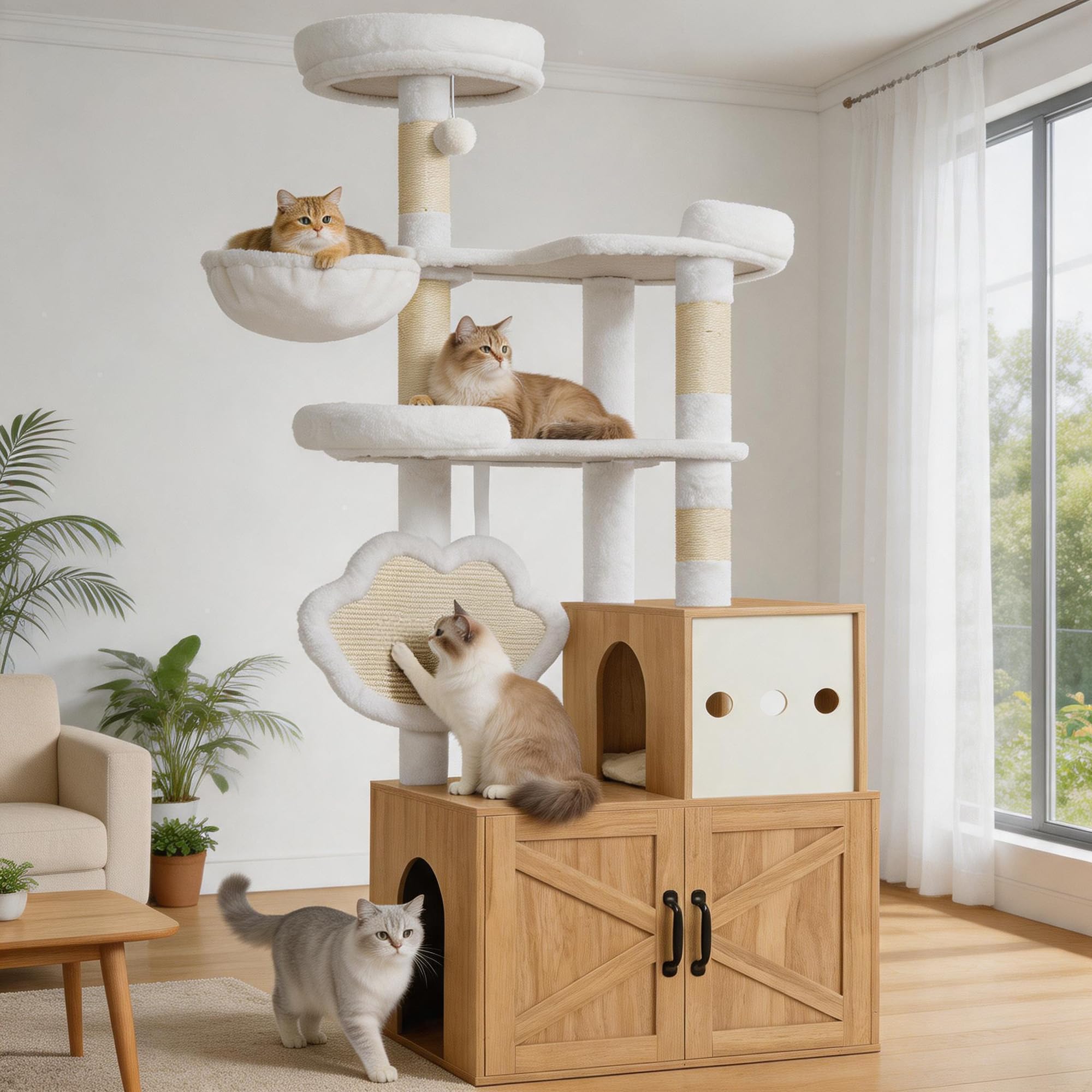
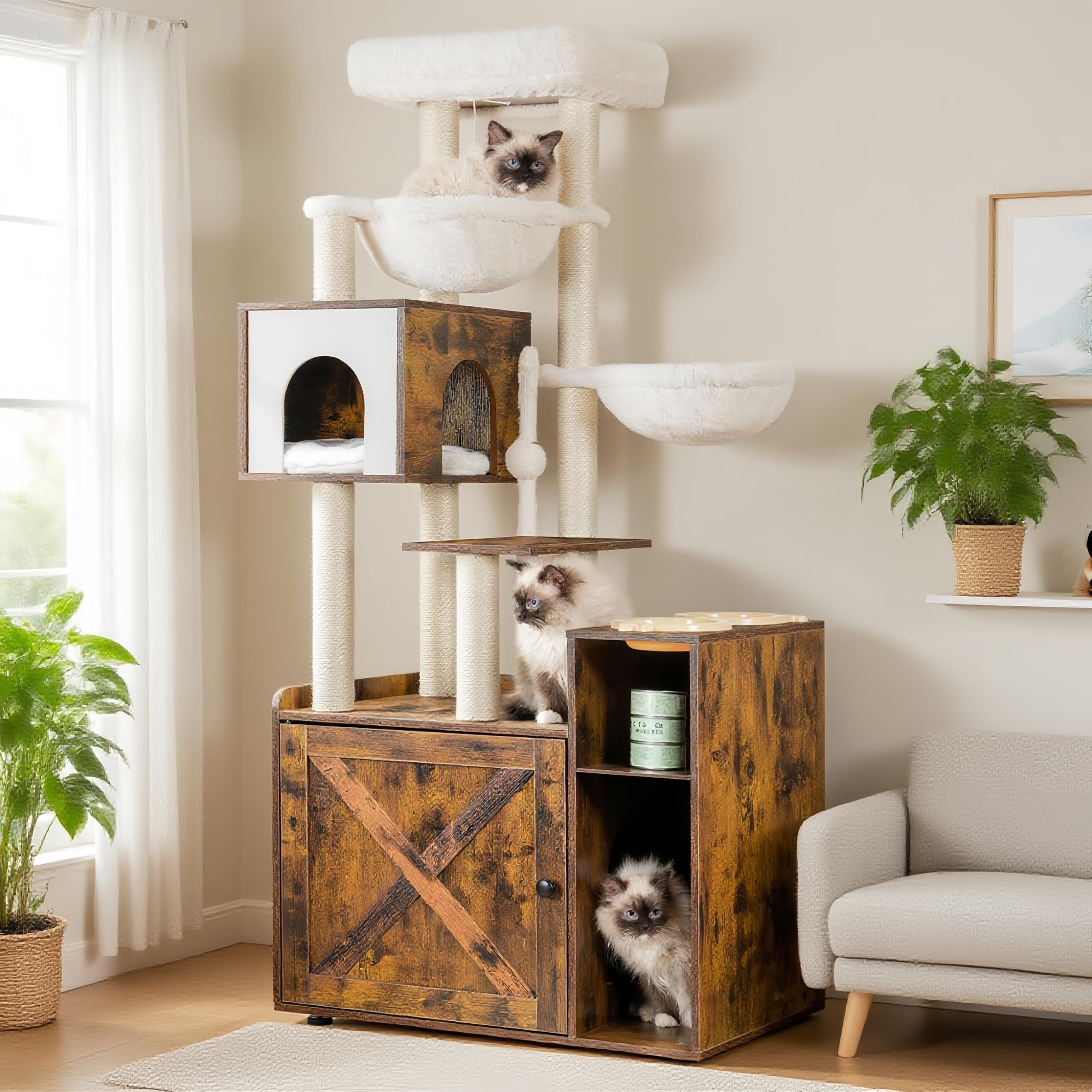
Most models fall into three layouts. Compact towers pair a small cabinet base with two or three levels and suit one cat in an apartment. Mid height designs add a condo and wider perches over a larger cabinet. The tallest designs stack several platforms above the enclosure and give cats room to spread out. Your first filter is simple: the cabinet interior must swallow your litter pan with space to spare.
Three Types Compared
Compact Towers for Small Rooms
A compact tower usually stands about 40 to 55 inches tall, with the enclosure at floor level, one scratching post, a small condo or platform in the middle, and a single top perch. It suits a kitten or one adult cat of average size, and it fits a corner of a bedroom or laundry room without crowding the door swing. The trade off is climbing variety. With only two resting spots, a cat that loves height may lose interest, and a large pan may not fit the cabinet at all.
Mid Height Trees for One or Two Cats
The mid height type, roughly 55 to 65 inches tall, is the most common layout and the one most households land on. You typically get a roomier cabinet, a condo, two or three perches at staggered heights, and posts wrapped for scratching on more than one level. Two cats can use it at once without a dispute over the only good spot. Check the perch dimensions rather than the overall footprint, since a wide base can still carry perches too small for a cat to stretch out on.
Tall Trees With Room to Climb
Tall designs run about 65 to 78 inches and stack the enclosure under condos, ramps or steps, and several high perches. They suit active cats and homes where vertical space is easier to give than floor space. Stability matters more here than in any other type, so look for a wide, heavy base and a wall anchor strap. If height is your main goal, our guide to the best tall cat tree explains how much climbing room different heights give a cat.
What Matters Most When You Compare
Five criteria separate a piece your cat uses for years from one that ends up listed for sale. Size and fit come first, because an enclosure that cannot hold your pan is useless no matter how nice the perches look. Durability comes next, judged by frame material and post wrapping. Safety and materials cover stability, finishes, and anything your cat might chew. Ease of cleaning decides how the cabinet handles litter dust and odor. Value ties the four together against the price.
How to Choose the Right Cat Tree
The steps below follow the order that prevents returns: fit, layout, features, then price. For a general framework, our walkthrough of how to choose a cat tree covers the same decisions for trees without an enclosure.
Size and Form Factor
Measure your litter pan first, length, width, and height with the lid on if you use one, then compare those numbers with the inside dimensions of the cabinet, not the outside of the tree. Leave about two inches of clearance on each side so you can slide the pan out without tilting it. Then measure your floor space and ceiling height. A corner layout tucks into dead space but can block the cabinet door if furniture sits too close.
Type and Layout
Wooden furniture style designs blend with living room decor and wipe clean, while carpet or plush covered frames feel softer and give cats more grip as they climb. Wall mounted trees save floor space but rarely include an enclosure, so they solve a different problem. Corner and tower layouts both work here as long as the cabinet entry faces into the room. Think about the path your cat takes to reach the pan. An entry that faces a wall or sits high off the floor will discourage use, especially for older cats.
Features Worth Paying For
The enclosure itself is the headline feature, and the best versions have a door you can open wide, a raised lip or inner ledge that catches tracked litter, and ventilation that lets air move without broadcasting odor. Above the cabinet, a replaceable scratching post is worth more than a fixed one, because the post wears out long before the frame does. A condo gives a shy cat a second hiding spot besides the litter cabinet, which matters, since a cat should never feel its only enclosed space is the toilet. Hammocks are optional, and suit lighter cats better.
Sizing for Your Cat
Match perch size and platform spacing to your cat, not to the room. A large cat needs perches at least about 14 inches across, posts thick enough to grip, and level spacing it can manage in one easy jump. If your cat is big framed, our guide to the best cat tree for large cats goes deeper on weight limits and perch sizing. Kittens and senior cats need the opposite: lower first steps, a ramp or staggered platforms, and a litter entry low enough that nobody has to jump into the cabinet.
Materials and Chew Resistance
Solid wood and thick plywood frames cost more than particle board, and they hold screws better over years of rocking and jumping. Sisal rope is the standard post wrap because cats like the texture and it frays slowly rather than shedding in chunks. Watch the fabric edges and any dangling toys. A cat that chews can pull loops of carpet free, and swallowed strands are a genuine hazard, so choose short pile coverings with bound edges. Painted or laminated cabinet interiors resist moisture far better than bare board, which swells and holds odor.
Cleaning and Odor Control
The cabinet traps odor if air cannot move, so look for vents near the top of the enclosure. A removable tray or a smooth interior floor makes the weekly wipe down much faster. Place a litter mat just outside the entry to catch what your cat tracks out. For the full routine on the levels above, see our guide on how to clean a cat tree.
Safety
Stability is the main safety issue. A tree that rocks when your cat lands on the top perch can tip, so test the assembled piece with firm pushes at the highest level before your cat uses it, and use the wall anchor on tall models. Check that the cabinet entry has no sharp hardware inside where your cat squeezes past. Keep the enclosure for litter only, never for food or water bowls, since cats avoid eating near their toilet. If your cat refuses the enclosed pan or strains in the box, call your veterinarian rather than treating it as a furniture problem.
How Much Should You Spend?
Compact towers generally cost under $100, and at that level you get a small cabinet and basic posts, which is fine for one cat. Mid height designs run about $100 to $200, and the extra money usually buys a sturdier frame, a bigger cabinet, and replaceable posts. Above about $200 you are paying for solid wood, furniture grade finishes, and larger perches rather than more levels. A tight budget spent on correct fit beats a premium tree your pan cannot enter.
Do You Really Need a Cat Tree With a Litter Box Enclosure?
You need one if floor space is tight, the litter box currently sits in a living area, or your dog keeps raiding the pan, since a cabinet with a cat sized entry keeps most dogs out. A household with several cats benefits too, because the tree above gives the cat leaving the box a place to go that is not straight into a housemate. Our guide to the best cat tree for multiple cats covers multi cat layouts in more depth. A separate covered litter cabinet plus a plain tree costs about the same and lets you replace each piece on its own schedule, so if you have room for both, that flexible setup may serve you better.
FAQ
What is the best cat tree with litter box enclosure?
The right one is the type that fits your pan, your cat, and your room, in that order. Most households do best with a mid height design, a cabinet with at least two inches of clearance around the pan, and replaceable posts. One detail buyers miss is the cabinet door swing: a door blocked by a sofa makes daily scooping a chore you will start to skip.
Is a cat tree with a litter box enclosure worth it?
It is worth it when it replaces two pieces of furniture with one footprint and your cat accepts an enclosed pan. Many cats take a few days to adjust, and leaving the cabinet door open at first helps. It also frees the bathroom or closet where the box used to live. If your cat has always refused covered boxes, though, a separate open pan is the safer purchase.
How long does a cat tree with a litter box enclosure last?
The frame of a well built tree lasts for years, while the wear parts fail sooner. Sisal wrapping typically frays first, plush on the favorite perch mats down, and cabinet hinges loosen from daily opening. Do a quick monthly check: tighten the connectors, look for wobble at the base, and inspect the interior floor for moisture damage. Replacing a post or hinge as soon as it wears keeps the whole piece in service far longer.
Is a cat tree worth it if your cat already has shelves and window seats?
It can be, because a tree bundles scratching, climbing, and resting in one vertical path, and the enclosure version adds litter storage on top of that. Shelves give height but nowhere to scratch, and window seats give a view but no hiding spot. If your cat ignores high places and prefers floor level hideaways, choose a shorter design with a generous condo rather than paying for height nobody uses.
How do you clean the enclosure part of a cat tree?
Slide the pan out, shake loose litter from the cabinet floor into a bag, and wipe the interior with a damp cloth and a mild, unscented cleaner, then let it dry fully before the pan goes back. One point owners overlook is the door track and hinge area, where fine litter dust packs in and can make the door squeak or stick. A soft brush clears it in seconds. Strong scents inside the cabinet can put a cat off using the box, so rinse cleaned surfaces well.
What is the most reliable type of cat tree with a litter box enclosure?
Reliability comes from construction, not a name on the box. Look for a frame of plywood or solid wood rather than thin particle board, metal connectors you can retighten, and posts you can buy replacements for. A clear frame warranty is another good sign. In buyer reviews, a pattern of the same broken part tells you more than any star average.
Final Thoughts
Start with your pan measurements, pick the type that fits your space and your cat, and let durability and cleaning shape the final call. For most homes, the best cat tree with litter box enclosure is a mid height design with a roomy ventilated cabinet, replaceable posts, and perches sized for a full stretch. Look back at the product table above to compare the layouts, and order only once the cabinet dimensions check out against your pan.