Best Cat Tree With Hammock in 2026: Support, Fit and Buying Guide
Disclosure: We may earn a commission when you buy through links on this page, at no extra cost to you. As an Amazon Associate I earn from qualifying purchases. Learn more

Choose the best cat tree with hammock by weight limits, hammock fabric, platform spacing and base stability.
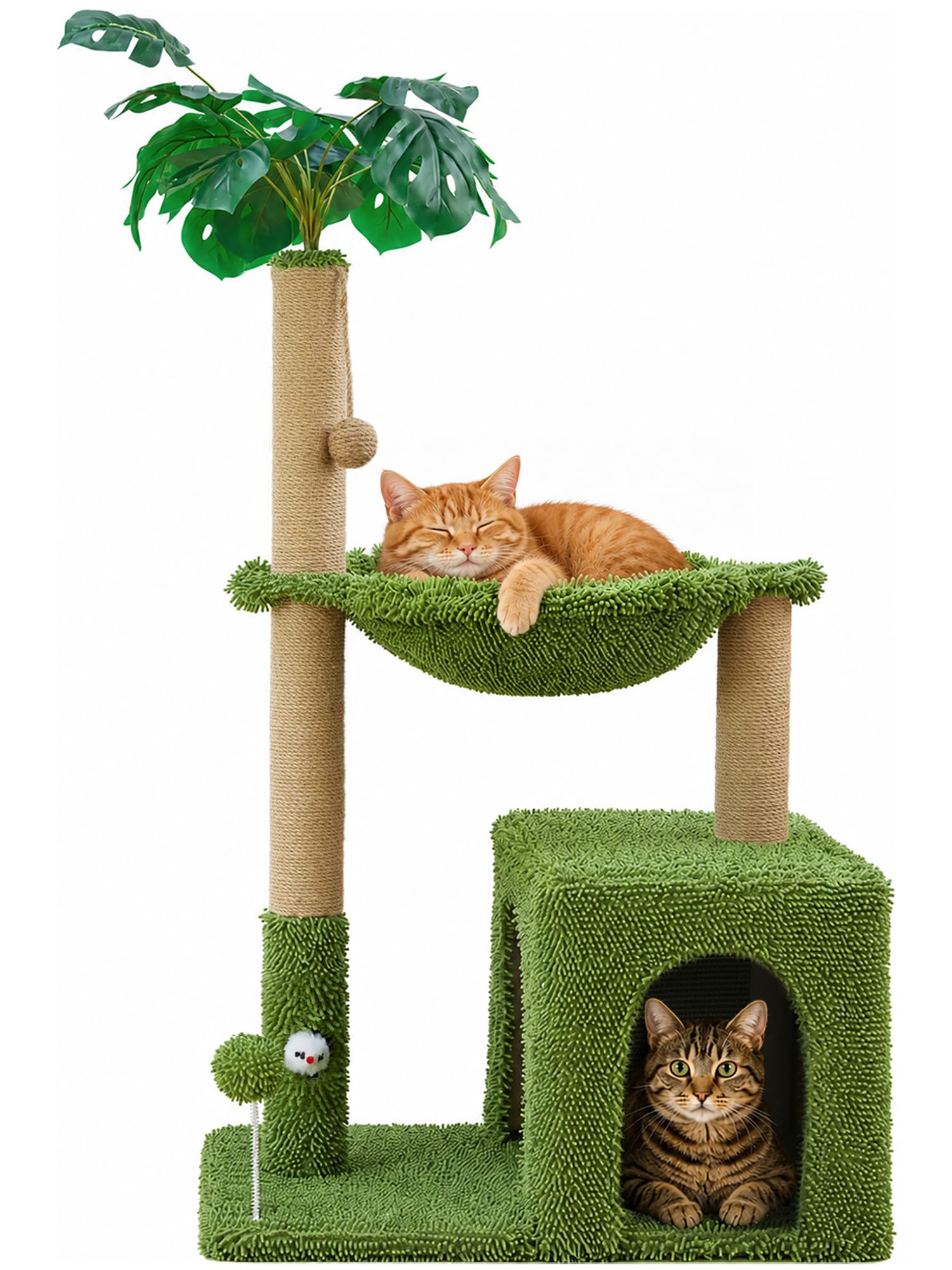
A flat perch suits a cat that likes to stretch out, but many cats sleep curled into a tight ball, and a hammock cradles that shape far better. Choosing the best cat tree with hammock comes down to more than the hammock itself, since the sling has to hold your cat safely, sit at a height your cat will actually climb to, and stay steady on a frame that does not rock. The comparison table below lines up the main types side by side so you can see the trade offs at a glance.
This guide walks through hammock sizes and weight limits, frame stability, materials, and cleaning, plus which cats gain the most from a sling style bed. If the hammock turns out to be optional for your home, our guide to the best cat tree covers standard designs without one.


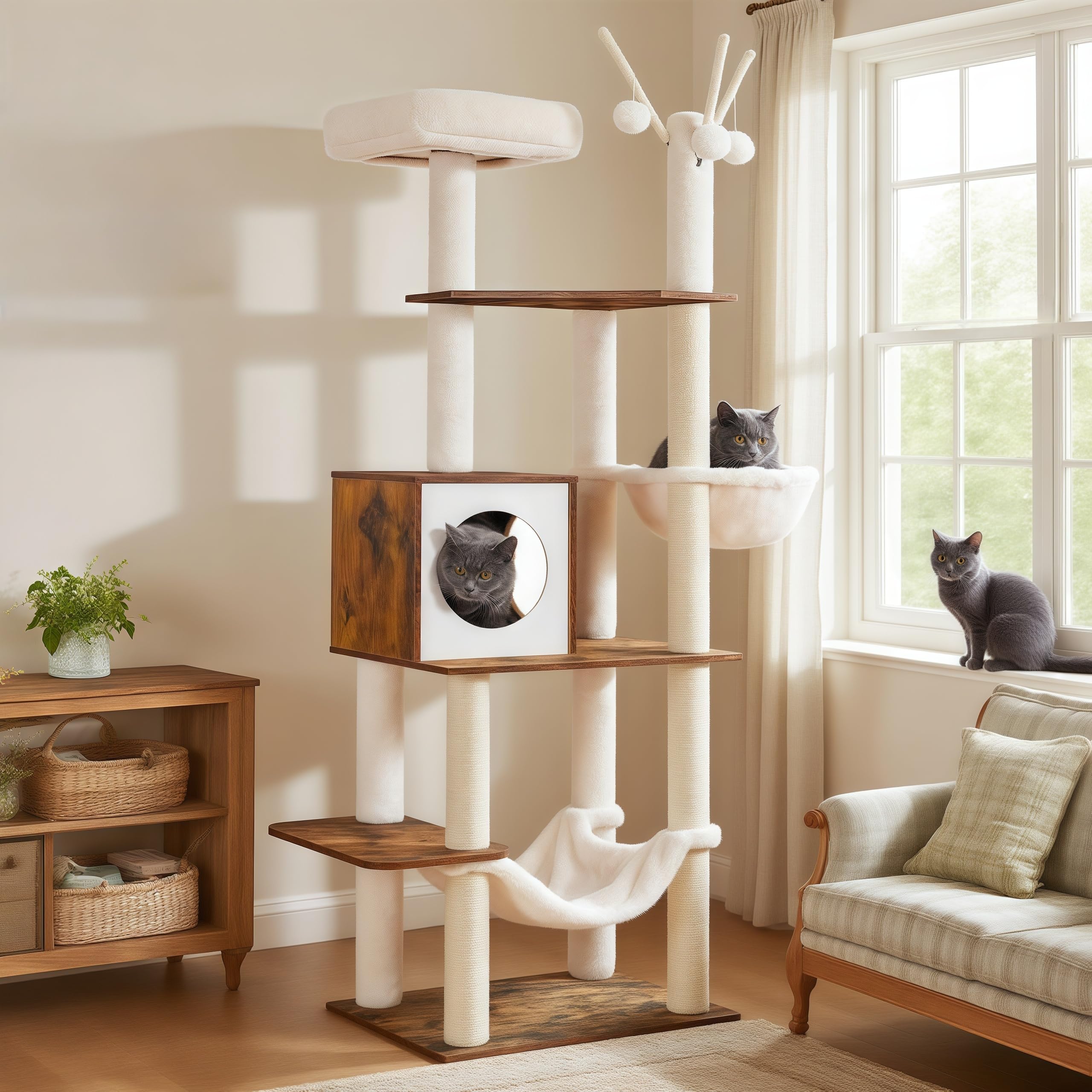
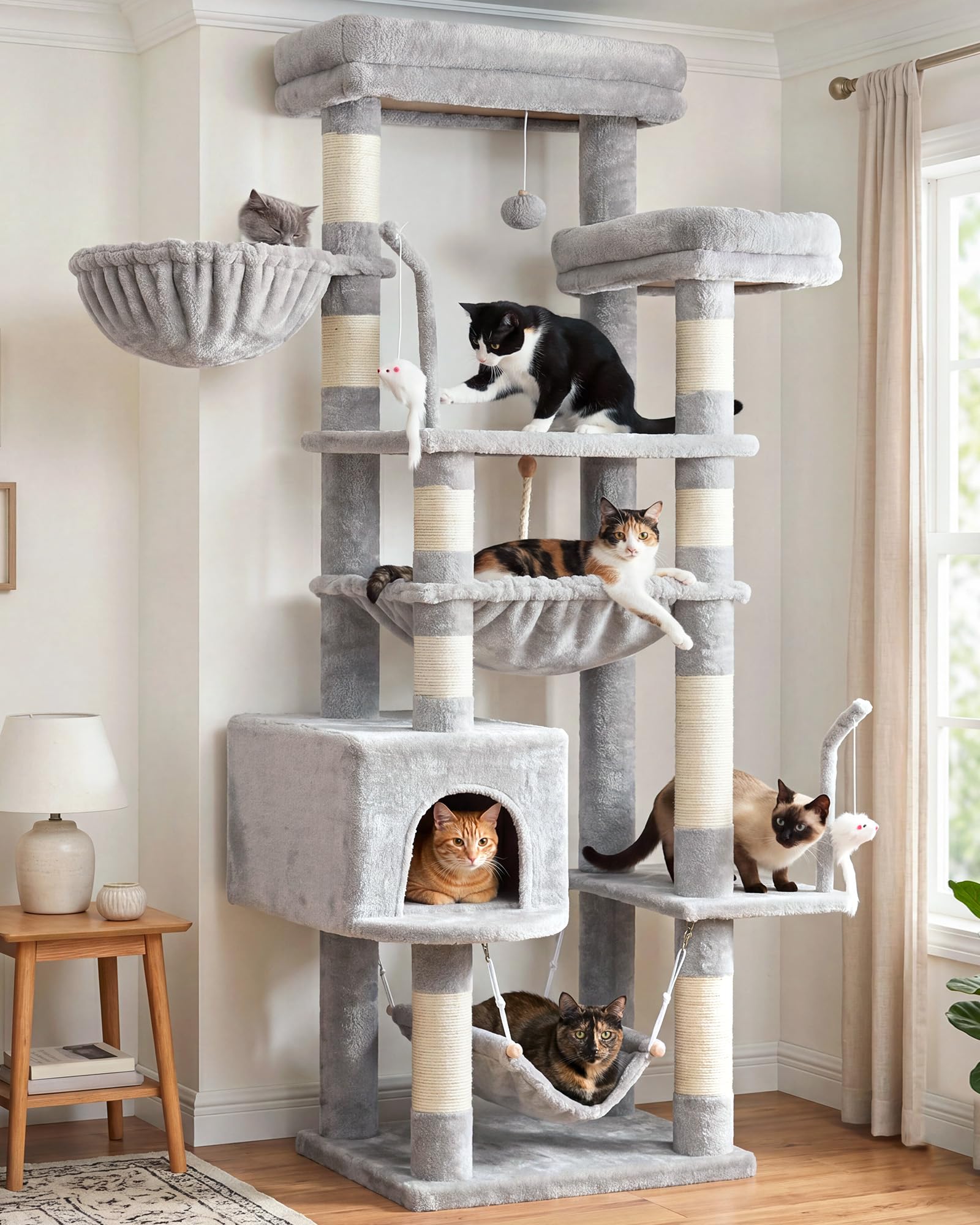

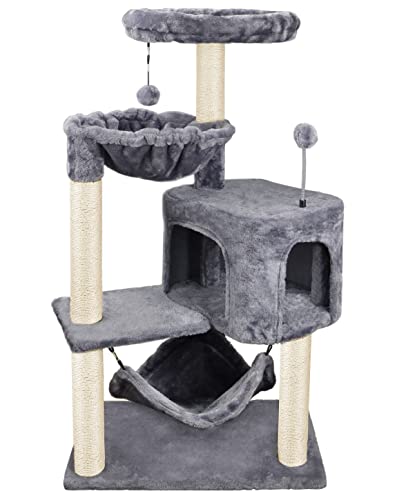



Who Should Buy a Cat Tree With a Hammock?
Cats That Sleep Curled Up and Knead Before Resting
Some cats circle, knead, and settle into a round shape every time they nap. A hammock supports that habit because the fabric dips in the middle and holds the body on all sides, which feels more enclosed than a flat platform. Cats that already choose laundry baskets, open boxes, or the curve of an armchair over a flat cushion are the strongest candidates.
Owners of Large or Heavy Cats
A big cat needs a hammock with room to turn around and a stated weight limit with margin to spare. Look for a wide sling mounted low on a broad frame, since a heavy cat dropping into a high hammock puts a strong pull on the posts. Our guide to the best cat tree for large cats goes deeper on frame sizing for big breeds.
Homes With Several Cats Sharing One Tree
When two or three cats share one tree, the hammock becomes one sleeping spot among several, so the design needs at least one other perch or condo at a similar height. Cats rarely share a sling at the same time, and a lone hammock on a bare post leaves the other cats nowhere appealing to rest. See our guide to the best cat tree for multiple cats for layouts that give each cat a separate level.
Types of Cat Tree Hammocks Compared
The first type is a sling strung between two posts or hung from a frame. It dips the deepest, suits cats that love a cocoon feeling, and takes the most care to size correctly because the fabric span determines how far it sags. The second type is a hammock set into a round or oval frame, like a shallow basket. It holds its shape, supports heavier cats more evenly, and is easier for older cats to step into and out of.
The third type pairs the hammock with other features on one tower, such as a condo below and a perch above. This suits homes that want one piece of furniture to cover scratching, hiding, and sleeping. The trade off is size, since combined towers have the largest footprint. A compact single post design saves floor space but works best as a second resting spot rather than the only tree in the home.
Key Features to Compare
Hammock Size and Weight Support
Measure your cat curled up, then choose a hammock at least a few inches wider than that circle so the cat can shift position without hanging over the edge. Check the weight limit the maker states for the hammock itself, not just for the whole tree, and leave a clear margin above your cat weight. A sling that is too small sags until the cat rests against the frame.
Hammock Placement and Ease of Access
Where the hammock sits changes whether your cat uses it. A sling placed midway up the tree with a perch or condo step below it is reachable for most adult cats, while one mounted at the very top with no step up suits only confident climbers. Kittens and senior cats do better with a low hammock they can step into from the floor or from one short climb.
Frame Stability and Base Size
A hammock load sits off center, so the tree shifts its weight every time your cat climbs in or jumps out. A wide, heavy base and posts set near the corners resist that rocking far better than a narrow base with one central post. Tall designs gain a lot from a wall strap or placement in a corner. If height is your main goal, our guide to the best tall cat tree explains how taller towers stay steady.
Materials and Scratching Surfaces
Most posts are wrapped in sisal rope, which gives cats a rough surface they prefer for scratching and which wears slowly. Hammock fabric ranges from plush fleece to canvas, and canvas usually holds its shape longer under daily use while fleece feels warmer in cool rooms. The frame under the cover is often engineered wood, which is heavy and steady but can swell if it gets soaked during cleaning. Solid wood frames cost more and handle moisture better.
Cleaning and Fabric Care
Hammocks collect shed fur and dander faster than flat perches because everything settles into the dip. A removable hammock that unclips or unhooks for washing is a major advantage, and machine washable fabric saves real time each week. Fixed slings can only be vacuumed and spot cleaned in place. For a full routine, including odor control on carpet covered posts, read our guide on how to clean a cat tree.
Sizing, Safety, and Budget
Size and Form Factor for Your Room
Measure the floor space and ceiling height before you shop, then leave a few inches of clearance on every side so the tree does not scrape the wall when it flexes. Compact designs under about 40 inches tall fit beside a sofa, while towers of about 60 to 72 inches give a cat a high lookout but need a corner or a strap for safety.
Safety Checks Before and After Assembly
Tighten every bolt by hand, then check that no screw tips poke through near the hammock or perches where a cat could catch a paw. The hammock should flex without its hooks or straps slipping, and the tree should not lift on one side when you press down into the sling. If your cat chews fabric, remove any damaged hammock at once, because swallowed thread can harm the digestive tract and needs a vet visit if you see vomiting or loss of appetite.
How Much Should You Spend?
Small single hammock designs often cost about $40 to $80, and they suit one average size cat in a small room. Mid size towers with a condo and several posts usually run about $80 to $180 and give better stability and more sleeping spots. Large, heavy frames for big or multiple cats can reach about $180 to $300, and at that level you should expect thicker posts, a wider base, and replaceable parts. Our broader guide on how to choose a cat tree can help you set priorities before you compare prices.
Common Mistakes to Avoid
- Buying a hammock rated close to your cat weight, so normal jumping loads push it past its limit and stretch the fabric or bend the mounts.
- Placing the only hammock at the top of a tall tree, so a kitten or senior cat cannot reach the feature you paid for.
- Choosing a narrow base for a tall tower, which lets the tree rock each time the cat lands in the sling.
- Ignoring whether the hammock removes for washing, which leaves fur and odor building up in fabric you can only vacuum.
- Measuring the tree footprint but not the hammock swing space, so the sling presses against a wall and the cat avoids it.
- Skipping the fastener recheck after assembly, even though loose bolts are the most common cause of wobble in the first month.
Care and Maintenance
Vacuum the hammock and perches weekly with an upholstery tool, working into the dip where fur collects. Wash a removable hammock on a gentle cycle and let it air dry so the fabric keeps its shape and the straps do not shrink. Tighten the post bolts and inspect the hammock hooks and stitching about once a month, and look at the sisal for sections worn down to the post. Replace a stretched or torn hammock promptly, since a sling that gives way can drop a sleeping cat and injure it.
For odor, sprinkle plain baking soda on carpet covered areas, leave it for about fifteen minutes, and vacuum it up. Keep the tree in a dry spot away from litter boxes, since damp air and tracked litter shorten fabric life.
Do You Really Need a Cat Tree With a Hammock?
If your cat sleeps in baskets, sinks into soft chairs, or curls against your side at night, a hammock matches habits the cat already has, and most such cats adopt one within days. A standard tree with flat perches is the better spend for a cat that sprawls or a cat with joint problems that make stepping over a raised hammock edge painful. You can also test the idea first with a soft basket on a low shelf and watch whether your cat chooses it.
FAQ
Can a cat tree hammock be added to a tree that came without one?
Often yes, if the tree has two posts or a sturdy perch frame spaced to match an add on sling. Clip on and strap on hammocks are sold as separate accessories, and they work best on posts that do not flex when you pull sideways on them. Measure the distance between the attachment points before ordering, and keep the added hammock low, since a high sling shifts weight on a frame not designed for it.
Why does a cat ignore a new hammock on a cat tree?
New fabric smells unfamiliar, and many cats wait until the tree carries their own scent before they trust a soft surface. Rub a blanket the cat already sleeps on across the hammock, and place treats in it for several days without picking the cat up and setting the cat inside. Location matters too, since a hammock facing a blank wall is less appealing than one near room activity.
Can kittens use a hammock on a cat tree?
Kittens can use a low hammock once they climb confidently, usually after about ten weeks, but the sling should sit close to the floor or just above a wide step. Deep slings are a poor fit for very small kittens because they can struggle to climb out of the dip. Supervise the first few naps, check that no strap gap can trap a leg, and move the hammock higher only as the kitten grows stronger and heavier.
How do you keep a cat tree hammock from sagging over time?
Sagging usually starts at the straps or hooks rather than in the middle of the fabric, so inspect those points first and tighten or replace worn straps. Turning the hammock end for end every few months spreads the load across both edges. A sling that still hangs much lower than when new, even unloaded, has lost its support and should be replaced.
Is a basket style hammock or a sling style hammock better for an older cat?
A basket style hammock usually suits an older cat better because the firm rim gives the cat a clear edge to step over and the surface stays fairly level, which is easier on stiff joints. A deep sling asks the cat to climb out of a dip every time, and that effort grows harder with arthritis. Place the basket low, add a step beside it if the tree allows, and watch whether the cat enters willingly or hesitates at the edge.
Final Thoughts
Match the hammock to the way your cat already sleeps, size it with real margin for your cat weight, and put it on a frame with a base wide enough to stay calm when the cat jumps in. Removable washable fabric and reachable placement do more for daily satisfaction than extra height. Use the product table above to compare the best cat tree with hammock options against those points, and you will land on a tree your cat uses every day instead of walking past.