Best Cat Tree for Small Spaces in 2026: Compact Designs That Fit
Disclosure: We may earn a commission when you buy through links on this page, at no extra cost to you. As an Amazon Associate I earn from qualifying purchases. Learn more

Choose the best cat tree for small spaces by footprint, height, wall anchoring and vertical features.
A cat tree can take over a small apartment fast, crowding a walkway, blocking a vent, or leaving no room to open a closet door. The best cat tree for small spaces solves that problem by building up instead of out, giving your cat height, scratching surfaces, and a quiet resting spot within a modest footprint. The comparison table below sums up the main types by footprint, height, and best use.
This guide focuses only on fit for tight rooms. You will learn how to measure your corner, which forms use vertical space well, and which features earn their room. If you want a broader view of sizes and styles first, see our guide to the best cat tree before you narrow your choice.

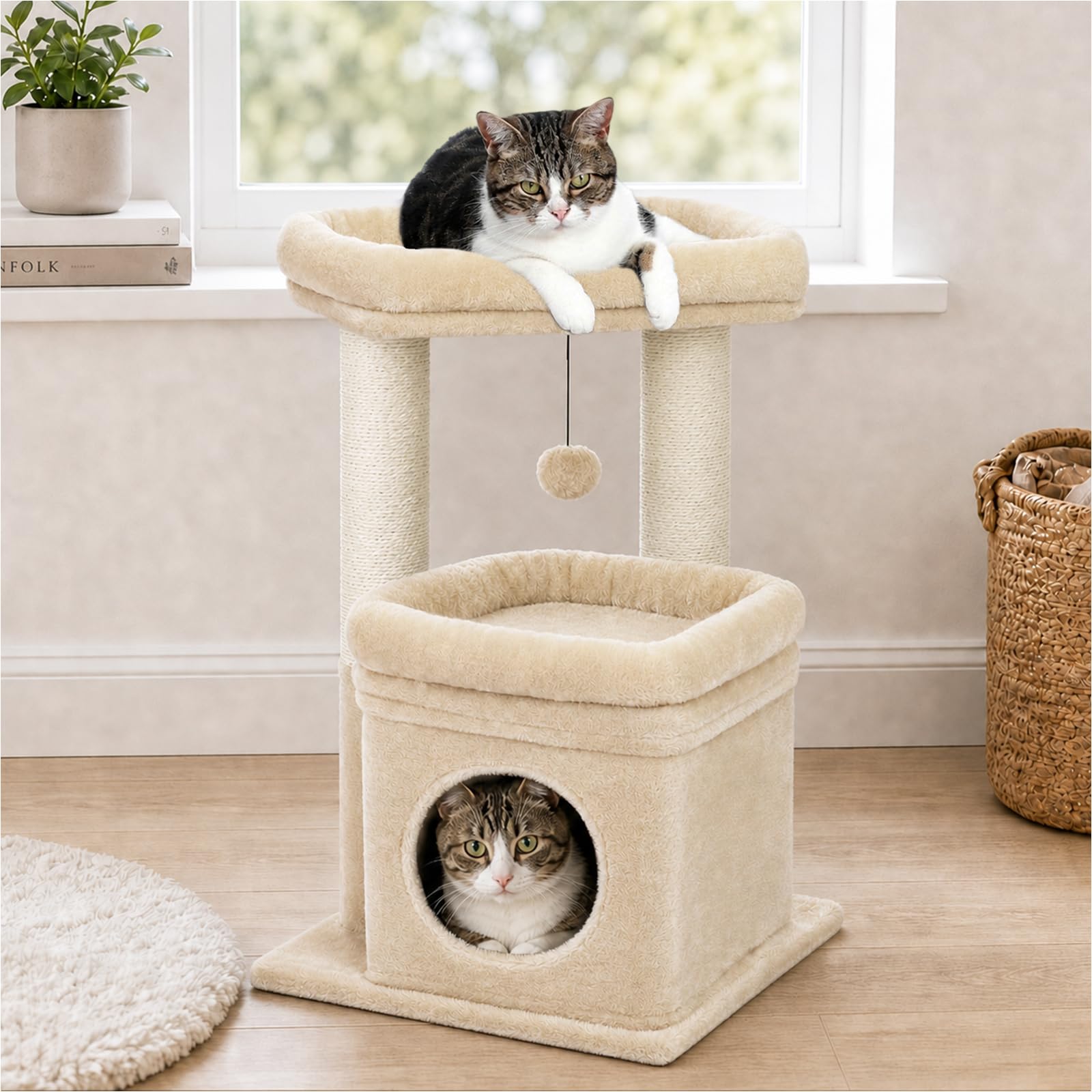
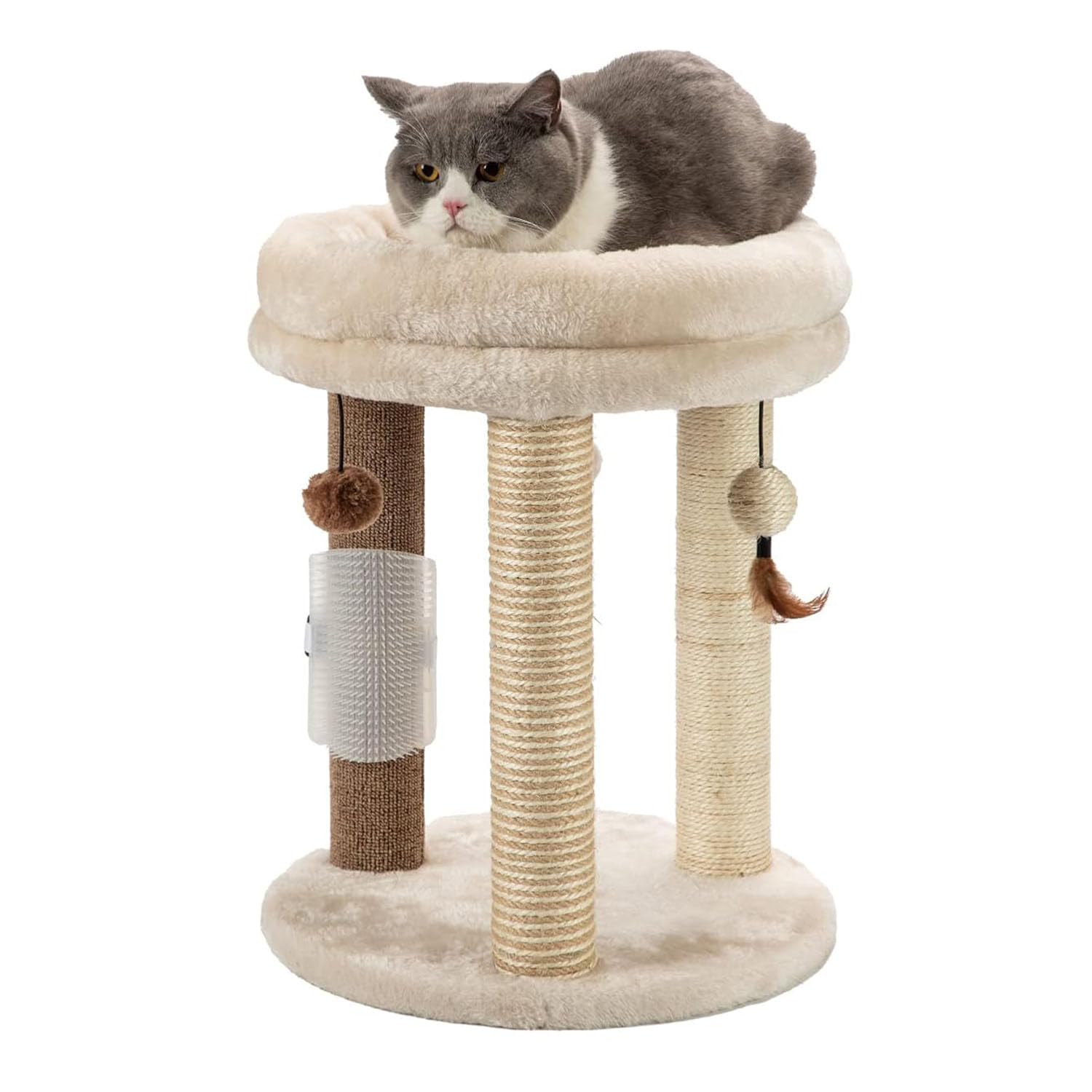


Types Compared for Small Rooms and Apartments
There is no single shape that suits every small home. A studio, a spare bedroom corner, and a narrow hallway each reward a different form. The types below cover the same basic needs, climbing, scratching, perching, and hiding, but they claim floor space in very different ways.
- Compact tower. A short tower on a square base, usually with two levels, one condo, and one top perch. It fits beside a sofa or desk and is the simplest choice for a single cat in a studio.
- Corner unit. A tower shaped to sit flush into a room corner, with sides that follow the walls. It uses space that often goes unused and keeps the center of the room clear.
- Wall mounted system. Shelves, steps, and a perch fixed to wall studs, with no floor base at all. It suits renters less well, since it needs screws, but it frees the floor completely.
- Tall narrow tower. A slim base with three or more levels stacked upward. It gives shy or active cats real height for very little floor area, as long as the base is heavy enough to stay steady.
- Window perch combo. A low frame that places a perch at sill height beside a window. It is a good pick when your cat spends hours watching outside and the window wall is your only free spot.
Start by deciding which type matches your room, then compare details within that type. Choosing the form first prevents the common error of buying a wide, low unit for a room that only had vertical space to spare.
How We Chose the Types and Criteria in This Guide
We ranked the factors in this guide by size and fit first, then durability, safety and materials, ease of cleaning, and value. Size came first because a sturdy tree that blocks your only path to the kitchen is still the wrong tree for your home. We drew on maker specifications for dimensions and weight limits, and on patterns in verified buyer feedback about wobble, fabric wear, and assembly.
We did not name individual products or rank brands. Instead, the criteria below let you judge any listing on its own measurements and materials, which matters more in a small room than a brand label. A fuller walk through of the general selection process sits in our guide on how to choose a cat tree.
How to Choose the Right Cat Tree for Small Spaces
Size and Form Factor
Measure the exact spot before you shop, not the room in general. Write down the width, the depth, and the distance to the nearest door swing, drawer, or heating vent. Then check the listed base size, not just the height, since a wide base with a narrow top still claims the full base area. Leave about two inches of clearance on each side so you can vacuum around it. In most small rooms, a base under about 24 inches square keeps walkways open while still holding a stable tower.
Type
Match the type to how your cat already uses the room. A cat that naps on top of a bookcase will use a tall narrow tower or wall shelves, while a cat that hides under the bed will prefer a compact tower with an enclosed condo at floor level. Corner units work well in living rooms where the corner is dead space. Wall mounted pieces suit owners who can drill into studs and want the floor clear for a robot vacuum or for foot traffic in a hallway.
Features Worth Paying For
In a small footprint, every feature has to earn its place. A sisal wrapped post is essential, since scratching is the behavior most likely to damage your furniture if the tree lacks a good outlet. A top perch with a raised edge gives your cat a secure sleeping spot and a clear view. A condo adds value for shy cats but adds bulk, so skip it if your cat never uses enclosed spaces. Hammocks look inviting, yet they stretch over time and suit smaller, lighter cats best. One strong post and one good perch beat four weak extras.
Sizing for Your Pet
Check the weight limit and the perch size against your actual cat, not against the average cat in the listing photos. A perch should let your cat curl up without hanging over the edge, and platforms should be wide enough for a safe landing when jumping down. If your cat is large or still growing, read our guide to the best cat tree for large cats for the frame strength and platform sizes bigger cats need, then look for those traits in a narrow design.
Materials and Chew Resistance
Most small trees use a frame of engineered wood covered in carpet, plush fabric, or sisal. Solid wood frames cost more but resist wobble and last longer in daily use. Sisal rope or sisal fabric on posts stands up to clawing far better than carpet, which can loop and catch claws. If your cat chews, favor tightly woven coverings with no loose fringe or dangling cords, and check that any cushion filling stays fully enclosed. Smooth wooden surfaces also wipe clean more easily than deep pile carpet in a tight, warm room.
Cleaning and Odor Control
A tree in a small room sits close to where you sit and sleep, so odor and shed fur build up fast. Removable cushions that you can wash are a real advantage, and short pile coverings release fur with a lint roller more readily than shaggy fabric. Vacuum the platforms weekly and spot clean accidents at once, since padding absorbs smells quickly. Our step by step guide on how to clean a cat tree covers deep cleaning methods that remove odor without damaging sisal or fabric.
Safety
Stability matters more, not less, in a small space, because a falling tree has less room to fall and more furniture to hit. Look for a heavy, wide base relative to the height, wall anchor straps on tall models, and posts that bolt through platforms rather than gluing on. Test the assembled tree with firm hand pressure from several angles before your cat uses it. Keep the tree away from cords, blinds, and heaters, and check monthly for loose bolts, frayed rope, or cracked particle board that could pinch or splinter.
How Much Should You Spend?
Simple compact towers often cost about $40 to $80 and cover one cat well if the post is full height and the base is solid. Mid range corner and tall narrow models at about $80 to $150 usually add thicker posts, washable cushions, and better coverings. Solid wood and wall mounted systems can run about $150 to $300, which can be worth it if the tree will anchor a room for years. Spending more only helps when it buys stability and materials, not extra toys or dangling balls your cat will ignore.
What Matters Most in a Cat Tree for Small Spaces
The modifier in this search changes the whole decision. In a large home, you can trade floor space for extra platforms and still have room to spare. In a small home, footprint is the budget you spend first, and height is how you get value back. A tree that rises to near ceiling height on a slim base can give two cats separate levels, a scratching post, and a high perch in the area of a single side table.
Households with more than one cat feel the squeeze most, since cats need vertical separation to share a room calmly. If that is your situation, our guide to the best cat tree for multiple cats explains level spacing and duplicate perches, and you can apply those points to the narrowest multi level designs. Likewise, height focused shoppers can compare the slimmest options in our guide to the best tall cat tree, keeping base width as the deciding filter.
The alternative to a tree is a mix of single pieces, one scratching post, one window perch, and one covered bed. That mix can fit odd rooms, but it spreads across more floor spots and rarely gives the climbing path cats prefer. A single vertical unit usually wins in a truly tight room because it stacks every function in one place.
FAQ
What is the best cat tree for small spaces?
For most small rooms, a tall narrow tower with a heavy base, one full height sisal post, and a top perch with a raised edge is the strongest all round choice. It stacks climbing, scratching, and sleeping in one footprint. If your only free area is a corner, the same features in a corner unit will serve you better than a square base pushed against a wall.
How far should a cat tree sit from walls and furniture?
Leave about two inches behind and beside the tree so air can circulate and you can clean up shed fur. Keep more room, ideally a foot or more, on the side your cat uses to jump down, since cats land with forward momentum. In a very tight corner, place the open platforms facing into the room so your cat never has to leap toward a wall or a hard furniture edge.
How long does a cat tree in a small apartment last?
The frame of a well made tree often lasts several years, while the scratching surface wears first. Sisal rope that has shredded down to the post core no longer satisfies scratching and should be rewound or the post replaced. In a small home the tree gets concentrated use from fewer spots, so inspect posts and perch edges every few months and repair wear early rather than replacing the whole unit.
Is a cat tree worth it if your apartment is very small?
Yes, if you choose a vertical design, because the tree returns floor value by moving scratching, climbing, and napping off your sofa, shelves, and bed. Cats in small homes have fewer places to claim as their own, so one defined spot can reduce friction and unwanted scratching. Measure honestly first. A tree that fits your corner is worth it, while one that blocks daily movement will annoy you no matter how much your cat enjoys it.
Can a small cat tree work for two cats?
It can, as long as the design gives each cat a separate level and the weight limit covers both cats using it at once. Two perches at different heights prevent one cat from trapping the other on a single platform with one route down. Add a second scratching surface if you can, since shared posts wear faster and some cats guard a favorite post. Watch the first weeks for crowding or avoidance, which signal the need for one extra perch nearby.
Final Thoughts
Start with your measurements, pick the form that fits your room, and then judge posts, perches, and materials within that form. That order keeps a small room livable while still giving your cat height, a proper scratching outlet, and a resting place of its own. Use the product table above to compare footprints and heights side by side before you order.
When you match the footprint to your space and the levels to your cat, the best cat tree for small spaces stops feeling like a compromise and starts feeling like the piece of furniture your room was missing. Measure once, choose for stability, and your cat gains a tall territory without costing you the room.