Best Cat Tree for Senior Cats in 2026: Low Steps and Stable Perches
Disclosure: We may earn a commission when you buy through links on this page, at no extra cost to you. As an Amazon Associate I earn from qualifying purchases. Learn more

Choose the best cat tree for senior cats with low steps, wide stable perches and easy access for stiff joints.
An older cat still wants a sunny perch, a quiet nap spot, and a place that feels like hers. What changes with age is the route up. Stiff joints, weaker back legs, and poorer balance can turn a tall jump into a fall, and many senior cats stop climbing and lose a favorite part of their day. The best cat tree for senior cats solves that problem first, with low steps, wide landings, and steady footing.
This guide compares types rather than naming picks, ranked by fit, stability, comfort, and ease of cleaning. Use the comparison table below to match each design to your cat's mobility, then read on for sizing and safety details. If your cat is still young and agile, our general guide to the best cat tree covers taller designs.


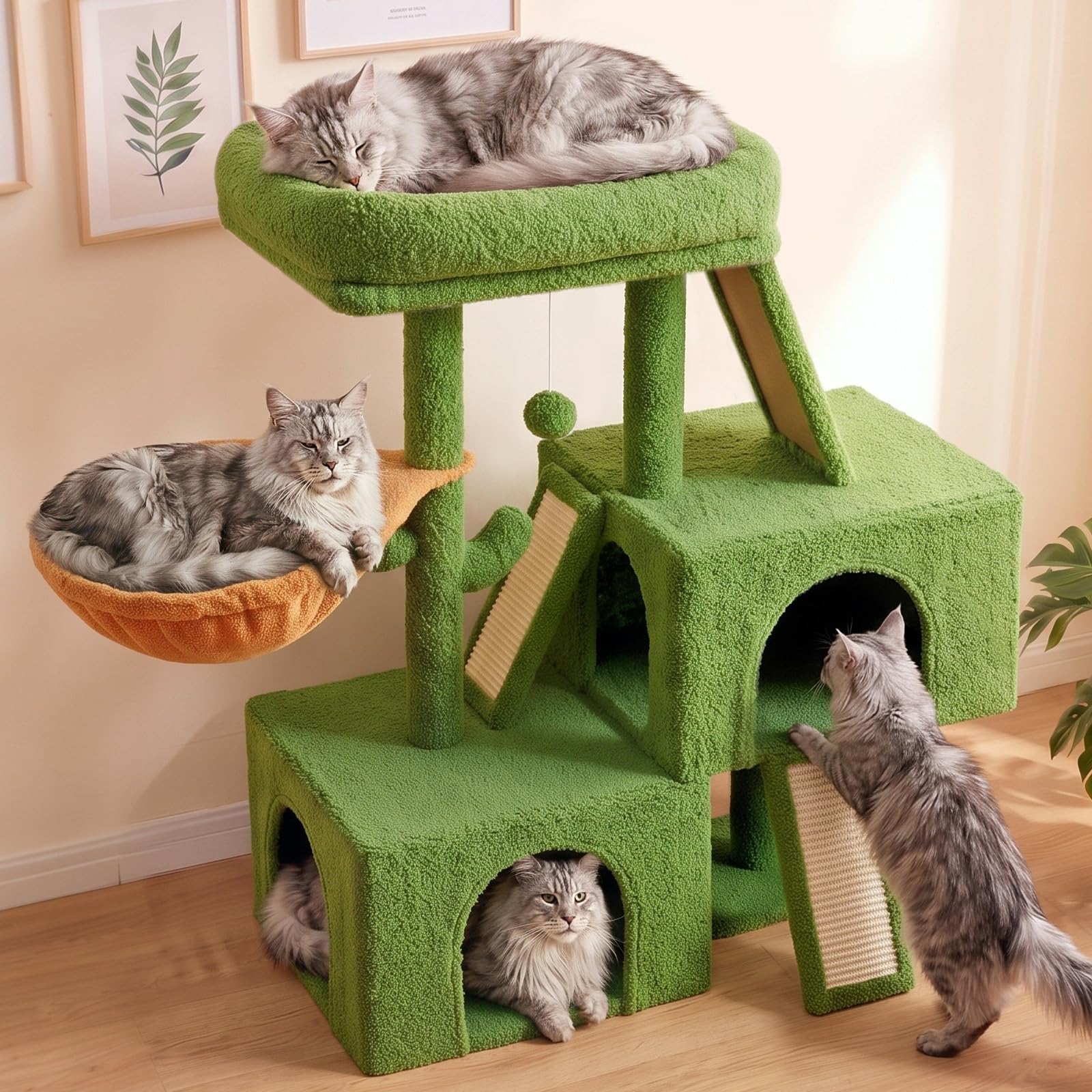


Types of Cat Trees That Work for Older Cats
Three layouts cover most senior cats. The right one depends on how far your cat can still step up and whether she prefers to hide, stretch out, or watch the room.
Low Step Trees With a Ramp or Stairs
This layout replaces jumps with a series of short rises, sometimes with a carpeted ramp on one side. It suits cats with arthritis, cats recovering strength after illness, and cats who hesitate before climbing. Look for steps deep enough for all four paws to land at once, and a slope gentle enough that your cat walks up instead of scrambling. Raised ramp edges help a cat with poor eyesight feel the boundary under her feet.
Short Towers With a Ground Level Condo
A short tower puts a cozy enclosed condo at floor level and one or two modest perches above it. This suits cats who nap for long stretches and want a warm retreat they can enter without climbing at all. Choose a condo door wide enough for a stiff cat to turn around inside, and check that the cushion removes for washing. Cats who no longer climb still use the ground level daily, so this part matters more than the top perch.
Wide Perch Trees With One Raised Bed
Some seniors still climb well but land heavily and wobble on narrow platforms. A wide perch tree gives them one broad, well padded bed at a modest height, reached by a single low step. The generous surface lets a large cat stretch out fully instead of curling around an edge. If your cat is big as well as older, compare dimensions with our guide to the best cat tree for large cats.
What Matters Most for a Senior Cat
Age changes five things that should shape your choice. Joints stiffen, so step depth matters more than total height. Muscle loss makes landings less accurate, so platforms need extra width and a surface with grip. Balance fades, so the structure must stay still when a cat leans on an edge. Older cats feel the cold, so padding and an enclosed option hold real value. Vision often dulls too, so a simple layout with no surprise drop offs beats a maze of levels.
That is why the best cat tree for senior cats often looks plainer than a tall showpiece. In a home with several cats, a senior also needs a low spot younger cats cannot claim first, and our guide to the best cat tree for multiple cats explains how to spread perches across ages. Watch for warning signs. A cat who cries out when jumping, limps after rest, falls from furniture, or suddenly hides and skips meals needs a veterinarian promptly, and no furniture change replaces that visit. Talk with your veterinarian about your cat's mobility and weight before you settle on a height.
How to Choose the Right Cat Tree for Senior Cats
The factors below work as a checklist. Measure your cat and your room first, then work through each point. Our overview of how to choose a cat tree covers the basics for any age, while the notes here focus on what aging changes.
Size and Form Factor
Start with the footprint and the top height together. A compact tree about 24 to 36 inches tall usually gives a senior a raised view without a risky climb, and it fits beside a sofa so the cat can step across from the seat. Floor to ceiling models serve athletic cats better, and our guide to the best tall cat tree fits those homes instead.
Step Height and Platform Spacing
The gap between levels decides whether your cat uses the tree at all. Look for rises of about 6 to 9 inches, close to the height of a single household stair, and test your cat on a stair before ordering. Platforms should sit close enough that she steps across rather than leaping and twisting in the air. If the first level sits higher than your cat's shoulder, add a sturdy pet step beside it or choose a different model.
Padding, Warmth, and Resting Spots
Thin carpet over hard board presses on sore joints during long naps. Look for a cushion thick enough that you cannot feel the board when you press down with your palm. Raised rims block a rolling cat from sliding off and trap warmth around her body. Place the main bed where it catches gentle sun or sits near a heat source.
Scratching Posts and Gentle Stretching
Scratching keeps claws in shape and lets a cat stretch her shoulders, but a senior should not need to rear up high to do it. Posts wrapped in sisal rope give good grip, and a low angled scratcher near the base invites use without a full stretch. Check that the wrap does not spin when you pull it, since a moving surface discourages a cat with weak legs. Keep one scratching surface close to the sleeping spot, because many cats scratch right after waking.
Materials, Stability, and Safety
Favor solid wood or thick plywood frames over thin board when your budget allows, since they flex less under a heavy landing. The base should be wide and heavy enough that the tree does not rock when you push a top corner. Rounded corners protect a cat who misjudges a turn, and fabric edges should sit tight with no loose loops that catch claws. Skip designs with dangling cords or small detachable toys that a cat with poor vision could tangle in or swallow.
Cleaning and Odor Control
Senior cats shed fine hair, track litter, and sometimes vomit on favorite surfaces, so washable parts save real effort. Removable cushions, wipeable covers, and carpet you can vacuum without shedding fibers all rank high. For step by step methods, see our guide to how to clean a cat tree.
How Much Should You Spend?
Simple low step trees start at about $30 to $50, and that buys a basic frame with one condo or perch and modest padding. Spending about $50 to $100 usually adds thicker cushions, a wider base, and better sisal wrap, the upgrades a senior feels most. Models at about $100 to $200 tend to use heavier wood and offer replacement cushions, while prices above that mostly pay for furniture grade looks. Put money toward stability and padding before height or extra toys.
Common Mistakes to Avoid
- Buying a tall tree your cat admired years ago, because unused top levels waste money and a risky climb can end in a fall.
- Choosing narrow perches to save floor space, because a cat who cannot turn around safely on top will avoid the tree.
- Placing the tree in a drafty corner or a noisy hallway, because a senior who feels cold or startled at rest will nap elsewhere.
- Skipping the base check in the store, because a tree that rocks under a light push will rock far more under a landing cat.
- Adding strong scented sprays to attract your cat, because sharp fragrances often repel older cats.
- Moving the tree to a new room often, because a cat with poor vision relies on a learned route and may stop using it.
Care and Maintenance for a Senior Cat Tree
Vacuum the platforms and condo twice a week, since fine hair builds up fast and a slippery layer of hair on a step reduces grip. Wash removable cushions on a gentle cycle and let them dry fully before they go back, because a damp cushion smells musty and chills a sleeping cat. Check every bolt once a month, tighten anything loose, and press each platform to confirm it still feels solid.
Inspect the sisal wrap for gaps where claws catch, and replace a worn post section before the bare core shows. If your cat starts sleeping on the floor beside the tree, treat that as information. The cushion may have flattened, the spot may have grown drafty, or her mobility may have changed.
FAQ
What is the best cat tree for senior cats?
The best choice is the design your cat can climb without jumping, with short steps, wide padded platforms, and a base that does not move. Before ordering, watch your cat climb one household stair and note whether she places each paw with confidence. That observation tells you more than any award label. Place the tree near her current favorite resting place, since a familiar location helps a cautious cat try new furniture.
What should I look for in a cat tree for senior cats?
Beyond step height and stability, check the condo doorway and the edge finish. A doorway cut low to the floor lets a stiff cat walk in without lifting her front legs high, and smooth edges will not scrape thin older skin when she brushes past. Also confirm the assembly is simple, because large heavy panels are hard to handle alone. If your cat takes daily medication, a quiet enclosed level doubles as a calm spot for that routine.
How long does a cat tree last?
A well built tree often serves for several years, and the parts that wear first are the cushion fill and the sisal wrap rather than the frame. Choosing a model that sells replacement cushions and posts turns a worn tree into a repair job instead of a full replacement. Retire the tree if the frame cracks, a platform joint stays loose after tightening, or the base warps, since those faults affect safety directly.
Is a cat tree worth it for an older cat?
Yes, for most indoor seniors, because a tree gives them territory, a raised view, and gentle daily movement that suits stiff joints better than total rest. Cats who lose access to high spots often become withdrawn, and a reachable perch restores a routine they value. It also concentrates scratching on one washable piece of furniture. The exception is a cat in advanced illness whose veterinarian has advised limiting climbing, and then a ground level condo alone is the wiser buy.
How do you clean a cat tree after an accident?
Blot vomit or urine right away, then treat the spot with an enzyme cleaner made for pet messes and let it sit for the time stated on the label, since enzymes need contact time to break down odor at the source. Avoid steam on glued carpet, because heat can loosen the adhesive. Once the area dries, sprinkle plain baking soda, leave it for an hour, and vacuum it up. If odor remains in a cushion, wash it again rather than masking the smell.
What is the most reliable cat tree brand?
No single brand guarantees reliability, and construction tells you more than a name does. Look for a maker that publishes weight limits, sells spare parts, and offers a clear warranty, since those habits signal confidence in the frame. Read recent buyer comments for reports of wobble on the exact size you want, not on the brand in general. A smaller maker with a solid plywood frame can outlast a famous name built from thin board.
Final Thoughts
Match the tree to the cat you have now, not the kitten who once scaled the curtains. Short steps, wide padded landings, a steady base, and a warm ground level retreat turn furniture into a daily comfort. Compare your shortlist in the product table above, measure your cat's comfortable step height once more, and choose the best cat tree for senior cats that she can climb with confidence. Prices and availability can change, so check the product page before ordering.