
Best Cast Iron Skillet Cleaner: Scrubbers, Brushes and Seasoning Care (2026)
Disclosure: We may earn a commission when you buy through links on this page, at no extra cost to you. As an Amazon Associate I earn from qualifying purchases. Learn more

The best cast iron skillet cleaner guide: chainmail scrubbers, brushes and scrapers, and how to protect seasoning.
Shopping for the best cast iron skillet cleaner is easier once you know the job: lift stuck food and grease without stripping the seasoning that keeps iron slick and rust free. Most cooks do not need a chemical product at all. They need a tool that scrubs well, rinses clean, and is gentle enough to use after every meal.
This guide explains the main cleaner types, the features that change how well they work, and the habits that protect the pan. The product table shows current options, so read the basics first and then use the table with fresh eyes.


Cast Iron Skillet Cleaners 101: The Basics
A cast iron skillet cleaner is any tool or product made to remove food residue from cast iron while leaving the seasoned surface largely intact. Seasoning is the thin layer of oil bonded to the metal through heat, and it helps food release and guards against rust. A good cleaner removes the mess and leaves that layer alone.
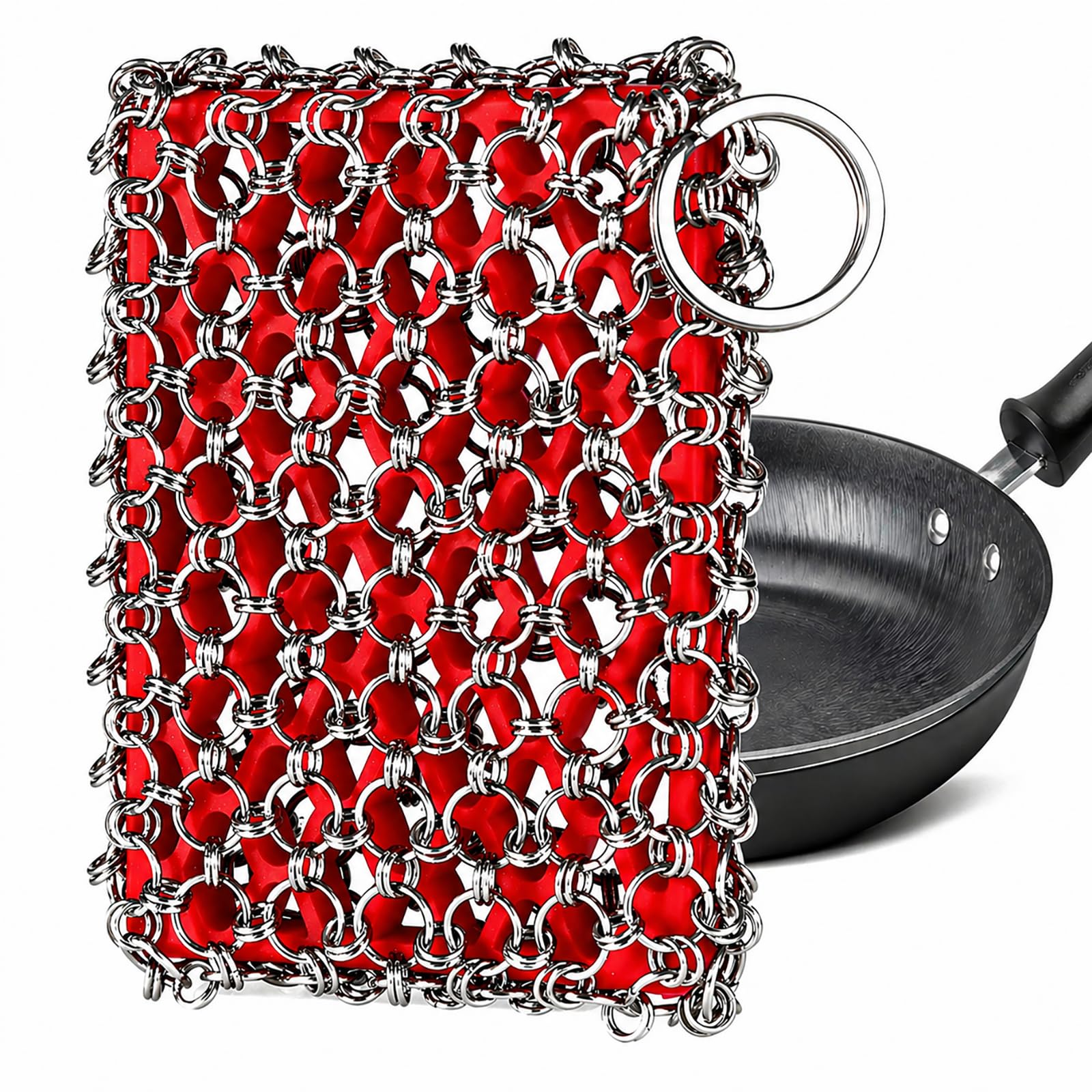
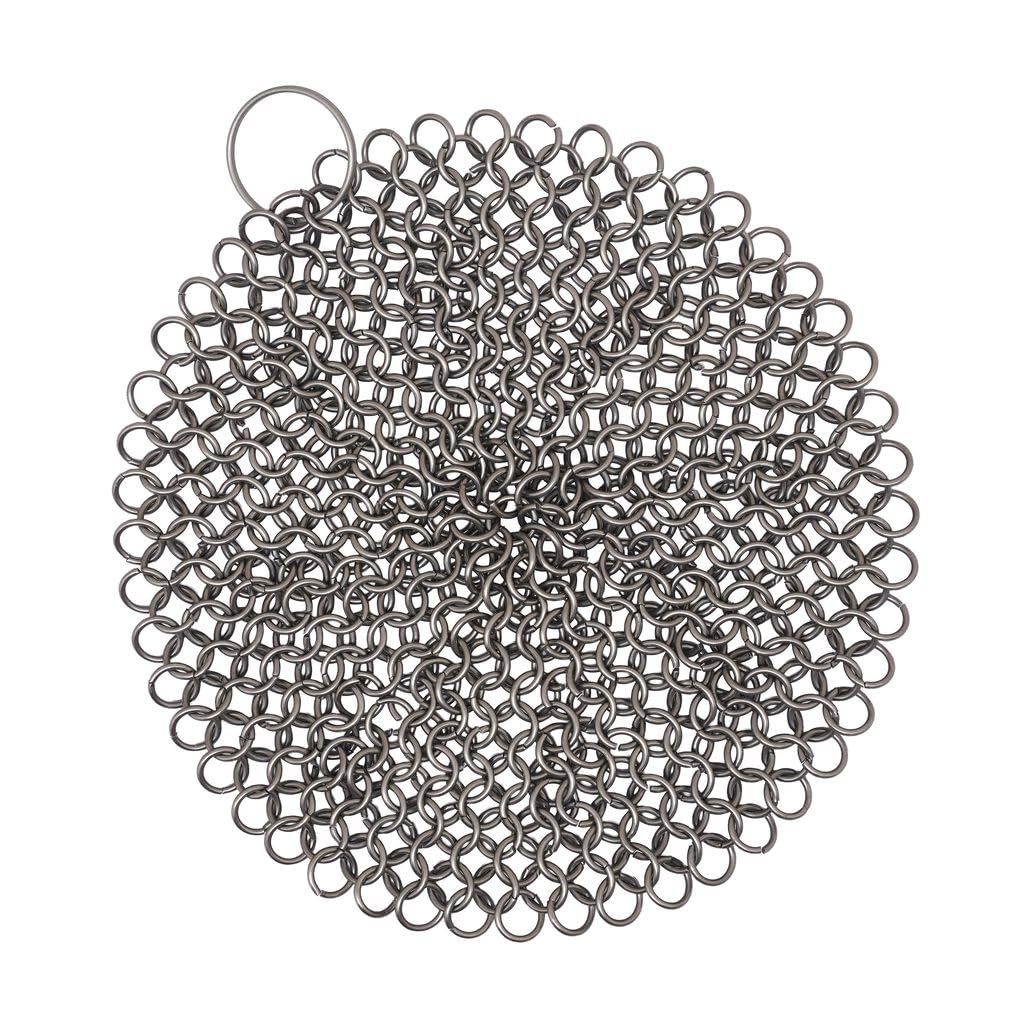
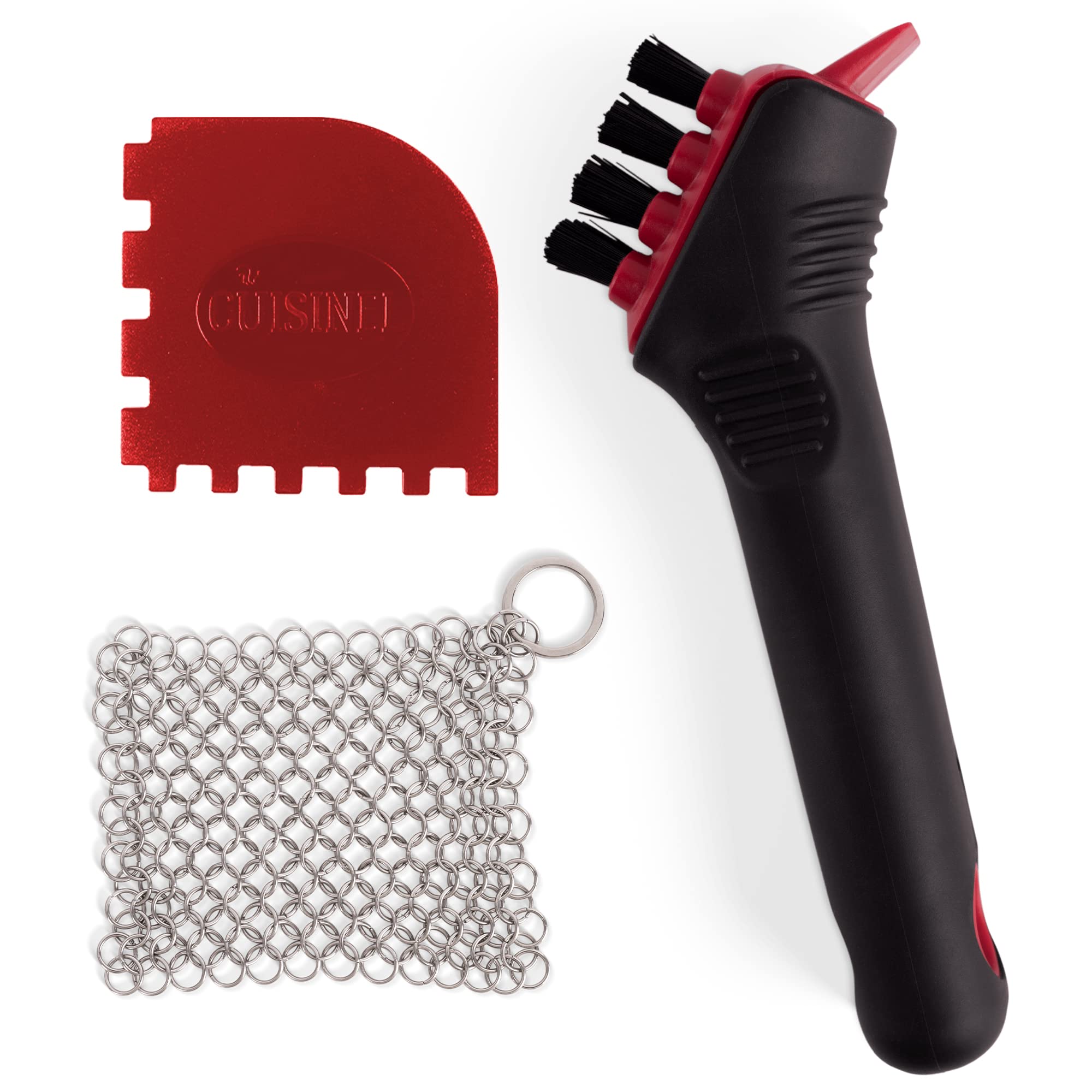
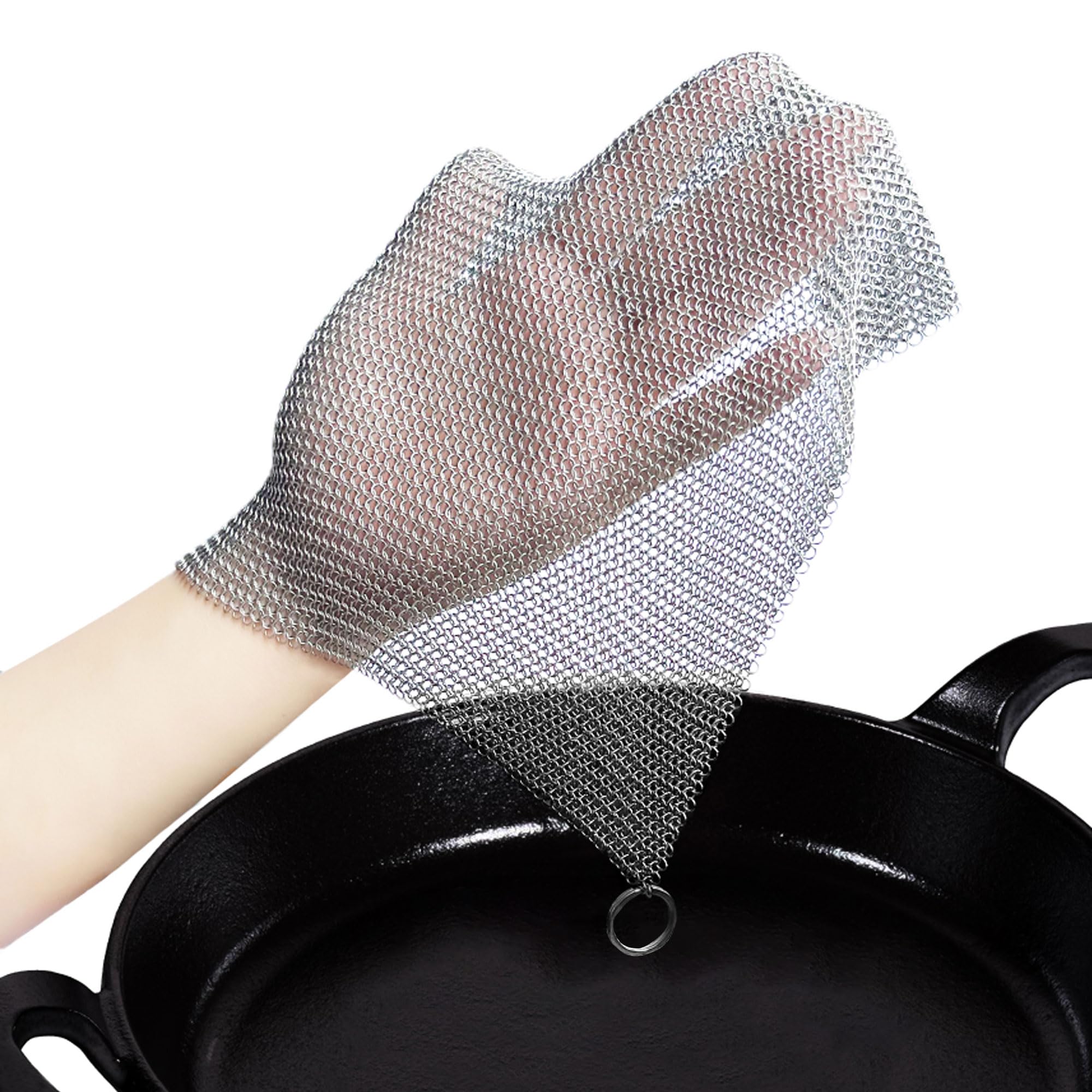
Several types do the work. A chainmail scrubber is a small mesh of stainless steel rings that scrapes stuck food without gouging seasoning. A stiff brush and a flat scraper handle everyday residue. Coarse salt works as a gentle abrasive when you want no tool at all. Some kits bundle a scrubber with a seasoning stick or oil, which helps when you want cleaning and upkeep in one purchase.
Key Features to Compare
Each point below answers a simple question about daily use. Skip any feature that does not change how you wash your skillet.
Material and Ring Quality
Chainmail scrubbers are usually made from stainless steel rings, and listings often name a grade such as 316. Tightly welded rings hold their shape and do not shed pieces into the pan, while loose or thin rings can bend and snag. Look for a listing that states the material clearly and describes how the rings are joined.
Size and Shape
A palm sized scrubber, roughly four to six inches across, covers most skillets and reaches the corners. Larger sheets cover a wide pan faster but are harder to rinse and store. If you cook in a deep pan or a grill pan with ridges, a scrubber with a slightly stiff mesh or a small brush reaches the grooves better than a flat sheet.
Gentleness on Seasoning
The goal is to remove stuck food, not the seasoning underneath. Chainmail works by scraping food off the surface, so it is far kinder than steel wool or a rough pad. Use light pressure and let warm water do part of the work. If the surface looks dull after cleaning, a thin coat of oil restores it.
Handles, Scrapers and Brushes
A silicone handle or loop keeps your fingers away from a warm pan and makes the scrubber easy to hang. A flat scraper helps with burnt on edges, and a stiff brush suits daily rinsing. A short handled brush with natural or nylon bristles is enough for most light messes.
Rust and Seasoning Care
Cleaning and seasoning go together. After washing, dry the pan on a warm burner and wipe on a thin film of cooking oil. Some kits include a seasoning stick or a bar of oil and wax, which makes that last step quick. If rust appears, scrub it off with chainmail and coarse salt, dry the pan fully, then season again.
Cost per Use and Durability
A good scrubber lasts for years, so its cost per wash is tiny even when the price is higher than a basic brush. Check whether the scrubber can be rinsed and dried easily, because a wet scrubber left in the sink can rust. Kits cost more but save a separate purchase if you do not already own seasoning oil.
Which Type Fits Your Mess
For light grease after eggs or vegetables, warm water and a brush are usually enough. For burnt on sauce or seared meat, a chainmail scrubber or a flat scraper works faster and saves you from long soaking. For old rust or sticky residue, combine coarse salt and a scrubber, then reseason the pan. Pick the best cast iron skillet cleaner for the mess you face most often and keep one backup tool for harder jobs.
Rookie Mistakes to Avoid
- Soaking cast iron for hours, which invites rust and weakens seasoning.
- Using steel wool or a rough pad on every wash, which strips the surface faster than needed.
- Skipping drying, which leaves water spots and rust risk on bare iron.
- Leaving a wet scrubber in the sink, so the tool itself rusts.
- Storing a damp skillet in a closed cupboard, which traps moisture against the iron.
Most of these mistakes come from good intentions, such as wanting a spotless pan. A quick, gentle wash right after cooking works better than a delayed, aggressive scrub, and it keeps the seasoning in better shape over time.
Getting Started: First Use of a New Cleaner
Rinse a new scrubber or brush under warm water before first use. Wash the skillet while it is still warm, loosen stuck food with light pressure, and rinse well. Dry the pan at once with a towel, then warm it briefly on low heat to drive off remaining moisture.
After drying, add a very thin layer of oil if the surface looks dry or dull, and wipe away any excess. Store the skillet in a dry place with air flow around it. If you cook on a glass cooktop, our guide to the best cast iron skillet for glass cooktops has surface care notes that pair with your cleaning routine.
FAQs
Will a chainmail scrubber damage seasoning?
Used with light pressure, a chainmail scrubber removes stuck food without stripping well built seasoning, because it scrapes rather than sands. Heavy pressure on a young or thin seasoning layer can wear it, so go gently on a newer pan and oil it afterward if the surface looks dull.
Can I use dish soap on a cast iron skillet?
A small amount of mild dish soap is fine for most modern seasoned skillets, despite older advice against all soap. Use it sparingly, rinse well, and dry at once so the surface does not stay wet. Avoid long soaking in soapy water, since standing water is what causes rust.
How often should I clean a cast iron skillet?
Clean the skillet after each use with a quick wash, then dry it at once. A full scrub is only needed when food sticks or residue builds up. If you cook daily, a light wash each time plus a deeper clean when needed keeps the surface in good shape without extra work.
How do I remove rust from a cast iron skillet?
Scrub the rusty area with a chainmail scrubber and coarse salt, rinse, and dry the pan completely. Then rub on a thin coat of oil and heat the pan so the oil bonds. Repeat the oil step once or twice if the surface still looks patchy.
Can a scrubber go in the dishwasher?
Many stainless steel scrubbers are sold as dishwasher safe, but the skillet itself should never go in a dishwasher. Check the maker instructions for the scrubber, and dry it after washing so it stays free of rust.
The Bottom Line
Choose a cleaner that matches your usual mess and your habits. A chainmail scrubber and a dry towel handle most daily needs, a scraper helps with burnt on food, and a small kit adds seasoning upkeep. Gentle, prompt cleaning protects seasoning better than occasional harsh scrubbing.
A well chosen best cast iron skillet cleaner makes cast iron care feel simple instead of stressful. Use the product table above to compare current options, then keep the routine short enough that you actually follow it after cooking.


