
Best Cast Iron Sets: Piece Mix, Finish and Weight (2026)
Disclosure: We may earn a commission when you buy through links on this page, at no extra cost to you. As an Amazon Associate I earn from qualifying purchases. Learn more

The best cast iron sets guide: bare versus enameled, piece mix, weight and care.
Cast iron has a reputation for lasting decades, and that reputation is earned one meal at a time. When you compare best cast iron sets, you are choosing cookware that sears, bakes, fries, and goes from stovetop to oven without fuss. The product table below lists current sets, so you can match one to the way you actually cook.
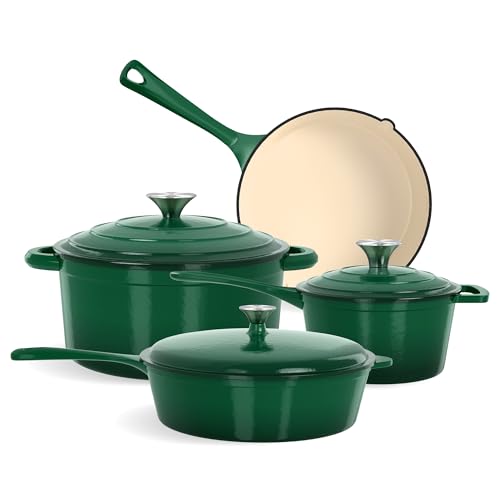
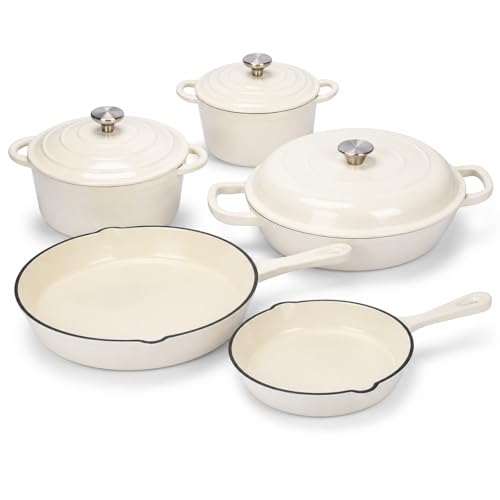
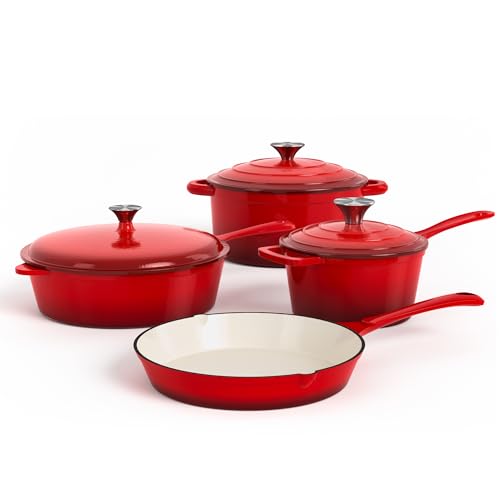
A typical set pairs a skillet with a Dutch oven, and larger sets may add a griddle, a grill pan, or a smaller skillet for sides and eggs. Each piece is heavy, which is part of the appeal, since that weight holds heat steady and browns food evenly. Before you buy, think about your stove, your oven, your strength, and how much storage you have.



Purpose and Who It Is For
Cast iron suits cooks who love searing steaks, frying chicken, baking cornbread, and slow cooking stews in a single pot. The material holds heat far longer than thin pans, so it recovers quickly when cold food hits the surface and gives an even, deep brown crust. It also moves from stovetop to oven, which makes it handy for dishes that start with a sear and finish with a bake.
It is less ideal for cooks who need very light pans, who cook a lot of acidic sauces, or who want cookware that can go in the dishwasher without thought. A full set is heavy to lift, especially a large Dutch oven filled with stew, so test your comfort with the weight before committing. If you cook for one or two people, a single skillet may serve you better than a full set.
Preseasoned Versus Enameled
Most bare cast iron arrives preseasoned, which means the maker has baked a thin layer of oil onto the surface to protect it and give it a head start on nonstick performance. That seasoning improves with use as you cook fatty foods and keep the surface lightly oiled. It also needs a little care, since long soaking and harsh detergents can strip it.
Enameled cast iron has a glass like coating that needs no seasoning and handles acidic foods such as tomato sauce with ease. It costs more, weighs about the same, and can chip if dropped or struck with metal tools, so wooden or silicone utensils are safer. Choose bare iron for searing and long term value, and enameled iron for low maintenance cooking and colorful kitchen display.
Sizes and Pieces Worth Having in a Cast Iron Set
Size is where many buyers go wrong, so match pieces to your household and your burners. A 10 to 12 inch skillet suits most families and fits a standard burner, while a 5 to 7 quart Dutch oven handles soups and braises for four to six people. Smaller skillets around 8 inches are handy for eggs and single servings, and a griddle suits pancakes and grilled sandwiches.
Check that each piece fits your oven and your sink for cleaning, since a Dutch oven with its lid can be tall. Also check handle shape, since a long handle gives control on the stovetop while a helper handle on the far side makes lifting a heavy pot safer. A set with one skillet and one Dutch oven covers most cooking, and extra pieces should earn their place by matching meals you cook often.
Weight, Handles, and Stovetop Fit
Weight is the honest trade off of cast iron, and it deserves attention before you buy. A 12 inch skillet can weigh around 8 pounds empty, and a filled Dutch oven weighs much more, so lifting it with one hand is hard for many cooks. Look for helper handles and a lid that is easy to grip with oven mitts, and consider your wrist and arm strength realistically.
Flat bottoms suit glass and induction cooktops, while rough or uneven bases can scratch glass surfaces, so check the base finish if you cook on glass. On gas and electric coil stoves, any flat bottom works well. Also confirm the size of your largest burner, since a skillet much wider than the burner heats unevenly and wastes energy at the edges.
Care, Seasoning, and Storage
Daily care for bare cast iron is simpler than its reputation suggests. After cooking, wash with hot water and a small amount of mild soap, dry the piece fully on low heat, and rub in a very thin layer of cooking oil while it is warm. Avoid long soaking, and never put a hot pan under cold water, since sudden temperature change can stress the iron.
For a fresh seasoning layer, coat the dry pan thinly with a high smoke point oil, wipe off almost all of it, and heat it upside down in the oven until it bonds, then let it cool. Repeat that step a few times for a smoother surface. Store pieces with a paper towel between them to absorb moisture and protect the seasoning, and keep lids slightly ajar so trapped dampness cannot cause rust.
Related Guides Worth Reading Next
If skillets are your priority, best cast iron skillet sets compares skillet only collections by size, weight, and handle design so you can pick the pan you will reach for daily.
Shoppers comparing iron cookware more broadly can look at best iron sets, which covers different iron pieces and how they suit stovetop, oven, and campfire cooking.
For low maintenance cooking and acidic dishes, best enameled cast iron cookware sets explains enameled options, their coatings, and how to avoid chipping the finish.
A Final Check Before You Order
Before you order, weigh the heaviest piece in the set against what you can lift safely when it is full of food. Measure your oven, your sink, and your storage shelf, and confirm the set fits all three. Check whether the set is preseasoned or enameled, and read the maker care guide so the first cleaning never damages the finish.
Prices for a basic skillet and Dutch oven set often run about $80 to $200, while enameled sets cost more. A midrange set from a known maker usually offers the best balance of finish quality and value. Buy the pieces you will use weekly, and add specialty pieces later once you know your cooking habits. That is how you end up with the best cast iron sets for your kitchen.
Frequently Asked Questions
Is preseasoned cast iron ready to use right away?
Yes, preseasoned cast iron can be used as soon as it arrives, since the maker has already baked a protective oil layer onto the surface. The finish improves with cooking, especially with fatty foods such as bacon, seared chicken, and cornbread. Wash it gently, dry it fully, and keep it lightly oiled after use. Avoid long soaking and harsh scouring during the first weeks while the seasoning builds up.
Can I cook tomato sauce in cast iron?
A well seasoned pan handles a short simmer of tomato sauce without trouble, but long acidic cooking can dull the seasoning and add a metallic taste. Enameled cast iron is the better choice for long braises with tomatoes, wine, or vinegar, since its coating does not react. If you use bare iron for sauce, keep the cook time short and reseason lightly afterward. This keeps both the food flavor and the pan surface in good shape.
How heavy is a cast iron set?
A single 12 inch skillet weighs around 8 pounds empty, and a Dutch oven can weigh 12 pounds or more before food is added. A full set therefore needs sturdy storage and confident lifting, especially when moving a hot pot from oven to table. Helper handles and a good grip make a real difference. If lifting is a concern, choose fewer pieces or smaller sizes rather than a large set you struggle to use.
Does cast iron work on induction cooktops?
Yes, cast iron works well on induction because the iron itself is magnetic, which is what induction needs to generate heat. Choose pieces with a flat, smooth base so they sit evenly and do not scratch the glass surface. Lift rather than slide the pan when moving it, and match the pan size to the induction zone for even heating. Enameled and bare iron both work, provided the base is flat.
How do I remove rust from cast iron?
Light rust can be scrubbed off with coarse salt and a stiff brush or a nonmetal scrub pad, then washed, dried fully, and reseasoned. For heavier rust, a vinegar soak of a few hours loosens the scale before scrubbing, but the pan must be dried and oiled right away to stop new rust. After cleaning, apply thin oil layers and heat them to rebuild the seasoning. Store the pan dry with airflow to prevent rust from returning.
Final Thoughts
Cast iron rewards cooks who value steady heat, durability, and cookware that improves with use. Choose pieces that match your household size, your stove, and your lifting comfort, and decide honestly between bare and enameled finishes. The product table above can help you compare the common set combinations before you buy.
With simple care, a cast iron set can serve your kitchen for decades and become the pan you reach for first. Wash gently, dry fully, and keep it lightly oiled, and it will only get better. A careful choice among best cast iron sets is an investment in meals you will enjoy for a long time.


