
Best Cast Iron Braiser: Size, Enamel and Lids (2026)
Disclosure: We may earn a commission when you buy through links on this page, at no extra cost to you. As an Amazon Associate I earn from qualifying purchases. Learn more

The best cast iron braiser guide: size, enameled versus bare iron, lids and budget.
A braiser earns its shelf space on nights when dinner starts on the stove and finishes in the oven, and the wrong one makes that plan awkward. It can crowd your burners, overflow when you add greens, or feel too heavy to lift once full. Choosing the best cast iron braiser for your home comes down to storage space, the number of people at your table, and how much lifting and washing you want on a weeknight.
This guide walks through sizes, finishes, lids, and budgets in that order, and the product table below lists current options. If you are still deciding whether this pan shape suits you, start with our guide to the best braiser styles in general, then come back for the cast iron specifics.

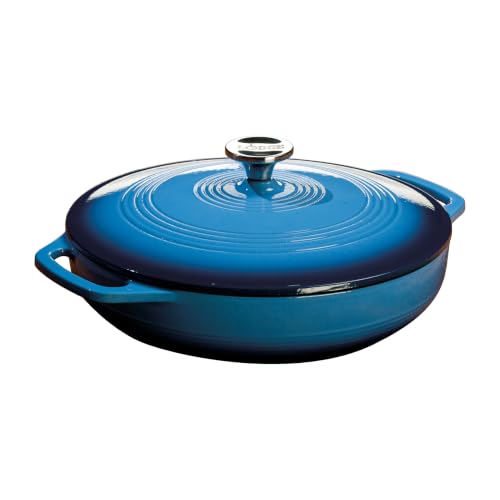


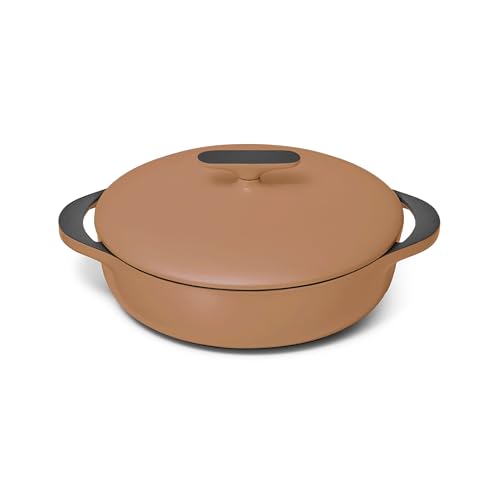


Quick Answer: The Three Cast Iron Braiser Types That Fit Most Homes
Most households land on one of three types. An enameled round braiser around 3.5 quart suits the widest range of homes, since it needs no seasoning, handles acidic sauces, and serves three to five people. A bare cast iron braiser costs less, tolerates metal tools and very strong heat, and rewards cooks who enjoy keeping a seasoned surface. A larger oval or 5 quart enameled braiser fits bigger families and batch cooking, if your oven and shelves can hold its width.
Before You Buy: A Quick Checklist for Choosing a Braiser
Size: Match It to Your Space
Capacity only helps if the pan fits your life. A 2.5 quart braiser suits one or two people and side dishes, and it stores easily in a small cabinet. The 3.5 quart and 4 quart sizes cover most family dinners, from chicken thighs to a full pan of beans, without food piled above the rim. A 5 quart model serves six or more and handles double batches, but it is wide, heavy, and hard to store. Measure your oven width, largest burner, and shelf depth before you order, and if you want a deeper sizing walkthrough, read our guide on what size braiser do i need first.
Which Type Fits Your Routine
Enameled cast iron is the low fuss option for daily use. The smooth coating resists stains, needs no seasoning, and lets you simmer tomato or wine based sauces without worry, though it can chip if you bang it with hard tools. Bare cast iron costs less and shrugs off scratches, but it asks for seasoning and prompt drying after every wash. If enamel appeals, look at the best enameled cast iron braiser options next. Stainless steel and ceramic pans hold heat less evenly than cast iron and suit lighter saute work better than slow braising.
Features Worth Paying For and Ones to Skip
A heavy lid that sits flat and traps steam is worth real money, since braising depends on keeping moisture inside the pan. Small bumps or rings under the lid help return condensation to the food, and wide loop handles give you a secure grip with oven mitts. A glass lid sounds handy, but many glass lids carry a lower oven limit than the pan itself, and you lose the tight seal braising needs. Skip novelty finishes, accessory bundles, and decorative knobs that cannot take full oven heat.
Material Safety and Coatings
Cast iron itself is simply iron, sometimes with a carbon based seasoning layer, and it carries no synthetic nonstick coating. Enameled models cover the iron with a glass based enamel, which is inert in normal cooking and does not flake into food unless the surface chips from impact. A braiser thus avoids the PFAS and PTFE questions that surround many nonstick pans. If enamel chips deeply or a bare pan shows rust that keeps returning under the seasoning, retire or restore the pan rather than cooking on a damaged surface.
Induction, Gas and Glass Top Compatibility
Cast iron works on gas, electric coil, and glass top ranges, because the metal itself conducts heat from any source under it. It also works on induction, since iron is magnetic, though you should lift the pan instead of sliding it so the heavy base cannot scratch a glass surface. On glass tops, check that the base is smooth and free of rough casting marks before first use. A pan much wider than the burner heats unevenly on electric and induction tops, so match the base diameter to your largest element as closely as you can.
Oven Safe Temperature and Handles
The pan body rarely sets the oven limit. The knob and handle materials do. Metal knobs usually tolerate the full heat a home oven or broiler produces, while some plastic style knobs cap out at much lower temperatures, so read the stated limit for the model you are eyeing. Wide handles matter more than long ones, since you lift this pan with two hands, often while it is full and hot. Short loop handles also take less storage room.
Realistic Budget Ranges
Under $50 usually buys bare cast iron or a small enameled pan, both sound choices if the size fits your household. About $50 to $100 opens up midsize enameled braisers with better lid fit and smoother enamel. About $100 to $200 adds more even casting, stronger enamel, and handles that feel balanced when the pan is full. Above $200 and up to about $300, you pay mostly for finish quality, color choice, and warranty support rather than better cooking, so spend there only if this pan will anchor your kitchen for decades.
Types Compared: Three Braiser Styles Worth Your Money
For most homes, the best cast iron braiser is the enameled round type, so choose it first. It covers weeknight braises, oven roasts, and stovetop sauces with the least upkeep, and the product table above shows how its specs compare with the other styles. Cooks on a tight budget do well with bare cast iron, which cooks much the same once seasoned and costs far less, as long as drying and oiling after each wash fits their habits. Readers drawn to premium enamel and curious how the leading styles differ in lid design and handle shape can study a detailed le creuset vs staub braiser comparison before deciding how much finish quality matters to them.
The long term investment case rests on enamel quality and warranty rather than extra features. A well made enameled braiser resists staining through years of tomato sauces and keeps its lid seal. A cheaper pan may cook well at first but show enamel wear or a warped lid sooner. Think of the higher price as paying for surface life and support, and weigh it against how often you braise. Twice a month or more, the upgrade math usually makes sense.
How to Evaluate a Braiser Before You Order
Judge each candidate on five points: even heating across the base, durability of the surface, safety of the materials, fit with your stove and oven, and ease of cleaning. Check the maker stated specs for weight, base diameter, and oven limit, and read buyer reviews for repeated complaints about chipping, lid fit, or handles that loosen. One complaint is noise, but the same flaw named by many owners is a signal. Treat those verified owner patterns as your best real world evidence.
What We Like and What We Do Not: Cast Iron Against Other Braiser Materials
Cast iron holds heat longer than any common rival, so food keeps braising gently after you lower the flame, and the pan goes from stove to oven without a second thought. It also sears deeply, which builds the browned base that gives braised dishes their flavor. The trade offs are weight and care. A full 3.5 quart braiser can strain your wrists, and bare iron rusts if it sits wet. Cooks who want a lighter pan can look at the best stainless steel braiser options instead, accepting faster heat loss in exchange for easy lifting. Ceramic pans feel light too, but most cannot sear over direct high heat, which limits them to oven only braising.
Common Buying Mistakes to Avoid
- Buying a 5 quart braiser for a household of two, so meals cook in a thin layer that dries out and the pan eats a whole shelf.
- Choosing by color or looks alone and ignoring base diameter, so the pan overhangs a small burner and heats unevenly.
- Paying for a glass lid you plan to use in a hot oven, when the lid oven limit is far below the temperature your recipe needs.
- Ignoring the loaded weight, so the pan you loved in the store becomes the pan you avoid lifting on busy nights.
- Skipping the knob material check, so a low limit knob forces you to remove the lid or lower the oven heat mid recipe.
Cost of Ownership and Care
A braiser has almost no running costs. There are no filters, pads, or parts to replace on a schedule, and a sound pan needs nothing beyond soap, water, and a soft sponge. Enameled surfaces want gentle tools and no sudden plunge from high heat into cold water, a shock that can crack enamel over time. Bare iron wants drying on a warm burner and a thin coat of oil now and then to keep the seasoning strong. Store the pan with a cloth between lid and rim, so trapped moisture cannot dull the enamel or invite rust. Ownership cost after purchase stays close to zero.
FAQ
Is a cast iron braiser worth it if you already own a Dutch oven?
It can be, because the two pans do different work. A braiser is wider and shallower, so meat or vegetables sit in one layer and brown better, and sauce reduces faster. A Dutch oven holds more liquid and suits soups and tall roasts. If you sear and braise in one pan several times a month, the braiser earns its place beside the deeper pot rather than replacing it.
Can you use metal utensils in a cast iron braiser?
On bare cast iron, yes, metal tools are fine and can even smooth the seasoning over time. On enamel, metal is risky, since a hard edge can chip the glass surface if you strike the rim or dig at stuck food. Wood, silicone, and nylon tools protect enamel and still handle turning and stirring well. If a recipe needs serious scraping to release a crust, a brief soak in warm water loosens it without any tool damage.
How do you clean a cast iron braiser after cooking acidic foods?
Wash it soon after serving rather than letting tomato or wine sauce sit in the pan overnight. Acid left for hours can dull enamel shine and, on bare iron, can strip seasoning and leave a metallic taste in the next meal. Use warm water, a small amount of soap, and a soft sponge, then dry the pan fully. If bare iron looks patchy afterward, one quick round of stovetop seasoning with a thin film of oil restores the surface.
How long does a cast iron braiser last with regular use?
The iron body can last for decades. What ages first is the surface. Enamel may stain or show fine lines after years of use, and bare seasoning wears and rebuilds in cycles. Warranty terms differ widely between makers, so check what coverage includes before you pay a premium for it. A pan retired for deep enamel chips can still serve for bread baking lined with parchment, which stretches its useful life further.
Can a cast iron braiser work for paella and other wide rice dishes?
Yes, and the wide base is the reason it works. Rice cooks in a shallow, even layer, and the heavy base spreads burner heat so the bottom grains cook at the same pace as the center. Keep the liquid below the rim curve, since the low sides spill more easily than a deep pan. Rest the finished dish in the pan for about ten minutes before serving so the grains firm up.
Final Thoughts
Start with size and storage, then pick the finish that matches the care you will actually give it, and let budget come last. For most households, an enameled 3.5 quart model is the best cast iron braiser choice because it balances capacity, upkeep, and price. Bare iron suits cooks who want the lowest cost and do not mind seasoning, while larger enameled pans reward big families. Look back at the product table above, match it against your burners and shelves, and order once with confidence.


