
Best Carpet Pads for Oriental Rugs: Buying Guide for 2026
Disclosure: We may earn a commission when you buy through links on this page, at no extra cost to you. As an Amazon Associate I earn from qualifying purchases. Learn more

The best carpet pads for oriental rugs protect knots and floors; learn why dense felt and natural rubber suit fine, hand knotted rugs.
An oriental rug is often the most valuable textile in the room, and it wears from the bottom up. Without a pad, the rug grinds against the floor with every step, its knots loosen, and the pile crushes unevenly. The wrong pad can be worse, sticking to the rug or staining the floor under it.
This guide shows you how to choose the best carpet pads for oriental rugs based on material, thickness, and the floor underneath. You will learn which pad types protect delicate knots and natural dyes, what to look for in stores, and how the product table organizes the key choices.

What Each Price Tier Gets You
Pad prices are usually quoted per square foot, and the tiers below describe what each range generally delivers in materials and lifespan. Match the tier to the value of the rug first and to your budget second, because a pad is cheap insurance for an expensive rug.
Premium Tier
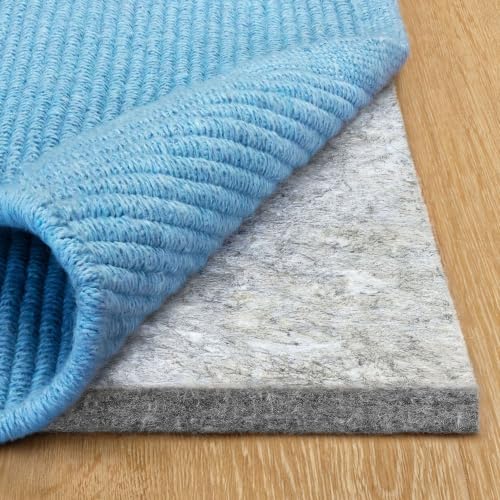
The premium tier is a dense felt pad with a natural rubber base, usually around $2 to $4 per square foot. It grips the floor without adhesives, cushions the knots evenly, and lasts about a decade. This pairing suits wool and silk blend oriental rugs on hardwood, tile, or stone. The limitation is price on very large rugs, where the total can pass $300, but for a rug worth many times that, the protection is easy to justify.
Value Tier
The value tier is a pure felt pad around $1 to $2 per square foot, used where the rug is heavy enough to stay in place by its own weight. You get excellent cushion and knot protection for larger rugs in low traffic rooms. The limitation is grip: on smooth floors a felt only pad can let smaller rugs drift, so value buyers should reserve it for big, heavy pieces or layer it over a thin rubber grip sheet. For dining rooms and bedrooms, it is often all the pad you need.
Entry Tier for Beginners
The entry tier for beginners is a standard felt and rubber pad in a common rug size that you trim at home, usually under $100 for a typical living room rug. It solves sliding and cushioning in one step, needs no adhesives, and forgives small measuring errors because you cut it about 1 inch smaller than the rug on every side. The limitation is choice overload in reverse: one general purpose pad will not be the plushest or the grippiest option, but it protects the rug properly from day one.
How to Choose the Best Carpet Pads: Buying Guide
Work through these seven checks and you will cover everything that decides whether a pad protects an oriental rug or quietly harms it.
Features That Matter for Oriental Rugs
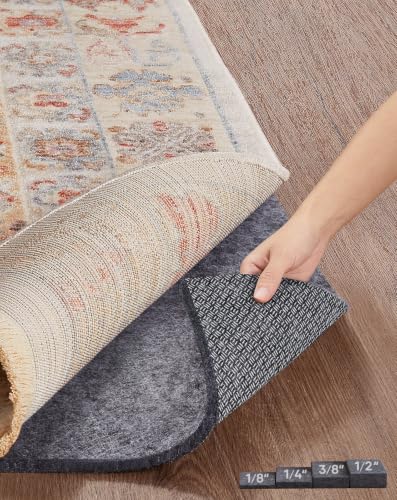
Oriental rugs have hand knotted or finely woven backs that flex with every step, so the pad must cushion without letting the rug stretch and shift. Look for dense felt that supports the knots evenly and a grip layer that holds by friction, not glue. Thickness of about 1/4 to 3/8 inch suits most fine rugs.
Avoid pads with rough plastic mesh, which can abrade the back of the rug over time. Our dedicated roundup of the best rug pads for oriental rugs compares pad builds made for this exact job.
Material and Fill
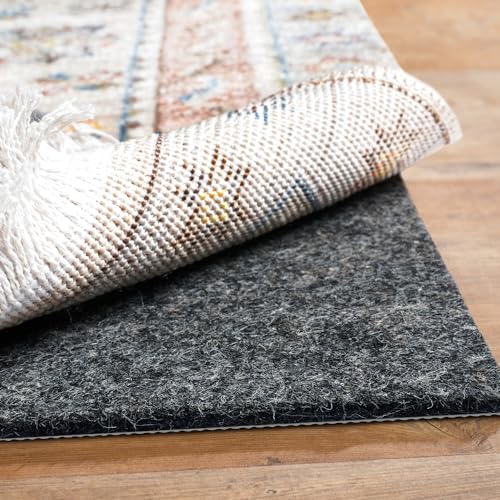
Felt is the core material to trust, whether recycled or virgin fiber, because it breathes and never bonds to floors or rug backs. Natural rubber adds safe grip for hardwood. Memory foam feels plush but compresses into uneven patches, which stresses knots unevenly, so it is a weak choice under valuable rugs.
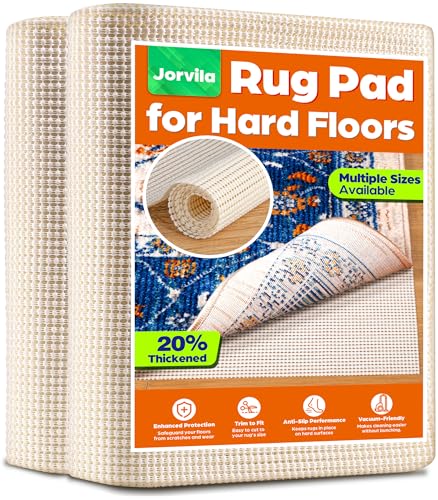
Latex blends cost less than natural rubber and grip well, though they can break down sooner. Avoid PVC and vinyl pads entirely under oriental rugs, since plasticizers can migrate into both the floor finish and the rug fibers.
Certifications (CertiPUR US, OEKO TEX, RDS)
Certifications help you screen out pads with unwanted chemistry. OEKO TEX style screening on textile layers signals limits on harmful substances, which matters when a pad sits under a natural dye rug for a decade. CertiPUR US applies if the pad contains foam and checks emissions and content.
Low VOC claims are worth favoring in bedrooms and nurseries. No label replaces reading the material list, but plain disclosure plus a recognized certification is the safer buy.
Thickness, Loft, and Cushion Feel
Think in thickness rather than softness. About 1/8 to 1/4 inch suits thin antique rugs and rooms with tight door clearance, keeping the rug profile low and stable. About 1/4 to 3/8 inch suits most modern oriental rugs, adding comfort without a spongy feel.
Heavier rugs need denser pads rather than thicker ones, because density carries the load. A pad that is too soft lets the rug ripple underfoot, which bends knots back and forth and shortens the life of the weave.
Airflow and Moisture Behavior
Felt breathes, letting small amounts of moisture escape instead of trapping them against the floor or the rug backing. That airflow protects hardwood finishes and discourages mildew under rugs in humid rooms. Solid rubber or vinyl pads can trap moisture, so if you use a rubber grip layer, choose one bonded to felt rather than a sealed sheet.
Lift the rug a few times a year to check for dampness, odor, or finish changes. In basements and ground floors, that quick check prevents the most expensive pad mistake of all: hidden moisture damage.
Support, Knot Protection, and Edge Behavior
Good support spreads the pressure of feet and furniture across thousands of knots instead of a few rows. Dense felt does this best, and it also stops the rug from stretching sideways as people walk across it, which keeps the pattern square. Check the edges after fitting: the pad should end about 1 inch inside the rug border all around, so the rug edge settles onto the floor and no pad peek shows. Edge curl that persists after a week usually means the pad is too thick or too soft for that rug.
Durability and Care
A quality felt and rubber pad lasts about 7 to 10 years, far longer than foam or PVC pads that crumble in 1 to 3 years. Care takes minutes: vacuum the pad when you lift the rug for seasonal cleaning, shake out grit outdoors, and blot spills quickly. Most pads are not washable, and they never need to be if spills are handled fast. For cleaning the rug itself, our guide to the best carpet sweeper for oriental rugs covers daily upkeep between deep cleans.
Types of Carpet Pads
Pad types differ mainly in how they combine cushion and grip. Four builds cover nearly every oriental rug and floor pairing.
Felt and Rubber Hybrid
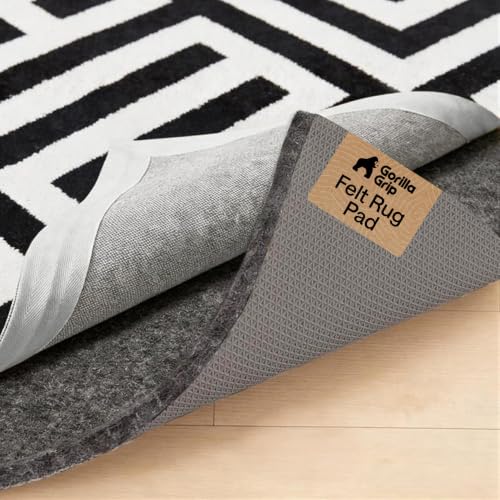
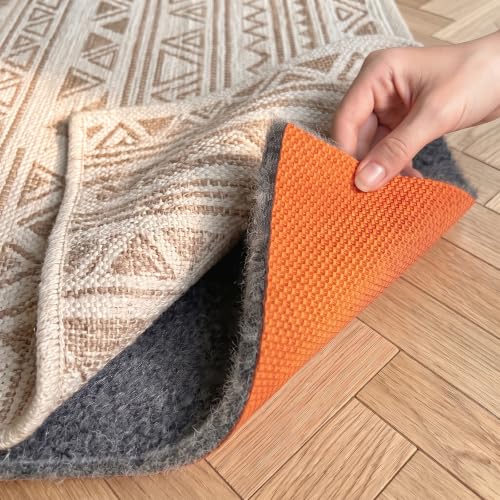
A hybrid pad bonds a dense felt top to a natural rubber base, giving cushion and grip in one layer. It is the default recommendation for oriental rugs on hardwood because nothing sticks, tapes, or coats the floor. It suits living rooms, halls, and dining rooms alike. The trade off is price and weight, but for most owners this is the pad they buy once and forget for a decade.
Felt Only Cushion Pads
Felt only pads deliver pure cushion with no grip layer. They excel under large, heavy rugs that stay put by weight, and on carpet or rougher floors where grip is less of an issue. They are also the gentlest option under very old or thin antique rugs. The limit is drift on smooth wood or tile with smaller rugs, so pair them with a separate thin grip sheet if the rug wanders.
Natural Rubber Grip Pads
Thin natural rubber pads focus on grip with minimal cushion, at about 1/8 inch thick. They keep runners and small oriental rugs steady in halls and entryways and fit easily under doors. They add little softness, so they suit rugs with a thick pile of their own. Quality varies, so choose pads that list natural rubber content plainly and avoid vinyl lookalikes that can mark floors.
Memory Foam Pads
Memory foam pads promise plush comfort and do feel soft at first. Under oriental rugs, though, foam compresses unevenly, stresses knots, and can hold grit against the floor. They fit better under inexpensive synthetic rugs in play areas than under fine woven pieces. If comfort is the goal, denser felt at a similar thickness gives a firmer, safer cushion.
Choosing Carpet Pads for Your Situation
Shopping in a Store or Online
Whether you buy at a home improvement store or online, apply the same checks: the material list should say felt and natural rubber, the pad should be trimmable to sit about 1 inch inside the rug border, and staff should be able to confirm it is safe for your floor finish. Buying in person lets you feel density, which helps first time buyers. Bring your rug measurements, and avoid plastic mesh pads. Deep cleaning questions are covered in our guide to the best carpet cleaner for oriental rugs.
How to Make Your Carpet Pad Last Longer
- Vacuum the pad and the floor beneath it every few months, since trapped grit grinds against both the floor finish and the rug backing.
- Rotate the rug and pad together about twice a year so foot traffic wears the pile and the cushion evenly.
- Blot spills at once and dry the pad fully before replacing the rug, because trapped moisture is the fastest route to odor and finish damage.
- Keep the pad trimmed about 1 inch smaller than the rug on every side so edges never peek out or fold under.
- Air the pad outdoors on a dry day once a year to clear dust and check for crumbling or sticking.
Pad care and rug care go together. If you are still choosing the rug itself, browse our guide to the best oriental rugs for weave and material basics, and our wider roundup of the best carpet rugs for other rooms in the house.
Carpet Pads: Your Questions Answered
What features matter most in carpet pads for oriental rugs?
Density, material safety, and fit matter most. Dense felt supports hand knotted backs evenly, natural rubber grips without adhesives that could harm floors or fibers, and a pad trimmed about 1 inch smaller than the rug keeps edges settled. Thickness comes next, matched to the rug and the room. Skip any pad that lists PVC, vinyl, or plastic mesh, because those materials risk staining and abrasion over the years a fine rug stays in place.
Is a thicker pad always better under an oriental rug?
No, a thicker pad is not always better. Past about 3/8 inch, extra thickness adds a spongy feel that lets the rug ripple and bends the knots with every step. Thin antique rugs do best on pads around 1/8 to 1/4 inch, which keep them stable and low. Density protects the weave more than height does, so choose a firm pad at a moderate thickness rather than the loftiest option on the shelf.
Can a rug pad damage the knots or backing of an oriental rug?
Yes, the wrong pad can damage the backing over time. Rough plastic mesh can abrade woven backs, foam that compresses unevenly stresses some knot rows more than others, and adhesive pads can pull fibers when removed. Dense felt avoids all three risks because it is smooth, even, and holds by weight and friction alone. Check the rug back once a year when you rotate it to catch problems early.
Are natural rubber pads safe under oriental rugs?
Yes, natural rubber is one of the safest grip materials for both oriental rugs and hardwood floors. It holds by friction, contains no plasticizers that migrate into finishes, and does not stick to rug backs. The caution is with synthetic latex blends and vinyl pads sold as rubber style alternatives, which can break down or mark floors. Check that the product names natural rubber plainly, and try any new pad under one corner of the rug for a few weeks first.
How do I clean a carpet pad under an oriental rug safely?
Do not machine wash a rug pad. Vacuum both sides when you lift the rug, shake it outdoors to release grit, and spot clean stains with a damp cloth and a little mild soap. Let it dry completely, ideally for several hours, before the rug goes back down, because a damp pad against wood or under wool invites odor and mildew. If a pad smells even after airing, replacement is the safer choice for a valuable rug.
How often should I replace my carpet pad?
Replace a quality felt and rubber pad about every 7 to 10 years, or sooner if it crumbles, sticks, flattens in traffic paths, or lets the rug slide again. Because oriental rugs can serve for decades, expect to renew the pad two or three times across the life of the rug. That small recurring cost is part of protecting the larger investment.
The Bottom Line
Choose dense felt for support, natural rubber for safe grip, and a thickness matched to your rug and doors, and your pad will protect both the weave and the floor. Compare finalists in the product table above, trim carefully, and check under the rug a few times a year. That simple routine is how you secure the best carpet pads for oriental rugs for a piece you want to keep for decades.

