
Best Carpet Pads for Area Rugs on Hardwood Floors in 2026: Safe Grip and Cushion
Disclosure: We may earn a commission when you buy through links on this page, at no extra cost to you. As an Amazon Associate I earn from qualifying purchases. Learn more
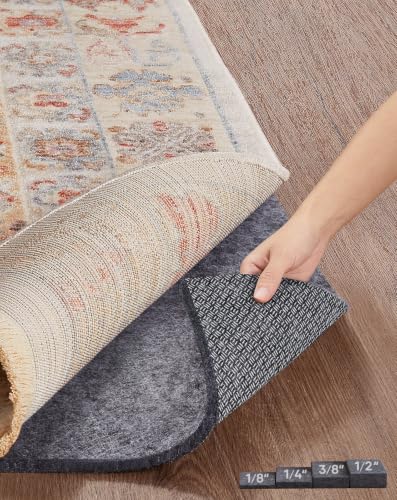
Which are the best carpet pads for area rugs on hardwood floors? Compare felt, rubber and thickness choices that grip without harming the finish.
There is no single pad that suits every rug and every room. A thin grip pad that keeps a hallway runner steady would feel hard and pointless under a plush living room rug, while a thick cushion pad can make a door swing catch and can let a small rug creep at the edges.
This guide starts with how you live, then matches pad types to routines, so you can find the best carpet pads for area rugs on hardwood floors for your home. You will see which materials protect hardwood finishes, how thick to go for each room, and how the product table lines up the main choices.


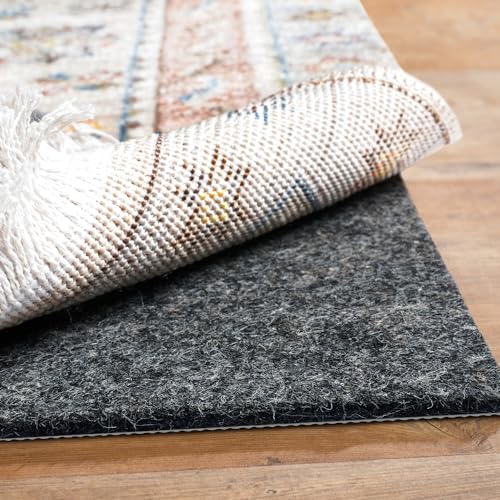

Who Should Buy Which Carpet Pads?
Your routine decides the pad more than the rug does. Find your group below and note the features to favor before you compare prices.
For Gift Shoppers
If the pad is a housewarming or wedding gift, favor the safe all rounder: a felt and natural rubber pad about 1/4 inch thick that fits standard rug sizes and works on any hardwood finish. Choose a seller with easy returns and a clear warranty, since the recipient may need a different size. Avoid memory foam pads as gifts, because their feel divides opinion, and avoid cheap PVC pads entirely, because some plasticizers can mark hardwood. Include the receipt and the trimming tip: pads should sit about 1 inch smaller than the rug on every side.
For First Time Buyers
First time buyers should keep it simple: one pad, one job. If your rug slides, buy grip first with a felt and rubber or natural rubber pad. If your rug stays put but feels thin, buy cushion with a dense felt pad.
Measure your rug before ordering and pick the closest pad size you can trim with sturdy scissors. Simple pads with clear material labels and a floor safe promise are the most reliable starting point, and they solve most problems for under $100 in typical room sizes.
For People Who Want the Best Performance
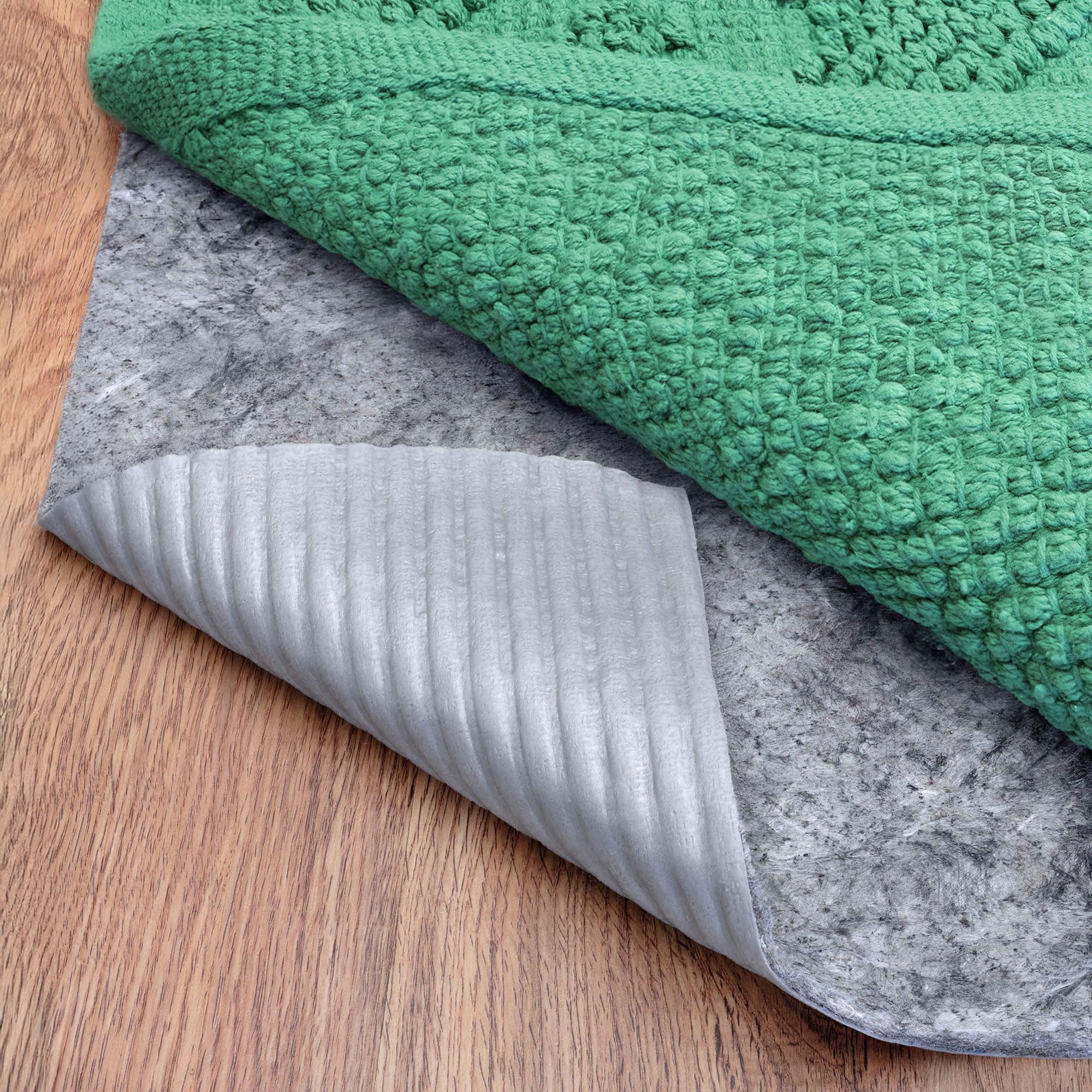
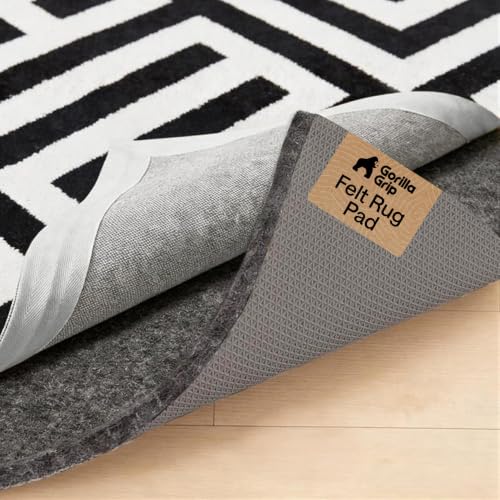
Performance seekers should look at dense felt combined with a natural rubber base, about 3/8 inch thick, for large rugs in busy rooms. This pairing gives the strongest grip, the most even support, and the longest wear, and it protects both the rug backing and the floor finish. Premium pads cost more per square foot but spread the load so well that rugs wear slower and feel richer underfoot. For very large or heavy rugs, this tier also reduces edge curl and bunching better than any foam option.
For Value Seekers
Value seekers get the most from plain dense felt pads in low traffic rooms and felt and rubber pads only where sliding is a real issue, such as halls and entryways. Buying one large pad and cutting it to fit two small rugs stretches the budget further. Expect to pay around $1 to $3 per square foot for dependable felt options, less for thin grip sheets. Skip the cheapest no name pads with strong chemical smells, because off gassing and finish damage cost far more than the savings.
Key Features to Compare
Four features decide how a pad performs on hardwood: what it is made of, what its materials are certified to contain, how it grips without harming the finish, and how it ages. Compare them in that order.
Material and Fill
Felt made from recycled or virgin fibers is the classic rug pad core: dense, breathable, and kind to floor finishes. Natural rubber bonded to felt adds grip without adhesives and is the safest partner for hardwood. Memory foam pads feel plush at first but compress unevenly over time and can trap grit against the floor.
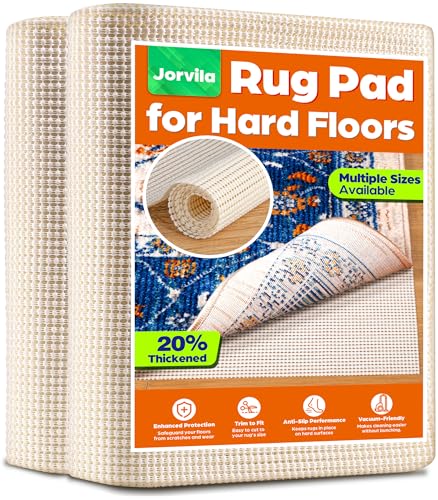
Latex blends sit between felt and rubber in cost and grip. Avoid pads made only of PVC or with plastic mesh coatings, because plasticizers can react with some hardwood finishes and leave marks that are costly to repair.
Certifications (CertiPUR US, OEKO TEX, RDS)
Certifications tell you what is inside the pad and what stays out of your air. CertiPUR US applies to foam components and limits certain chemicals and emissions. OEKO TEX labels on felt or textile layers signal screening for harmful substances against skin contact standards.
Low VOC claims matter most in bedrooms and nurseries, where pads sit under rugs for years. A pad maker that names its materials plainly, such as natural rubber and recycled felt, and backs them with a recognized label gives you more confidence than vague green marketing.
Features That Matter for Area Rugs on Hardwood Floors
Hardwood changes the rules because the pad touches a finished surface every day. The pad must grip without adhesives, tapes, or coatings that can bond to polyurethane finishes. Thickness must clear door swings, which usually means about 1/8 to 1/4 inch in halls and up to about 3/8 inch in open living areas.
The pad should also be trimmable, since rugs are rarely exact standard sizes, and dense enough that chair legs and sofa feet do not punch through to the floor. For more options in this exact category, see our guide to the best pads for area rugs on hardwood floors.
Durability and Care
A good felt pad lasts about 5 to 10 years, while thin foam and PVC pads often flatten or crumble within 1 to 3 years. Care is simple: vacuum the pad when you deep clean, shake it outdoors a few times a year, and spot clean spills quickly so moisture never sits against the wood. Most pads are not machine washable, and soaking felt can break down its fibers. Check warranty length and what it covers, since a long warranty against crumbling or finish damage signals a maker that trusts its materials.
Common Mistakes to Avoid When Buying Carpet Pads
- Choosing by price alone, then paying far more later to repair a marked or scratched hardwood finish.
- Ignoring the material list and buying PVC or plastic mesh pads that can react with floor finishes.
- Ordering the wrong size, either too large so edges peek out, or too small so rug corners slide off the pad.
- Going too thick under doors and in halls, where a plush pad becomes a trip edge and blocks door swing.
- Skipping the warranty and materials check, which are your only protection if the pad crumbles or stains the floor.
- Using tape or adhesive sprays to fix a sliding rug instead of buying a pad with real grip.
How to Make Your Carpet Pad Last Longer
Pads fail quietly under rugs, so a little attention pays off. Lift the rug and vacuum both the pad and the floor under it every few months, because grit trapped between pad and wood acts like sandpaper. Rotate the rug and pad together about twice a year so traffic wear spreads evenly.
Blot spills fast and dry the area fully before laying the rug back down. When you clean the rug itself, choosing the right vacuum matters, and our guide to the best vacuum for hardwood floors and area rugs covers models that are safe on both surfaces. Replace the pad when it crumbles, sticks to the floor, or no longer grips.
Carpet Pads: Your Questions Answered
What features matter most in carpet pads for area rugs on hardwood floors?
Safe grip and material come first, because the pad must hold the rug without adhesives or coatings that can mark the finish. Natural rubber and dense felt are the benchmark pairing. Thickness comes second, matched to the room and door clearance.
Size and trimmability come third. If you are also choosing the rug itself, our guide to the best area rugs for hardwood floors explains which rug backings pair well with pads.
Are thicker carpet pads always more comfortable underfoot?
No, thicker is not always better. A dense 1/4 inch felt pad often feels more supportive than a soft 1/2 inch foam pad, because foam bottoms out underfoot and under furniture. Thick pads also raise the rug edge, which can trip people in halls and block doors. Save the plush thickness for large living room rugs with no door swings nearby, and choose firm support over soft sink for standing areas like kitchens.
How do I wash carpet pads safely?
Most rug pads should not go in a washing machine. Vacuum both sides, shake them outdoors, and spot clean with a damp cloth and mild soap, then air dry fully before putting the rug back. Never leave a damp pad against hardwood, because trapped moisture can cloud or lift the finish. If a pad holds odors after cleaning or starts to crumble, replacement is safer and usually cheaper than deep cleaning.
How often should I replace my carpet pad?
Replace a quality felt and rubber pad about every 5 to 10 years, and thin foam or PVC pads every 1 to 3 years. Replace sooner if you see crumbling, cracking, sticking to the floor, or if the rug starts sliding again despite a clean pad. A quick check twice a year, when you rotate the rug, catches wear early. Pads are inexpensive insurance compared with refinishing hardwood.
Is a thicker pad always better for hardwood floors?
No, the best thickness depends on the room. Use about 1/8 to 1/4 inch in hallways, entryways, and under doors, and about 1/4 to 3/8 inch under large living room or dining rugs where cushion matters. What protects hardwood most is density and material, not raw thickness. A related alternative for a single rug on wood is covered in our guide to the best pad for area rugs on wood floors.
What firmness is best under a rug on hardwood?
A firm, dense pad is best for most rooms. Firm felt supports the rug evenly, keeps furniture legs from denting through, and stops the rug from stretching and wrinkling as people walk. Soft foam feels nice for the first month, then compresses into thin and thick patches that telegraph through the rug. The one exception is a play area where children sit on the floor, where a medium cushion pad is a fair trade for comfort.
Wrapping Up
Match the material to your floor finish, the thickness to your doors, and the grip to your traffic, and the rest is detail. Dense felt with natural rubber is the safe default for most homes, and the product table above makes it easy to compare sizes and prices. For related floor protection elsewhere in the house, our guide to the best pads for chairs on hardwood floors covers furniture feet. Chosen well, the best carpet pads for area rugs on hardwood floors keep rugs steady, floors safe, and rooms comfortable for years.

