
Best Carbon Steel Roasting Pans (2026): How to Choose for Your Kitchen
Disclosure: We may earn a commission when you buy through links on this page, at no extra cost to you. As an Amazon Associate I earn from qualifying purchases. Learn more

Choose the best carbon steel roasting pan by size, gauge and oven fit, with plain advice on racks, gravy on the stove and everyday care.
The bird fits the pan, the pan fits the oven, and then the loaded weight surprises you at the oven door. That small chain of fit problems is where most roasting regrets start in real homes. Finding the best carbon steel roasting pan for your home comes down to your oven space, your usual head count, and the care routine you will actually keep.
This guide keeps the focus on daily life at home rather than chef technique. It weighs storage room, lifting comfort, stovetop gravy making, and the cost of owning carbon steel over many years. Use the product table to match each build to your household, then work through the checklist before you spend.


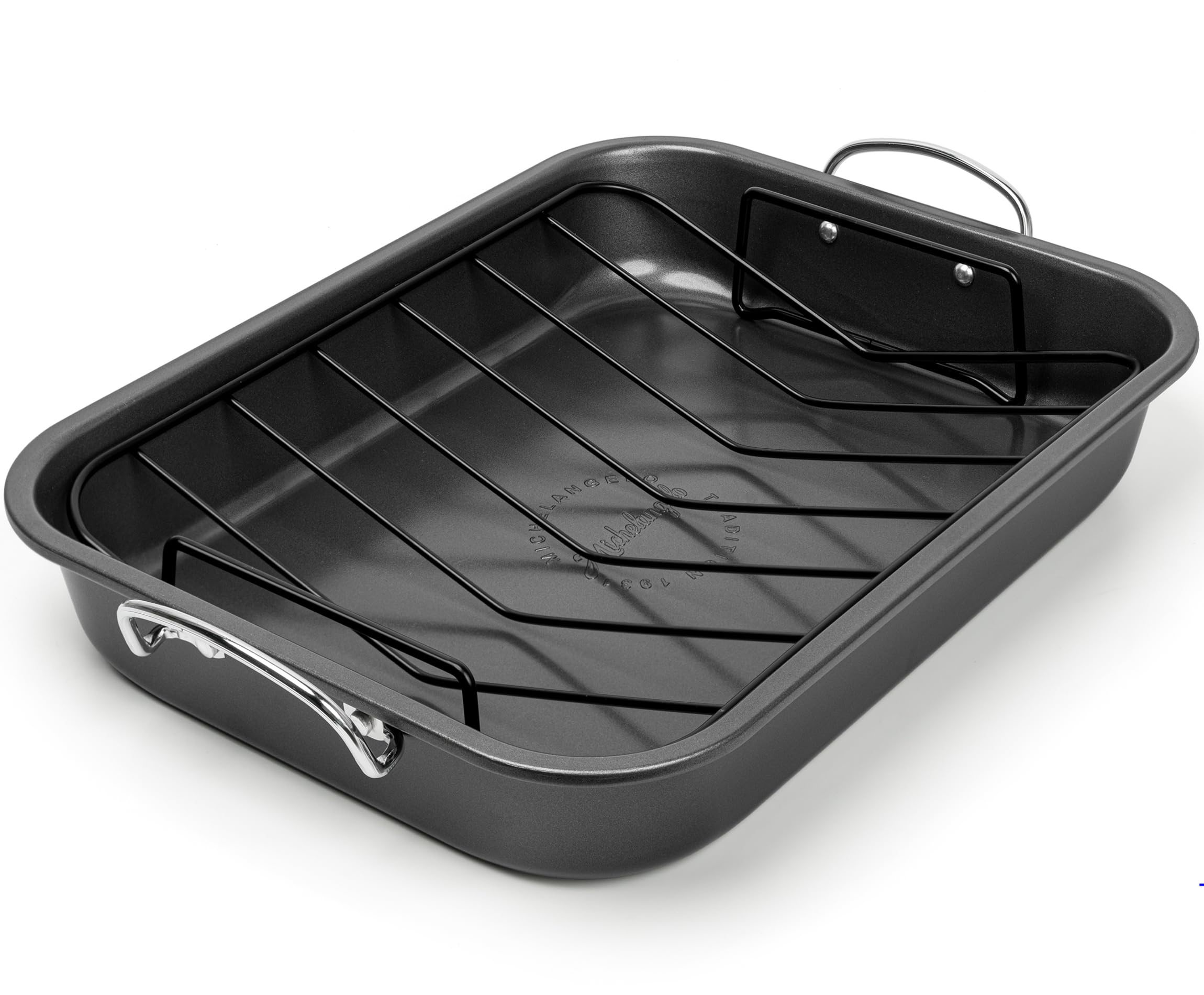
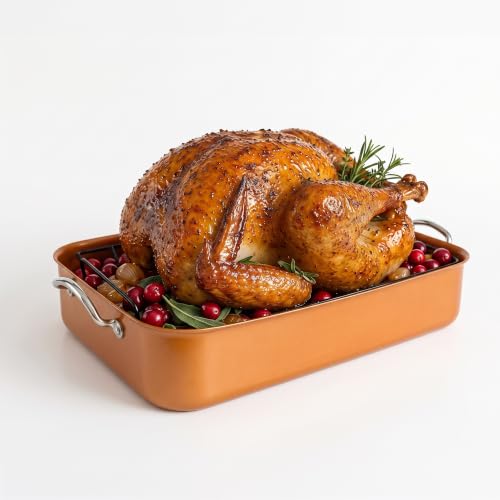


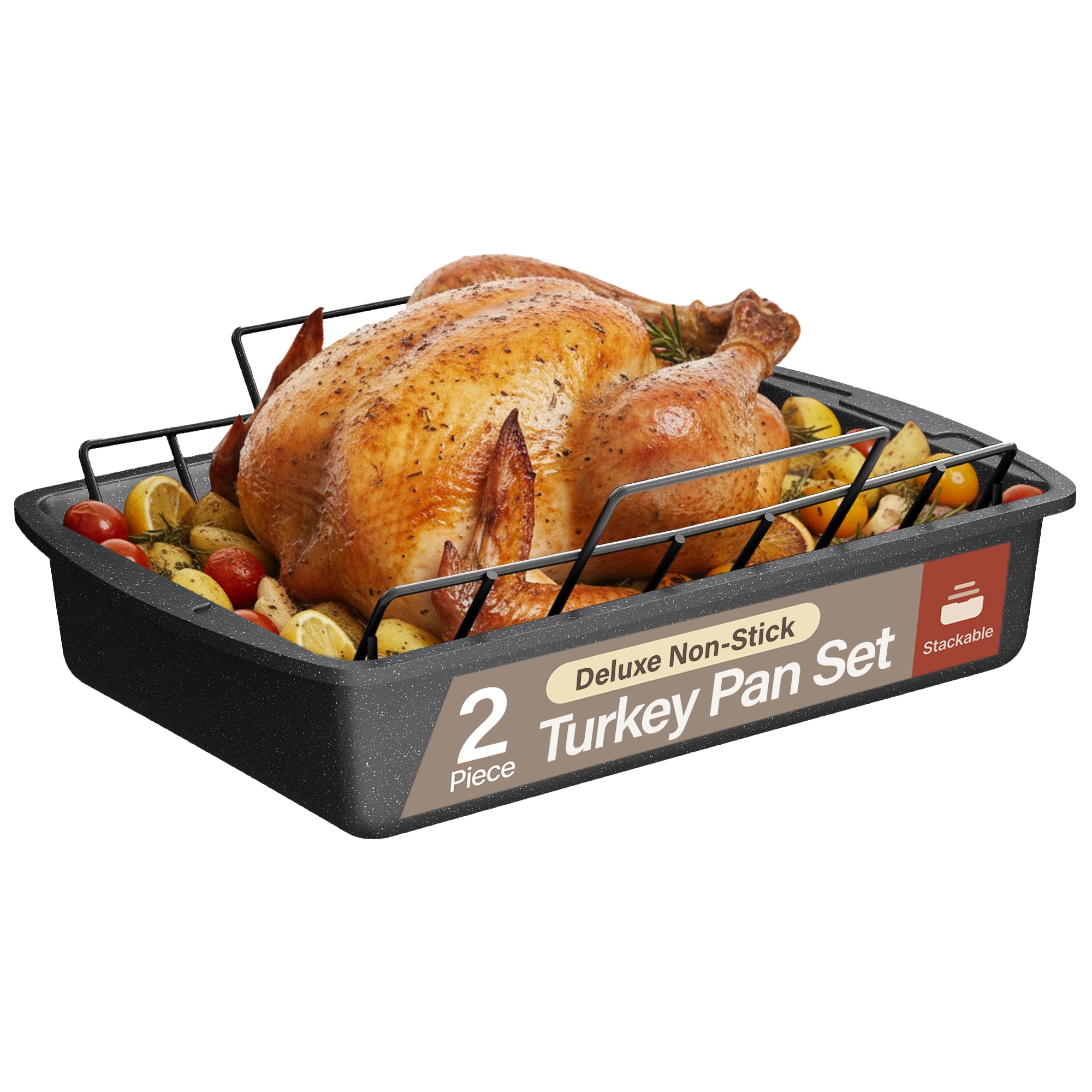
Quick Answer: Three Builds in 30 Seconds
Carbon steel roasting pans fall into three builds, and each one suits a different kind of home. If you want the wider view across all materials first, see our guide to the best roasting pan before you narrow your choice.
- Light gauge pans suit small households that roast a chicken or a modest joint and want easy lifting and simple storage.
- Heavy gauge pans suit families who cook large holiday birds and want a base that stays flat under strong heat.
- Rack sets suit cooks who roast poultry often and want skin that crisps instead of sitting in its own fat.
Before You Buy: A Quick Checklist for Choosing a Roasting Pan
Work through these checks in order, starting with size. A pan that fails on fit will frustrate you every time, whatever the steel quality.
Size: Match It to Your Space
Measure the inside of your oven, then leave about two inches of clear space around the pan for air flow and for your mitts. Small pans near 13 by 10 inches handle a chicken or a small roast. A pan about 16 inches long suits birds up to about 16 pounds, while 18 inch pans handle birds around 20 pounds. Handles add length, so measure your deepest cabinet too, since a pan that fits the oven can still fail on storage. If bird size drives your choice, compare options in our guide to the best roasting pan for turkey before you order.
Which Type Fits Your Routine
Rectangular pans use oven corners well and leave room at the ends for vegetables around the roast. Oval pans hug a bird closely and slide into narrow cabinets, but they give you less flat space for extras. Deep sides suit roasts that release a lot of juice, while shallower sides brown tops faster. Households that roast a chicken most weekends often settle on one midsize rectangular pan, and our guide to the best roasting pan for chicken shows how weekly cooks size that choice.
Features Worth Paying For and Ones to Skip
Pay for a sturdy rack, wide handles you can grip with thick mitts, and a rolled rim that pours drippings without a stream down the side. A rack earns its shelf space every time you roast poultry, and our guide to the best roasting pan with rack explains rack styles in depth. Skip the matching lid if you braise in another pot, since a lid adds bulk and cost you may never use. Bundled utensils and decorative finishes also add price without improving a single roast.
Material Safety and Coatings
Carbon steel is iron with a small share of carbon, and it carries no synthetic coating at all. There is no PFAS or PTFE layer to wear thin, flake, or set an oven temperature limit. The cooking surface is seasoning, a hard layer built from oil heated onto the bare steel, and you can renew it at home whenever it wears. Worn seasoning looks patchy, but that is wear you can repair rather than a coating that is failing.
Induction, Gas and Glass Top Compatibility
Carbon steel contains iron, so it works on induction cooktops as well as on gas and electric burners. What matters most is a flat base, since a base that rocks on a glass top heats unevenly and can spin on a smooth surface. Gas burners forgive small flaws in flatness, but induction needs firm contact across the whole base. Check the maker listing for your cooktop type, and plan to make gravy in the same pan you roast in.
Oven Safe Temperature and Handles
With no coating to protect, many carbon steel bodies tolerate about 600 degrees Fahrenheit, though the listing for your exact pan sets the real limit. Steel handles share that tolerance, but they also reach the full heat of the oven, so mitts are part of every lift. Upright loop handles are easier to grip with bulky mitts than low tabs close to the pan wall. Judge handle comfort with your thickest mitts on, because a loaded pan leaves no room for a weak grip.
Realistic Budget Ranges
Light builds often cost under $50, and they suit occasional roasting if you accept a thinner base. Mid weight builds land about $50 to $120, adding thicker steel, flatter bases, and handles that feel secure under load. Heavy premium builds run about $120 to $250, and the extra money buys steel that resists warping. For most homes the middle range is the sensible stop, since the top range pays off mainly for very frequent roasting.
Types Compared: Three Builds for Different Homes
Light Gauge Pans for Small Households
Thin steel heats fast and keeps the empty pan light, which matters in small kitchens where the pan moves in and out of a low cabinet often. These pans roast chickens and small joints well and store in tight spaces. Their limit shows with sudden heat changes, since thin bases can bow when cold liquid hits a hot surface. Choose this build if you roast modest meals a few times a month.
Heavy Gauge Pans for Big Holiday Roasts
Thick steel spreads heat slowly and evenly, so large birds brown without scorched patches. The base stays flat through years of holiday use, and the pan moves from oven to burner for gravy without complaint. The trade is weight, since a thick pan holding a bird around 20 pounds is a serious two handed lift. Choose this build if your table seats a crowd several times a year.
Rack Sets for Frequent Poultry Cooks
A set pairs the pan with a rack shaped to fit it, either flat or formed into a shallow V that cradles the bird. Buying the pair together costs less than sourcing a rack later that almost fits, and the rack stores inside the pan. Wire racks need a brush and a soak after sticky glazes, so count that cleaning time in your routine. Choose this build if poultry is a weekly habit and crisp skin is the goal.
What to Compare in a Roasting Pan
Judge each build on heat spread, durability, material safety, cooktop and oven fit, and cleaning effort. Maker specification sheets and repeating patterns in verified buyer feedback, such as notes on warping and handle comfort, are the best evidence. The angle throughout is how a pan suits your rooms, your family size, and your budget over years of ownership.
Carbon Steel Compared With Other Roasting Pan Materials
Stainless steel needs no seasoning and tolerates a dishwasher, but it usually costs more at equal thickness and browns drippings less readily. Enameled cast iron holds heat superbly and looks fine on the table, yet a large roaster in that material is very heavy and the enamel can chip if you knock it. Many homes cover that braising role with a separate pot, which is why the roasting pan vs dutch oven choice is worth settling before you buy both.
Coated nonstick pans release food with almost no effort, but the coating wears and the whole pan becomes a repeat purchase every few years. Disposable aluminum pans cost little up front, flex under a heavy bird, and turn every holiday into another purchase and more waste. Carbon steel sits between those poles: one purchase, some simple care, and a surface that improves with use.
Common Buying Mistakes to Avoid
- Buying by bird weight alone without measuring your oven, so the pan arrives too wide for the door.
- Choosing the largest size for a small household, so the pan crowds the cabinet and small roasts dry out in the extra space.
- Ignoring your cooktop type, so a pan bought for holiday roasting cannot make gravy on your induction hob.
- Putting carbon steel in the dishwasher, so harsh detergent strips the seasoning and rust spots form.
- Storing the pan while it is still damp, so trapped moisture quietly rusts the surface.
Cost of Ownership and Care
Ownership costs stay low with carbon steel, since there is no coating to renew and no replacement cycle to budget for. Your running costs are a little oil for seasoning, a brush, and a rack if the first one eventually sags. There are no parts to order and no special cleaners to keep on hand.
Care takes minutes after each roast. Wash the warm pan with water and a brush, dry it fully on a warm burner, and wipe on the thinnest film of oil before you store it. Keep it in a dry cupboard, with a cloth or a sheet of paper between stacked pans to guard the seasoning. For stuck on drippings, follow the steps in our guide on how to clean a roasting pan before you reach for harsh pads.
FAQ
Are carbon steel roasting pans worth it for a small household?
Yes, if you roast at least a few times a month and want one pan that also works on the stove. A small carbon steel pan browns a chicken, then deglazes on the burner for a quick sauce, so one purchase replaces two tools in a tight kitchen. The value grows each year because the surface improves with use instead of wearing out. If you roast twice a year, a simpler pan may serve just as well.
How long does a carbon steel roasting pan last?
A carbon steel roasting pan can last for decades, because there is no coating with a fixed life span. Its real enemies are a warped base from sudden heat shock and deep rust left untreated, and both trace back to habits rather than age. One check worth making at purchase is base flatness, since a pan that starts flat on your cooktop tends to stay that way. Many families hand these pans down rather than replace them.
What is the best carbon steel roasting pan?
The honest answer is the build that matches your oven, your cooktop, and your largest usual roast. Before your first big holiday cook, do one practical test the guides rarely mention: lift the empty pan from your oven wearing your thickest mitts, then imagine it holding a hot bird and its juices. If that lift feels shaky, choose the lighter build or the pan with taller loop handles. Comfort under load is a safety feature, not a luxury.
Can you roast vegetables in a carbon steel roasting pan?
Yes, and vegetables are one of the kindest uses for this material. Spread roots, onions, or squash in a single layer with space between the pieces, and the steel gives you crisp edges and deep browning. Crowding is the main error, since piled vegetables steam in their own moisture and soften instead of roasting. Every batch also feeds the seasoning, so weeknight sides quietly improve the pan.
Can a carbon steel roasting pan go under the broiler?
Yes, the bare steel body and steel handles tolerate broiler heat that would damage most coated pans. Keep the food a sensible distance from the element and stay nearby, since dripping fat under a broiler can flare if it pools and overheats. Broiling also darkens seasoning, which is harmless. Use that final blast for crisp skin or browned cheese, then move the pan to the burner for sauce.
Final Thoughts
Look back at the product table and match gauge and size to the meals you cook most, not the largest meal you can imagine. Light builds serve small homes, heavy builds serve holiday crowds, and rack sets serve weekly poultry cooks. Whichever build you choose, the best carbon steel roasting pan is the one that fits your oven, suits your cooktop, and asks only for care you will happily give.


