
The Best Carbon Full Suspension Mountain Bike: A Buying Guide for 2026
Disclosure: We may earn a commission when you buy through links on this page, at no extra cost to you. As an Amazon Associate I earn from qualifying purchases. Learn more

Learn how to choose the best carbon full suspension mountain bike by travel, geometry, sizing, and budget, with clear guidance for every rider type.
A carbon full suspension bike is likely the largest cycling purchase you will make, so small spec differences deserve real attention before you commit. Travel, geometry, and suspension design change how the bike climbs, descends, and fits your body far more than a small weight gap does. This guide shows you how to choose the best carbon full suspension mountain bike for your terrain, your budget, and the way you ride each week.
The product table brings current models together for a quick scan. Use it after you settle on travel and frame size.


What Each Spending Level Delivers
Rather than naming bikes, learn what each spending level normally delivers. Carbon full suspension prices span a wide range, and the steps between levels follow a pattern across brands. Knowing that pattern lets you set a budget that matches your riding instead of a budget set by marketing.
Premium Tier
The premium tier, often $4,500 and up for established brands, pairs a quality carbon frame with suspension and brakes that need no early upgrades. You get a modern drivetrain, tubeless wheels, and a dropper post as standard. For riders who ride weekly on varied trails, this level removes the most common regrets without chasing race level weight.
Support is part of the value here. Available spare links and hangers and clear setup guides matter over years of ownership.
Value Tier
Value models, often priced from roughly $700 to $3,000 and sold direct by smaller brands, keep similar carbon frame shapes but use heavier parts to hold the price down. Wheels are usually alloy and suspension may lack some fine adjustment, yet parts can be upgraded as they wear out.
Shoppers focused on price can compare this tier with our guide to the best carbon full suspension mountain bike under 3000 to see what changes when the budget drops further. They can also read our guide to the best inexpensive full suspension mountain bike to judge when alloy delivers better value than entry level carbon.
First Full Suspension Choices
Beginner friendly choices at any price share traits rather than a label: moderate travel around 120 to 140 mm, stable geometry that is calm at low speed, and simple suspension setup with clear sag guides. A slightly heavier build is fine, because durability and predictable handling teach skills faster than a feather light bike that feels nervous.
If this is your first full suspension bike, leave part of the budget for fit and protection. A shock pump and a helmet that fits well improve your first season more than a carbon wheel upgrade would.
How to Choose a Carbon Full Suspension Mountain Bike: Buying Guide
Bike Type and Riding Style
Start with the riding you do most. Cross country bikes with about 100 to 120 mm of travel climb fast and suit smooth, rolling terrain. Trail bikes with about 130 to 150 mm are the all round choice for most riders, while enduro bikes with 160 to 170 mm favor steep, rough descents and accept slower climbing as the trade off.
Other categories in store listings, such as road and gravel bikes, solve different problems and should not set your expectations here. A mountain bike earns its cost on dirt. If most of your riding is pavement, a different category will serve you better and cost less.
Weight and Components Upgrade Path
A carbon trail bike often weighs around 27 to 32 lb complete, depending on travel and parts. Chasing the lowest number can backfire if it comes from light tires or weak brakes that you replace at once. Judge weight alongside part quality, and favor a bike whose frame, suspension, and brakes are right, even if the wheels invite a later upgrade.
Think about the upgrade path before you buy. Wheels and tires change ride feel the most per dollar later, while a frame change costs nearly as much as a new bike. Choose the frame and travel you will still want in three years.
Suspension and Travel
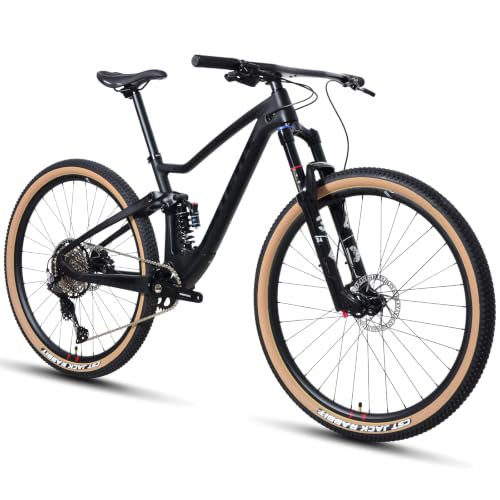
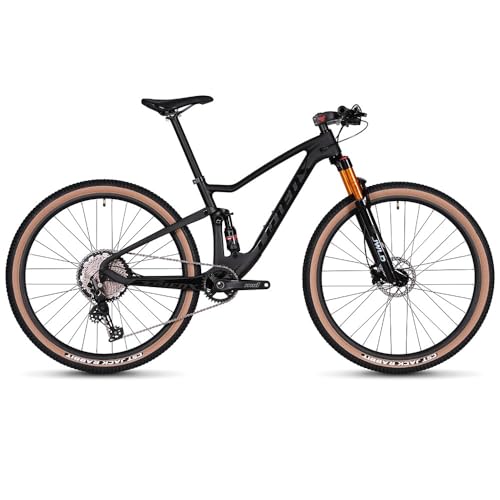
Full suspension means a fork at the front and a rear shock working through a linkage. What matters in daily use is setup: set sag to the maker guide, usually around 25 to 30 percent of travel at the rear, and write down your pressure and rebound settings. A well set mid priced shock outperforms a premium shock set by guesswork.
Compare this with a hardtail honestly. A hardtail is lighter, cheaper, and simpler, and it can be the right tool for smooth trails. Full suspension earns its cost on rocky, root filled, or steep terrain and on long rides where reduced fatigue keeps your riding sharp in the final hour.
Drivetrain and Gearing
Most current models use a 1x drivetrain with a wide range cassette, which keeps shifting simple and drops the front derailleur entirely. Check that the lowest gear suits your steepest local climb, because carbon lightness does not rescue gearing that is too tall. Electronic shifting appears at higher prices and is a convenience, not a requirement for trail performance.
Shimano and SRAM systems both work well, so let gear range and local shop familiarity guide the choice.
Brakes: Hydraulic vs Mechanical Disc
Hydraulic disc brakes are the standard at this level for good reason: strong power, even feel in wet weather, and self adjusting pads. Look for four piston calipers on trail and enduro models and rotors sized to your terrain, commonly 180 to 200 mm. Mechanical disc brakes belong to much cheaper bikes and would be out of place on a carbon build.
Brake upkeep is simple but real. Budget for pads each season if you ride often, and check lever feel before rides.
Wheel Size and Tires
Most models now use 29 inch wheels for rollover and stability, while some smaller sizes and playful builds use 27.5 inch wheels or a mixed setup. Stock tires should match the travel class: lighter tread for cross country, stronger casings for enduro. Nearly all quality models arrive tubeless ready or already set up tubeless, which improves grip and reduces pinch flats.
Check tire clearance and stock tire width together. A trail bike that clears 2.5 inch tires gives you options for wet seasons, while a race focused frame may cap width lower for weight.
Types of Carbon Full Suspension Mountain Bikes
Full Suspension Mountain Bikes
This is the core category of the guide: bikes with front and rear suspension built for dirt trails. Most buyers should land in the trail group, because it climbs acceptably and descends with confidence on varied terrain.
Hardtail Mountain Bikes
A hardtail has a suspension fork and a rigid rear end, with lower cost, lower weight, and less upkeep. Riders on smooth trails or tight budgets often do better starting here.
Choosing Carbon Full Suspension Mountain Bikes for Your Situation
Choosing an Affordable Carbon Full Suspension Mountain Bike
The best affordable carbon full suspension mountain bike is the one that protects the frame, suspension quality, and brakes while saving on wheels and cockpit parts. Look for travel that matches your trails, a shock with rebound adjustment at minimum, and four piston brakes if your descents are long. Avoid builds that look cheap because the fork is under spec, since that saving is felt on every descent.
Choosing a Carbon Full Suspension Women's Mountain Bike
The best carbon full suspension women's mountain bike is mainly about fit range and contact points. Look for smaller sizes with real stand over clearance, shorter reach options, and narrower bars. Lighter riders may also need a lighter suspension tune to use full travel, so ask about tune options before buying.
If style is part of your process, our guide to the best looking full suspension mountain bike covers finish choices, but let fit and travel decide first.
How to Make Your Carbon Full Suspension Mountain Bike Last Longer
- Check tire pressure before every ride, and set suspension sag again whenever your riding weight changes by more than a few pounds.
- Clean and lube the chain every 100 to 200 miles, and rinse the bike with low pressure water only, keeping direct spray away from bearings and seals.
- Have a professional tune up yearly, including suspension service on the maker schedule, because worn seals and old oil harm performance quietly.
- Inspect the carbon frame after any crash for cracks or soft spots, use a torque wrench on all bolts, and apply protective film to the down tube and chain stay.
- Store the bike indoors and out of prolonged heat, and keep a simple log of service dates, pressures, and part changes.
FAQs
Hardtail or full suspension for beginners?
Beginners on smooth trails can start happily on a hardtail and spend less. Beginners whose local trails are rocky or steep often learn faster on full suspension, because the rear wheel tracks the ground and small mistakes are forgiven. The deciding factor is your terrain, not a rule about skill, so ride a demo on your own trails if a shop offers one.
How much should I spend on my first bike?
A sensible first carbon full suspension budget sits in the value tier, from roughly $700 to $3,000, with money held back for a helmet and shock pump. Spending less usually means alloy serves you better, and that is a fine outcome.
What size bike do I need?
Use the maker size chart by height as a start, then judge by reach and stand over. Riders between sizes often pick the smaller bike for tight, technical trails and the larger one for stability at speed and on climbs. Saddle height can be adjusted easily, but reach cannot, so if one measurement must drive the choice, let it be reach.
Final Thoughts
Settle three things and the rest becomes detail: travel that matches your terrain, a size that fits your reach and stand over, and a budget level whose brakes and suspension need no instant fixes. Then use the product table to check price and availability on the models that pass. Chosen that way, the best carbon full suspension mountain bike is simply the one that disappears under you and lets the trail hold your attention.


