
Best Car Pumps: Portable Tire Inflators and 12V Air Compressors Compared (2026)
Disclosure: We may earn a commission when you buy through links on this page, at no extra cost to you. As an Amazon Associate I earn from qualifying purchases. Learn more

Choose the best car pumps with confidence: 12V plug-in, cordless and heavy-duty compressors compared by fill speed, accuracy and run time.
A tire that loses a few pounds of pressure wastes fuel, wears unevenly and handles poorly, and the nearest gas station air machine is never close when you need it. A portable pump in the trunk solves that. The best car pumps fill a tire quickly, show an accurate pressure reading and run without overheating. The product table above includes compact 12V models, cordless units and larger twin-cylinder compressors, so the choice comes down to how much air you move and where you need it.
Read on for the types, the specs that matter and how to use a pump correctly.




Types of Car Pump
12V Plug-In Inflators
These plug into the car's accessory socket and run off the battery. They are compact, inexpensive and work anywhere the car is. They are fine for topping up passenger-car tires, and larger versions handle SUV and truck sizes.
Cordless Inflators
A rechargeable battery gives freedom from cords, which is handy at the side of a road or for bikes and sports balls. Run time depends on the battery, so a cordless pump suits top-ups more than filling a flat tire from empty. Keep it charged, because a dead battery leaves you stuck.
Heavy-Duty Dual-Cylinder Compressors
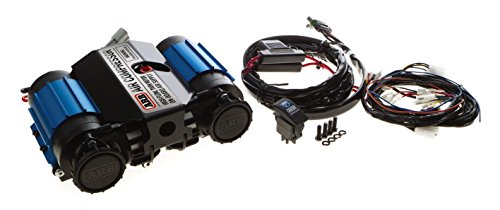
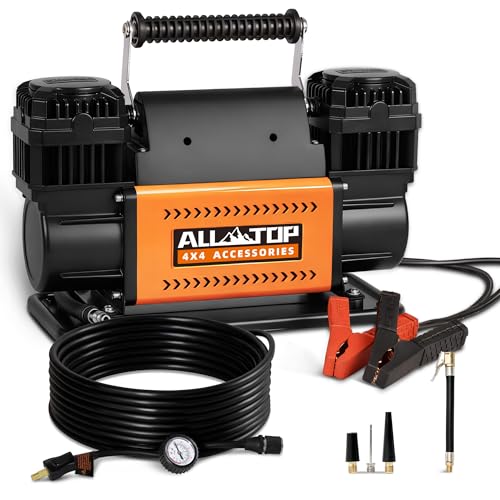
These use two pistons for faster fills and a longer duty cycle. They suit large tires on trucks, off-road vehicles and RVs, and many connect directly to the battery clamps for higher output. They are bigger and cost more, but they work much harder.
AC and Hybrid Models
Some pumps also accept household power, giving versatility at home as well as on the road.
Speed and Duty Cycle
The advertised fill speed is a rough guide, and larger tires take longer. A more important figure is the duty cycle, which tells you how long the motor can run before it needs to rest. A small inflator may need pauses to cool down, while a heavy-duty unit can run continuously. If you plan to fill several large tires, choose a pump designed for long operation.
Gauge and Auto Shut-Off
A digital gauge is easier to read than a dial, especially in the dark. Look for a pump that lets you set a target pressure and stops automatically, so you do not overfill the tire. Check the reading against a separate tire gauge once in a while, since built-in gauges can drift. A backlit display and a work light help at night.
Hoses, Valves and Attachments
- Hose length: a longer hose reaches all four tires without moving the car.
- Valve connector: a screw-on or a clamp-on chuck keeps a firm seal. Clamp-on is quicker.
- Nozzle set: adapters for sports balls, bike tires and inflatables add versatility.
- Carry bag: a case keeps everything tidy in the trunk.
Power Considerations
A 12V pump draws a lot of current, so check the fuse rating of your accessory socket. Run the engine while inflating to protect the battery. Direct battery clamps provide stronger output for large compressors but require care with the connection order and polarity. For everyday use, the socket-powered type is simplest.
Using a Pump Properly
Check cold tire pressure, because heat from driving raises readings. Find the recommended pressure on the door jamb label or in the owner's manual, not on the tire sidewall. Attach the chuck firmly, set the target and let the pump work. Recheck with a gauge and replace the valve cap.
If a tire keeps losing air, do not just keep filling it. Look for a nail or a leak, and get it repaired.
Matching a Pump to Your Needs
- Compact cars and regular top-ups: a small 12V or cordless unit.
- SUVs, trucks and trailers: a dual-cylinder compressor.
- Off-roading: a heavy compressor that airs tires back up after deflating them.
- Cyclists and families: a cordless pump with ball and bike adapters.
Choosing the Best Car Pumps
Think about your largest tire and how often you will use the pump. Compare power source, duty cycle and gauge features, and read the hose and cable length. If the pump will live in a hot trunk, look for sturdy construction. Keep it in a place where you can reach it easily, along with a flashlight.
Noise, Heat and Reliability
Small piston pumps are loud and get hot during a long fill. Hot parts can burn skin, so let the unit cool before packing it away and avoid touching the cylinder head. Look for a pump with a thermal protection feature that stops the motor if it overheats.
A well-built hose with a strong crimp on the connector holds up better to the strain of pulling it around the car. Plastic housings are fine for occasional use, while metal parts tend to survive a harder life.
Storing Your Pump
Keep the pump in its case in the trunk, away from moisture, and coil the cable loosely so it does not kink. Check cordless models every few months and recharge them, since lithium batteries lose charge slowly while stored. In very cold weather, a pump may run slower and a hose may stiffen, so give it a moment to warm up.
Common Mistakes to Avoid
- Reading the sidewall number: that is the maximum pressure of the tire, not the right setting.
- Filling hot tires and trusting the reading: check after the car has rested.
- Using the pump on a flat with a damaged tire: a sidewall bulge or cut needs a replacement, not more air.
- Ignoring the duty cycle: forcing a small pump to run nonstop shortens its life.
- Leaving the pump plugged in unattended: stay with it while it runs.
Related Guides
- Best Air Pumps For Cars
- Best Tire Pumps For Cars
- Best Air Pumps For Car Tires
Frequently Asked Questions
How long does it take to inflate a tire?
It depends on the pump and the tire size. Small inflators can take several minutes, and heavy-duty models are quicker.
Can a 12V pump drain my battery?
Running the engine during use prevents that. Without it, a long job can drain a weak battery.
Are built-in gauges accurate?
They are generally good enough for top-ups, but compare with a separate gauge.
Should I fill to the number on the tire?
No. Use the pressure listed on the vehicle placard or in the manual.
The Bottom Line
The best car pumps are fast enough for your tires, accurate and easy to store. Pick the type that suits the size of your vehicle and the way you travel, check the duty cycle and keep the pump where you can reach it when a tire runs low. A small purchase can prevent a long wait for help.


