Best Car Dash Cameras in 2026: Which Type Is Right for You?
Disclosure: We may earn a commission when you buy through links on this page, at no extra cost to you. As an Amazon Associate I earn from qualifying purchases. Learn more

Compare the main types of car dash cameras, from front only to front and rear sets, with honest notes on wiring, parking mode, cards, and typical prices.
Walk into the dash camera market cold and the first confusion is not brands or prices. It is the sheer number of shapes the product comes in, from a single lens on the windshield to systems that watch the road ahead, the road behind, and the seats inside. Choosing among the best car dash cameras starts with picking the type that matches your car and your driving, because the type decides the wiring, the install effort, and most of the cost before any spec sheet matters.
This guide compares each type side by side, then walks through the features that separate a clear recording from a blurry one. The comparison table below sums up the types at a glance, and the sections after it explain what each one changes in daily use.
Types of Car Dash Cameras Compared
Every dash camera does the same basic job: it records video while you drive and saves the important clips. The types differ in how many directions they watch and how much of the car they take over to do it. Use the table to narrow the field, then read the type that fits your situation.
| Type | Best For | Pros | Cons | Typical Price |
|---|---|---|---|---|
| Front only | Budget buyers and simple installs | Lowest cost, one cable to route | Nothing recorded behind the car | About $50 to $120 |
| Front and rear | Drivers worried about rear end hits | Covers both ends of the car | Long cable run to the back window | About $120 to $250 |
| Front and cabin | Rideshare and taxi drivers | Records passengers and disputes | Audio and consent rules apply | About $150 to $300 |
| Mirror style | Cars with small or crowded windshields | Big screen, hides in plain sight | Heavier, can vibrate on rough roads | About $100 to $220 |
| Motorcycle | Riders on two wheels | Weather sealed, made for vibration | Not designed for car windshields | About $150 to $350 |
Front Only Dash Cams
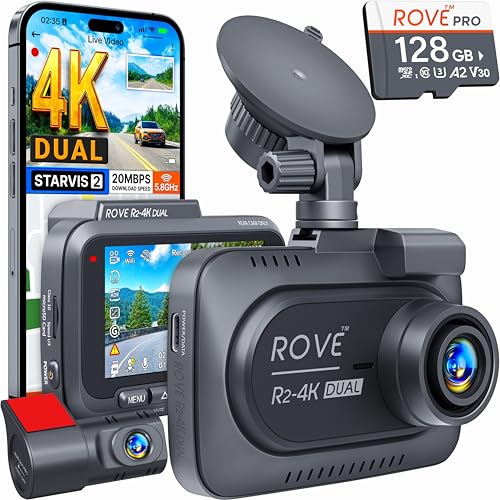
A front only camera is one lens unit that sticks to the windshield behind the rear view mirror and records the road ahead. It is the simplest type to install, because there is a single power cable to tuck along the headliner and down to the power outlet or fuse box. For a commuter who mainly wants evidence of what happens in front of the car, this type covers the core job at the lowest price.
The trade off is obvious: nothing behind the car is recorded, so a rear end collision is captured only as a jolt and a sound. If your worry list is mostly about other drivers cutting in, running lights, or disputing who changed lanes, front only is usually enough. If parking lot bumps from behind worry you more, keep reading.
Front and Rear Camera Sets
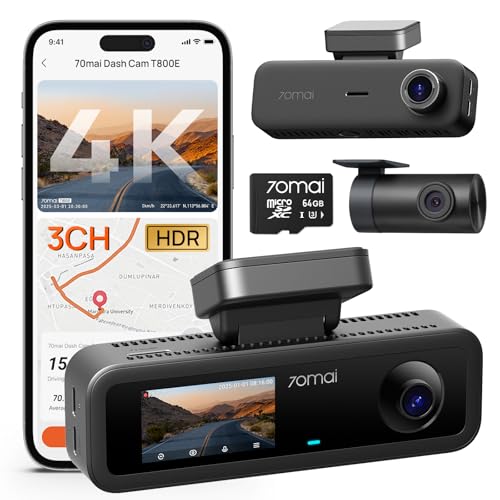
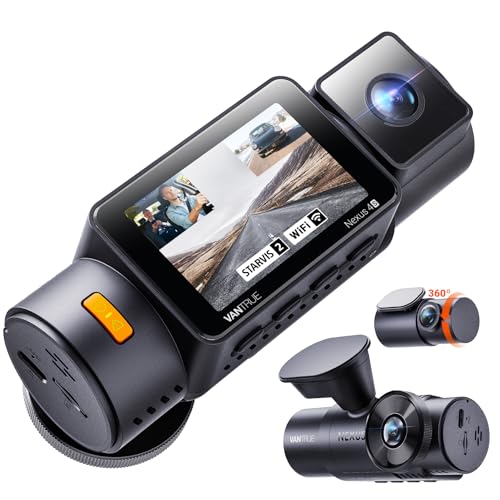
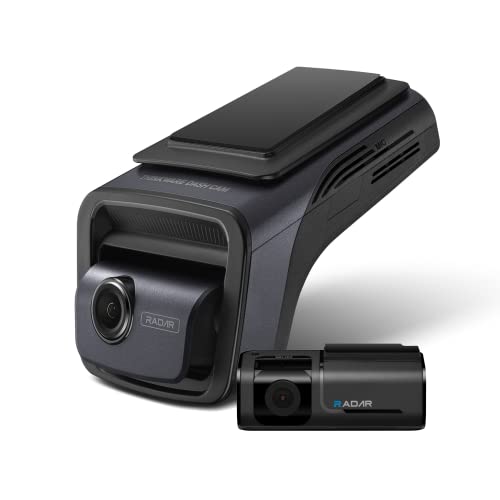
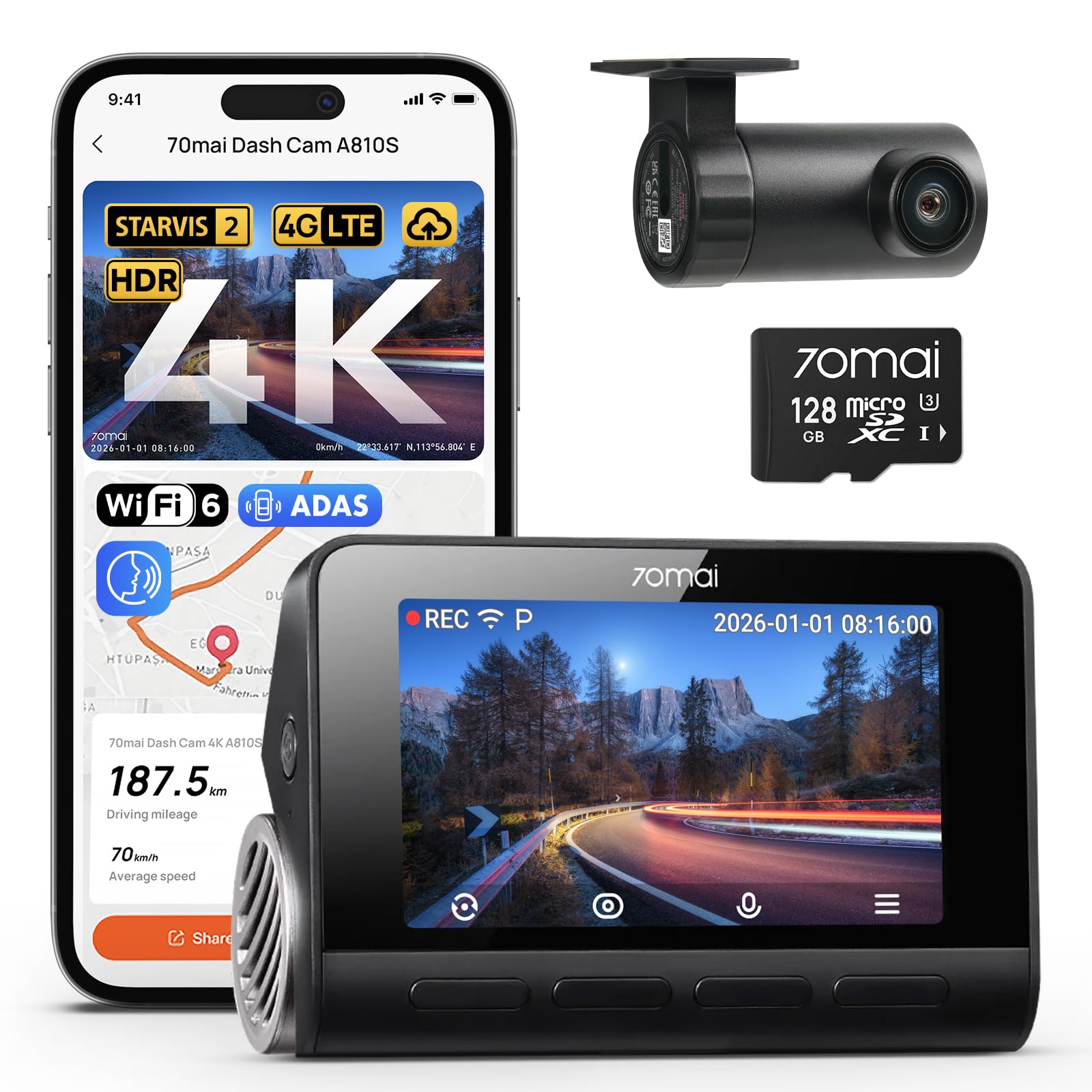
A front and rear set adds a smaller second camera on the back window, wired to the main unit with a long cable that runs the length of the cabin. The two views record together, so an incident shows both the car that hit you and the road in front at the same moment. This is the type most drivers settle on once they think about how many disputed crashes start at the rear bumper.
The cost is more than money. Routing the rear cable through trim panels takes time, and on some cars it means working around curtain airbags, which is a job to do carefully or hand to an installer. Readers who want the fuller record of the best dash cam cameras for cars usually accept that extra hour of setup as the price of rear coverage.
Front and Cabin Camera Sets
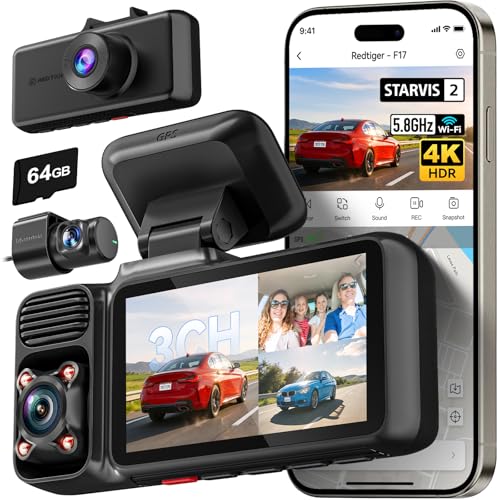
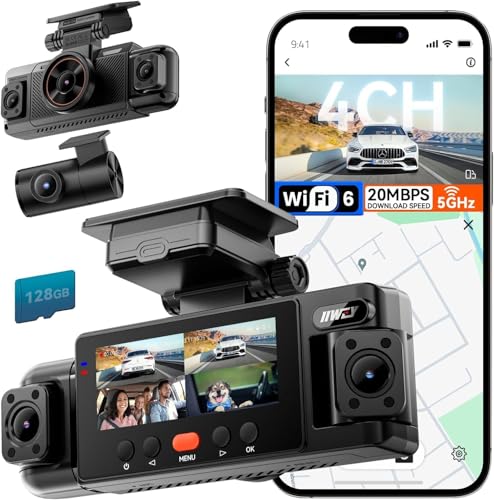
Front and cabin sets point the second lens inward instead of backward, recording the driver and passengers along with the road. Rideshare and taxi drivers choose this type because a cabin view settles disputes about what happened inside the car, and fleet owners use it to coach driving habits. Some sets add a third channel for the rear window as well.
This type carries the heaviest rule burden. Recording passengers, and especially recording their voices, follows consent laws that vary by state and country, and many rideshare platforms have their own notice policies on top of the law. If you carry paying passengers, check both before the camera records its first trip.
Mirror Style Dash Cams
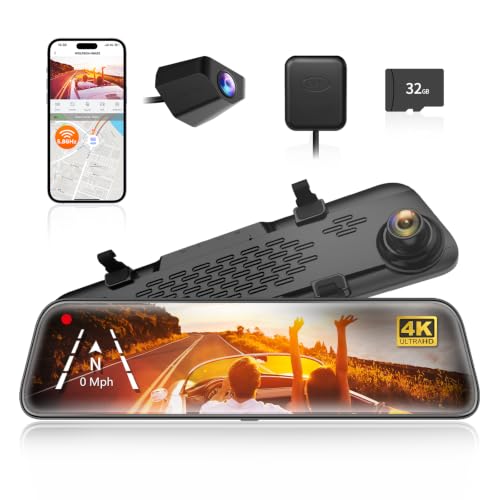
A mirror style camera straps over your existing rear view mirror and uses a wide screen as both mirror and display, with the lens peeking past the mirror edge. The large screen makes it the easiest type to review footage on, and the rear camera in most kits doubles as a reversing aid when you shift into reverse. It suits older cars whose dashboards feel crowded and drivers who dislike a separate gadget on the glass.
The added weight can make some mirrors droop or vibrate, and the screen view is a mirror image layered over a real mirror, which takes a day or two to get used to. Shoppers comparing best car on dash mounted cameras weigh this type against the smaller stick on units and usually decide based on how much windshield clutter they can tolerate.
Motorcycle Dash Cams, a Boundary Case
Motorcycle cameras are the odd entry in this list, because they solve a different problem. They use two small weather sealed lens pods wired to a recording box hidden under the seat, built to survive rain and constant vibration that would shake a car camera apart. They appear in dash camera searches often enough that buyers ask about them, so they belong in a complete type comparison.
For a car, though, they are the wrong tool: no windshield mount, no cabin screen worth using, and a price that reflects the weather sealing. Riders should shop them as their own category, and car drivers should treat this type as a sign to go back to the four types above.
Front Only vs Front and Rear: Which Should You Choose?
These two types take most sales, so it helps to compare them directly. On coverage, the rear set wins plainly, because it records the single most common crash direction that a front camera cannot see. On install effort, front only wins by a wide margin, with one cable and ten minutes of work against a cable run the length of the car.
On cost, a front and rear set runs about double a comparable front only unit, and the gap widens if you pay an installer for the rear cable. On evidence value, ask what you fear more: a disputed lane change in front of you, or a driver behind who claims you reversed into them. Most family cars that carry kids and spend time in parking lots get more from the rear set, while a second car or a tight budget is well served by front only.
How to Choose the Right Car Dash Camera
Once the type is settled, four feature areas decide whether the footage will actually help you. Work through them in this order and the spec sheet gets much shorter.
Video Quality and Night Recording
Resolution numbers headline every listing, but a plate is readable only when the subject is close, the light is decent, and the lens puts enough pixels across the plate itself. A 4K badge does not fix a car two lanes away at night, and maker night performance figures describe best case scenes, not your unlit street. Judge a camera by sensor quality and honest sample footage at night rather than by the biggest number on the box, which is why guides to the best quality dash cameras focus on sensors before resolution.
Practical advice: treat daytime plate reading at one car length as a realistic expectation, and treat night plate reading as a bonus. A camera that records a clear wide scene with readable signs and signals still does its evidence job well.
Field of View and the Lens
Field of view is measured in degrees, and most dash cameras sit between about 130 and 170 degrees. A wider lens catches more of the intersection and the sidewalks, which helps show where another car came from. The cost of width is distortion: straight lines bow, and cars at the edges look farther away than they are, which can make distances in the footage hard to judge.
For most drivers the middle of the range is the sweet spot. Very wide lenses earn their keep on wide multi lane roads, while a moderate lens gives a more natural scene for city driving. Whichever you choose, mount the camera high and centered so the view is balanced between road and sky, since too much sky in the frame darkens the road in the exposure.
Power Options and Parking Mode
While driving, every type runs from the car itself, either through a power outlet adapter or a hardwire kit at the fuse box. The differences start when you park. Parking mode watches for impacts or motion while the engine is off, and it needs power the whole time, which means either a hardwire kit or a dedicated battery pack.
A hardwire kit must include a voltage cutoff that stops drawing power before the car battery gets too low to start the engine. Set up without that cutoff, parking mode can leave you with a dead battery after a long weekend, so the cutoff setting matters more than the mode itself. Battery packs avoid the risk by charging while you drive and powering the camera from their own cells, at a higher purchase price.
Memory Cards and Storage
Dash cameras record in a loop, overwriting the oldest footage as the card fills, and they save protected clips when the impact sensor trips or you press the lock button. The card itself is a consumable. Constant rewriting wears cards out, so buy a high endurance card made for surveillance style writing, and expect to replace it every year or two depending on how much you drive.
Card size decides how far back your loop reaches. A front and rear set recording at high resolution can fill a mid size card in a day of driving, so frequent drivers should buy the largest card the camera supports. Format the card in the camera every month or so, as makers recommend, to keep the file system healthy.
Choosing Car Dash Cameras for Your Situation
Type and features narrow the field, but the last filter is your own routine. The drivers below cover most buyers.
Best Cameras for Car Dash
The phrase best cameras for car dash usually comes from shoppers who want one camera that simply watches the dash and the road without extra channels or cabin lenses. For that job, a front only or mirror style camera with a good sensor, a high endurance card, and a simple mount beats a feature loaded multi channel set you never finish installing. Match the type to the dash space you have: mirror style for a crowded windshield, compact front only for a clean look behind the mirror.
Drivers who park on the street every night should step up to a set with parking mode and a proper hardwire cutoff, while garage parked cars can skip parking mode and put the money into image quality instead. If you are still torn between the plain approach and a full camera system for the car, the broader category of best car cameras covers reversing and surround options as well.
Evidence, Laws, and Honest Limits
A dash camera records evidence. It does not prevent accidents, it does not slow anyone down, and it does not decide who was at fault. Insurers and courts weigh footage alongside statements, damage patterns, and road rules, and clear footage of your own mistake counts against you just as clearly. This section is general information, not legal advice.
Mounting and recording rules vary. Some states limit where on the windshield a device may sit, some places restrict recording in general, and audio recording follows consent rules that differ sharply between states and countries, with some requiring every recorded person to agree. Check your local rules before relying on the audio track, and tell regular passengers the camera is there.
Finally, set everything up while parked. Never tap through menus, review clips, or adjust the app while the car is moving, since a camera bought for safety becomes a distraction the moment it pulls your eyes off the road. Use automatic recording, voice prompts, or a passenger for anything that cannot wait for a stop.
Tips to Get the Most From Your Car Dash Camera
- Clean the windshield glass inside and out where the lens looks through, because a smeared patch of glass ruins more footage than a cheap sensor.
- Save any important clip to your phone the same day, since loop recording will overwrite unprotected footage sooner than you expect.
- Check the date and time stamp after any battery disconnect, because a wrong timestamp weakens the clip as evidence.
- Consider the GPS and speed stamp honestly: it can prove you were under the limit, and it can just as easily prove you were over it, so turn it on only with your eyes open.
- Reaim the lens after any windshield work or mirror adjustment, since a camera tilted at the sky records great clouds and a dark road.
Frequently Asked Questions
How much should I spend on my first dash camera?
Most first time buyers do well in the about $80 to $180 range for a front only camera from a reputable maker. Below that range, sensors and night recording usually suffer, and above it you are paying for extra channels, screens, or cloud features rather than clearer core footage. Budget a little extra for a high endurance memory card, since many cameras ship without one. A mid priced camera that is installed and running beats an expensive one still sitting in its box.
Can a dash camera read license plates at night?
Sometimes, but only at close range and in decent light, so do not count on it as the main job. Plate reading needs the plate large in the frame, lit by headlights or street lights, and not blurred by motion, and all three rarely line up at distance after dark. The footage still shows vehicle type, color, direction, and signal use, which is often enough to support your account. If a plate matters after an incident, say it aloud so the audio track captures it.
Will parking mode drain my car battery?
It can, if the setup lacks a voltage cutoff or the cutoff is set too low. A hardwire kit with a cutoff stops the camera before the battery falls below a level you choose, and that setting is the difference between safe parking coverage and a car that will not start on Monday. Cars driven daily recharge the battery on each trip, so the risk is highest for cars parked for days at a time. A separate battery pack removes the risk entirely at a higher upfront cost.
Is a smartphone enough instead of a dash camera?
A phone can record the road, but it makes a poor full time dash camera. It overheats in a sun baked windshield, fills its storage with footage you actually want to keep, stops recording when calls or messages take over, and needs manual starting on every trip. A dedicated camera starts and stops with the car, loops its recording, and survives cabin heat far better. Many drivers try a phone for a week, then buy the dedicated unit for the automation alone.
Do I need GPS on a dash camera?
GPS is optional, and it cuts both ways, so decide with that in mind. It stamps location and speed onto the recording, which can confirm where an incident happened and that you were driving legally. The same stamp can also document your own speeding in the seconds before a crash, and insurers will see it either way. If your main goal is the clearest possible evidence of the other driver, GPS adds little, but if you drive for work and need trip records, it earns its place.
Wrapping Up
Start with the type, since it fixes your wiring, your coverage, and most of your budget in one decision. Then judge image quality by night footage rather than headline resolution, and treat parking mode and memory cards as part of the purchase, not accessories. Drivers who follow that order end up with the best car dash cameras for their own routine instead of the longest feature list. Look back at the product table above to see how the types you shortlisted stack up before you order.