Best Canopy Humidifiers of 2026: Which Model Should You Buy?
Disclosure: We may earn a commission when you buy through links on this page, at no extra cost to you. As an Amazon Associate I earn from qualifying purchases. Learn more
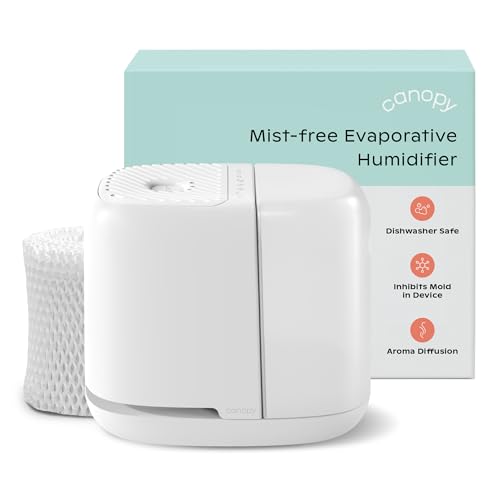
Compare the best canopy humidifier models by room size, tank capacity, filters and price to find the right Canopy for your space.
Choosing a Canopy humidifier sounds simple until you compare tank sizes, coverage claims, filter costs, and noise ratings side by side. The best canopy humidifier for you depends on your room size, how often you want to refill the tank, and how much cleaning you will actually do each week. This guide sorts the lineup by type and by the features that matter most, so you can match a model to your space using the comparison table below.
Canopy built its name on humidifiers that are easier to clean than most, with parts designed for simple washing and a focus on reducing mold growth inside the tank. That approach appeals to parents, light sleepers, and anyone who has abandoned a past humidifier after one grimy season. If you are weighing the brand against the wider market, our guide to the best humidifier shows how Canopy compares. Keep those points in mind as you pick the best canopy humidifier for your space.


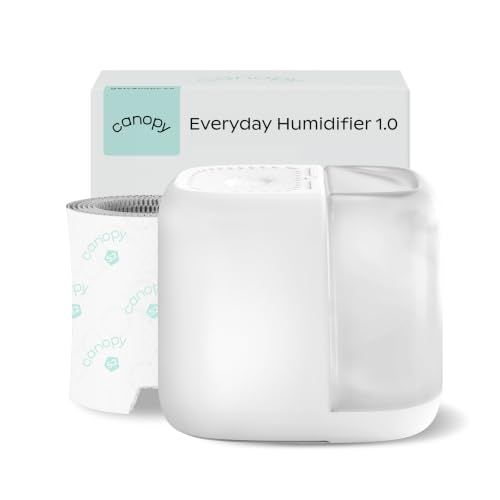

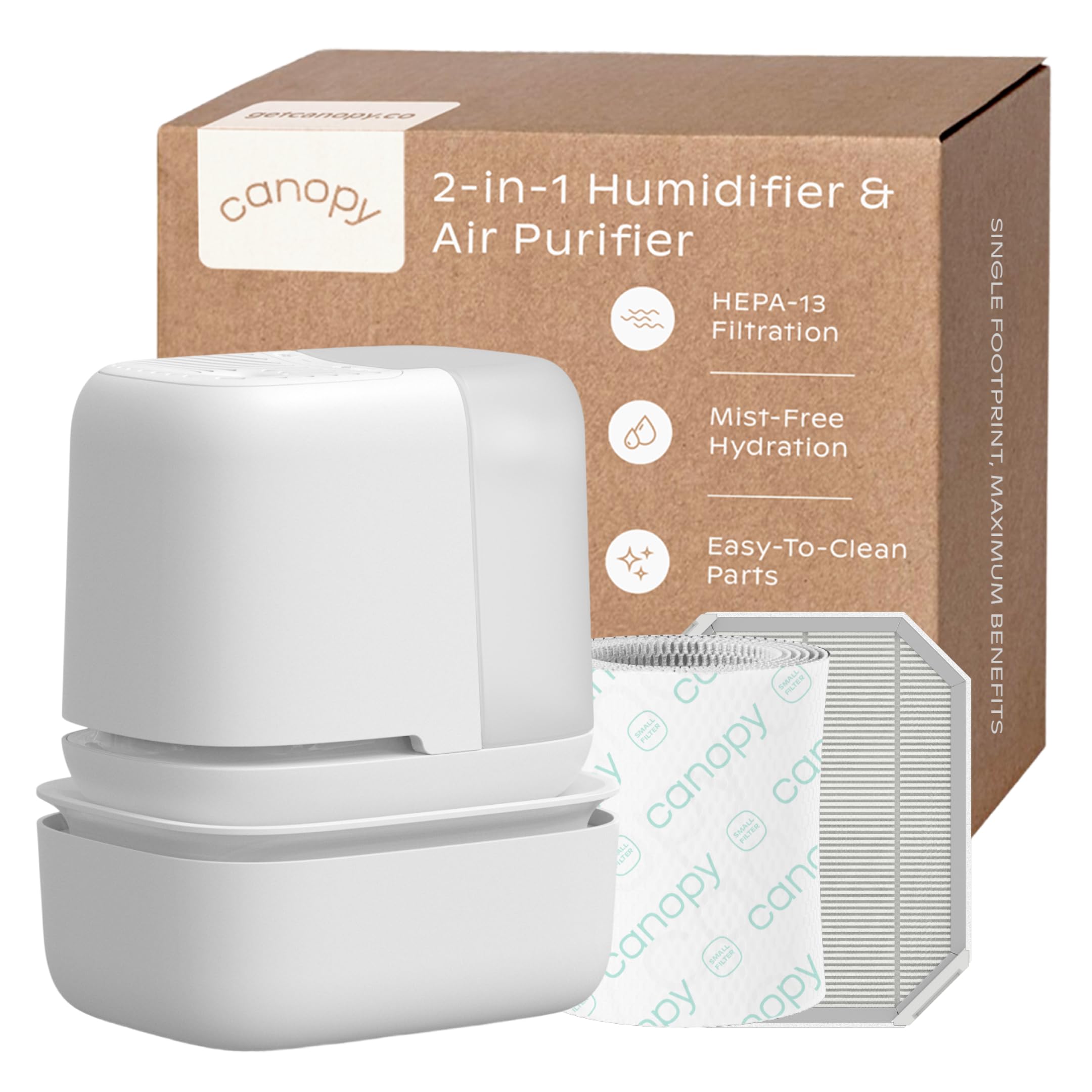
Canopy Humidifier Types Compared at a Glance
The Canopy range is narrower than the ranges from large appliance brands, and that is part of its appeal. Instead of dozens of near identical models, you choose mainly by room size, tank capacity, and where the unit will sit. The three broad types below cover most decisions, and the product table above lists the current versions of each.
- Compact tabletop models suit desks, nightstands, and small nurseries. They take up little space and are easy to move, but the smaller tank means more frequent refills in dry weeks.
- Standard bedroom models balance tank size with a modest footprint. They are the most versatile choice for a main bedroom or a child room, with enough output for overnight use on a single fill.
- Larger capacity models serve open plans, big bedrooms, and shared living spaces. They run longer between refills and move more moisture, but they need more space and cost more to buy.
Notice what does not change across the lineup. The cleaning design, filter approach, and general look stay consistent, so you rarely trade away the core Canopy idea when you pick a smaller or larger unit. You mainly trade capacity, output, and price.
Who Should Buy Which Canopy Humidifier?
Bedroom sleepers who wake up dry
If you wake with a dry throat or stuffy sinuses, a standard bedroom model is usually the right starting point. Prioritize steady overnight output, a tank that lasts a full night on a medium setting, and controls you can dim so light does not disturb sleep. Readers comparing options for this use can also see our guide to the best humidifier for bedroom for a wider view of quiet models.
Parents setting up a nursery
For a nursery, your priorities shift toward cool mist only, simple cleaning, and placement out of reach of small hands. A compact or standard model with a stable base and no hot surfaces fits that brief well. Consistent humidity and scrupulous cleaning matter more than extra features. Our guide to the best humidifier for baby covers nursery safety in more depth, including cord placement and safe distances from the crib.
Households with large or open rooms
Open plans dilute moisture across a much bigger air volume, so a small tabletop unit will run constantly and still fall short. Choose the larger capacity end of the lineup, place the unit near the center of the space rather than in a corner, and expect longer run times. If your space is especially large, our guide to the best humidifier for large rooms explains when one big unit beats two smaller ones.
How We Compare Canopy Humidifiers
We compare the lineup using factors a buyer can verify before ordering. Those are stated coverage, tank capacity, output settings, noise claims, energy use, filter type and replacement interval, and the cleaning steps the maker describes. We weigh verified buyer feedback on refills and upkeep. Price is judged as total cost across a season, including filters.
How to Choose the Right Canopy Humidifier
Size, form factor, and room coverage
Start with the room you will actually humidify, measured in square feet with the door mostly closed. Coverage ratings assume a sealed room, so an open doorway lowers the real effect and pushes you toward the next size up. Form factor matters too. A tall unit may fit a corner but wobble on carpet, while a low wide unit sits stably on a dresser but needs more surface space. Leave clearance around the mist outlet and keep the unit on a water safe surface, not flush against a wall.
Mist type and output control
Canopy models use cool mist, which suits nurseries and year round use because there is no heating element and no hot water in the tank. Adjustable output lets you match moisture to the day. Low settings stretch a tank through the night with less noise, while higher settings recover dry air faster after doors have stood open. A built in humidistat or auto mode, where fitted, cycles the unit to hold your target level instead of running flat out.
Features worth paying for
The features that earn their keep are the ones tied to daily friction. A clear water level view ends guesswork about refills. Simple controls you can use half asleep beat complex menus you will never open. A night light with a true off option helps in nurseries but annoys some adults, so check that it can be disabled. An aroma tray is pleasant for living areas, provided oils go in the tray and never in the tank. Remote and app features add convenience in large rooms, yet they matter far less than tank size and cleaning design in a small bedroom.
Noise levels and energy use
Humidifiers live close to beds and desks, so small noise differences feel large at night. Fan based designs produce a soft steady sound that many sleepers find easy to ignore, while output changes can cause clicks or gurgles as water feeds the system. Place the unit on a solid surface, since hollow furniture can amplify vibration. Energy use is modest, closer to a small fan than to a heater, because cool mist designs do not boil water. Running cost is driven mostly by filters and by daily run time in peak winter.
Filters, tanks, and everyday upkeep
Canopy uses a filter to trap minerals from the water before moisture leaves the unit, which helps reduce the fine white dust that some humidifiers spread on furniture. Filters are a recurring cost and task, so note the replacement interval and factor a season of filters into your budget. Tank shape decides how cleaning feels. Wide openings let you reach inside with a cloth, and parts that tolerate dishwashing cut the weekly scrub. Our guide on how to clean a humidifier walks through descaling and disinfecting in order.
How much should you spend?
Within a single brand lineup, extra money should buy capacity, quieter operation, or controls you will use, not just a different finish. Set your budget by room size first. Spending more to upsize for a large room is money well used, while paying extra for smart features in a guest room that sits empty most of the year is not. Add the cost of filters for one full season to every price you compare, because a cheaper unit with costly filters can overtake a pricier model within months.
The Canopy Humidifier Lineup Explained
Think of the lineup as one design idea offered in a few sizes rather than as separate inventions. The shared idea is cleaner moisture with less scrubbing. Parts that touch water are made to be washed thoroughly, the filter handles mineral content, and the styling stays plain enough to blend into a bedroom. Your decision therefore rests on fit. Measure your room, decide where the unit will sit, and count how many nights you want between refills.
Target humidity helps you judge success once the unit is home. Most guidance points to indoor levels of about 30 to 50 percent, high enough to ease dry skin and airways but low enough to discourage condensation and mold. A small hygrometer tells you more than guesswork. Our explainer on what humidity should my house be breaks down targets by season and by room.
One honest limit applies to the whole brand. If you want warm mist, a giant whole house console, or a filter free design with no ongoing costs, another brand will suit you better. If your top concerns are easy cleaning, cool mist, and a tidy nightstand look, the lineup is aimed squarely at you.
Care Habits That Keep a Canopy Humidifier Fresh
Daily habits do more for freshness than any single deep clean. Empty leftover water each morning, rinse the tank, and let parts air dry when the unit will sit unused, since standing water is where slime and odor start. Refill with fresh water rather than topping up old water. Once a week, wash the parts the maker marks as washable, descale buildup with a vinegar soak if your water is hard, and rinse well before you run the unit again.
Watch for warning signs that upkeep has slipped. A musty smell in the mist, pink or gray film inside the tank, or a sudden rise in coughing at night all mean the unit needs a full clean before further use. People with asthma or allergies should be especially careful, and anyone whose symptoms worsen around a humidifier should stop using it and talk with a clinician about whether added humidity is right for them.
FAQs
Is Canopy a good humidifier brand?
Canopy suits buyers who value easy cleaning and a tidy design over the widest choice of sizes. The brand focuses on a small range of cool mist models with washable parts and filtered moisture, and owner feedback tends to praise upkeep while noting the ongoing cost of filters. If you want warm mist or whole house coverage, other brands offer more. Judged on its own aims, the brand delivers a coherent and well liked option.
Which Canopy humidifier should you buy for a small room?
For a small bedroom, nursery, or home office, pick the compact end of the lineup and save the larger capacity for bigger spaces. A smaller tank is not a drawback here, because you will empty and rinse it more often, which quietly improves freshness. Check that the footprint fits your nightstand with room for airflow, and choose a model whose light can be turned off for sleep.
Can you put essential oils in a Canopy humidifier?
Only use oils where the model provides a dedicated aroma tray or puck, and never pour oils into the water tank. Oil in the tank can coat internal parts, void coverage, and leave residue that is hard to remove. In a tray, start with a drop or two, since scent spreads fast in a closed bedroom. Stop using scent altogether in a nursery or around anyone with scent sensitivity, asthma, or pets that react to strong fragrances.
How often should you replace a Canopy humidifier filter?
Follow the interval stated for your model, and treat visible discoloration, reduced mist, or a stale smell as signs to replace the filter sooner. Hard water shortens filter life because minerals load the material faster, so homes with very hard water may cycle through filters more quickly than the schedule suggests. Order a spare before the heating season starts, because a clogged filter makes the unit work harder while delivering less moisture.
Can a Canopy humidifier raise humidity too much?
Yes, any humidifier can overdo it in a small closed room, especially on a high setting overnight. Condensation on windows or a damp feeling on bedding signals that output exceeds what the room can absorb. Lower the setting, run the unit in shorter cycles, or crack the door to balance the air. Holding a moderate steady level beats chasing a high number, and a hygrometer reading gives you the evidence to adjust with confidence.
Final Thoughts
The right Canopy model is the one sized to your room, easy for you to clean, and honest about its running costs. Match capacity to square footage, favor washable parts, and budget for filters across the season. On those terms, the best canopy humidifier pick becomes a simple fit decision rather than a gamble. Look back at the product table above to compare the lineup by size and features, then choose the model you will happily maintain.