Best Canister Vacuum for Oriental Rugs: Matching the Right Model to Your Routine for 2026
Disclosure: We may earn a commission when you buy through links on this page, at no extra cost to you. As an Amazon Associate I earn from qualifying purchases. Learn more

Delicate oriental rugs need adjustable suction and a brush that switches off. Compare features, filtration and care.
There is no single vacuum that suits every oriental rug, because a flat woven kilim, a thick hand knotted wool rug, and a silk blend runner all punish the wrong machine in different ways. The best canister vacuum for oriental rugs in your home is the one whose suction you can dial down, whose floor head glides without chewing fringe, and whose weight you will actually use week after week.
This guide matches machine types to real routines instead of handing you a generic winner. Use the product table below to shortlist a few models, then check them against the user profiles, features, and care notes that follow.




Who Should Buy Which Canister Vacuums?
For Gift Shoppers
If you are buying for someone else, choose simplicity and support over exotic features. A midweight canister with clear controls, a long cord, and a warranty of at least two years is a safer gift than a heavy premium unit with modes the recipient may never open. Ask about their rug first, because a home full of delicate antique pieces needs gentle suction control, while a busy family rug needs strong pickup and a larger bin or bag. Include the receipt and note the filter type, so the new owner can order spares without guessing. A practical gift also stores compactly and has attachments that clip onto the body rather than living loose in a closet.
For People Who Want the Best Performance
Performance on oriental rugs means controlled power, not maximum power. Premium canisters earn their price with a sealed filtration system, a motorized head with true brush shutoff, and suction adjustment at the handle so you can drop power the moment you reach fringe. They also tend to run quieter, roll more smoothly on thick pile, and hold suction as the bag or bin fills. If you clean several large rugs every week, those refinements save time and reduce wear on fibers. What you should not pay extra for is raw suction alone, because too much pull can distort a lightweight rug and lift it off the pad beneath.
For First Time Buyers
Start with a straightforward corded canister, a combination floor head, and a suction slider you understand at a glance. Corded models free you from battery anxiety, and they usually cost less for the same cleaning strength. Practice on the least precious rug in the house, working with the pile direction and lifting the head at the edges rather than pushing over fringe. Once the routine feels easy, you can judge whether you need a motorized head for deep pile or a lighter body for stairs. Keep the manual page that lists belt and filter part numbers somewhere handy, because ordering the right consumables later is much easier with those codes.
For Value Seekers
Value here is a balance of price, durability, and consumable costs over about five years. A bagged model with inexpensive bags can cost less to own than a cheap bagless unit whose filters need frequent replacement, so do the simple math before you buy. Look for a metal wand, reinforced hose ends, and a floor head with replaceable brushes, because those parts decide whether the machine survives daily use. Skip decorative extras like scent pods and elaborate displays. Money is better spent on a parquet style head for the hard floors around your rugs and on a spare set of filters you rotate while one set dries.
Choosing Canister Vacuums for Your Situation
Best Light Canister Vacuum for Oriental Rugs: What to Prioritize
If carrying weight is your main concern, the best light canister vacuum for oriental rugs is usually a compact corded body under about ten pounds with a shoulder friendly handle and large rear wheels. Prioritize a suction control slider, since light models sometimes pair a strong motor with few settings, and check that the floor head has soft bristles or a brush shutoff for fringe. A shorter hose can be a hidden drawback in big rooms, so confirm the cleaning radius reaches across your largest rug without dragging the body onto the pile every few steps.
Key Features to Compare
Vacuum Type (Upright, Canister, Stick, Robot, Handheld)
Canisters suit oriental rugs because the motor weight stays on the floor while only the light head crosses the pile, which gives you control at edges and fringe. Uprights can clean deep pile well but their weight presses into delicate fibers and their wide heads are clumsy around furniture legs. Sticks are handy for quick passes on low pile runners, robots can maintain surface dust between deeper cleans, and handhelds only really serve for spot work on steps. If you are comparing formats more broadly, see our guide to the best vacuum for oriental rugs for how each style treats fringe and pile. For most mixed homes, the canister remains the main tool and the others fill gaps.
Features That Matter for Oriental Rugs
Three controls protect your rug. First, variable suction lets you clean a sturdy wool pile firmly and a thin silk blend gently with the same machine. Second, a brush roll that switches fully off, or a suction only floor head, prevents the beater bar from fraying fringe and pulling at knotted edges. Third, soft wheels and a smooth head sole keep the underside from snagging loose threads. Aim for suction adjustment with at least three clear levels, and test any new machine on a corner first. If the rug ripples, bunches, or lifts, reduce power or change heads before you continue across the center.
Suction Power and Airflow (AW, Pa)
Air watts describe cleaning power at the head, while pascals describe raw suction pressure, and neither number tells the whole story alone. For oriental rugs, steady airflow matters more than a headline figure, because airflow carries grit out of the pile base where it grinds against fibers. A sealed system with a clean filter will outperform a stronger rated motor leaking air at the hose joints. Treat published figures as a rough guide, then weigh the controls you get with that power. A moderate motor with precise adjustment and a well sealed path will clean thoroughly and safely, which is exactly the combination delicate rugs reward.
Pet Hair Tools and Attachments
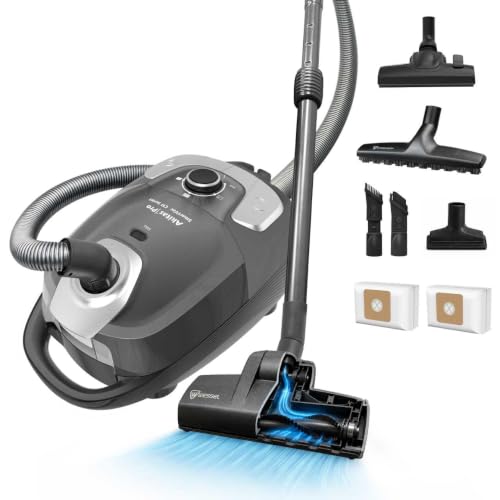
Pet hair wraps tightly around brush rolls, so an anti tangle comb or an easily removed roll saves real time if you have cats or dogs. A small motorized tool lifts hair from rug covered stairs and upholstered edges without dragging the full floor head, and a crevice tool pulls litter and kibble from along baseboards. Check that the main head opens without special tools, because a roll you cannot reach will stay clogged. Homes comparing rug focused models may also want to read about the best canister vacuum for rugs for general pile care beyond oriental styles. Store pet tools in a small caddy so they are present when hair builds up, not lost.
Corded vs Cordless Runtime
Most rug ready canisters are corded, and that is usually an advantage, because you get full suction for a whole house session with no fade near the end. Cord length plus hose reach, often called the cleaning radius, matters more than cord length alone, so look for a total radius that covers your largest room from one outlet. Cordless canisters and sticks offer freedom for quick jobs but often run only about twenty to forty minutes on high power, which is rarely the setting rugs need most yet still drains fastest. If you go cordless, a removable battery and a second pack option protect you from a half cleaned room.
Common Mistakes to Avoid When Buying Canister Vacuums
- Shopping on price alone and ignoring brush shutoff, which is the feature that protects fringe and binding.
- Choosing the wrong vacuum type for your floors, such as a heavy upright for a home of fragile flat weaves.
- Buying too much machine for a small flat or too little suction control for a house of mixed pile heights.
- Skipping the warranty terms and the cost of bags, belts, and filters over the first few years of ownership.
- Assuming a robot can replace deep cleaning, when even the best robot vacuum for oriental rugs mainly maintains surface dust between proper sessions.
Care and Maintenance Tips
Empty the bin before it is full or change the bag when it feels about two thirds packed, because airflow drops long before the container looks stuffed. Wash or replace filters on the schedule in the manual, and let washable filters dry fully for a full day before refitting them, since damp media chokes suction and can smell. Cut hair off the brush roll with small scissors after pet heavy weeks, working along the groove many rolls provide. Vacuum your rug on a moderate setting weekly, shake smaller rugs outdoors when you can, and rotate heavy rugs about twice a year so foot traffic and sunlight spread evenly. Readers with several rug types can compare notes in our guide to the best canister vacuum for area rugs, since area rug care overlaps in useful ways.
FAQs
What features matter most in canister vacuums for oriental rugs?
Variable suction and a brush roll that switches off matter most, because they let you clean deeply without fraying fringe or distorting thin weaves. After that, look for soft wheels, a sealed filtration path, and a head that seals well on low pile. One extra check is hose swivel quality, since a hose that twists freely lets you change direction on a large rug without dragging the canister body across the pattern.
What type of canister vacuum is best for my home?
A midsize corded bagged or bagless canister suits most homes, with bagged models often kinder to allergy sufferers because emptying releases less dust. Choose a compact light body if storage or stairs dominate your routine, and a premium sealed model if you clean many large rugs weekly. Count your outlets and measure your largest room first, because cleaning radius quietly decides how pleasant the machine feels in daily use.
Are cordless vacuums strong enough for carpet?
Yes, on low and medium pile many cordless models now clean carpet credibly, but runtime on the highest setting is often short and suction can dip as the battery drains. For thick oriental rugs or whole house sessions, a corded canister stays more consistent. A sensible setup is a corded canister for the weekly deep clean and a cordless stick for crumbs and entry mats, rather than asking one battery machine to do every job in the house.
Is HEPA filtration necessary?
HEPA filtration is not strictly necessary, but a fully sealed system with a HEPA filter helps a lot if anyone at home has asthma or dust allergies. The seal matters as much as the filter itself, because unfiltered air leaking around a cheap housing defeats the upgrade. Brand focused shoppers sometimes compare filtration across lines, and our guide to the best miele vacuum for oriental rugs shows how one maker approaches sealed systems. If allergies are severe, talk with your doctor about home dust control beyond vacuuming.
How often should I replace the filter?
Most foam and fabric pre motor filters need washing or replacing about every three months, while sealed HEPA exhaust filters commonly last six to twelve months. Homes with pets or renovation dust should check monthly, because a gray clogged filter cuts suction before it looks obviously dirty. Write the change date on a small label on the filter frame, a simple habit that removes guesswork and keeps performance steady between deep cleaning days.
Our Verdict
Match the machine to your most delicate rug first, then check weight, radius, and running costs against your routine. Variable suction, brush control, and a sealed path are the three criteria that protect value in the rug itself, which is worth far more than the vacuum. Compare your shortlist in the product table above, and you will land on the best canister vacuum for oriental rugs for the way you actually clean.