Best Camping Freezers in 2026: The Buyer Checklist
Disclosure: We may earn a commission when you buy through links on this page, at no extra cost to you. As an Amazon Associate I earn from qualifying purchases. Learn more

Compare the best camping freezers by capacity, zone layout, power draw and portability, with a checklist for car camping, overland and off grid trips.
A camping freezer changes how you eat on the road. Meat, dairy and frozen meals stay solid for days, with no ice runs and no soggy packaging. The best camping freezers match your vehicle, your power supply and your trip length. Use this checklist to read the comparison table below with clear priorities.
Start with three questions. How much food must stay frozen, how will you power the unit away from mains power, and where will it ride in your vehicle? Your answers point to a size, a zone layout and a power budget, and the sections below turn them into simple checks.



Who Should Buy Camping Freezers?
Buy for the trip you repeat most often, because size and power needs grow fast as trips get longer.
Weekend Car Campers Who Cook Fresh Meals
You drive a few hours, set up once and cook for two to four people over two or three nights. A mid size unit of about 35 to 45 liters holds frozen meat, vegetables and ice cream without crowding your trunk. Prioritize low power draw and a secure lid, since your vehicle battery may be your only power source.
Overland Travelers Who Move Camp Each Day
You drive rough tracks, sleep in a new place most nights and rely on frozen food for a week or longer. Choose a metal cased unit with strong handles that double as tie down points, and check that it runs while tilted. A dual zone layout lets you freeze meat hard while keeping drinks cool but not frozen.
Family and Group Campers Who Freeze Meals Ahead
You cook and freeze meals at home, then reheat them at camp for a group of five or more. Look at about 50 to 65 liters and a basket system that lifts food out in layers. Plan a separate portable battery, because a load this size draws too much for a starter battery alone.
Key Features to Compare
Score each factor in order. A unit that fails on power or fit will frustrate you no matter how cold it gets.
Capacity and Usable Freezer Space
Capacity is listed in liters, and usable space is always less than the headline number once baskets and the compressor step are counted. About 10 liters holds two to three days of frozen food for one person. Pack food flat in thin bags, because bulky boxes waste space and block cold air. Choose the smallest size that fits your longest usual trip.
Zone Layout and Temperature Control
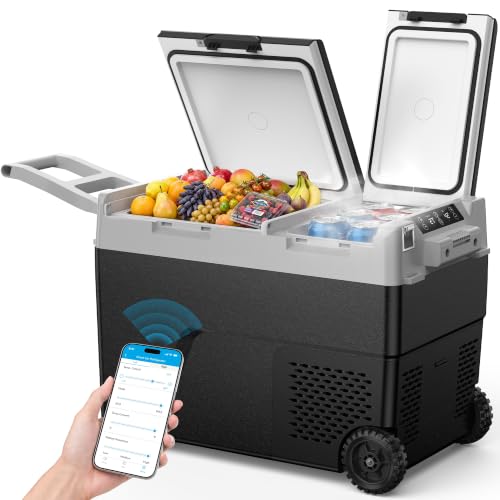
A single zone unit holds one temperature, so set it low and everything freezes, or set it higher and it works as a fridge only. A dual zone unit has two compartments with separate controls, so meat can sit at minus 4 degrees Fahrenheit while drinks stay just above freezing. Choose dual zone only if you regularly carry frozen and fresh food together.
Power Draw and Battery Protection
Most camping freezers run on 12 volt vehicle power, mains power at home and a portable battery or solar setup at camp. Look at average draw in amps, not only the peak figure, because the compressor cycles on and off. Battery protection matters even more. It cuts power before your starter battery falls too low to start the engine, so use the high setting when running from the vehicle alone.
Insulation, Lid Seal and Hot Weather Performance
Thick wall insulation and a tight lid seal decide how hard the compressor works on a hot afternoon. A unit in a vehicle at 95 degrees Fahrenheit may cycle twice as often as one in shade, so holding cold is also a power saving feature. Check that the lid latches firmly and the seal sits flat all around.
Compressor Noise and Vibration in Camp
A camping freezer compressor makes a low hum each time it cycles, heard most inside a van at night. Quieter models rate around 40 to 45 decibels, close to a soft conversation. Place the unit on a firm, flat surface away from where you sleep, because a loose panel can turn a mild hum into a rattle.
Size, Weight and Carrying the Unit Loaded
Measure the cargo space and the tailgate opening before you order, and leave room around the vents. A loaded 45 liter unit can weigh 50 to 65 pounds, so two strong handles and a second person for lifting are realistic needs, not extras. Wheels help on smooth ground but add little on sand or rough grass.
Camping Freezer Types and Sizes for Specific Trips
True compressor models are the only portable units that freeze reliably in summer heat, and the best camping freezers all use a compressor rather than a thermoelectric chip. They cost more, but they hold a set temperature instead of chasing the weather outside.
For one box that can switch roles, see our guide to the best camping fridge freezers. For short trips where food only needs to stay cool, see our guide to the best camping coolers, because a cooler costs far less and needs no power.
Best Small Camping Freezers
Small models of about 20 to 30 liters suit solo drivers, couples and day boats that still need real freezing. They fit behind a seat, draw less power and are light enough to carry loaded with a handle in each hand. The trade off is discipline. You can freeze meat for two or pack ice cream and ice, but not both in quantity.
Thermoelectric Coolers Versus True Compressor Freezers
Thermoelectric boxes cool to a set drop below the air around them, so on a 95 degree day the inside may reach only about 60 degrees Fahrenheit. That is fine for drinks and unsafe for raw meat held over days. Compressor models hold the temperature you set almost regardless of the weather. If a listing avoids the word compressor, read it as a cooler, not a freezer.
Questions to Settle Your Size and Power Plan
Answer each question before you order. A no on any of the first four usually means a different size or power plan. Build quality also varies widely, so see our guide to the best quality freezers if long service life matters more than the lowest price.
- Does the closed unit fit your cargo area with vent space on every side?
- Can your battery or solar setup cover a full hot day of use?
- Is the capacity right for your longest usual trip, with little empty space?
- Can two people lift the unit safely when it is fully loaded?
- Does the battery protection setting suit your chosen battery?
- Will the lid open fully where the unit rides?
- Is the noise level low enough for sleeping nearby?
Common Mistakes to Avoid
- Buying the largest size you can afford leaves you hauling extra weight and draining your battery faster.
- Running the freezer from a starter battery with no protection setting can leave your vehicle unable to start.
- Packing warm food from the store makes the compressor run for hours and can thaw food inside.
- Blocking the side vents with luggage causes overheating, weak cooling and early compressor wear.
- Trusting a powered cooler headline and using it as a freezer leaves raw meat at unsafe temperatures.
Care and Maintenance for a Camping Freezer
Empty the unit after each trip, wipe the inside with a mild soap solution and dry it fully with the lid open. Spills left in a warm, closed box grow odor fast, and moisture under the seal can start mold. Clean the seal groove with a soft cloth, and never chip ice with sharp tools, because a punctured inner wall ends the unit.
Store the freezer dry with the lid slightly open, keep the cord loosely coiled and clear dust from the vents before each season. Run it for an hour at home before a long trip so a fault shows up early. For home overflow storage, see our guide to the best upright freezers instead.
FAQ
How much electricity does a camping freezer use on a trip?
A camping freezer typically uses about 20 to 40 amp hours per day in mild weather, and more during heat waves. A panel rated at about 100 watts in clear sun can replace much of that use, but parking in shade can cut its output sharply, so size your battery for the shaded case.
What size camping freezer does a family of four need for a long weekend?
A family of four usually needs about 35 to 45 liters for a long weekend of frozen food. Keep drinks in a separate small cooler, because drinks steal space and warm the box each time the lid opens. Frozen water bottles in the gaps hold cold while the compressor rests and become drinking water later.
How long should a camping freezer last before replacement?
A camping freezer kept dry and ventilated often lasts about 8 to 12 years. The compressor is rarely the first part to fail. Hinges, lid seals, cords and control panels usually wear out first, so check spare availability when you buy. Constant running with a warming interior is the clearest sign that replacement is near.
Can a camping freezer run safely while tilted on uneven ground?
Yes, a camping freezer can run while tilted, within the limit the maker states, often around 30 degrees for short periods. Level it as well as you can for overnight stops, because long running at a steep angle strains the compressor. After steep driving, rest it briefly on level ground first.
Can a camping freezer keep ice cream properly frozen at camp?
Yes, a camping freezer keeps ice cream firm if you set it to 0 degrees Fahrenheit or lower. Tubs soften fastest near the lid, where warm air enters each time you open it. Bury tubs low in the middle of the load, open them last and close the lid quickly.
The Bottom Line
Match capacity to your longest usual trip, protect your battery first and treat insulation as a power feature, not a comfort extra. Then use the product table above to compare models that pass those checks.
When you judge best camping freezers by those three tests, the right choice is rarely the biggest or the cheapest. It is the unit that fits your vehicle, sips power and is still keeping food solid on the last morning of the trip.