
Best Camping Cutlery Sets: 2026 Camp Dining Guide
Disclosure: We may earn a commission when you buy through links on this page, at no extra cost to you. As an Amazon Associate I earn from qualifying purchases. Learn more

Compare materials, piece counts and cases to choose the best camping cutlery sets that pack small, stay together and handle real camp meals.
A best camping cutlery sets choice seems small until you are eating stew with a flimsy fork or searching a bag for a missing spoon. Good camp cutlery packs together, feels solid in the hand, and handles hot, hearty camp food without bending. The comparison table below compares the main camp cutlery materials side by side.
Camp cutlery differs from home cutlery in weight, packing, and durability. It must survive drops, pack into a tiny case, and resist rust after washing in basic conditions. Some sets include only the basics, while others add a knife, opener, and small tools. This guide compares materials and piece counts, and helps you choose between a personal set and a family set.

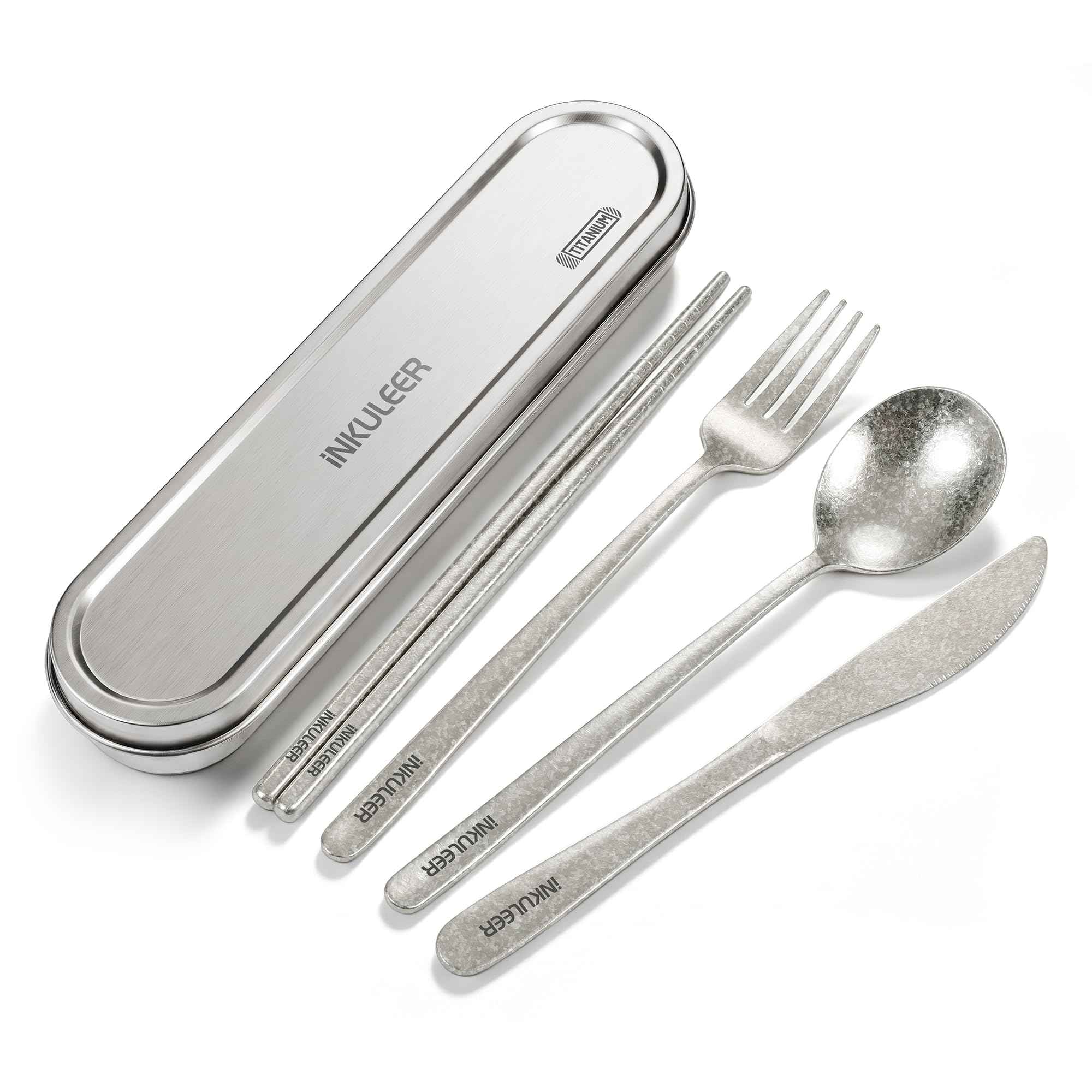


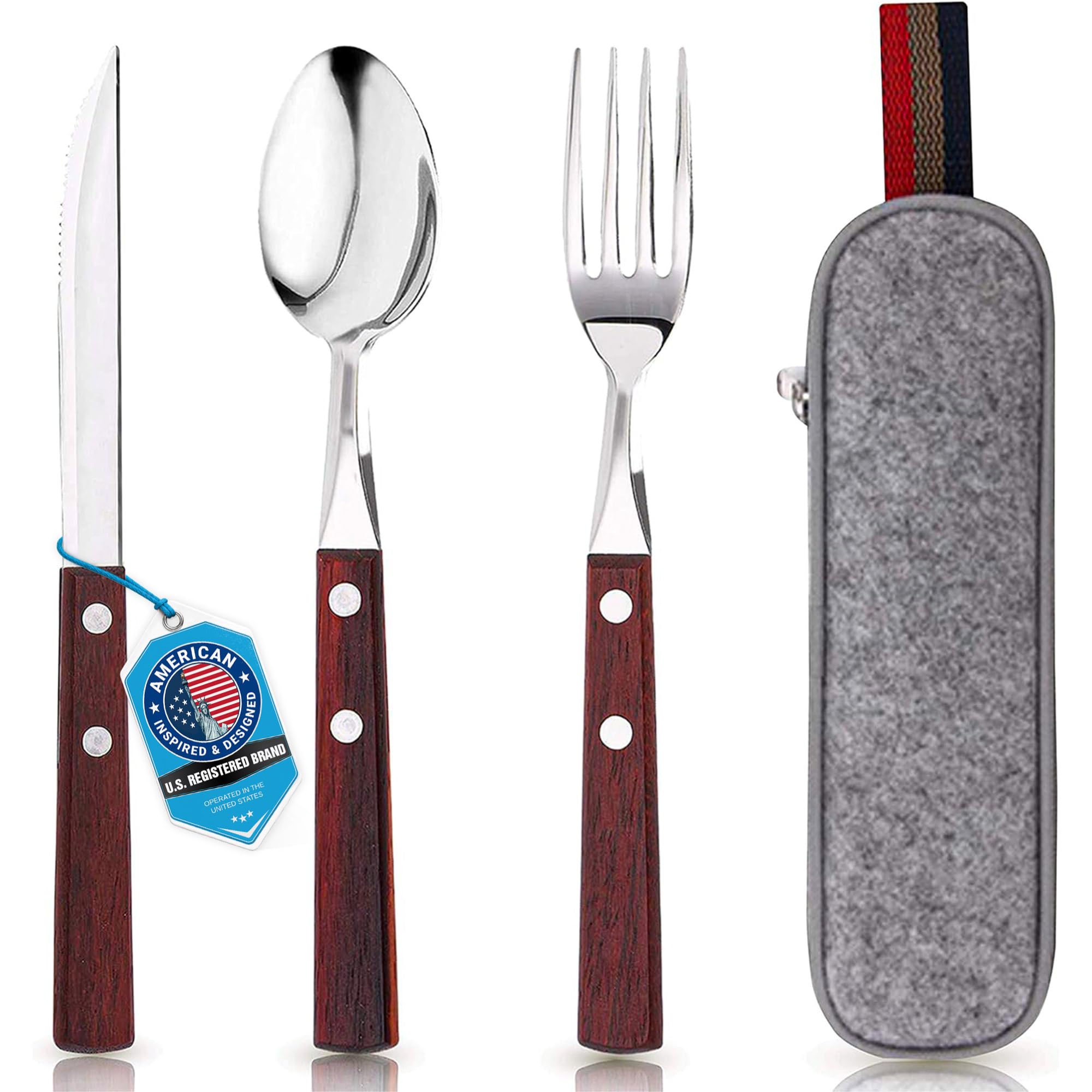


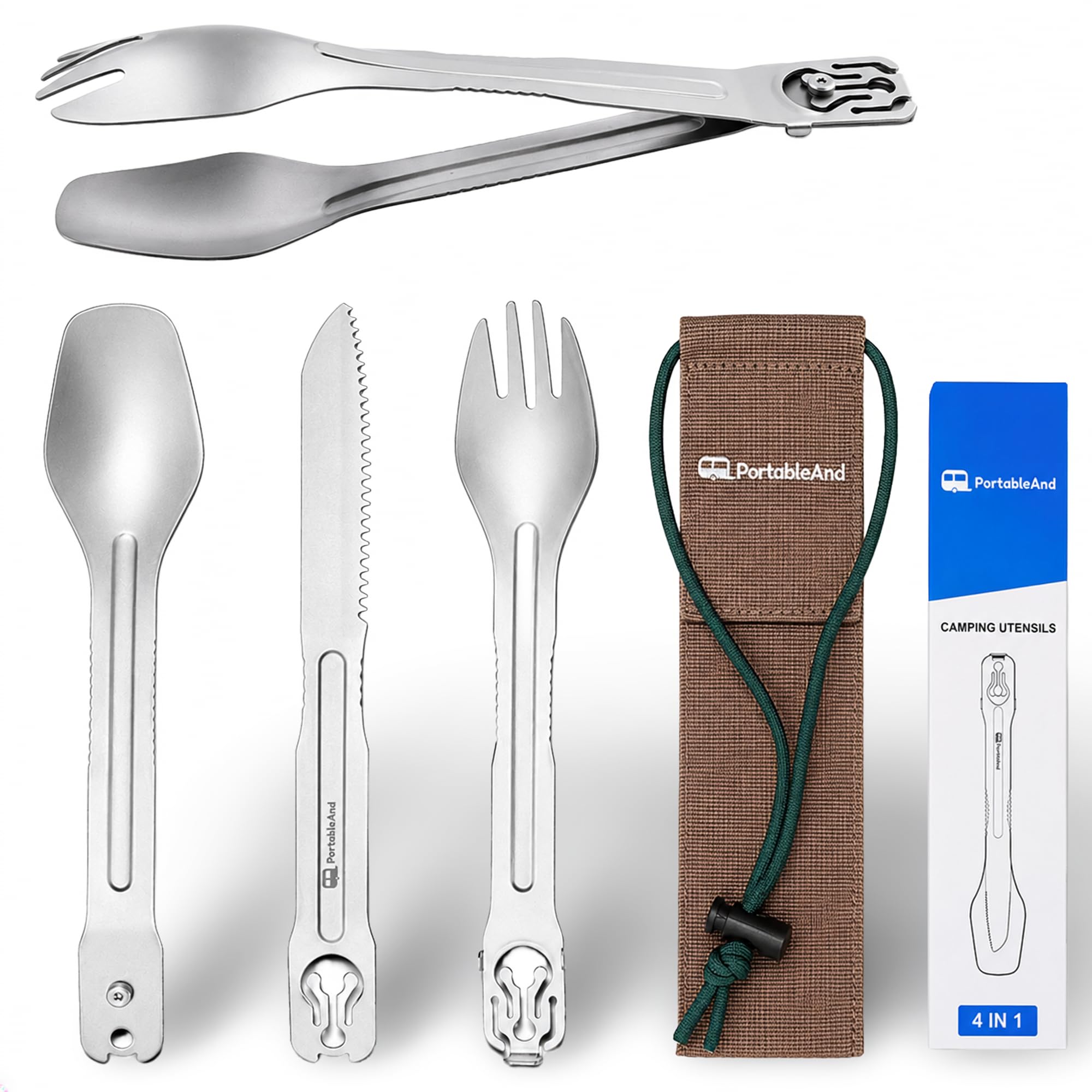

Who Should Buy a Camping Cutlery Set
Solo backpackers need a light personal set: a fork, spoon, knife, and maybe chopsticks in a tiny pouch. Titanium or light steel sets keep weight down without feeling flimsy. A spork can replace fork and spoon for the lightest kits, though it compromises on both jobs.
Family car campers can carry a full set with real sized pieces for everyone, plus serving tools. A roll up case keeps the set organised and easy to grab from the camp box. Group leaders and scout groups often buy several matching sets so pieces stay together and losses are easy to spot.
Camping Cutlery Sets Materials Compared
Stainless steel is the best all round camp cutlery material. It resists rust, feels solid, handles hot food, and lasts for years. Full sized steel pieces weigh more than titanium, but for car camping that hardly matters. Look for smooth edges and solid handles rather than hollow handles that bend.
Titanium sets are lighter and very strong, but they cost more and can feel thin in the hand. They suit backpackers who count grams. Bamboo sets feel pleasant and pack light, but they need thorough drying to avoid mould and may stain with sauces. Plastic sets are cheap and light but bend with hearty food and melt near stoves, so treat them as backup rather than main kit.
Piece Counts and Cases
Count what you actually need. A basic personal set has a fork, knife, and spoon. A fuller set adds a teaspoon, chopsticks, a bottle opener, and a small spreader. Family sets multiply the basics by the group size and add serving spoons and a carving knife, so avoid sets padded with tools you never use, since they add weight and clutter.
The case matters as much as the cutlery. A roll up fabric case, a zip pouch, or a hard case all keep pieces together and protect other gear from sharp edges. Check that the case closes securely and fits your bag. A case with a loop or clip lets you hang the set at camp for easy access.
Care at Camp and at Home
Wash camp cutlery soon after meals, since dried food sticks hard and sauces stain bamboo. Dry steel fully before packing to prevent water spots, and dry bamboo thoroughly to prevent mould. At home, wash and dry the set before storage, and check handles and joints for loosening after each trip.
Keep sharp knives in a sheath or a separate slot, not loose with other pieces, to protect edges and fingers. Replace a bent or cracked piece promptly, since damaged cutlery can break during a meal and leave sharp fragments. A well cared steel set can last decades of camping.
A Final Check Before You Order
Before you order, hold the pieces if you can, since cutlery feel decides whether a set gets used or stays in the bag. Full sized steel pieces feel civilised for real meals, while tiny folding pieces can feel awkward with hearty camp food. A set that feels good in the hand at home will feel good at camp, while a set that feels flimsy in the shop will feel worse when you are hungry.
Check the case design against your packing style: a roll up case suits a camp box, a zip pouch suits a backpack pocket, and a hard case suits a car kit. The case should close securely, protect other gear from sharp edges, and let you count pieces at a glance. A case that pops open in transit scatters cutlery through your bag and risks lost pieces.
Finally, check the piece list against your real meals, not an ideal menu. A set with a carving knife suits group roasts, while a set with chopsticks suits noodle lovers, and a set with a bottle opener suits evenings around the fire. Buy the set that matches your camp cooking, not the set with the longest piece list.
Related Buying Guides
If you want a full camp kitchen bundle, our guide to best camping sets covers kits that include cutlery, and best cutlery sets helps if you also want a matching set for home.
Frequently Asked Questions
What should a camping cutlery set include?
A personal set should include a fork, knife, and spoon at minimum, with a teaspoon and chopsticks as useful extras. A family set multiplies those basics by the group size and adds serving spoons and a carving knife. Avoid sets padded with tools you never use, since they add weight and clutter. A good case that keeps pieces together matters as much as the piece count itself.
Is stainless steel or titanium better for camp cutlery?
Stainless steel suits most campers, since it resists rust, feels solid, handles hot food, and costs less. Titanium suits backpackers who count every gram, since it is lighter and very strong, but it costs more and can feel thin. For car camping, steel is the better value. For long trails where pack weight matters, titanium earns its price.
How do I keep camp cutlery together?
Use a roll up case, zip pouch, or hard case that holds each piece in its own slot. Pack the set in the same bag pocket every trip so you notice a missing piece before you leave camp. Count pieces when you pack up, just as you count tent pegs. A bright coloured case is easier to spot in a dark bag or tent.
Can I put camp cutlery in a dishwasher?
Most stainless steel camp cutlery can go in a dishwasher at home, but check the maker guidance for handles, cases, and bamboo pieces. Bamboo should be hand washed and dried thoroughly to prevent mould. Titanium is usually dishwasher safe, but hand washing extends the life of any set. Always dry pieces fully before storage to prevent spots and rust.
What size cutlery suits camping?
Full sized pieces feel best for real meals, especially for car camping and family trips. Compact or folding pieces save space for backpacking but can feel awkward for hearty food. A good compromise is a personal set with near full sized fork and spoon and a compact knife. Test the feel at home with a real meal before you rely on a set for a long trip.
Final Thoughts
Choosing best camping cutlery sets gear is about material, piece count, and a case that keeps everything together. Steel suits most campers, titanium suits light packs, and a full sized set suits real camp meals. The product table above can help you compare materials side by side. Pack a set you enjoy using, count it when you pack up, and camp meals will feel much more civilised.


