
Best Camping Cookware Sets: Materials and Sizes for 2026
Disclosure: We may earn a commission when you buy through links on this page, at no extra cost to you. As an Amazon Associate I earn from qualifying purchases. Learn more

Compare aluminum, stainless steel, titanium and cast iron to choose the best camping cookware sets for your group, stove and pack space.
Good camp cookware turns a pile of ingredients into dinner without scorching the food or filling the car. The best camping cookware sets give you the pots, pans and lids you actually use, nest into one compact bundle and clean up without a full kitchen sink. This guide compares the main materials, explains what to look for in a set and shows how to match one to your group and your stove.
Use the comparison table below to see the types side by side, then read on for the details that decide whether a set is a pleasure or a chore to use.

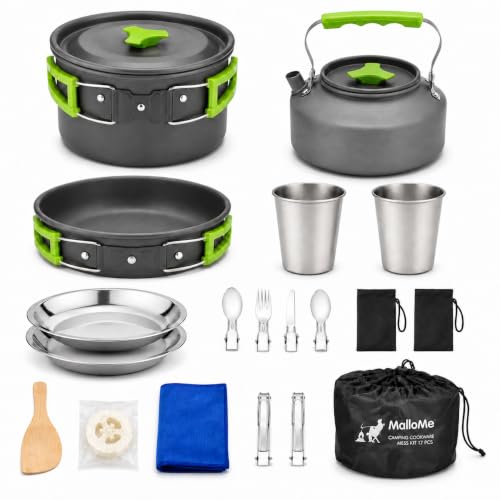

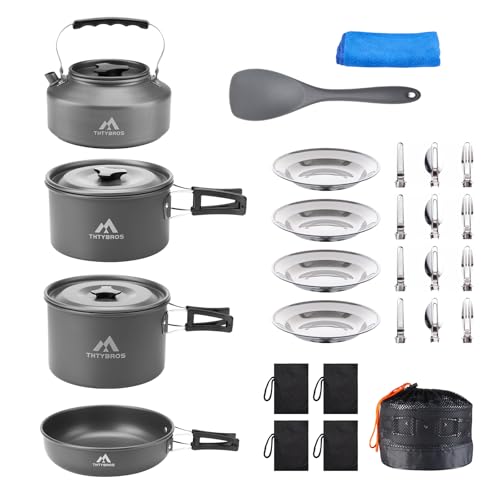
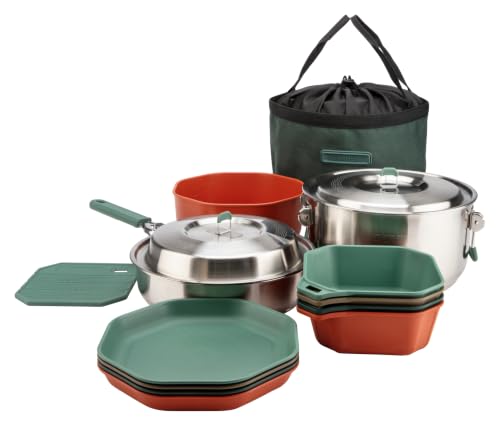


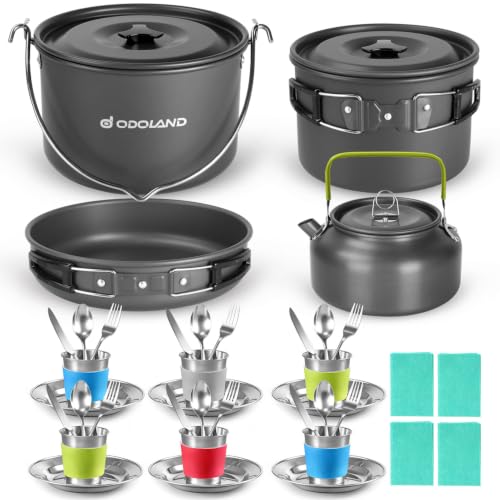
Who Should Buy Which Kind of Set
Backpackers and Solo Campers
If you carry everything, choose a small set built around one pot and a lid that doubles as a pan. Look at titanium or thin aluminum, since weight matters more than durability. Most solo cooking is boiling water and simple one pot meals, so a pot of about 1 to 1.5 liters is plenty.
Couples and Small Groups
Two to four people usually want a pot of 2 to 3 liters, a frying pan and a lid or two. A hard anodized or nonstick aluminum set heats evenly and cleans easily, and it is light enough for a short walk from the car.
Families and Car Campers
Car campers can afford larger, heavier sets with a stockpot, a skillet and a kettle. Stainless steel and cast iron take rough treatment and last for years, while nonstick sets are easier to clean with limited water.
Camping Cookware Sets Materials Compared
Aluminum
Aluminum is light, cheap and a good heat conductor, which is why most budget camp sets use it. Thin pots can scorch food on a hot flame, so keep the heat low and stir. Hard anodized aluminum is tougher and more scratch resistant, and many sets add a nonstick coating.
Stainless Steel
Stainless steel is durable, does not react with acidic food and handles rough use. It is heavier than aluminum and heats less evenly, so look for a set with a thick base. It is a good choice for car camping and for people who cook over open flame.
Titanium
Titanium is very light and strong, but it costs more and conducts heat poorly, so it heats unevenly and is best for boiling water. It suits ultralight hikers who cook simple meals.
Cast Iron
Cast iron holds heat for searing and baking and can sit directly on coals, but it is heavy and needs seasoning. It is a car camping material, not a backpacking one.
Nonstick Coatings
Nonstick makes cleaning easy when water is short, but the coating can scratch if you use metal utensils or pack the pans without a protector. Use wood or silicone tools and do not heat an empty pan.
What to Look For in a Set
Nesting Design
Pots that nest inside each other with the pan and lids on top save a lot of space. Check that the set stacks into one bundle and that the handles fold flat or detach. A mesh bag keeps the pieces together and keeps soot off the rest of your gear.
Capacity and Piece Count
Match the pot sizes to your usual meals. Large piece counts often include mugs, plates and utensils you may already own, so compare what is actually included and skip sets padded with extras.
Handles That Stay Usable
Handles should lock firmly, stay cool enough to grip with a cloth and fold without pinching. Silicone covered handles are comfortable but should be kept away from direct flame. A pot grip or lifter adds safety with hot pots.
Stove Compatibility
Check that the set suits your stove. A wide pot on a tiny canister stove is unstable, and a thin pot over a two burner stove may scorch. Heat exchanger pots work only with matching burners.
Care and Cleaning
Soak stuck food with a little warm water, scrub with a soft pad and use biodegradable soap well away from streams and lakes. Dry the set before packing it to prevent odors and corrosion. Re-season cast iron after washing, and avoid metal tools on nonstick. Check handles and rivets for looseness before each season and replace any piece that is warped or has a flaking coating.
Common Mistakes to Avoid
- Buying a huge set for solo trips, then carrying pieces you never use.
- Choosing thin aluminum for hot flame cooking, which scorches food.
- Ignoring stove fit, so pots tip or do not heat evenly.
- Packing nonstick pans without a layer between them, so the coating scratches.
- Leaving the set damp in a bag, which causes smells and corrosion.
More Camp Kitchen Planning
If you are also buying dishes and utensils, our guide to best camping sets covers complete camp kitchen kits that bundle cookware with plates and cutlery.
Frequently Asked Questions
What size pot do I need for camping?
For one person, about 1 to 1.5 liters. For two to four people, 2 to 3 liters. Larger groups benefit from a stockpot and a second pot so one dish can stay warm while another cooks.
Is nonstick safe for camp cooking?
Yes, if you follow the maker's heat limits and avoid scratching the coating. Use wood or silicone tools, do not heat an empty pan, and replace any pan whose coating is flaking.
Can I use camping cookware on a campfire?
Some sets can, but soot will blacken the pots. Stainless steel and cast iron tolerate open flame best, while nonstick coatings and plastic handles can be damaged. Check the maker's instructions.
How do I clean camping cookware without much water?
Scrape off food, wipe the pot with a paper towel, then wash with a little warm water and biodegradable soap. Dispose of wash water well away from water sources.
Is a bigger piece count better?
Not necessarily. A smaller set with the pots and pan you will use is better than a long list that includes pieces you already own. Check what is included before comparing prices.
Final Thoughts
Pick the material for your style of camping, check the pot sizes and nesting and make sure the set suits your stove. The product table above makes it easy to compare current options, and the best camping cookware sets for your trips are the ones that cook your usual meals and pack into a single bundle.


