
Best Camping Axes: A First Time Buyer's Guide for 2026
Disclosure: We may earn a commission when you buy through links on this page, at no extra cost to you. As an Amazon Associate I earn from qualifying purchases. Learn more

A first time buyer guide to camping axes: hatchets vs camp axes, steel, handles, sheaths and safe use at camp.
A good camping axe makes splitting kindling, trimming branches and driving tent stakes quick work, while a poor one bounces, sticks or loosens at the head. Camping axes range from compact 12 inch hatchets to 26 inch camp axes, and from $30 composite handles to hand forged Swedish heirlooms. If you are buying your first one, this guide to the best camping axes explains what matters so you can choose with confidence.
We cover the basics, explain each spec in plain English, list rookie mistakes and walk through first use. An axe is a serious cutting tool: wear sturdy boots and eye protection, clear a wide swing area, split on a stable chopping block rather than the ground, keep the sheath on when carrying and never let children use one without close adult supervision. Many campgrounds limit cutting live trees, so use only downed wood where allowed.



Camping Axes 101: The Basics
A camping axe has a head with a sharpened bit on one side and a flat poll on the other, mounted on a handle of wood, composite or steel. Hatchets are short, usually 12 to 15 inches, and used with one hand for kindling and small branches. Camp axes or pack axes run about 16 to 26 inches and are swung with two hands for bigger splitting and chopping. Splitting axes have wedge shaped heads that push wood fibers apart, while chopping axes have thinner bits that cut across the grain.
A few terms show up often. Forged heads are shaped from heated steel, usually stronger than cast heads. Full tang or one piece designs, like Estwing's, connect head and handle with no joint to loosen. Hickory is the classic wood handle material because it absorbs shock. Composite handles, like Fiskars' FiberComp, resist weather and do not loosen.
How to Choose the Best Camping Axes: Key Specs in Plain English
Six factors decide which camping axe suits you: size and weight, head and steel, handle, safety features, ease of use and support.
Size and Weight
Choose size based on how you camp. Backpackers and canoe campers need light hatchets around 12 to 15 inches, like Estwing's 12 inch Sportsman's Axe, Fiskars' 14 inch X7 and Gränsfors Bruk's 13.5 inch Wildlife Hatchet. Car campers who split real firewood benefit from longer axes like Gerber's 17.5 inch Freescape, Council Tool's 16 inch Camp Carver or Estwing's 26 inch Camper's Axe. Longer handles generate more power but weigh more and need more swing room.
Head Design and Steel
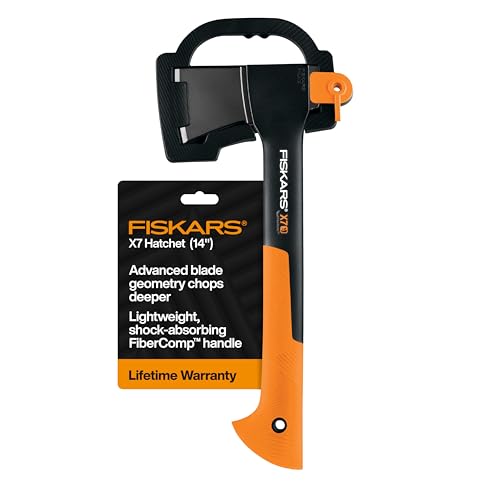
Head shape decides whether an axe splits or chops better. Fiskars says its X7 head uses proprietary blade grinding and an insert molded head that stays sharper longer, plus a low friction coating that prevents sticking.
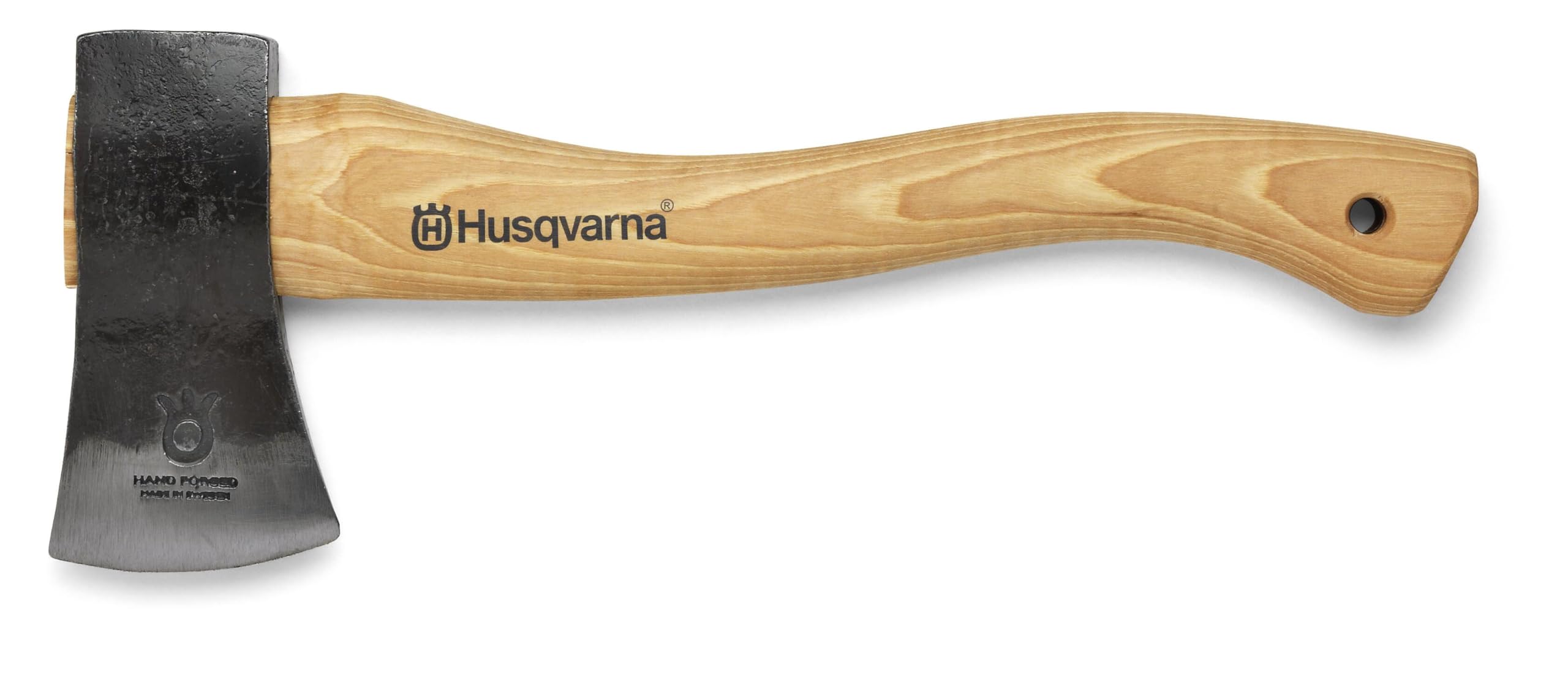
Husqvarna's hatchet uses a 1.32 pound hand forged Swedish steel head. Purple Dragon's hatchet lists a hand forged carbon manganese steel splitting face. Hand forged Swedish and American heads, like Gränsfors Bruk's and Council Tool's, are prized for edge retention and balance.
Handle Material and Grip
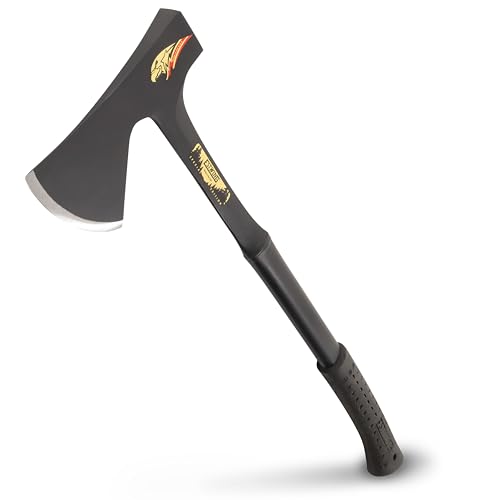
Handles affect comfort, shock and durability. Hickory handles, used by Husqvarna and Purple Dragon, absorb shock and feel traditional but need oiling and can loosen in dry climates. Fiskars' shock absorbing FiberComp handle resists weather and reduces hand fatigue. Estwing's one piece steel designs use a genuine leather grip on the Sportsman's Axe or a molded Shock Reduction Grip on the Camper's Axe, which Estwing says reduces impact vibration by 70 percent.
Safety Features
A good sheath is the most important safety feature. Estwing includes ballistic nylon sheaths with belt loops, Husqvarna includes a leather sheath and Purple Dragon includes a hand stitched leather holster. Secure head attachment prevents dangerous head loss; one piece and insert molded designs, like Estwing's and Fiskars', cannot loosen. Non slip grips help when hands are wet or cold.
Ease of Use and Sharpening
Balance matters more than raw weight. Fiskars highlights its power to weight ratio for faster swings.
A sharp edge is safer than a dull one, since dull axes glance off wood. Gränsfors Bruk sells its Wildlife Hatchet in a bundle with a ceramic grinding stone. Carry a small axe file or puck sharpener to touch up the edge at camp.
Warranty and Brand Support
Fiskars lists a lifetime warranty on the X7. Estwing builds its axes in the USA, and Council Tool also makes its axes in the USA. Gränsfors Bruk and Husqvarna hatchets are made in Sweden. Established brands make it easier to find replacement sheaths and support.
Price vs Value
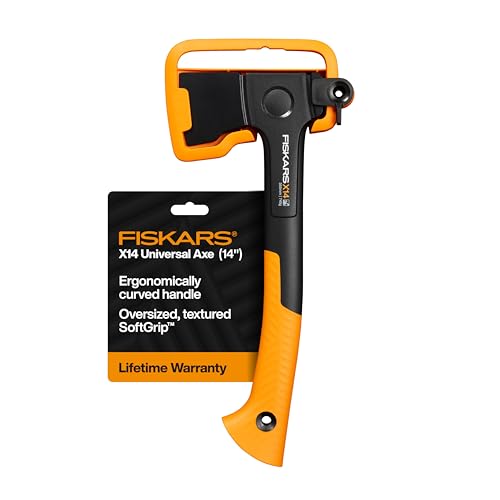
Budget hatchets cost around $29 to $44, including Fiskars' X14 around $29, Fiskars' X7 around $36, Purple Dragon's hand forged hatchet around $38 and Estwing's Sportsman's Axe around $43. Mid range axes cost around $62 to $77, such as Estwing's Camper's Axe around $62, Husqvarna's hatchets around $67 to $75 and Gerber's Freescape around $77. Premium handcrafted axes cost around $171 to $185, like Council Tool's Camp Carver around $171 and Gränsfors Bruk's Wildlife Hatchet around $185.
Axe vs Saw vs Knife at Camp
An axe is not the only way to process firewood, and the best kits often combine tools. A folding saw cuts branches and logs to length quietly and safely, an axe or hatchet splits those rounds into smaller pieces and a sturdy fixed blade knife handles feather sticks and fine kindling. If you mostly burn store bought firewood bundles, a hatchet alone may be all you need. If you gather downed wood, pairing a saw with a mid size axe like Gerber's Freescape or Estwing's Camper's Axe is faster and safer than chopping long branches with an axe.
Rookie Mistakes to Avoid
- Splitting on the ground. Rocks and dirt dull the edge and the axe can bounce. Use a stable chopping block.
- Choosing too large an axe for backpacking. Heavy axes add weight you may not need for kindling.
- Swinging toward your legs. Kneel or position wood so a missed swing goes into the block, not your shin.
- Leaving the axe unsheathed. Bare blades cause cuts around camp. Sheath it every time you set it down.
- Using a hatchet as a hammer on metal. Pounding metal stakes can crack or deform the poll on some heads.
Getting Started: Setup and First Use
Inspect the axe when it arrives. Check that the head is tight, the edge is sharp and the sheath fits snugly. For wooden handles, rub a little boiled linseed oil into the handle before first use. Practice at home on split firewood before your trip.
At camp, set up a chopping block on firm ground and clear a circle at least one axe length plus your arm length around you, with no people nearby. For small kindling, use a baton method: place the hatchet on the wood and tap the back with another piece of wood rather than swinging. Wear gloves and eye protection, stand with feet apart and swing with control. When finished, wipe the blade, sheath it and store it out of reach of children.
Choosing for Your Situation
Backpackers should choose light hatchets like Estwing's Sportsman's Axe or Gränsfors Bruk's Wildlife Hatchet. Car campers and families who build big campfires do well with Fiskars' X7 for kindling plus Estwing's 26 inch Camper's Axe for splitting. Bushcraft fans who enjoy carving and traditional tools may prefer Council Tool's Camp Carver or Husqvarna's hickory hatchet. Budget campers get great value from Fiskars' X7 or X14, and Gerber's Freescape is a sturdy middle ground for truck and car camping.
Camping Axes: Your Questions Answered
How long does a camping axe last?
A quality camping axe can last decades with proper care. One piece steel and composite handled axes resist breakage, while wooden handles may eventually need replacing. Keep the edge sharp, store the axe dry and oil wood handles to extend its life.
What specs matter most?
Length, head weight, handle material and sheath quality matter most. Choose a length that matches your camping style, a head heavy enough to split your typical wood and a handle that feels comfortable and absorbs shock. A sturdy sheath is essential for safe carrying.
Is a hatchet or a camp axe better for camping?
A hatchet is better for backpacking and kindling, while a longer camp axe is better for splitting larger firewood. Many car campers carry both. If you only bring one, a 14 to 17 inch axe like Fiskars' X7 or Gerber's Freescape balances portability and power.
Do I need to sharpen a new axe?
Most quality axes arrive sharp enough for camp use, but touch ups keep them safe. A sharp edge bites into wood instead of glancing off. Carry a small file or puck sharpener and hone the edge every few uses.
Are expensive axes worth it?
Premium handcrafted axes are worth it for frequent users and bushcraft enthusiasts who value balance and edge retention. Gränsfors Bruk and Council Tool axes can last generations. For occasional campers, Fiskars and Estwing offer excellent performance for much less.
How do I care for an axe between trips?
Clean, dry and lightly oil the head, then store it sheathed in a dry place. Wipe off sap with a little mineral spirits, apply a thin coat of oil to prevent rust and rub boiled linseed oil into wooden handles a few times a year. Check that the head is tight before each trip.
Can I bring an axe to any campground?
Most campgrounds allow axes, but many prohibit cutting live trees or gathering wood. Check park rules before you go, use only downed wood where permitted and consider buying local firewood to avoid spreading insects.
Final Thoughts
When choosing a camping axe, focus on three things: a length that fits how you camp, a strong, well attached head and a comfortable handle with a reliable sheath. Fiskars' X7 is a great all round value, Estwing's Sportsman's and Camper's Axes suit backpacking and car camping, Husqvarna and Gerber suit campers who want classic or rugged designs and Gränsfors Bruk and Council Tool suit enthusiasts. The best camping axes make camp chores safer, faster and more enjoyable.
For more camping guides, see the best camping tents, the best burn firewood, the best firewood log carrier and the best folding hunting knives. Then compare current prices in the product table above.


