
Best Camp Cookware Sets Buying Guide Explained 2026
Disclosure: We may earn a commission when you buy through links on this page, at no extra cost to you. As an Amazon Associate I earn from qualifying purchases. Learn more

Learn how to choose best camp cookware sets with confidence. Compare types, features, and value, check fit and compatibility, and avoid common buying.
The best camp cookware sets turn a pile of loose pots into one tidy kit that packs small, heats evenly and cleans up with very little water. The right one depends on how you travel: a solo hiker counting grams, a couple sharing a one pot dinner, or a family cooking breakfast and dinner at a drive up site. Use the comparison table below to match size, material and price before you read the details.
Start with two questions. How many people will you feed at once, and how will the set get to camp: on your back or in the trunk? Those answers narrow the choice faster than any feature list.




Who Should Buy a Camp Cookware Set?
Backpackers and Solo Hikers
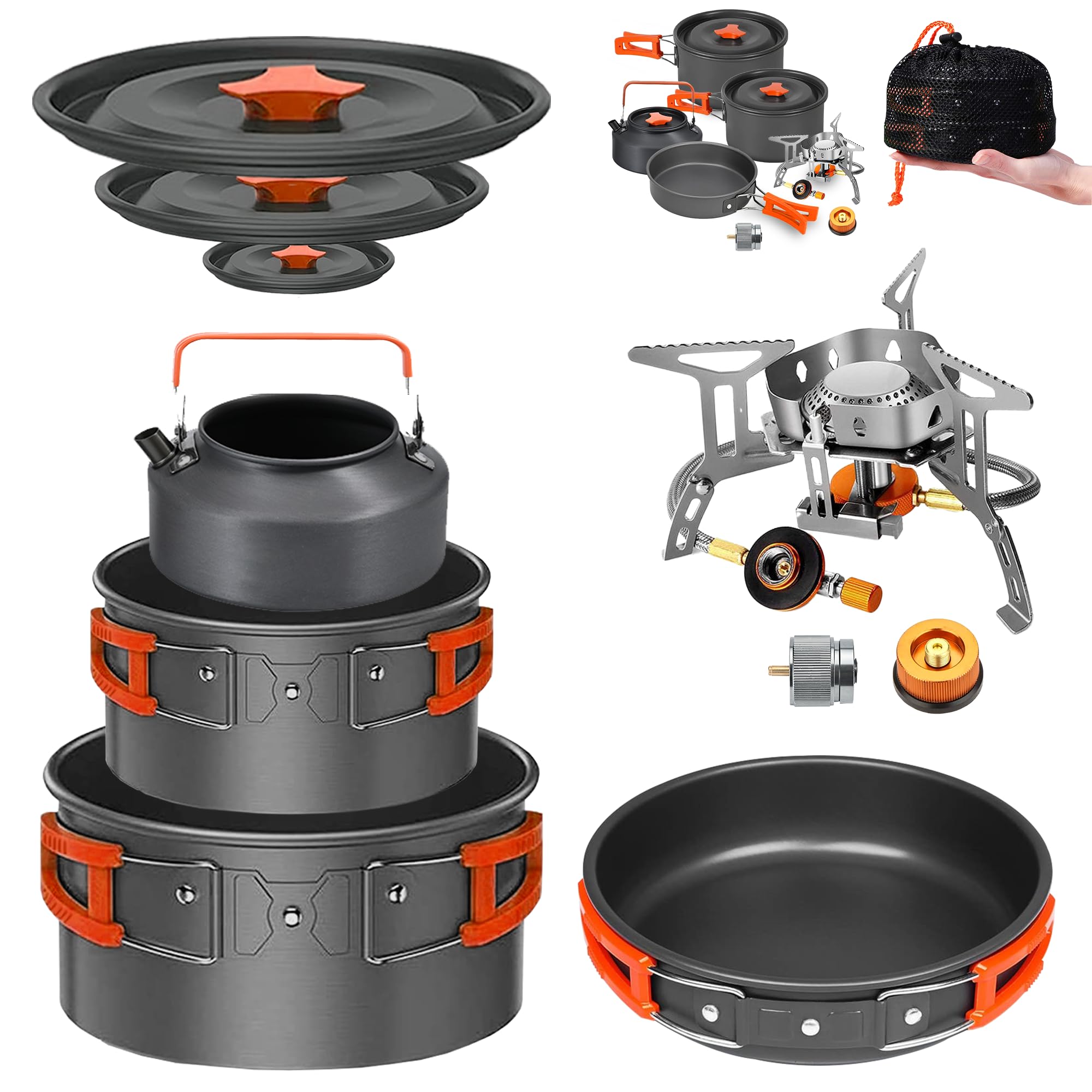
You need a pot of about 0.7 to 1.5 liters, a lid that doubles as a pan or plate, and handles that fold flat. A small nesting set that holds a stove and a fuel canister inside keeps your pack organized. Weight matters more than a long piece count, so skip anything you will not use on the trail.
Couples and Small Groups
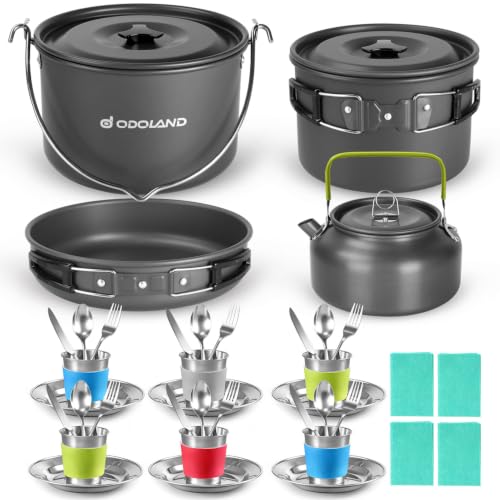
Two pots, a small frying pan and a shared strainer lid cover almost every trail or campsite meal for two to four people. Look for sets that include bowls or mugs that nest inside the pots, which saves buying separate dishes. A pot near 2 to 3 liters handles pasta, chili or soup for a small group.
Family Car Campers
Weight is less of a concern when the trunk does the carrying, so choose larger pots, a real frying pan and sturdy handles. A set with a drain lid and a carry bag keeps the kit together between trips. Stable bases matter, because wide pots on a two burner camp stove need to sit flat.
Key Features to Compare
Material: Aluminum, Stainless Steel or Titanium
Hard anodized aluminum heats quickly and evenly at a modest weight, which suits most campers. Stainless steel is the toughest and resists scratches and acidic foods, but it weighs more and can scorch if the flame is too high. Titanium is the lightest and strongest, yet it heats unevenly and costs the most, so it suits backpackers who mostly boil water.
Nonstick Coating
A nonstick surface makes cleanup easier when water is scarce, but it needs wooden or silicone utensils and gentle scrubbing. Bare metal pots tolerate metal spoons and open fire, though food sticks sooner. Choose coated pots for pan meals and eggs, and bare metal for rough, high heat cooking.
Nesting, Pack Size and Weight
A good set nests completely, with lids, cups and utensils stored inside the largest pot. Check the packed dimensions against your backpack or storage bin before you order. A set that shrinks to the size of a large pot is easier to carry than separate pieces that rattle in a bag.
Stove and Heat Compatibility
Wide, flat bases work on most camp stoves, while a very narrow stove with a heavy pot can tip. Check that handles stay cool or fold away from the flame, and that the set suits your fuel: canister stoves, propane burners, or a grate over a fire. Open fire blackens bases, so keep a separate sack for soot.
Handles, Lids and Pouring
Locking folding handles prevent burns and make pouring safer, and a lid with strainer holes lets you drain pasta without a second tool. Silicone covered handles stay cooler but should stay clear of direct flame. Pour spouts and measurement marks inside the pots save time at camp.
What the Best Camp Cookware Sets Cost
Basic aluminum sets often cost about $25 to $50 and suit occasional trips. Mid range hard anodized or stainless sets run about $50 to $120 and add better coatings, tighter nesting and stronger handles. Premium titanium or large family sets can pass $150. Spend on materials and handles rather than on extra pieces you will rarely use.
Matching a Set to Your Trip
For a weekend overnight hike, one pot, a lid and a spork are enough, and every extra piece is weight. For a week at a lakeside site, add a frying pan, a second pot and a drain lid so breakfast and dinner do not compete for the same burner. For long trips with several cooks, favor sturdy stainless pieces that survive daily use, and bring a small scrub pad so cleanup stays quick even when water is limited.
Common Mistakes to Avoid
- Buying a large family set for solo trips, which adds weight and bulk you carry for no reason.
- Choosing very thin pots for high heat cooking, which scorch food and dent in the pack.
- Ignoring stove fit, so a heavy pot sits unsteadily on a small burner.
- Using metal utensils on nonstick surfaces, which scratches the coating quickly.
- Skipping the packed size check, so the set does not fit the pack or bin you planned for.
Care, Cleaning and Storage
Let pots cool before washing, scrub gently with a sponge and a few drops of biodegradable soap, and follow leave no trace rules for wash water. Dry every piece fully before nesting them, because trapped moisture causes smells and rust on bare steel. Store the set with a cloth between pots so coatings do not rub, and pack a small sack for sooty bases.
For a wider look at kit styles, see our guide to the best camp cook sets, and for home kitchens compare the best kitchen cookware sets or the best stainless cookware sets.
Frequently Asked Questions
What size camp cookware set do I need?
Plan about 0.7 to 1 liter of pot capacity per person for one pot meals. A solo hiker is fine with a single 1 liter pot, two people do well with 2 to 3 liters, and a family of four usually wants 4 liters or more plus a frying pan.
Is nonstick or bare metal better for camping?
Nonstick is easier to clean with little water and is better for eggs and sauces. Bare metal handles metal utensils, open flame and rough packing better. Many campers choose a nonstick pan with bare metal pots for the best mix.
Can camp cookware be used over a campfire?
Many sets can, but open fire blackens pots and can damage nonstick coatings and plastic handles. Check the maker guidance, use a grate rather than burying pots in coals, and keep a separate sack for sooty pieces. A cast iron pan is a stronger choice for regular fire cooking.
How much should I spend on my first camp cookware set?
Most first time buyers do well spending about $40 to $100. That range covers durable aluminum or stainless pots with a pan, lids and a carry bag. Spend more only if you backpack often and want lighter titanium or a tighter nesting design.
How do I clean camp cookware with little water?
Wipe out food with a paper towel or a small scraper while the pot is still warm, then wash with a splash of hot water and a sponge. Scatter strained wash water well away from streams and campsites, and pack out food scraps.
The Bottom Line
Pick the material and size that match how you travel, check that the set nests and fits your stove, and put the budget into handles and heat performance instead of extra pieces. Compare the best camp cookware sets in the product table above and choose the one that packs smallest for the meals you actually cook.


