
Best Bunk Beds With Slide (2026): Layouts, Safety and Fit
Disclosure: We may earn a commission when you buy through links on this page, at no extra cost to you. As an Amazon Associate I earn from qualifying purchases. Learn more

Standard bunk or loft with slide? Check landing space, guardrails and weight limits to choose the best bunk bed with slide.
A slide turns a bunk bed into the part of the room your child actually looks forward to, but it also takes floor space, changes how the bed is climbed, and raises safety questions a plain bunk never does. Choosing the best bunk bed with slide means matching the slide angle, the top bunk height, and the room layout before you fall for a fun shape. The product table above lists the frames we compared, and the sections below sum up the main types so you can see which layout fits your space.
This guide walks through sizes, materials, weight limits, and safety details for young sleepers. It also explains when a slide stops being a good idea.


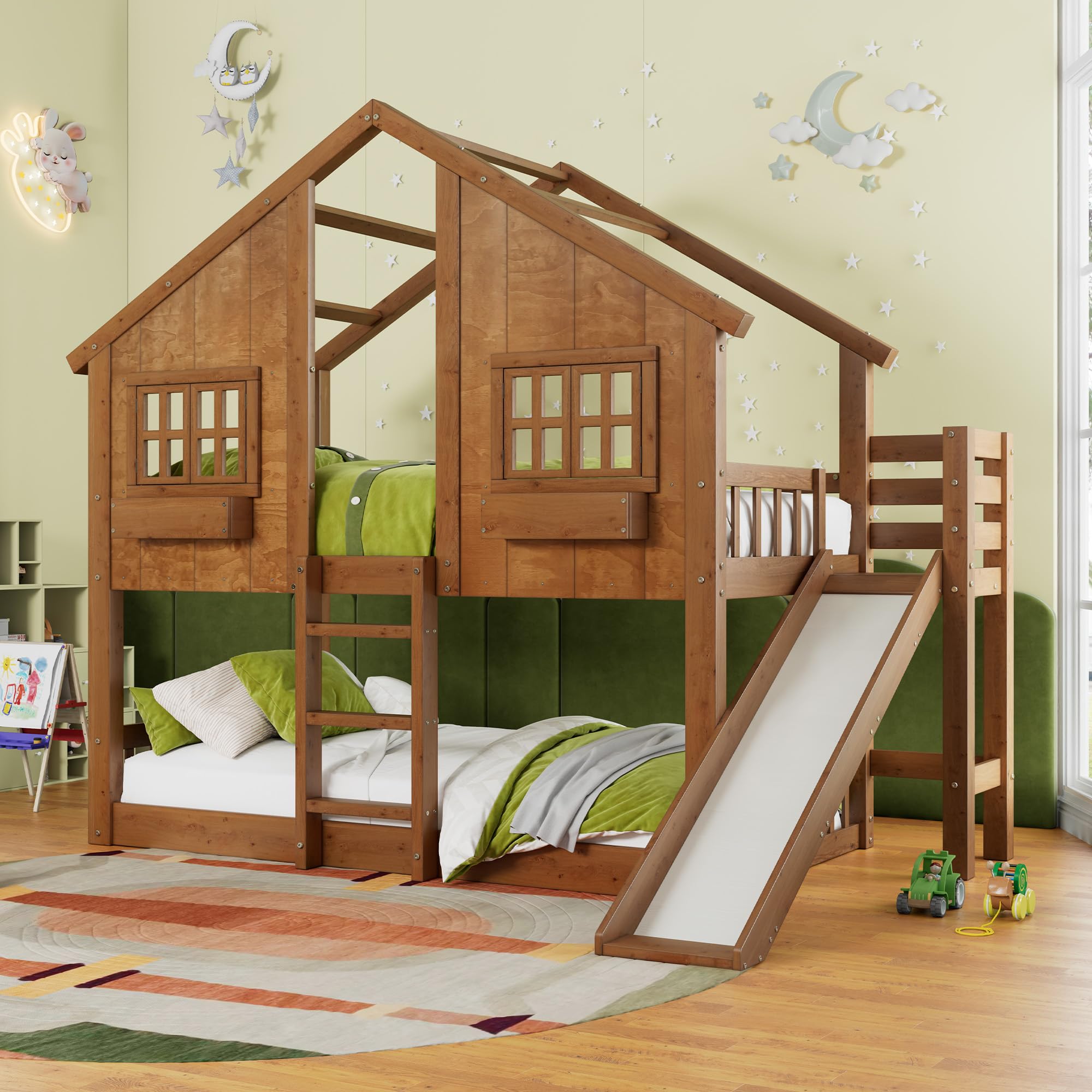
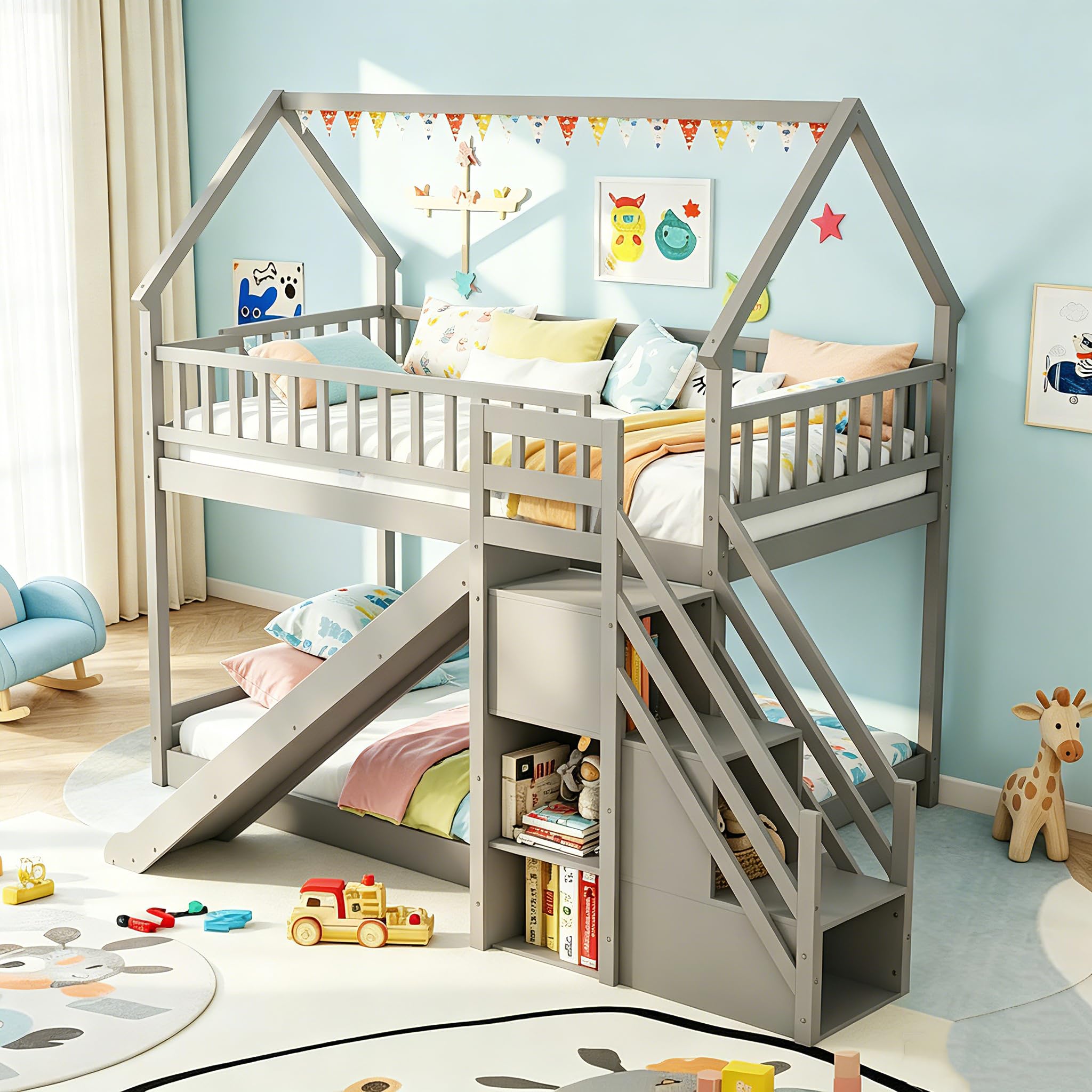


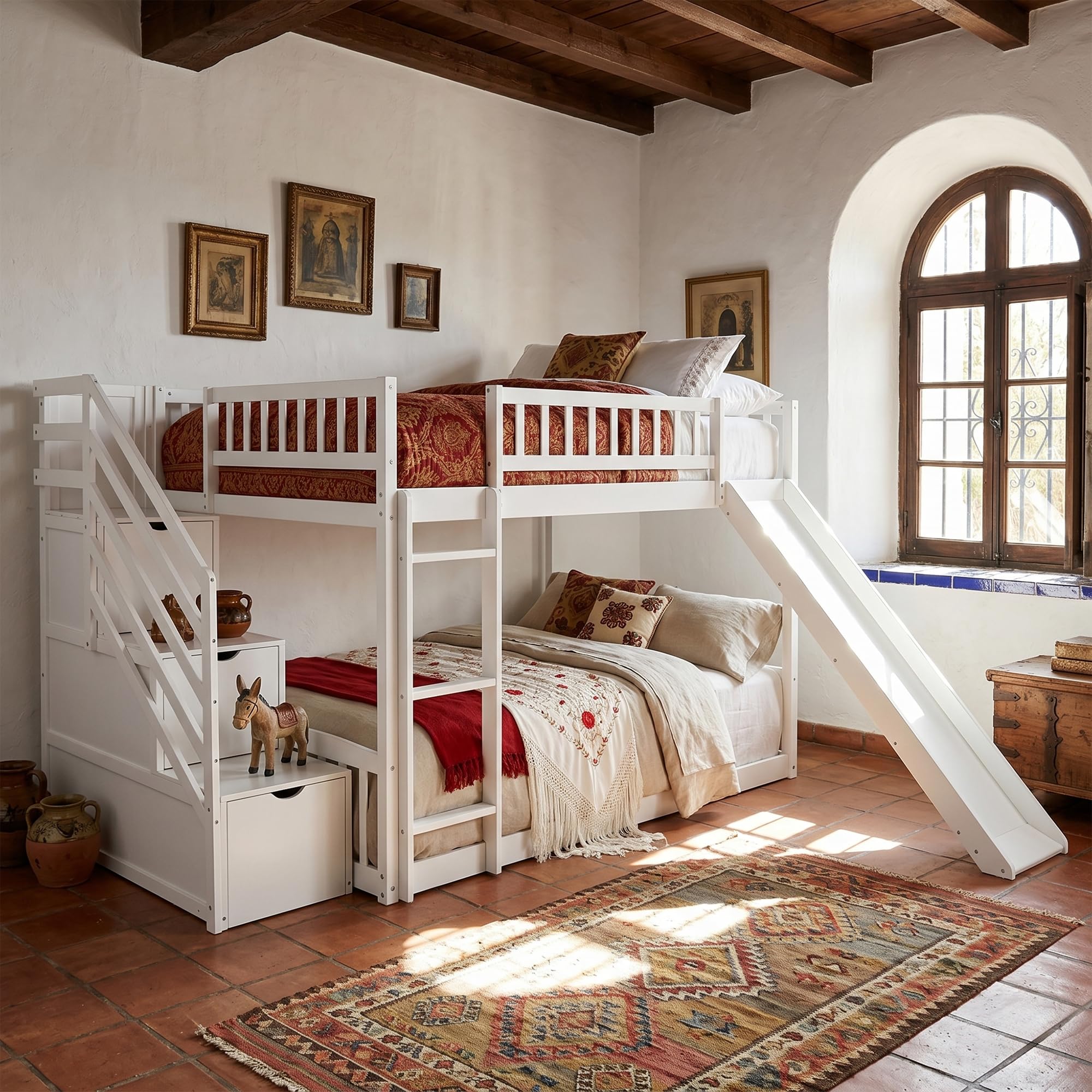
Bunk Bed With Slide Types at a Glance
Most slide bunks fall into three layouts. A standard bunk stacks two beds and adds a slide beside the ladder, which suits siblings who both need a full sleep space. A low loft raises one bed just enough for a gentle slide and leaves open space or storage below, a good fit for a single child in a smaller room. A mid height loft sits higher, gives more room underneath for play or a desk, and needs a steeper slide and a more confident climber.
Your first filter is simple. If two children sleep in the room every night, start with a true bunk. If only one child sleeps there, a loft uses the footprint better and keeps the top mattress lower.
Three Main Layouts Compared
Standard bunk with a side slide
This layout pairs an upper and a lower bed with a slide that runs down from the top level, usually at one end of the frame. It gives you two real beds plus the play feature, making it the natural pick for siblings or frequent sleepovers. The cost is width, since the slide needs its own landing zone clear of the lower bed and the door swing.
Low loft with a gentle slide
A low loft lifts a single bed a modest distance off the floor, so the slide can be shorter and less steep. Younger children find the climb less daunting, and you can reach the top mattress easily to change sheets. The space below works for toy storage, a reading corner, or a small dresser. It will not fit a second full bed, so plan ahead if a sibling may later share the room.
Taller loft with room below
A taller loft trades a higher climb for a larger open area underneath, enough for a desk, a bookshelf, or a play zone as your child grows. The slide is longer, which can keep the angle reasonable even from a higher platform. This layout suits older children who climb confidently and follow slide rules. Check ceiling height closely, since a child sitting up in the top bed still needs comfortable clearance.
What to Compare Before You Buy
Start with safety certification and the guardrail design, then look at slide construction, frame material, and the stated weight limit for each bed. A slide should feel solid when an adult presses on it, with smooth edges and a raised lip on each side to help keep a child centered. The ladder or stairs should not block the slide exit, and the two routes down should never cross each other.
Next, think about daily life. You will make the top bed, vacuum under the frame, and supervise the slide during play. For a broader starting point, our guide to the best bunk bed covers standard bunks without slides.
How to Choose the Right Bunk Bed
Size and form factor
Twin over twin is the most common layout and fits most children through the early teen years. A best twin over full bunk bed gives a wider lower bed that works for an older child, a parent reading at bedtime, or a guest. A best full over full bunk bed adds width on both levels but needs a larger room and a longer slide landing zone. Measure the room, the ceiling, and the path the slide will take, then leave open floor at the bottom of the slide for a safe stop.
Type and access style
Metal frames tend to cost less and feel lighter, while wood frames often feel sturdier and quieter at the joints. Loft styles free up floor space, and trundle styles add a spare bed that pulls out below. Stairs take more room than a ladder but give younger children a steadier climb and often hide storage drawers. Whichever access style you choose, confirm it sits on the opposite side from the slide or far enough away that children are not crossing paths at the top platform.
Features worth paying for
A slide with high side rails, a gentle curve at the bottom, and a textured step area at the top is worth more than decorative cutouts or themed panels. Built in storage, such as drawers under the lower bed or shelves at the headboard, helps a shared room stay tidy without extra furniture. A removable slide can also help, since it lets you reclaim floor space once your child outgrows it. Skip features that cut into guardrail height or narrow the top platform, because safety parts should never shrink to make room for extras.
Body size and weight capacity
Check the weight limit for each level separately, since the top bunk limit is often lower than the lower bunk limit. The limit must cover the sleeper plus the mattress, and older or taller children will reach it sooner than you expect. If teens or adults will use the bed regularly, look at our guide to the best adult bunk bed for frames built with higher limits and longer decks. Also confirm the deck supports the mattress evenly, with closely spaced slats or a solid panel, so the mattress does not sag between supports.
Adjustability and layout flexibility
For this product, adjustability means layout choices rather than moving parts. Some frames let you mount the slide and ladder on either end, which helps you work around windows, closets, and doors. Others let you separate the bunk into two standalone beds later, extending the useful life of the purchase. Convertible designs and reversible ladders add real value in a room you plan to rearrange. Ask whether the slide can be removed without leaving sharp brackets or open holes, since that change often comes sooner than parents expect.
Materials and durability
Solid wood frames resist loosening at the joints and can often be tightened or repaired over time. Engineered wood and metal frames can also last well when the hardware is thick and the finish is even, with no rough spots on the slide surface or the ladder rungs. Inspect photos and listings for how the slide attaches to the frame, since a slide bolted at several points will flex less than one hooked over a rail. A smooth, intact slide surface matters too, because cracks or raised seams can catch clothing and skin.
Assembly and warranty
These frames arrive in large, heavy boxes and take two adults several hours to build, so plan the delivery path and the build space in advance. Clear instructions, labeled parts, and spare hardware save real frustration. Our step by step guide on how to assemble a bunk bed walks through the order of work and the checks to do before the first night. For warranty, look at what is covered for the frame, the slide, and the hardware, and keep the manual so you can order matching parts later.
How much should you spend?
Simple metal or engineered wood slide bunks often fall at about $200 to $400, with basic slides and ladders. Solid wood frames with stairs, storage, or a removable slide commonly run about $400 to $800. Larger full size layouts and convertible designs can reach about $800 to $1,200 or more. Spending more should buy thicker materials, better hardware, and clearer safety testing, not just a themed shape. Our bunk bed buying guide explains how frame cost relates to size and construction across bunk styles.
Do You Really Need a Bunk Bed with Slide?
A slide earns its space when your child is old enough to climb safely, young enough to enjoy it daily, and the room can spare the landing area. Safety guidance in the United States advises that children under 6 should not sleep on a top bunk, so the slide makes the most sense for school age children who can follow rules. If your child is still very young, a low bed now and a slide bunk later is often the safer order.
Consider the alternatives honestly. A standard bunk without a slide costs less, fits tighter rooms, and removes the temptation to climb up the slide itself. A separate small play slide can be moved or stored when not in use. Choose the built in slide only when you have the floor space and ceiling height for it.
Set rules from day one. One child on the slide at a time, always feet first, never climbing up the slide, and no jumping from the top bunk. Stop use and contact the maker or a professional if the frame wobbles, the slide cracks, or a guardrail loosens, and keep younger visiting children off the top level entirely.
FAQ
What is the best bunk bed with slide?
There is no single answer, since the right choice depends on room size, the age of your child, and whether you need one bed or two. A low loft slide suits a single younger child, while a twin over twin bunk suits siblings. Prioritize certified guardrails, a sturdy slide attachment, and a weight limit that fits your child with room to grow, then pick the layout that leaves a clear landing zone.
Is a bunk bed with slide worth it?
It can be, if the slide gets daily use and makes mornings and playtime smoother rather than adding conflict. Families tend to value it most during the early school years, when children are confident climbers but still love active play indoors. If floor space is tight or your child will outgrow the novelty within a year, a plain bunk plus a separate play option usually gives better value over time.
How long does a bunk bed last?
A well built frame can serve through childhood, often around 8 to 10 years, while the slide portion is usually enjoyed for a shorter span. Longevity depends on tightening hardware, keeping the frame dry, and respecting weight limits as children grow. Designs that split into two separate beds or allow slide removal tend to stay useful longest, since the sleep function remains after interest in the slide fades.
Is a bunk bed worth it?
For shared rooms and small bedrooms, yes, because stacking beds frees floor space for dressers, study, or play. The tradeoff is harder bed making on the top level and stricter safety routines than floor level beds. It is less worthwhile for a single child in a large room, or for children who have not yet settled into staying safely behind a guardrail.
How do you clean a bunk bed?
Dust the frame and slide weekly with a soft cloth, and wipe the slide with a damp cloth and mild soap so dust and grit do not make the surface scratchy. Vacuum under the lower bed and around the slide landing area, where crumbs and small toys collect. While cleaning, glance at bolts, the slide surface, and the ladder rungs, and address any looseness or roughness before the next use rather than waiting for a scheduled check.
What is the most reliable bunk bed brand?
Reliability varies more by model and construction than by name alone, so compare the specific frame rather than shopping by label. Look for clear safety certification, published weight limits, replacement part support, and a warranty that covers the frame and slide. A maker that publishes full dimensions and assembly manuals in advance is usually easier to own.
Final Thoughts
A slide bunk can be a joyful, practical centerpiece when the size, the slide angle, and the safety details all fit your room and your child. Compare layouts in the product table above, measure the landing zone twice, and choose sturdy construction over themed extras. When those basics line up, the best bunk bed with slide is the one your family can climb, sleep in, and maintain safely for years.


