Best Brazilian Hammock: Cotton, Weather Ready and Double Types (2026)
Disclosure: We may earn a commission when you buy through links on this page, at no extra cost to you. As an Amazon Associate I earn from qualifying purchases. Learn more

Best Brazilian hammock guide to cotton, weather ready and double types, fabric, size, capacity and hanging tips.
A Brazilian hammock feels different from the rope and spreader bar styles many people grew up with, and that difference is exactly why choosing one can be confusing. The fabric wraps around you, the ends gather to a single point, and small details in weave, size, and fabric decide whether you get a flat, supported rest or a sagging bundle. If you are shopping for the best brazilian hammock for your home, this guide compares the main types by build materials and weather resistance, size and capacity, and assembly, so you can match a style to your space before you buy. The product table sums up the key differences side by side.
Instead of naming individual models, we compare the three broad types you will meet in listings, because fabric and construction matter more than a label. For the wider picture, our guide to the best hammock styles covers every major category.

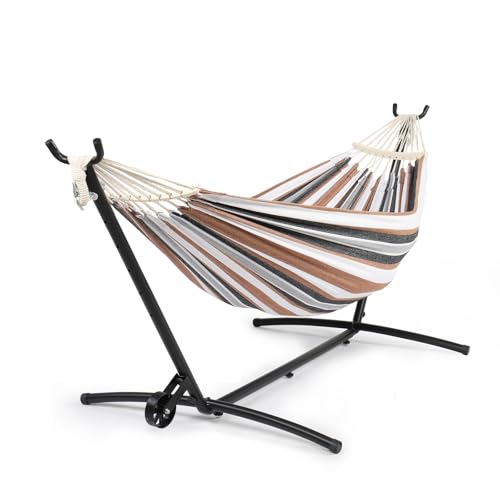



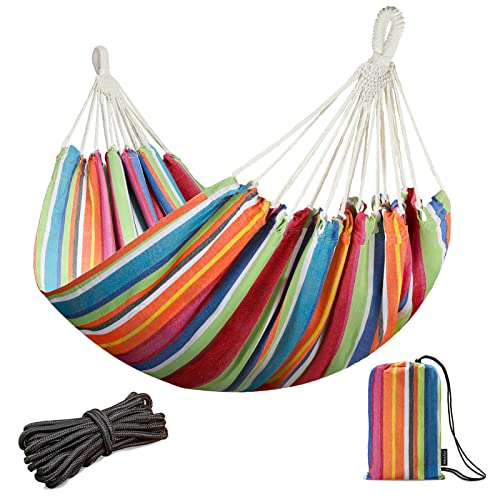
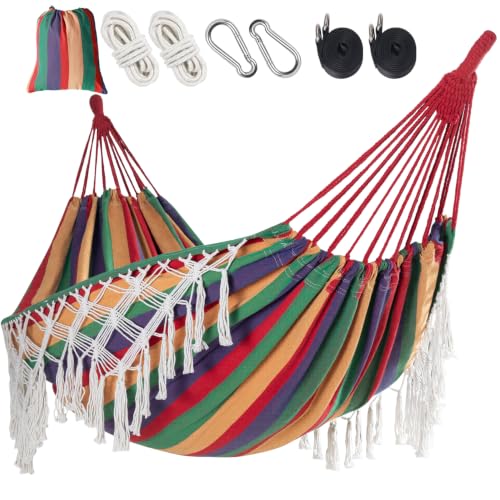

The Main Brazilian Hammock Types at a Glance
Brazilian hammocks fall into three practical groups. Classic cotton models use a tight weave of natural fiber and give the soft, breathable feel most people picture. Weather ready models swap cotton for polyester or a cotton and polyester blend, trading a little softness for faster drying and better resistance to sun and mildew. Oversized double models widen the fabric bed so two people can share, or one person can stretch out with room to spare. All three share the same gathered end design with no spreader bars, so the real choice is fabric, size, and where you plan to hang the hammock.
Brazilian Hammock Types Compared
Classic Cotton Brazilian Hammocks
The classic cotton type is the reference point for this style. A dense weave supports your weight evenly, so pressure points stay low and the fabric feels cool against the skin in warm weather. Cotton does absorb water, though, and it dries slowly after rain. That makes this type best suited to a covered porch, a shaded patio, or indoor use where it stays dry. If your spot is sheltered and comfort comes first, classic cotton is usually the most satisfying and often the most affordable place to start.
Weather Ready Brazilian Hammocks
Weather ready models use polyester or blended yarns that shed water instead of soaking it up. They dry far faster after a shower, resist fading in strong sun, and are less prone to mildew when the air stays humid for days. The fabric can feel slightly firmer and less breathable than pure cotton on a hot afternoon. Choose this type when your hammock will live outdoors full time in an open yard, especially in a rainy or coastal climate where bringing it inside after every use is not realistic.
Double and Oversized Brazilian Hammocks
Double models widen the fabric bed, often to around 55 to 65 inches, and raise the weight capacity so two adults can lounge together. A single sleeper also gains space to lie at a stronger diagonal angle, which is the secret to a flatter rest in this style. The trade off is bulk: a wider bed needs more hanging distance, uses more fabric, and costs more to ship and store. Pick a double if sharing or overnight sleeping is the plan, and a standard single if you mostly rest alone and want the simplest setup.
How to Choose the Right Hammock
Type
Start by separating Brazilian models from their close cousins. A rope hammock uses spreader bars and an open weave, so it feels flat but can press the cords into your skin. A quilted model adds padding and bars for a bed like surface that is bulky to store. A camping model in nylon is light and packs small, and our guide to the best camping hammock covers that world well. A Brazilian hammock sits between them: solid breathable fabric, no bars, and a gathered end that lets the bed form a gentle cocoon around you.
Features Worth Paying For
A stand is the feature that changes where you can hang, since it frees you from trees and posts entirely, though it adds cost and a large footprint. Tree straps protect bark and make height adjustment simple, and they beat rope alone for quick setup between two trees. A small pillow helps some readers, but many Brazilian hammock users skip it because the fabric already cradles the head when you lie diagonally. A canopy only earns its price in an open yard with harsh midday sun. Spend first on fabric quality and sound end loops, then add accessories that solve a real problem in your space.
Weather Resistant Materials
Fabric choice decides how much weather your hammock can shrug off. Cotton breathes well and feels soft, yet it holds moisture and can develop mildew if it is stored damp. Polyester dries quickly, keeps its color longer in sunlight, and tolerates humid air, at the cost of a slightly slicker feel. Blends try to split the difference. Whatever the fiber, look for a tight, even weave with no loose threads, because weave density does more for both comfort and lifespan than any coating. Bright colors fade fastest in open sun, so expect some fading on any fabric left outside all season.
Size for Your Space
Measure the full length of the hammock, loop to loop, and not just the fabric bed, since the gathered ends and suspension add several feet. Most Brazilian models run about 11 to 13 feet in total length, with fabric beds around 6 to 7 feet long. Single beds are usually about 40 to 47 inches wide, while doubles reach roughly 55 to 65 inches. Check the rated capacity as well: singles commonly hold about 300 to 400 pounds, and doubles about 400 to 450 pounds. If you are tall, favor a longer bed so your feet do not press against the gathered end.
Assembly and Anchoring
You need two anchor points about 10 to 12 feet apart for most models, hung so the hammock curves with its lowest point roughly 18 inches off the ground when occupied. Aim for a hang angle near 30 degrees at each end, which spreads the load and keeps tension reasonable. Trees, sturdy posts, and wall studs all work when the hardware is rated for the load. A stand removes the measuring but needs level ground and a footprint longer than the hammock itself. Our step by step guide on how to assemble a hammock walks through hardware choices and safe anchor placement in detail.
Care and Off Season Storage
Shake out leaves and debris after use, and let the fabric dry fully before you fold it away, since trapped moisture is the main cause of mildew on any fiber. Cotton models benefit from cover during long wet spells. Store the hammock indoors in a dry spot, loosely folded or hung, rather than sealed in a plastic bin while damp. Inspect the end loops and suspension cords each spring for fraying, and replace worn cords before they fail under load.
How Much Should You Spend?
Listings in the product table run from about $28 to $120. Basic cotton models sit at the low end and suit a sheltered porch or a first hammock for occasional naps, while denser weaves, better end loop construction, larger beds, weather ready fabrics, and bundles that include a stand cost more. Paying more should buy a visible step up in weave quality, capacity, or included hardware. If a listing at any price cannot state its fabric, dimensions, and rated capacity clearly, treat that silence as a reason to keep looking.
Brazilian vs Other Hammocks: Pros and Cons
The Brazilian style shines where comfort per dollar matters most. With no spreader bars, it packs into a small bundle, stores in a closet, and cannot tip you out the way a stiff bar model sometimes does when you shift your weight. The gathered fabric supports a diagonal sleeping position that many people find easier on the back than the curved banana shape of a rope model. On the downside, the same wrap around feel can feel warm in still, humid air, and two people in a single width bed will feel crowded fast. For a yard focused setup, our guide to the best hammock for backyard use compares how each style handles open lawns and patios.
Portability splits the field further. A Brazilian hammock is far lighter to carry than a quilted or stand based model, but it cannot match a nylon travel hammock for pack size. Hikers who count every ounce should look at our guide to the best hammock for backpacking instead, since cotton is heavy when wet and slow to dry on the trail. At home, though, that fabric weight is part of the appeal: the bed feels substantial and quiet.
FAQ
What is the best brazilian hammock?
There is no single answer, because the right choice depends on where it will hang and who will use it. A sheltered porch favors classic cotton for softness, an open yard favors weather ready fabric, and couples or overnight sleepers need a double width bed. Match the fabric to your climate, confirm the total length fits your anchor points, and check that the rated capacity covers your household. A hammock that fits your space and drying habits will serve you better than any single headline pick.
Are Brazilian hammocks worth it?
For most home users, yes, because the style delivers strong comfort at a modest price and stores in very little space. The gathered end design has no bars to store, no cords digging into your back, and no frame to assemble. The value drops if you need a hammock that lives in constant rain without cover, since even weather ready fabric ages outdoors. Buyers who want a flat surface they can roll onto from the side may still prefer a spreader bar design.
How long does a Brazilian hammock last?
A well kept cotton model often lasts about 3 to 5 years of regular seasonal use, and weather ready fabrics can go longer when rinsed and dried rather than left damp. The end loops and suspension usually wear out before the bed fabric does, so inspect them first when a hammock feels less secure. Storing any hammock dry is the habit that extends its life the most.
How do you clean a Brazilian hammock?
Most fabric hammocks wash well by hand in a tub of cool water with a small amount of mild soap, followed by a thorough rinse and a full air dry on a line. Keep the end loops and any metal rings out of the soak where you can, and never put a hammock away while it still feels damp. Our full walkthrough on how to clean a hammock covers stain treatment and mildew removal for cotton and synthetic fabrics in more depth.
Can you sleep in a Brazilian hammock all night?
Many people do, and the key is lying at a diagonal of roughly 30 degrees across the bed rather than straight along its length. The diagonal flattens the fabric under your back and reduces the curve that can leave you stiff by morning. A double width bed makes overnight use easier, since it gives your shoulders and feet more room to settle. If you wake with numb heels, shift your position slightly and check that the hammock is not hung too tight, which deepens the curve.
Final Thoughts
A Brazilian hammock rewards buyers who think in terms of fabric, size, and hanging space rather than brand names. Choose cotton for sheltered comfort, weather ready fabric for an open yard, and a double bed for sharing or sleeping, then confirm the length, capacity, and anchor distance before you order. The product table above pulls those key specs together so you can compare types at a glance. Whichever route you take, the best brazilian hammock for your home is the one whose materials match your climate and whose dimensions fit your spot.