Best Bookshelf for Nursery (2026): Types, Height and Stability
Disclosure: We may earn a commission when you buy through links on this page, at no extra cost to you. As an Amazon Associate I earn from qualifying purchases. Learn more

Height, stability and finish advice for choosing the best bookshelf for nursery rooms, from display shelves to low open bookcases.
A nursery bookshelf does a different job than a bookshelf in any other room. It has to hold chunky board books now, taller picture books later, and stay steady when a toddler pulls up on it. Choosing the best bookshelf for nursery use means thinking about height, stability, and safe finishes before you think about style.
This guide walks through the main types, the features that matter most around babies and toddlers, and the mistakes that lead to wobbly or outgrown shelves. The product table below lets you compare real shelves so you can match a style to your room and your child.



Who Should Buy Which Bookshelf for a Nursery?
Parents Setting Up a First Book Corner for a Baby
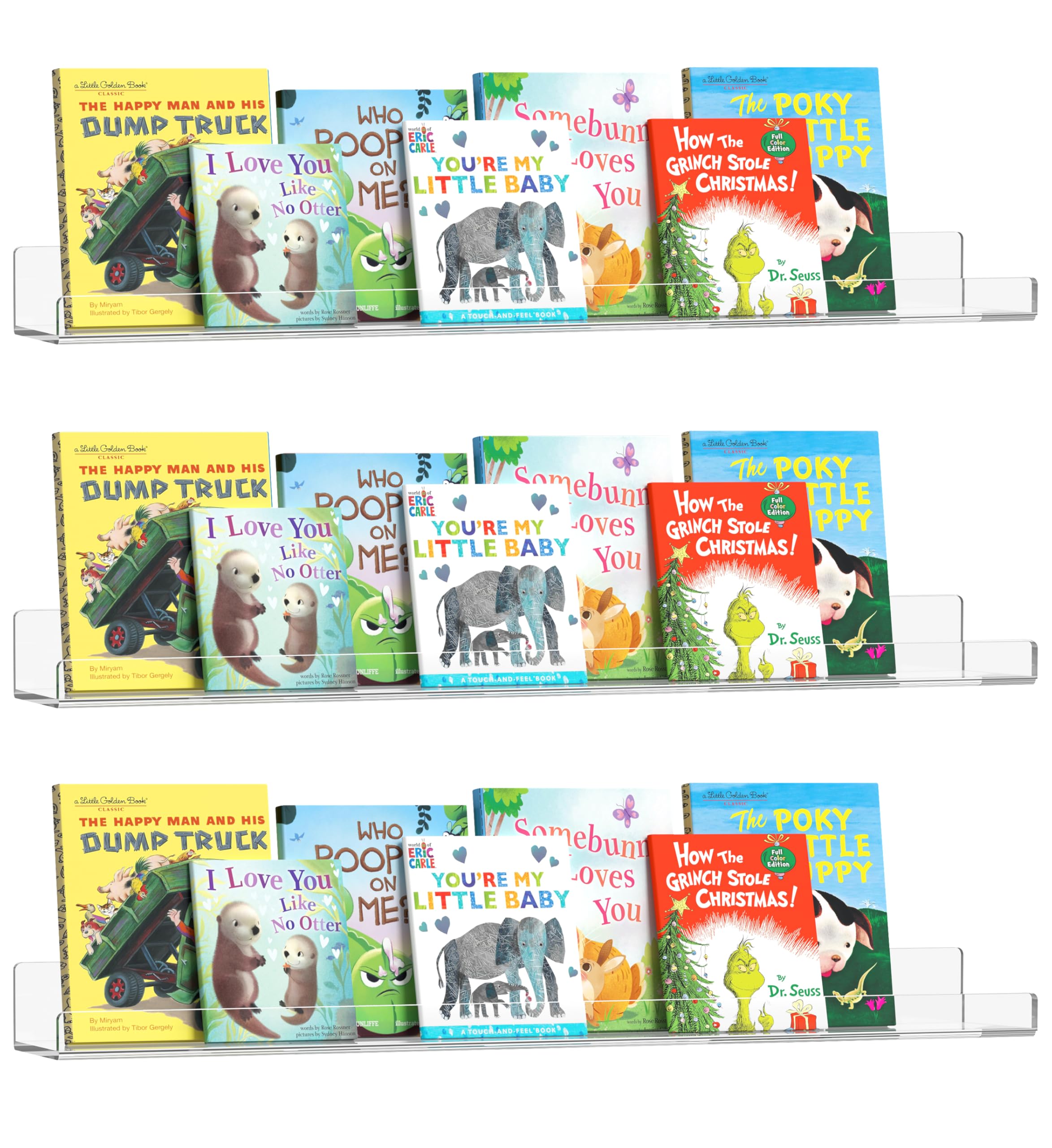
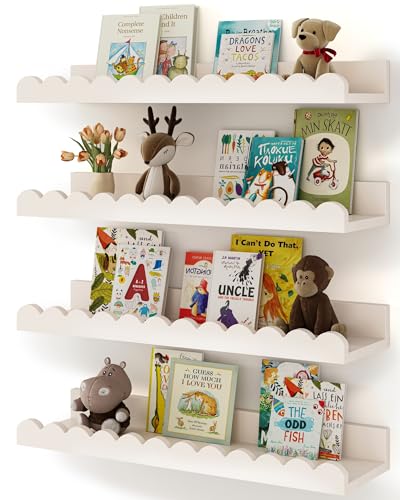
If your baby is still in the looking and listening stage, a forward facing display shelf suits you best. Covers face outward, so a baby in your lap can see bright artwork and point at favorites. You do the reaching at this stage, so the shelf can sit a little higher, beside your nursing chair. Capacity stays small, and that is fine, because a rotation of eight to twelve board books holds a young baby attention better than a packed shelf.
Parents of Toddlers Who Grab Books on Their Own
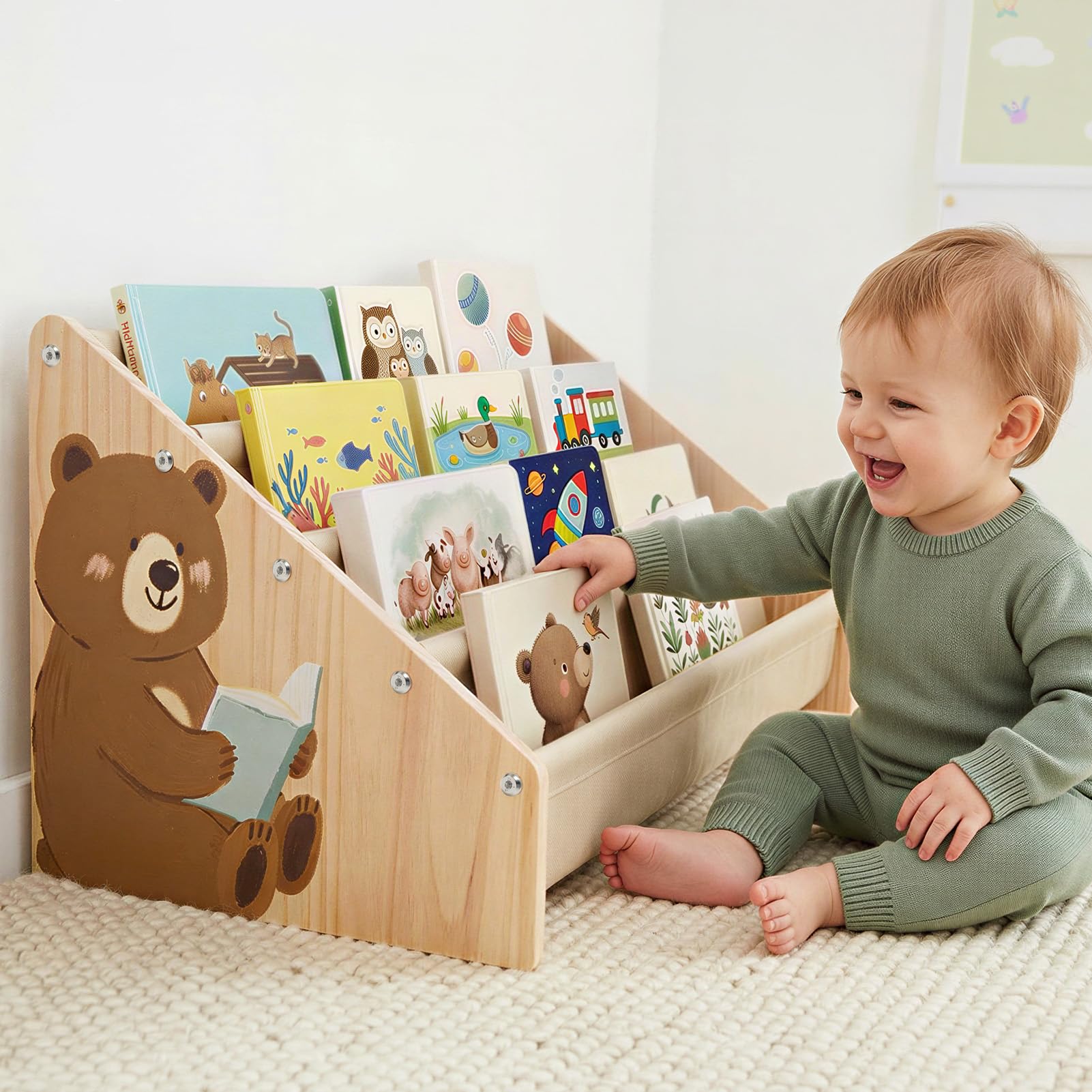
Once your child cruises, crawls to the shelf, and pulls books down independently, a low open bookcase is the right shape. Two or three shelves at toddler height let small hands slide books out without climbing or stretching. Pick a frame with a solid back panel for stiffness. This is also the stage where anchoring stops being optional, because a child pulling up to stand puts real force on the frame.
Families Working With a Small Nursery
When floor space is tight, a narrow tower, a corner unit, or a wall mounted ledge keeps books off the floor without crowding the crib and changing table. Measure the wall run you can spare before you shop, and count your current book collection so you do not buy more shelf than you need. Our guide to the best bookshelf for small spaces covers compact footprints in more depth.
Nursery Bookshelf Types Compared
Forward Facing Display Shelves
These shelves hold books with the covers showing, stored in shallow rails or bins. Babies and young toddlers choose by picture rather than by spine, so this style gets books noticed and used more often. The trade off is capacity. A typical rail holds a slim layer of books rather than a deep row, and tall picture books can flop forward if the rail is too shallow. Keep overflow books in a basket nearby.
Low Open Bookcases
A short bookcase with two or three open shelves is the classic nursery choice, and it grows with your child better than any other type. Books stand spine out in rows, bins and stuffed animals can share the lower shelf, and the same unit later works in a playroom or a child bedroom. Shelves around 10 to 12 inches deep fit most picture books upright, while deeper shelves swallow small board books and make them hard for little fingers to pull out.
Cube Storage Shelves
Cube units divide storage into square openings that suit fabric bins, folded blankets, and stacks of books laid flat. They work well when the nursery shelf has to store more than books, which is common in the first year. Books are less visible than on an open shelf, though, and very small books can get buried at the back of a deep cube. Reserve one or two cubes for books standing upright at the front edge, and use bins for toys and supplies.
Rotating and Corner Bookshelves
A rotating unit stores books on all sides in a small footprint, and older toddlers enjoy spinning it to find a title. If that format appeals to you, see our roundup of the best rotating bookshelf options for how the bases and shelf heights vary. A corner unit instead tucks into an unused angle of the room and stays put, which suits long narrow nurseries. Our guide to the best corner bookshelf explains which shapes fit tight corners.
Key Features to Compare
Height and Reach for Small Children
A unit around 24 to 30 inches tall puts the top shelf within reach of most toddlers, so they can choose and return books without help. Taller units hold more, but the upper shelves become adult only storage, and a determined climber may treat them as a ladder. If you want one shelf from babyhood through preschool, pair a low bookcase with adult height storage elsewhere in the home rather than buying one tall tower for the nursery.
Stability and Wall Anchoring
Stability is the feature that matters most in a nursery. Look for a wide base, a solid back, and a wall anchor kit included in the box. Anchor the unit to the wall, following the maker's instructions, before your baby starts pulling up, not after the first wobble. Set the shelf on a hard floor or a low pile rug, since thick carpet lets a frame rock. If a listing gives no weight or stability information at all, treat that silence as a reason to keep looking.
Materials and Safe Finishes
Babies chew book corners and teethe on anything at mouth height, so materials and finishes deserve close attention. Solid wood and quality plywood feel sturdier and shrug off dents better than thin particleboard. Whatever the material, look for smooth sanded edges, rounded corners, and a finish described as non toxic or low odor. If a finish smells strong out of the box, air the unit in another room until the smell clears.
Adjustable Shelves and Room for Board Books
Your book collection changes shape fast. Board books are short and thick, while picture books are tall and thin. Adjustable shelves with peg holes let you raise one shelf for tall picture books and lower another for a row of board books standing upright. Fixed shelves can still work if the spacing is generous, around 10 to 12 inches between shelves. Check the shelf weight rating too, because a full row of hardcover picture books is heavier than it looks, and a sagging middle shelf is the usual failure point.
Easy Cleaning for Everyday Messes
Nursery shelves collect dust, milk drips, and sticky fingerprints in places adult shelves never see. Smooth sealed surfaces wipe clean with a damp cloth, while raw unfinished wood and deep fabric bins hold onto stains and odors. Removable fabric bins you can wash are a plus in cube units. Avoid ornate grooves and tight decorative trim, since those edges trap grime and slow down the fast cleanups that nursery life demands.
Size, Capacity, and Budget
Footprint and Shelf Count
Start with the space, then count the books. Measure the wall width and the depth you can give up, and check that the shelf will not crowd the crib or block a heating vent. A two shelf bookcase suits a starter collection of about 30 to 50 books, while three shelves handle a growing library plus a bin or two. Leave a little empty room on each shelf, since books packed tight are hard for small hands to pull free.
How Much Should You Spend?
Small wall ledges, slim forward facing racks, and simple two shelf units in basic finishes usually cost under $50. Most sturdy low bookcases and cube units cost about $50 to $100, and this is where nursery shelves offer the best balance of stability and size. Solid wood construction and adjustable shelves generally cost about $100 to $200, while furniture grade pieces cost more than that. Spend first on stability and materials, and let decoration come last.
Assembly and Setup Time
Most nursery bookshelves arrive flat packed and take about 30 to 60 minutes to build with a screwdriver and a second pair of hands. Read the anchor instructions before you start, because some units must be positioned against the wall before the final panels go on. Our step by step guide on how to assemble a bookshelf walks through cam locks, dowels, and back panels if this is your first flat pack build.
Common Mistakes to Avoid
- Buying a tall bookshelf for a toddler room, which invites climbing and puts the books your child wants out of reach.
- Skipping the wall anchor because the shelf feels heavy, since a loaded shelf can still tip when a child pulls up on it.
- Choosing deep shelves for small board books, so titles slide to the back and your child stops looking for them.
- Picking a finish with sharp corners or peeling paint, which matters once babies grip and mouth the edges.
- Filling every shelf right away, leaving no room for the gift books that arrive during the first year.
How to Make Your Nursery Bookshelf Last Longer
Simple habits help a nursery shelf survive toddlerhood and serve a school age child later. Dust the shelves weekly and wipe spills the same day, before milk or juice soaks into the finish. Our full routine for how to clean a bookshelf covers safe cleaners for painted and wood surfaces. Check the wall anchor and shelf fasteners every few months. Rotate books between the shelf and a closet box every few weeks. When your child outgrows a low unit, move it to a playroom rather than replacing it.
FAQ
When can a baby start using a nursery bookshelf?
From the first months, in a simple way. During tummy time, stand two or three board books upright on the floor in front of your baby, so the covers become something to look at and reach for. Move those same books onto the lowest shelf once your baby sits and crawls. The habit matters more than the shelf itself: keep a few books at your baby level, within sight and within reach, every day.
Should a nursery bookshelf have doors?
Doors keep dust off books and give the room a tidy look when guests visit. The downsides are real, though. Closed doors hide the covers that draw babies toward books, and little fingers can get pinched in a swinging door. Many families compromise with open shelves for everyday favorites and one closed cabinet or bin for the rest of the collection.
Is a rotating bookshelf safe for a nursery?
It can be, with checks. Choose one with a wide, heavy base and a smooth turn, and test the spin with books loaded before your child uses it. Keep small gaps in mind, since curious fingers explore the space between the rotating section and the base. Anchor it or place it against a wall where possible, and move it to a playroom once your child starts climbing or hanging on the shelves.
Where should you place a bookshelf in a nursery?
Place it against a wall away from the crib, so a standing child cannot use the shelf to climb into or out of the crib, and so nothing can be pulled down into the sleeping area. Keep it clear of window blind cords and radiators as well. A spot beside your reading chair works nicely, because books stay within your reach during feeding and bedtime stories.
How many books does a nursery bookshelf hold?
A typical low two shelf bookcase holds about 30 to 50 board and picture books standing upright, depending on thickness. Rather than filling it completely, keep about two thirds of that number on display and store the rest in a closet box. Swapping a few titles every week or two makes old books feel new again to a toddler, and no single row becomes a tight wedge of books.
Final Thoughts
The right nursery shelf is low, steady, anchored, and easy to wipe clean, with room for books to change shape as your child grows. Start with the type that fits your child stage and your floor space, then check stability and finishes before you compare colors. When your child is ready for a full height unit in a bedroom of their own, our guide to the best bookshelf covers the taller options. Whichever style you choose from the product table near the top, the best bookshelf for nursery is the one your child can reach safely and use every single day.