
Best Bookcase Speakers: A Clear Buying Guide for 2026
Disclosure: We may earn a commission when you buy through links on this page, at no extra cost to you. As an Amazon Associate I earn from qualifying purchases. Learn more

Learn how driver size, room placement, connectivity, and power help you choose bookcase speakers that sound clear in your room without wasted features or cost.
Choosing the best bookcase speakers is easier once you ignore the jargon and focus on your room. The comparison table below shows the main speaker styles side by side, from small desk speakers to larger shelf models. This guide explains sound, size, and connections in plain terms so you can pick speakers that suit your space, your music, and your budget.
Bookcase speakers, also called bookshelf speakers, sit on a shelf, a stand, or a desk rather than on the floor. They suit small and medium rooms, near field listening at a desk, and home setups where floor speakers would dominate the space. Their limits are real too: very small models may lack deep bass, and large models need breathing room to sound their best.





Bookcase Speakers 101: The Basics
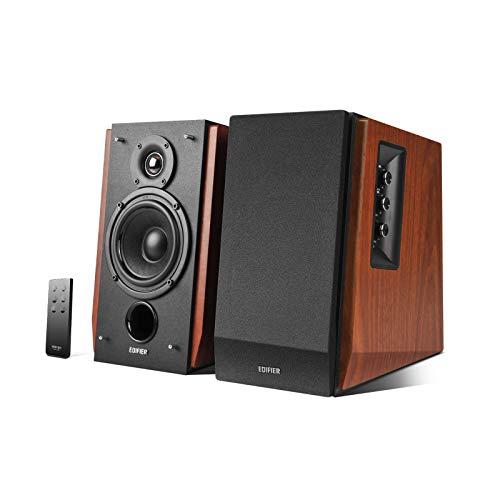
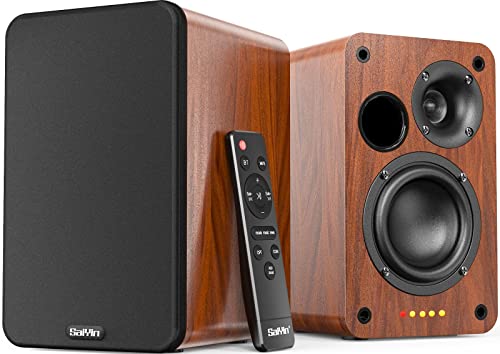
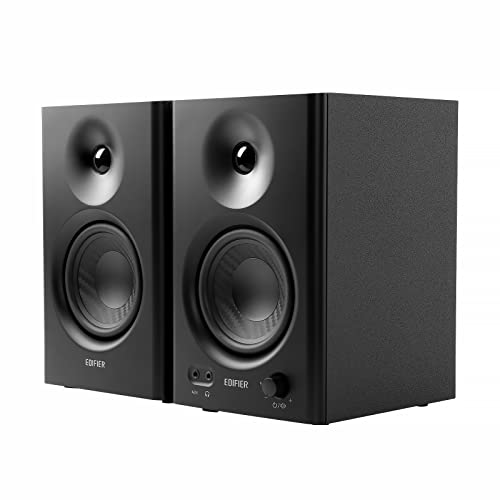
A bookcase speaker usually has two drivers: a tweeter for high sounds and a woofer for mids and bass. The cabinet shapes the sound, so a well braced cabinet with no rattles matters as much as driver size. Some speakers are passive and need a separate amplifier, while others are powered and plug straight into a wall outlet. Powered models are simpler, while passive models give you more freedom to upgrade the amplifier later.
Placement changes sound more than most buyers expect. Speakers sound clearer when the tweeters sit near ear height and when both speakers form a triangle with your seat. Pulling speakers a little away from the wall usually tightens bass, while pushing them hard against a wall can make bass boomy. A small change in position is often worth more than a larger budget.
Key Features to Compare
Sound Quality and Tuning
Listen for clear voices, natural instruments, and bass that supports music without overwhelming it. Larger woofers, around 5 to 6 inches, usually give fuller bass than small 4 inch woofers. Frequency response numbers help, but they do not tell the whole story, since room shape and placement change what you hear. Trust your ears in a similar sized room when you can.
Placement and Room Size
Small rooms suit compact speakers with 4 to 5 inch woofers, while medium rooms suit 5 to 6 inch models. Keep speakers away from corners if bass sounds muddy, and angle them slightly toward your seat. If you place speakers inside a closed bookcase, leave air space behind them and expect some change in bass, since enclosed shelves reinforce low sounds.
Connectivity and Power
Check inputs before you buy: Bluetooth for phones, optical or HDMI ARC for a television, and analog inputs for a turntable or computer. Powered speakers simplify setup, but check that the volume control and remote suit your daily use. For passive speakers, match the amplifier power to the speaker rating and confirm the impedance range works with your amplifier.
Build Quality and Long Term Value
A solid cabinet, firm binding posts, and a removable grille point to a speaker built to last. Removable grilles let you clean drivers and protect them from dust and pets. A speaker that sounds good at moderate volume matters more than one that only shines when loud, since most home listening happens at everyday levels.
How to Compare Options Before You Buy
Start with your room and your main source. A desk listener needs near field clarity and compact size, while a living room listener needs more output and better bass. Then check inputs: a speaker without the input your television or turntable needs is a poor fit no matter how good it sounds.
Price tiers give a useful frame. Pairs around $100 to $250 cover solid everyday listening. Pairs around $250 to $500 add cleaner bass, better cabinets, and wider sound. Above that range you pay for finer drivers, tighter tuning, and better finishes rather than for louder sound alone.
Common Mistakes to Avoid
Do not buy the largest speaker that fits your shelf, since a large speaker crammed against a wall can sound worse than a smaller one with air around it. Do not judge speakers only by bass, because clear mids carry voices and most instruments. Finally, do not ignore the amplifier match for passive speakers, since weak or mismatched power can strain both the amplifier and the sound.
Getting the Most From Your Purchase
Spend time on placement before judging sound. Move speakers a few inches at a time, try toeing them toward your seat, and test different distances from the wall. Small moves change bass and clarity more than most buyers expect. Listen to familiar music during placement tests, since familiar tracks reveal changes faster than new music you do not know well.
Give new speakers time to settle in your room. Your ears adjust to a new sound signature over days, and initial impressions can mislead. Listen at everyday volume for a week before deciding whether bass or treble needs adjustment. Use tone controls sparingly, since heavy equalizer changes can mask placement problems that a small move would fix better.
Protect your investment with simple habits. Keep speakers out of direct sun and away from radiators, dust grilles gently, and avoid pushing volume into distortion. Distortion damages drivers faster than clean loud sound. If a speaker rattles, check for loose items on top, a loose grille, or a nearby object vibrating before assuming the driver has failed.
Related Guides
Frequently Asked Questions
Do bookcase speakers need a subwoofer?
Not always. Many bookcase speakers give satisfying bass for music and television in small rooms. A subwoofer helps if you want deep movie bass or if your speakers are very small. Add a subwoofer only after you have placed your speakers well, since good placement often fixes thin sound without extra gear.
Are powered speakers better than passive ones?
Powered speakers are simpler and suit desks and televisions, because the amplifier is matched and built in. Passive speakers suit listeners who already own an amplifier or who want to upgrade parts over time. Neither choice is better in itself, so choose based on your setup and how much equipment you want to manage.
How far from the wall should speakers sit?
Start with a few inches of space behind each speaker and listen. Move them out a little at a time if bass sounds boomy or muddy. Rear ported speakers usually need more space than front ported models. Small moves can change bass noticeably, so test before you settle on a final spot.
What size speaker suits a small room?
Compact speakers with 4 to 5 inch woofers usually suit small rooms and desks. Larger speakers can overpower a small room with bass and may need more distance to blend properly. If your room is small, prioritize clarity and placement over driver size.
Can bookcase speakers work with a television?
Yes, if the speaker has the right input. Optical or HDMI ARC inputs connect cleanly to most televisions, and powered speakers keep the setup simple. Place the speakers on either side of the television at ear height for clear dialogue, and check that the remote or volume control is easy to reach.
Final Thoughts
Use the product table above to compare size, inputs, and power side by side, then choose speakers that fit your room first and your budget second. The best bookcase speakers for you are the ones that sounds clear at everyday volume, connects to the gear you already own, and fits the space where you actually listen.


