Best Body Fat Scales: Everything to Know Before Your First Purchase
Disclosure: We may earn a commission when you buy through links on this page, at no extra cost to you. As an Amazon Associate I earn from qualifying purchases. Learn more

The best body fat scales explained for first time buyers: electrodes, metrics, Wi-Fi vs Bluetooth and setup tips.
A body fat scale does more than tell you your weight. It sends a tiny, painless electrical signal through your body to estimate body fat percentage, muscle mass, body water and other metrics, then syncs the numbers to an app so you can see trends over weeks and months. For anyone tracking fitness, weight loss or strength training, those trends often say more than the number on a basic bathroom scale. But the terms can be confusing, and prices run from around $20 to $170. This guide to the best body fat scales is written for first time buyers: it explains the basics in plain English, compares options and helps you avoid common mistakes.
We cover how body fat scales work, the key specs, rookie mistakes, setup and first use and answers to common questions. Every scale in the table above is sold new on Amazon US. Body fat scales give estimates, not medical measurements. People with pacemakers or other implanted electronic medical devices, and people who are pregnant, should not use bioelectrical impedance scales unless their doctor approves; check the maker's warnings and talk to your doctor about your health goals.


Body Fat Scales 101: The Basics
Body fat scales use bioelectrical impedance analysis (BIA). Metal electrodes on the scale send a small current up one leg and down the other, or through your hands as well on 8 electrode models. Fat conducts electricity differently than muscle and water, so the scale combines that resistance with your height, age and sex to estimate body composition.
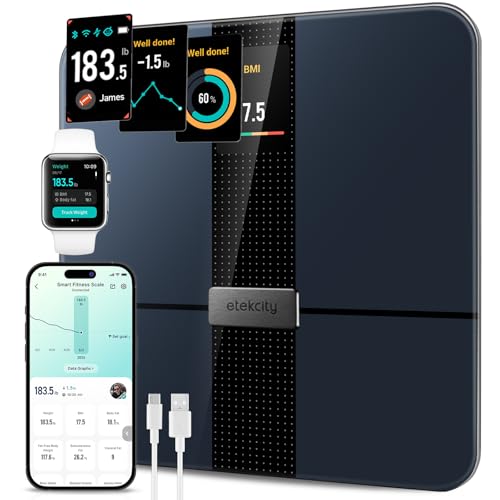
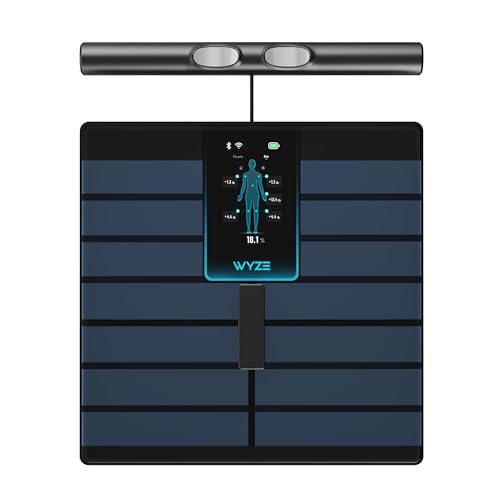
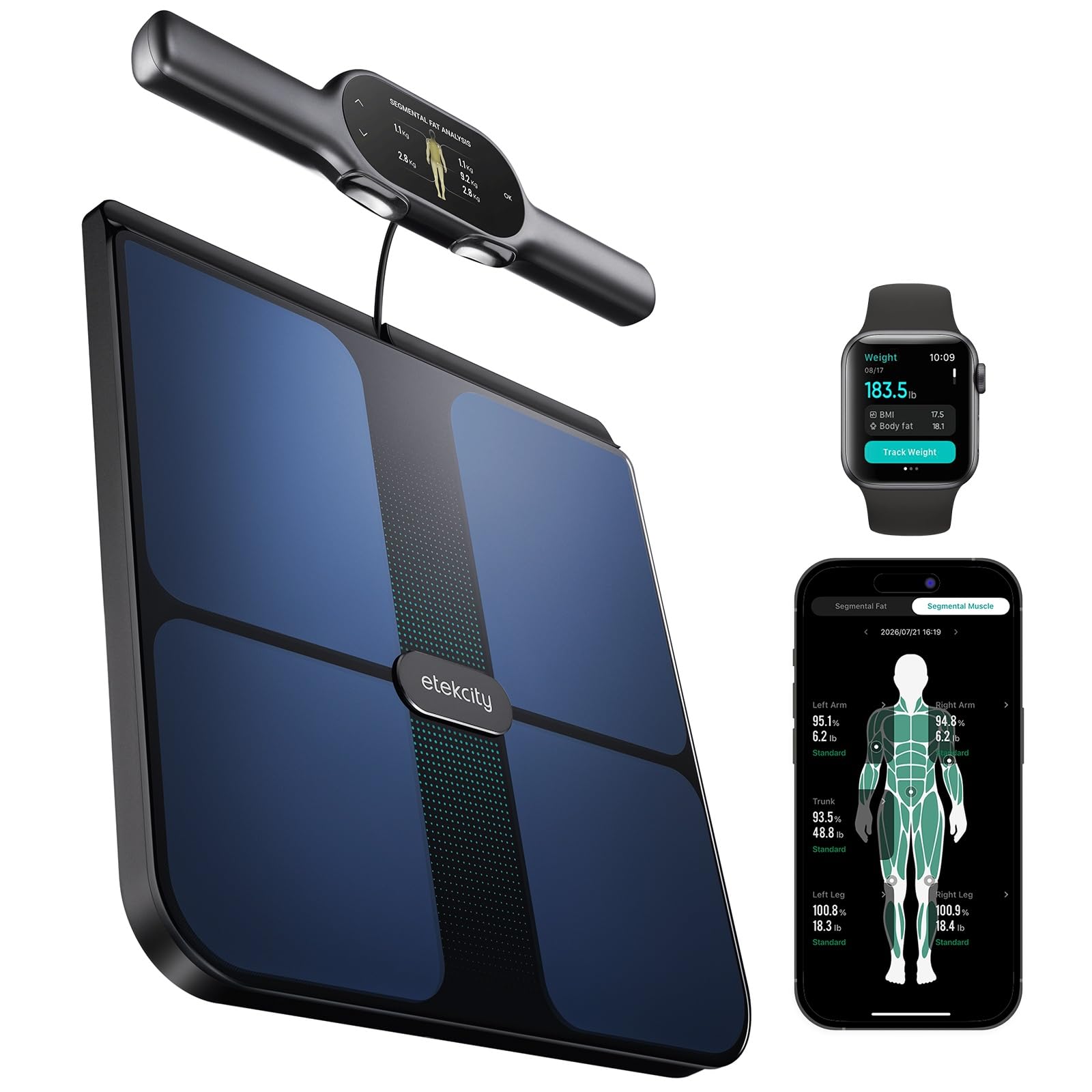
Basic models have four electrodes under your feet and measure mainly the lower body. Advanced models add a handle with electrodes for your hands, like the Wyze Scale Ultra BodyScan and the Etekcity WiFi 8 Electrode scale, which measure arms, legs and torso separately for segmental results.
Readings change with hydration, meals, exercise and time of day, so the most useful number is the trend over time, measured under the same conditions. A body fat scale is a tracking tool, not a diagnostic device.
If you are choosing among the best body fat scales for the first time, the most important decision is not the brand but how you will use the numbers. Someone losing weight wants to see body fat fall while muscle holds steady. Someone building strength wants muscle mass to climb. Families want one scale that recognizes everyone and keeps data separate.
Key Specs Explained in Plain English
The key specs are electrode count, metrics tracked, connectivity, app features, user profiles, display and build. Here is what each means and how to choose.
Electrodes: 4 vs 8
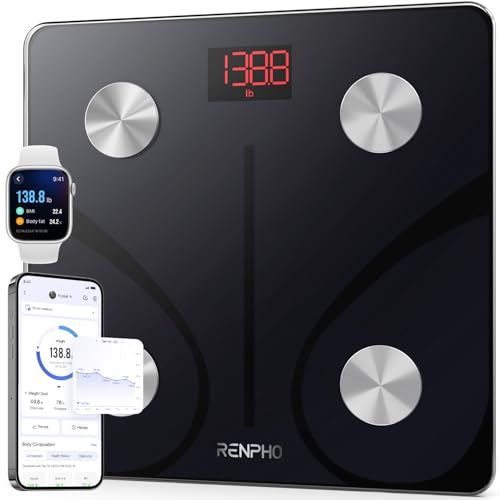
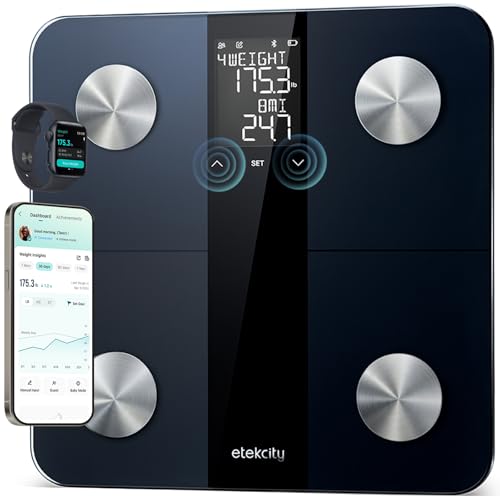
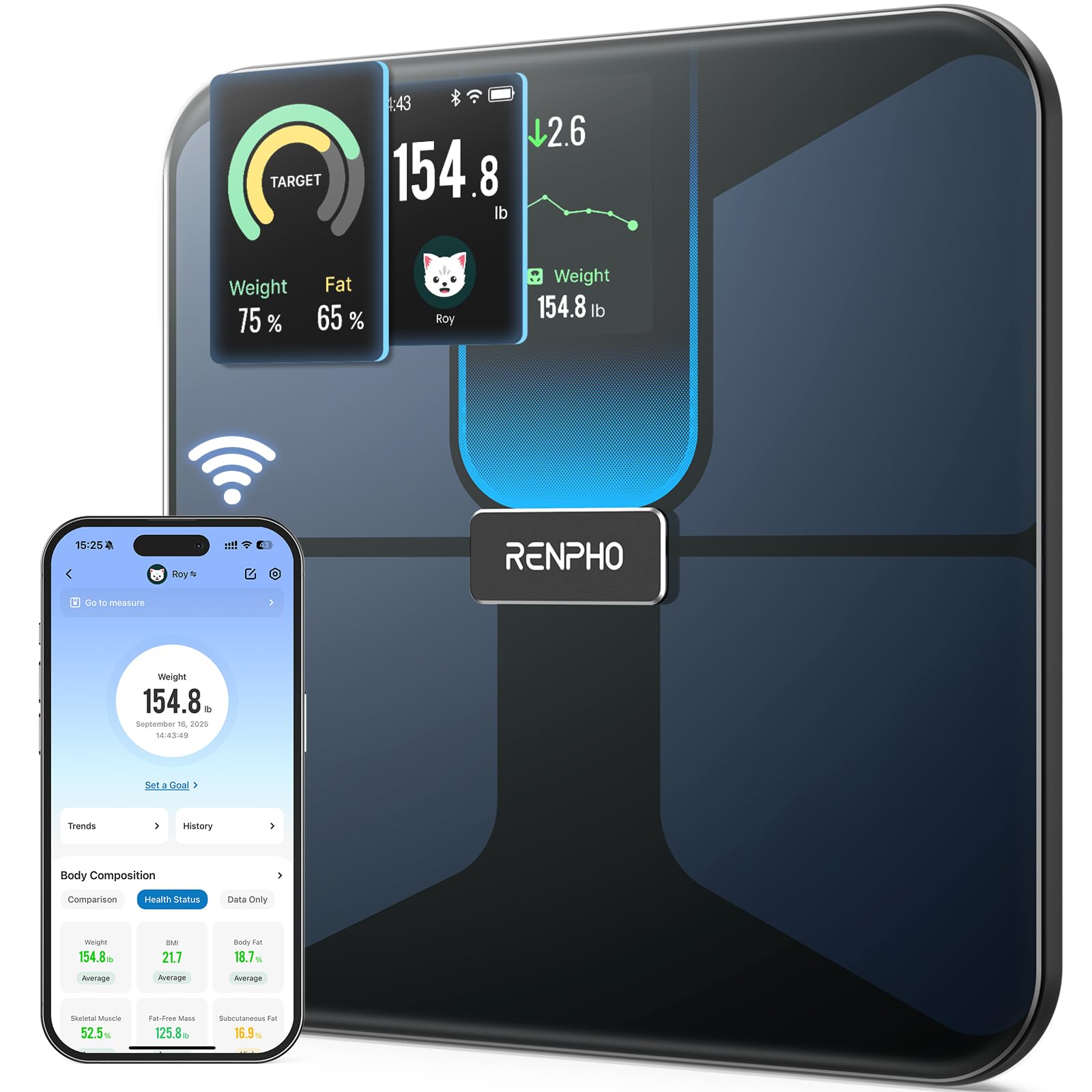
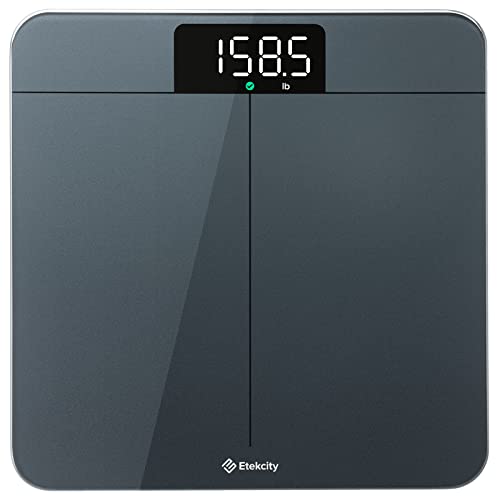
Four electrode scales, like the RENPHO Elis 1 and Etekcity Upgraded Smart Scale, measure through your feet. They are affordable and simple, and they track trends well for most people. RENPHO lists four high sensitivity electrodes and tempered glass on the Elis 1, which measures weight in 0.2 pound increments.
Eight electrode scales add hand electrodes on a handle. Wyze lists dual frequency 8 electrode BIA on its Scale Ultra BodyScan, measuring impedance through arms, legs and torso. They offer segmental readings, showing muscle and fat by body region, which helps strength trainers track balance between sides.
Choose 4 electrodes for simple tracking and 8 electrodes if you want detailed body composition and segmental data.
Eight electrode scales also tend to be more consistent from reading to reading because the current passes through the whole body rather than mainly the legs. That consistency matters more than the exact percentage, since trends are what you will track. The trade off is cost: 8 electrode models like the Etekcity WiFi 8 Electrode cost around $170, compared with around $25 to $40 for good 4 electrode scales.
Metrics Tracked
Scales list how many metrics they estimate. RENPHO lists 13 metrics on the Elis 1 and Etekcity lists 13 on its Upgraded Smart Scale, typically including weight, BMI, body fat, muscle mass, body water, bone mass, visceral fat and metabolic age. Wyze lists 44 metrics, including segmental fat and muscle for each limb.
More metrics are not always more useful. Most people get the most value from weight, body fat percentage and muscle mass trends.
Body water and visceral fat are useful secondary metrics. Body water readings explain day to day swings, since dehydration makes body fat appear higher. Visceral fat, the fat around internal organs, is linked to health risks, so a downward trend is encouraging. Talk to your doctor if any number concerns you.
Connectivity: Bluetooth vs Wi-Fi
Bluetooth scales, like the RENPHO Elis 1, sync with your phone when the app is open nearby. Wi-Fi scales, like the Withings Body Smart, RENPHO Elis Evo, Greater Goods Wi-Fi model and Etekcity WiFi 8 Electrode, upload readings automatically even when your phone is elsewhere.
Wi-Fi is more convenient for daily use, while Bluetooth scales cost less. Some scales, like Etekcity's upgraded model, also offer a mode that works without a phone at all.
Wi-Fi scales usually connect to 2.4GHz networks only, so check your router settings during setup. Bluetooth scales store a few readings until your phone connects, so occasional missed syncs are not a problem.
App Connectivity and Fitness Integration
Apps chart your trends and set goals. RENPHO says its app syncs with fitness apps like Apple Health, and Wyze lists syncing with Apple Health, Health Connect and Fitbit. Etekcity uses the VeSync app with diet and exercise guidance.
Check that the scale's app works with the fitness tracker or platform you already use, so all your data lives in one place.
Privacy matters too. Your weight and body composition are personal health data, so review the app's privacy settings, choose which data to share with other apps and use a strong password on your account.
Users, Display and Extra Modes
Family scales recognize multiple users automatically. RENPHO lists unlimited users, and Wyze lists automatic recognition for up to 8 users. Displays range from simple LED numbers to full color screens; Wyze lists a 4.3 inch color display that shows metrics without opening the app.
Extra modes add value: RENPHO and Wyze offer baby or pet modes, and Wyze adds a luggage mode, which let you weigh yourself holding a child, pet or bag and subtract your weight automatically.
Automatic user recognition works by matching your weight to profiles, so family members of similar weight may need to confirm their profile in the app. Some scales also offer athlete modes, which adjust formulas for people with high muscle mass.
Size, Footprint and Power
Measure your bathroom floor. Most scales are about 11 to 13 inches square, and handle models need extra room to stand comfortably. Many scales run on AAA batteries, while rechargeable models like the RENPHO Elis Evo charge over USB. Place the scale on a hard, flat floor; carpet affects weight readings.
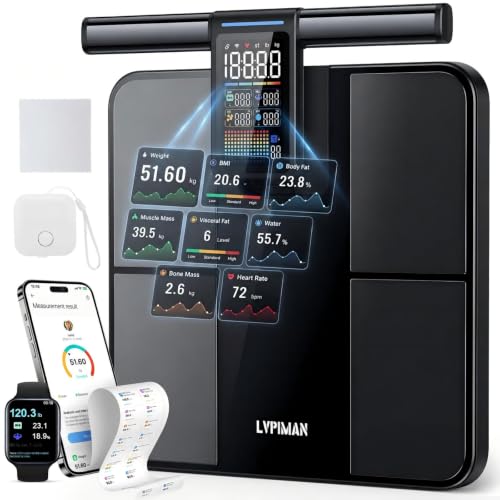
Weight capacity also varies. Many smart scales support around 400 pounds, and some advanced models list higher limits, like the LVPIMAN 8 electrode scale at 485 pounds. Check the capacity if anyone in the household is near the upper range, since accuracy can drop close to the limit.
Rookie Mistakes to Avoid
The most common mistake is comparing single readings day to day, when hydration swings can move body fat estimates by a percent or more. Another is weighing at different times of day; mornings after using the bathroom and before eating or drinking give the most consistent results.
Many people forget to enter accurate height, age and sex in the app, which the formulas depend on. Placing the scale on carpet or uneven floors skews weight. Finally, people sometimes treat body fat numbers as exact medical measurements; they are estimates best used to track trends.
Another common mistake is weighing right after a workout, a shower or a big meal, all of which change hydration and skew body fat estimates. Wet feet can also improve conductivity and lower readings. Dry your feet and wait a while after exercise for more consistent numbers.
Getting Started: Setup and First Use
Install the batteries or charge the scale, download the app and create a profile with accurate height, birth date and sex. Pair the scale over Bluetooth or connect it to your home Wi-Fi as the app directs.
Place the scale on a hard, level floor and step on barefoot with clean, dry feet so the electrodes make good contact. For handle models, hold the handle as shown in the instructions. Weigh yourself at the same time each day, ideally in the morning, and review weekly averages rather than single readings.
During the first week, weigh in daily to establish a baseline, then watch the weekly average. Small daily swings of a pound or two and a percent of body fat are normal. Many apps show trend lines that smooth out these swings automatically.
If readings seem off, check that your profile details are correct, the scale sits on a hard floor and your feet are centered on the electrodes. Replacing weak batteries also fixes many erratic readings.
Frequently Asked Questions
How accurate are body fat scales?
Body fat scales are reasonably consistent for tracking changes over time but less accurate than clinical methods like DEXA scans. Readings vary with hydration, meals and exercise. Use the same conditions each time and focus on trends.
For a reality check, compare your scale's trend with how your clothes fit, your waist measurement and progress photos every few weeks.
Which is better for beginners: 4 or 8 electrodes?
Four electrode scales like the RENPHO Elis 1 or Etekcity Upgraded Smart Scale are better for most beginners: affordable, simple and good for trends. Choose an 8 electrode scale if you want segmental data or train seriously.
Beginners can always upgrade later; data from many apps can be exported or synced to platforms like Apple Health, so your history carries over.
How long does a body fat scale last?
Most smart scales last several years. Tempered glass platforms and quality electrodes hold up well; batteries need replacing periodically unless the scale is rechargeable. App support from established brands keeps scales useful longer.
Keep the glass and electrodes clean with a damp cloth, avoid stepping on the scale with wet feet and store it flat rather than on its edge to protect the sensors.
How much space do I need?
Most scales need about a foot square of hard, level floor. Handle models need room to stand and hold the handle comfortably. Avoid carpet, which can affect weight readings.
Is a subscription required?
Most body fat scales work fully with free apps. Some brands offer optional premium plans with extra insights. RENPHO, Etekcity and Wyze apps provide core features without a subscription.
Withings and Google Fit style ecosystems may offer paid tiers for coaching or extra health insights, but weighing and body composition tracking remain free.
Who should not use a body fat scale?
People with pacemakers or other implanted electronic medical devices and people who are pregnant should avoid bioelectrical impedance scales unless their doctor approves. Many scales offer a weight only mode for those users.
Children and teens should use body composition features only with guidance from a pediatrician.
Wrapping Up
The best body fat scales help you track body composition trends with simple daily weigh ins. The RENPHO Elis 1 and Etekcity Upgraded Smart Scale offer affordable 4 electrode tracking, Wi-Fi scales like the Withings Body Smart, RENPHO Elis Evo and Greater Goods sync automatically and 8 electrode models like the Wyze Scale Ultra BodyScan and Etekcity WiFi 8 Electrode add segmental detail. Weigh in at the same time daily, watch the trends and talk to your doctor about health goals.
For more health guides, see the best baby scale, the best home treadmills for walking, the best incline treadmills and the best weight loss dog food. Then compare current prices in the product table above.