Best Baby Scale: How to Choose One You Can Actually Trust
Somewhere between the two-week checkup and the two-month appointment, most parents start wondering if their baby is really gaining weight the way the pediatrician expects. That gap between visits is exactly why a home scale has become such a common nursery item. The best baby scale for your family isn't necessarily the one with the most features. It's the one that gives you a number you can actually trust, week after week, without turning every weigh-in into a guessing game. This guide walks through what makes a scale accurate, when precision really matters, and how to get a reliable reading once you own one.




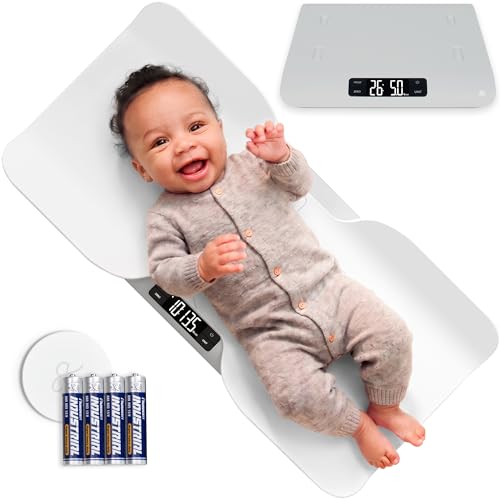
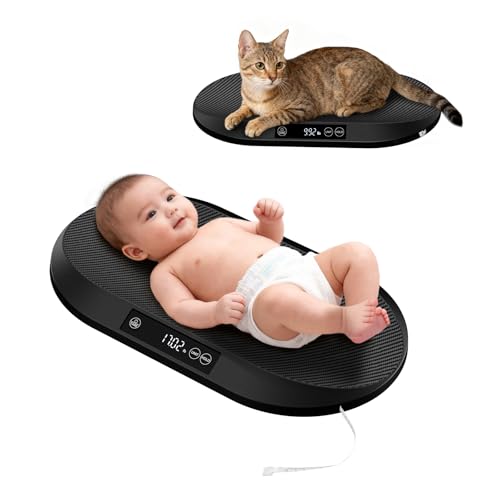
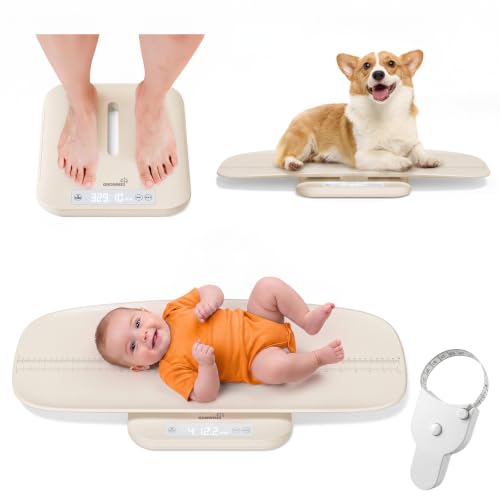
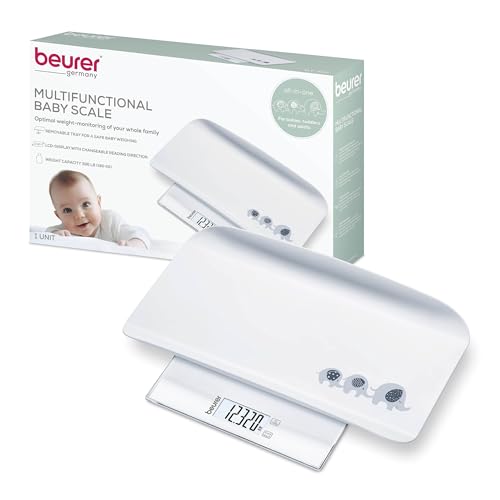
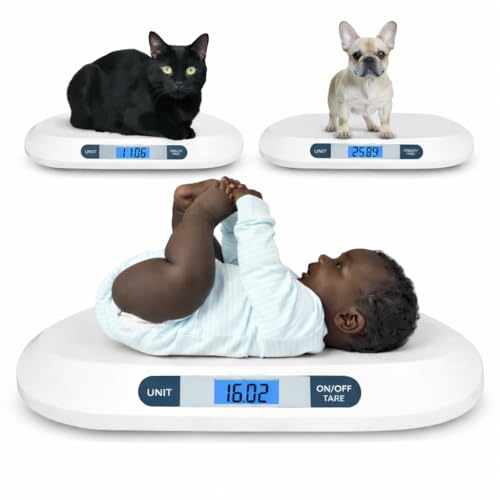
Accuracy Comes First
Every other feature on a baby scale is secondary to how precisely it reads, so it's worth understanding what "accurate" actually means before you compare one best baby scale against another.
Reading Increments: Grams vs. Ounces
Look at the increment a scale reads in, not just whether the listing says "accurate." A scale that moves in 5-gram or roughly 0.1-ounce steps is precise enough to catch small week-to-week changes in a newborn. Scales that only jump in half-pound or full-ounce increments can hide meaningful shifts, especially in the first couple of months when growth happens fast.
Tare and Hold Functions
The tare function zeroes out whatever is on the platform, a blanket, a diaper, a liner, so the display shows only your baby's weight. The hold function locks in a number once your baby settles for even a second, which matters because infants rarely sit still long enough for a scale to land on a stable reading on its own. Between the two, tare and hold do more for accuracy than any marketing claim about precision.
Display, Units, and Platform Comfort
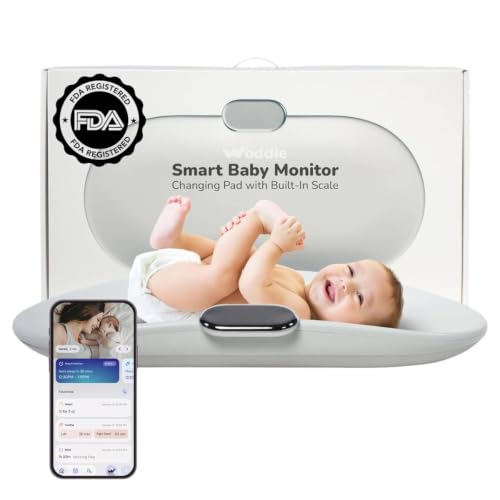
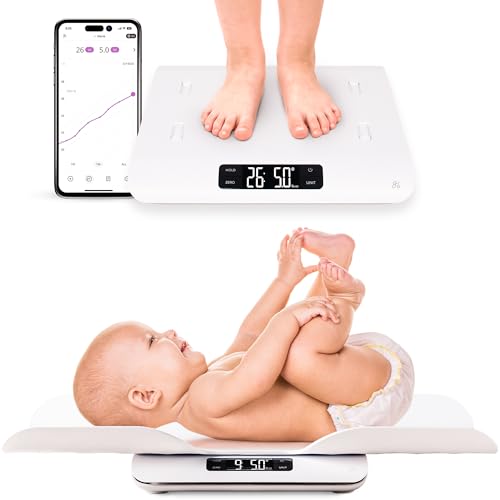
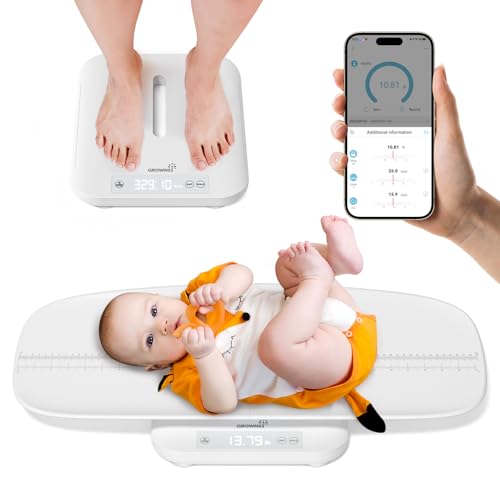
A large backlit display is easier to read one-handed, especially at 3 a.m. Being able to toggle between pounds and ounces, kilograms, and grams is genuinely useful if your pediatrician's chart uses metric and your bathroom scale doesn't. Beyond the electronics, look for a curved or contoured platform with a non-slip surface and raised sides, and consider whether a built-in length or height marker matters to you, some scales include one so you can track growth in more than one dimension at the same visit. Plenty of parents pair a scale with a baby monitor as part of the same general routine of keeping tabs on a newborn's wellbeing during the early months.
Why Most Home Scales Aren't Precise Enough for Weighted Feeds
If a lactation consultant has suggested weighted feeds to check how much milk your baby is transferring, it's worth knowing that the average home scale probably isn't built for it. Professional lactation scales used in clinics typically measure to within 2 to 5 grams, which is tight enough to trust for a single feeding. Many consumer baby scales, even ones marketed as accurate, are only sensitive to a range of 15 to 30 grams. That's a big enough margin of error to make one feed's number essentially meaningless, even though the same scale is perfectly fine for tracking overall growth over days or weeks.
If weighted feeds are part of your feeding plan, ask specifically about gram-level precision before buying, since that detail is what actually separates a best baby scale suited for feeding checks from one that's merely adequate for routine growth tracking. Or borrow a clinical-grade scale from your lactation consultant instead of relying on a general nursery scale. For everyday growth tracking, though, a standard digital baby scale with tare and hold is more than enough. If you're combination feeding, sticking with the same baby bottles for every session also keeps your pre- and post-feed numbers easier to compare.
Dedicated Infant Scales vs. Convertible Toddler Scales
Most baby scales fall into one of two categories, and picking between them mostly comes down to how long you plan to use it, which is really the deciding factor in finding the best baby scale for your specific timeline.
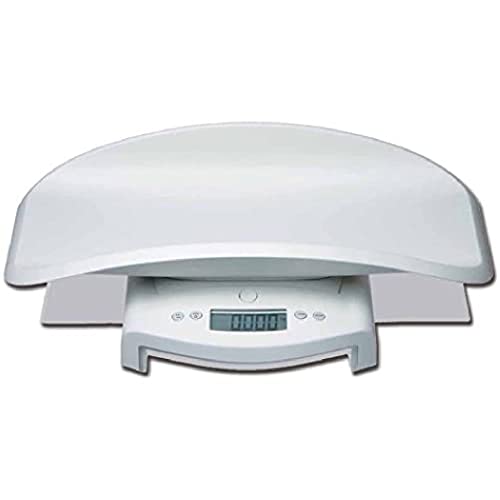
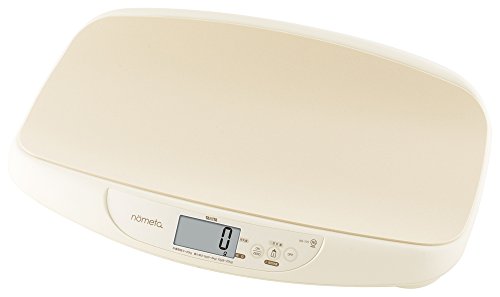
A dedicated infant scale has a curved or bowl-shaped platform sized specifically for a newborn lying down. These tend to be lighter, simpler, and less expensive, which makes sense if you only plan to use it through the first year or so before your child outgrows the platform entirely.
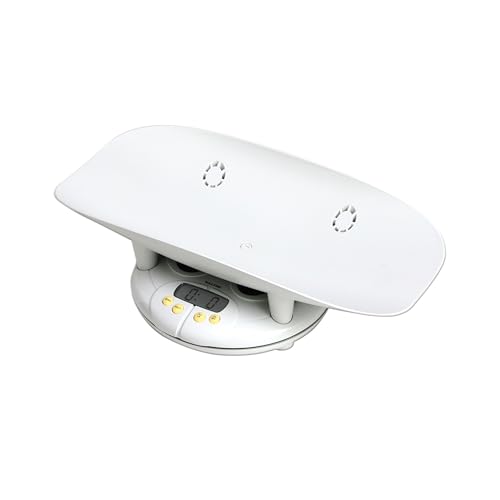
A convertible scale includes a removable infant tray over a flat standing surface, so the same unit that weighs a newborn can later weigh a toddler standing up, and some models are rated for adults as well. They cost more upfront, but if you'd rather buy once and use it for years, the flat platform underneath makes that possible. Weight capacity is the easiest way to tell them apart at a glance: dedicated infant scales usually top out around 40 to 50 pounds, while convertible models often handle 220 pounds or more.
Getting a Reliable Weigh-In at Home
A scale is only as useful as the habits around it, and even the best baby scale can't compensate for inconsistent conditions. Weigh your baby at roughly the same time of day, in the same or similar clothing, and ideally on the same schedule relative to feeding, either always before or always after, so the numbers you compare are actually comparable. Always place the scale on a hard, flat floor rather than carpet or a mattress, since a soft surface can throw off the reading enough to make a normal fluctuation look like a real problem.
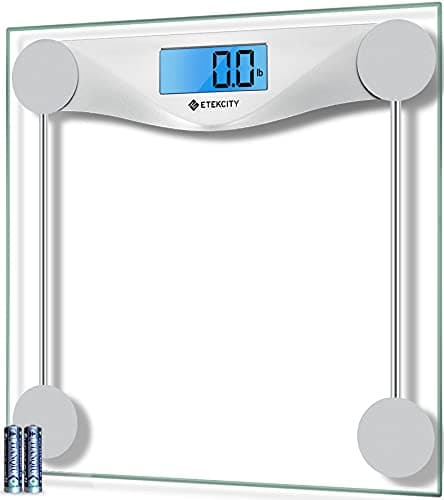
You don't need to weigh daily. After the first couple of weeks, once a month is plenty for most healthy babies up to six months old, stretching to roughly every two months between six months and a year. Weighing more often than that mostly just picks up normal day-to-day swings from feeding and diaper changes, which can cause unnecessary worry rather than useful information. If you don't have a scale yet and need a rough number in the meantime, weighing yourself alone and then again while holding your baby, then subtracting the difference, is a reasonable stopgap using a regular bathroom scale, even though it won't match the precision of the best baby scale options built for infants.
Store the scale somewhere flat and protected between uses, tucking it into your nursery storage setup keeps it from getting knocked around while staying within easy reach.
Frequently Asked Questions
How often should I weigh my baby at home?
After the first two weeks, once a month is typically enough for healthy babies up to six months old, and roughly every two months from six months to a year. Weigh more often only if your pediatrician recommends closer monitoring.
How do you weigh your baby at home without a scale?
Weigh yourself alone on a regular bathroom scale, then weigh yourself again while holding your baby, and subtract the first number from the second. It's not as precise as a dedicated infant scale, but it works as a rough estimate in a pinch.
Is a baby scale different from a regular bathroom scale?
Yes. Standard bathroom scales aren't sensitive enough to catch the small weight changes that matter for a newborn, and most lack a platform designed for a baby to lie or sit safely. A dedicated infant scale reads in much finer increments and is built with a baby-safe surface, which is exactly what separates the best baby scale from a general household one.
How accurate does a baby scale need to be for weighted feeds?
For weighted feeds, aim for 2 to 5 gram accuracy, which is closer to what professional lactation scales offer. Many consumer home scales are only accurate to within 15 to 30 grams, which isn't tight enough to trust for a single feeding.
What is the tare function on a baby scale?
Tare resets the display to zero after you place a blanket or liner on the platform, so the final number reflects only your baby's weight. It's worth using the exact same liner setup each time you weigh, for consistency.
Can a baby scale be used for toddlers?
A basic infant scale usually can't, once your child exceeds its weight capacity or outgrows the curved platform. A convertible scale with a flat standing surface is built to handle toddlers and, on many models, adults as well.
How do I clean a baby scale?
Wipe the platform with a damp cloth and mild soap after any spills or diaper leaks, then dry it before the next use. Avoid submerging the unit in water, since the internal electronics aren't designed to get wet.
The Bottom Line
The best baby scale for your household is the one whose accuracy actually matches what you need it for, routine growth tracking, weighted feeds, or both. Prioritize a real gram-level reading increment, a working tare and hold function, and a platform built for a baby, then build a consistent weigh-in habit around it. Get those basics right and the numbers on the display will actually mean something.