Best Boat Fishing Boots of 2026: Complete Buying Guide
Disclosure: We may earn a commission when you buy through links on this page, at no extra cost to you. As an Amazon Associate I earn from qualifying purchases. Learn more

Compare boat fishing boots by deck grip, waterproof height, fit and drainage, with a checklist for wet decks, types, care tips and common mistakes.
A wet deck changes every step you take. Spray, fish slime and washdown water turn a smooth surface slick, and ordinary shoes soak through in minutes. The best boat fishing boots keep your feet dry, planted and comfortable while you cast and move. Use the comparison table below to match height, grip and lining to your season.
Start with how you fish. Note the water that reaches your ankles, the hours you stand at the rail and the temperatures at launch. Those facts narrow the field fast and turn into clear choices on fit, outsoles and price below.




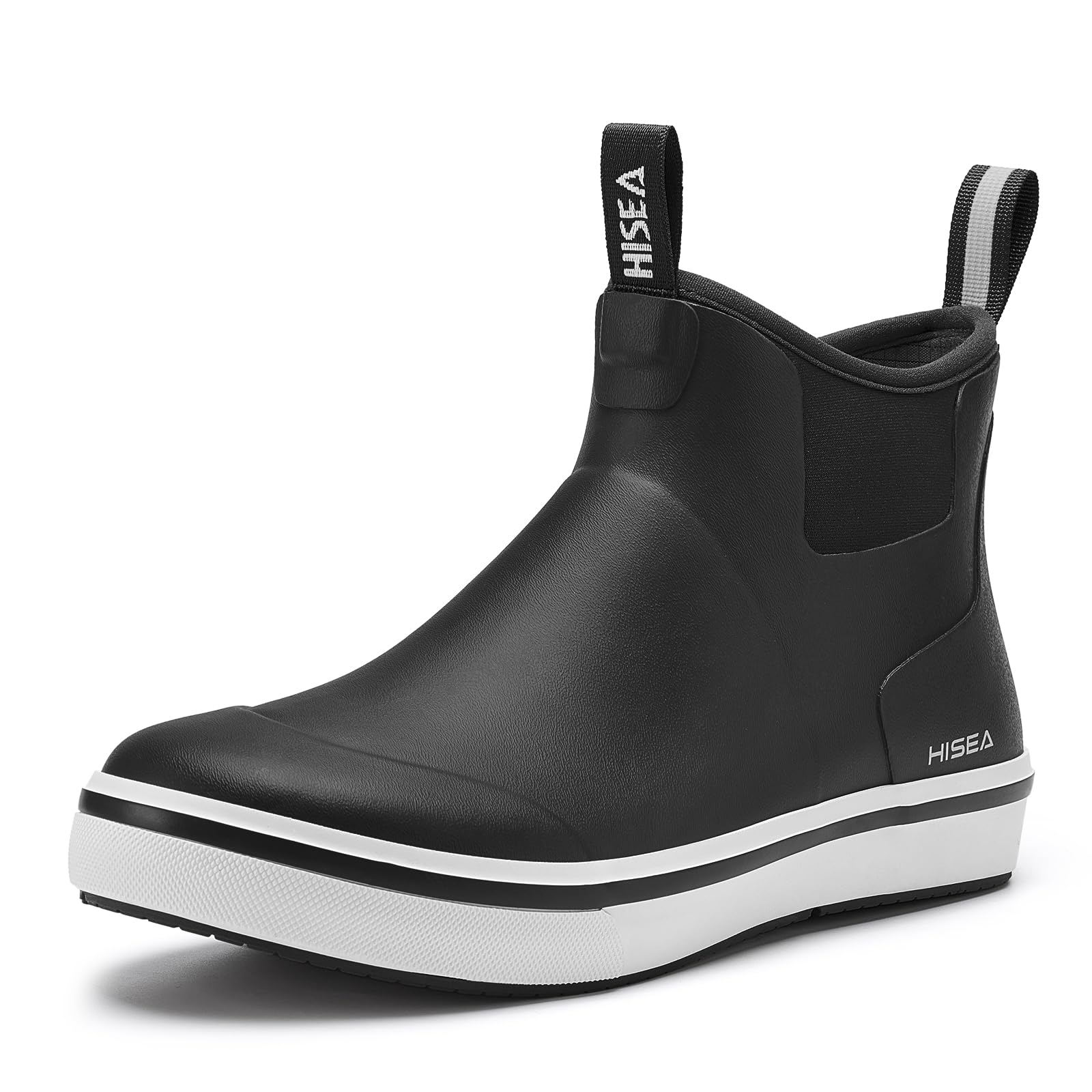

Who Should Buy Which Boat Fishing Boots?
Pick by your boat, your role on board and your climate. A boot for a warm bay will feel heavy and hot on a cold launch, so match the group below to your usual trip.
Anglers Who Stand on Open Decks All Day
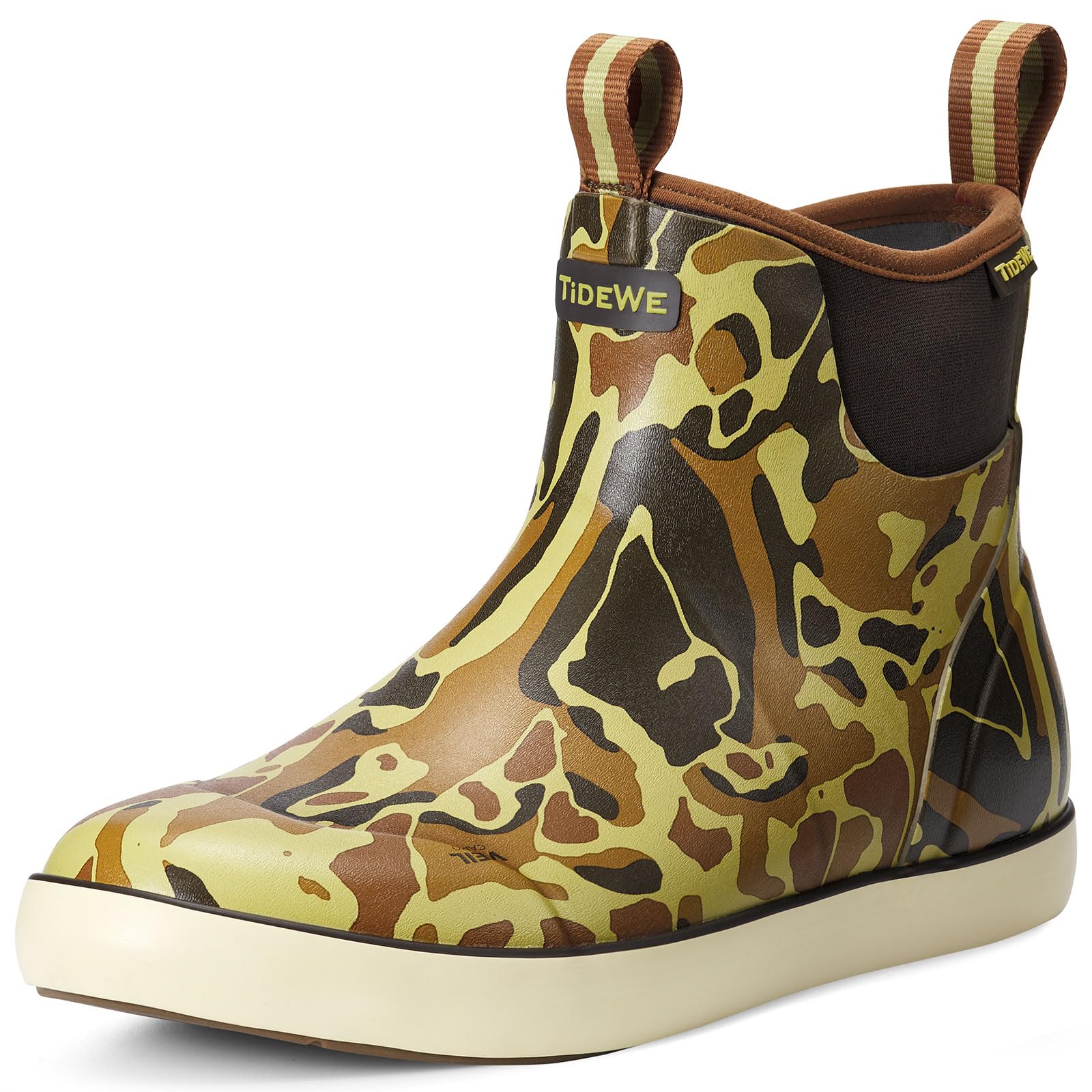
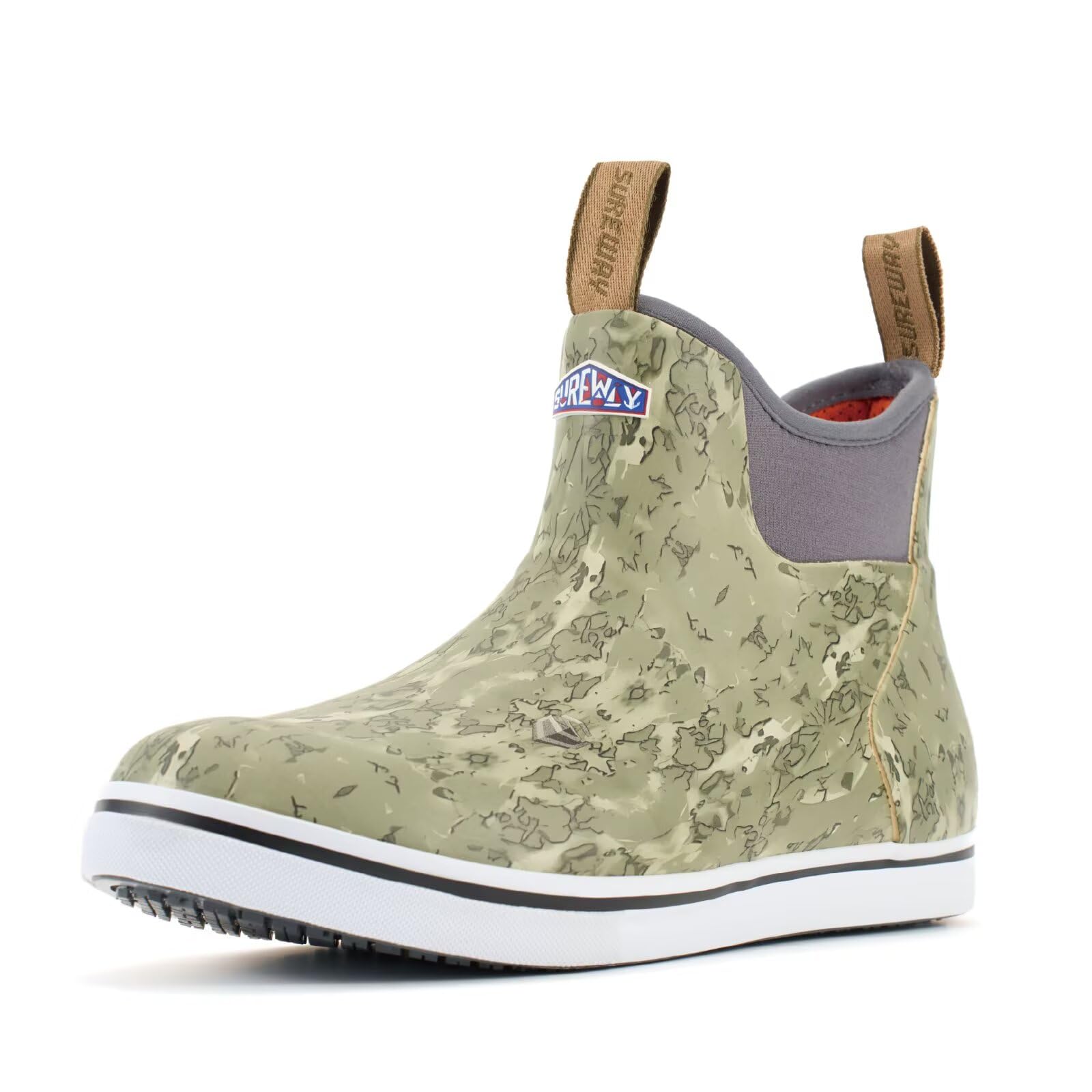
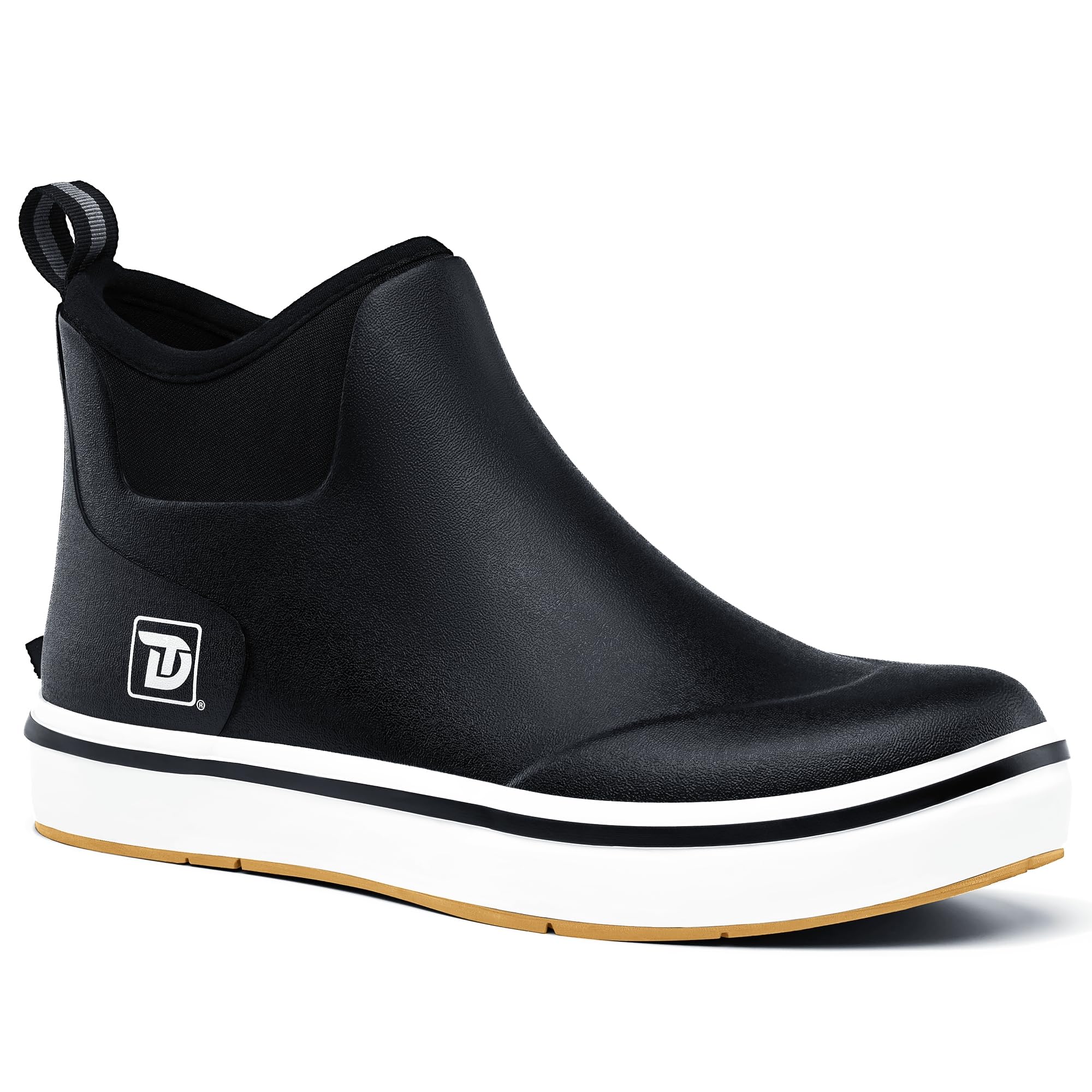
You move from bow to stern, brace while casting and stand through long drifts. Choose firm cushioning under the heel and forefoot, steady arch support and a wide, stable base. A short or mid calf height keeps water out without limiting your stride. If your trips also include docks and shore work, see our guide to the best fishing boots.
Charter Crew and Anglers Who Need Quick Entry
You step on and off the boat often, rinse the deck between groups and need boots you can pull on in seconds. Choose a pull on style with large pull tabs, a roomy shaft and a smooth lining that slides over socks. Short deck boots suit this pace in warm weather. On hot, calm days some crew prefer lighter footwear, and our guide to the best shoes to wear on a fishing boat covers those options.
Cold Water Anglers Who Fish Early and Late Seasons
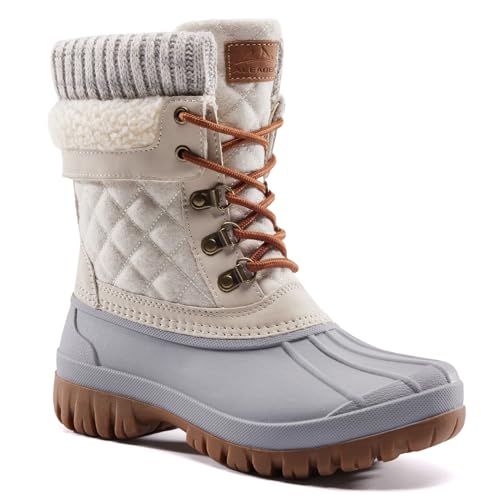
You launch before sunrise, face cold spray and stand on decks that stay near freezing. Choose a taller insulated boot with a thick lining, room for heavy socks and a sole that stays flexible in the cold. Low boots let icy water pour in when you step into a flooded corner. For hard ice conditions, see our guide to the best ice fishing boots instead.
Key Features to Compare
Compare these factors in order. Grip and height protect you first, then fit and comfort decide how the boot feels after hour four. When you compare best boat fishing boots side by side, score each pair on the same five points.
Grip on Wet Decks and Non Marking Outsoles
The outsole is your contact with a wet deck, so study its pattern first. Fine cuts called sipes open under your weight and push water aside, while wider channels move washdown water away from the sole. Soft rubber grips smooth fiberglass better than hard rubber, and a non marking compound leaves no dark streaks on light decks. Choose deep, flexible siping for slick fiberglass and firmer lugs for rough docks and ramps.
Waterproof Shaft Height and Sealed Construction
Height decides how much water a boot can shed before it pours over the top. Short boots at about 6 inches suit spray and light washdowns, while mid calf boots at about 10 to 12 inches handle waves and launching in shallow water. Look for sealed seams and a one piece lower section with no stitched holes near the foot. Taller boots add weight and warmth, so buy only the height your trips demand.
Fit, Sizing and Room for Socks
Measure both feet late in the day, when they are at their largest, and size for the larger foot. Wear the socks you fish in during a fitting, because thin socks give a false sense of room. You need space to wiggle your toes, firm hold at the heel and no pressure across the top of the foot. Most deck boots come in whole sizes only, so if you fall between sizes, choose the larger size and add a thicker insole.
Cushioning and Arch Support for Long Standing
Standing on a hard deck tires feet in a different way than walking does, because your weight stays in one place for long stretches. A molded footbed with clear arch support spreads pressure and reduces ache under the heel. Moderate cushioning absorbs the small shocks of a boat moving under you, while a very soft sole can feel unsteady when you brace. Flat feet usually need firmer support, and high arches need more padding under the midfoot.
Weight, Flexibility and Ease of Entry
A heavy boot protects well but slows every step, ladder climb and quick shift of position. Flexible rubber or neoprene uppers bend as you crouch to net a fish, and they pack smaller in a gear bag. Check that the shaft bends without folding sharply at the ankle, because a sharp fold can crack over time. Pull tabs should fit two fingers easily, even with wet hands or thin gloves.
Types of Boat Fishing Boots Compared
Most deck boots fall into three families by height and lining. Each suits a clear set of conditions, and our guide to the best boat boots gives a wider view of boating styles.
Short Deck Boots for Warm Days and Quick Trips
Short boots end just above the ankle and weigh the least of the three types. They pull on fast, feel cooler in summer and allow the freest stride for casting and moving around a small boat. Their limit is simple: water above the ankle enters at once. Choose this type for warm bays, calm lakes and decks that stay mostly dry apart from spray.
Mid Calf Boots for Splash and Spray Protection
Mid calf boots reach about 10 to 12 inches and give the most balanced coverage for general boat fishing. They block spray, washdown water and shallow water at the ramp while still bending well as you walk. Most anglers who fish varied conditions land on this height first. Choose a breathable lining in warm regions and a thicker lining for cold mornings.
Tall Insulated Boots for Cold Launches
Tall boots reach near the knee and pair height with thick insulation for the coldest work on board. They keep out deep water during launch and protect your legs from cold spray on open runs. The trade offs are weight, warmth in mild weather and a slower stride. Choose this type only if cold water is your norm, because on a warm deck the extra height burdens you by midday.
Common Mistakes to Avoid
These errors are common and easy to prevent.
- Buying a hard, smooth sole for a fiberglass deck leaves you sliding during the first washdown.
- Choosing ankle height for rough water lets spray pour in and soaks your socks within minutes.
- Sizing down for a snug feel cramps your toes and makes cold feet worse on long trips.
- Wearing cotton socks inside waterproof boots holds sweat against your skin and causes blisters.
- Ignoring whether the sole marks decks can leave dark streaks on fiberglass.
- Storing boots in a sealed, damp bag grows odor and weakens linings.
Rinsing and Drying Deck Boots After Salt Water Trips
Rinse your boots with fresh water after every salt water trip, paying attention to the sole pattern where grit collects. Salt left in the sipes dries rubber and cuts grip over time. Wash the outside with mild soap when fish residue builds up, then rinse fully so no soap film stays.
Dry boots upright in shade with the shafts open, away from direct heat that can warp rubber and crack linings. Stuff tall shafts loosely with dry newspaper if they fold while drying, and store the pair upright in a ventilated space. Inspect soles and seams each month, and retire a boot when the siping has worn smooth.
FAQ
Do boat fishing boots need to be fully waterproof for deck fishing?
Yes, boat fishing boots for deck fishing should be fully waterproof up to the top of the shaft. Even on calm days, washdown hoses, live well overflow and netted fish put real water on deck. Check the gusset behind any front opening too: choose a sealed or high gusset, because open tongues leak long before shaft height is reached.
How should boat fishing boots fit with fishing socks?
Boat fishing boots should fit with a thumb width of space past your longest toe while you wear your fishing socks. Stand and shift your weight side to side; your heel should lift only slightly and your toes should never press the front when you brace. Try both boots together, because many anglers have one foot larger and need to size for that foot.
Can I wear boat fishing boots all day on a boat?
Yes, you can wear boat fishing boots all day on a boat if the cushioning and lining suit your climate. Plan one midday sock change on very long or hot trips, because fresh socks restore comfort more than loosening the shaft does. If your feet overheat often, pick a shorter boot for summer and save the insulated pair for cold months.
Are expensive boat fishing boots worth it for occasional anglers?
Expensive boat fishing boots are rarely worth it if you fish only a few calm days each year. Around $60 to $100 usually buys sound grip, sealed construction and decent cushioning for that use. Pay more only for insulation, lighter uppers or a fit that suits wide feet, because those gains help on frequent or cold trips far more.
How often should I replace boat fishing boots used on decks?
Replace boat fishing boots used on decks when grip, sealing or support fails, not on a fixed schedule. Smooth sipes, cracked folds at the ankle and water entering at a seam are clear end points. A practical check is the wet tile test at home: if the sole skids on a wet smooth floor under light pressure, it will also skid on fiberglass.
Wrapping Up
Put grip first, then height, then fit with your real fishing socks. Those three choices decide safety and comfort more than price or color. Use the product table above to confirm shaft height, lining and sole pattern for your conditions.
When the best boat fishing boots match your deck, your water and your season, you stop thinking about your feet and focus on the next cast. Choose the simplest pair that meets those needs and keep it rinsed and dried.