Best Boat Deck Chairs in 2026: Which Type Is Right for You?
Disclosure: We may earn a commission when you buy through links on this page, at no extra cost to you. As an Amazon Associate I earn from qualifying purchases. Learn more

Compare boat deck chair types by frame, fabric, grip and folded size, with a clear checklist for choosing seating that suits your boat, crew and budget.
Boat deck seating looks simple until you shop for it. Frames come in aluminum, steel and teak, fabrics range from thin slings to thick padded vinyl, and folded sizes vary enough to decide whether a chair fits your locker at all. The best boat deck chairs match your deck space, your water and your crew. This guide compares the main types side by side, so you can read the comparison table below with a clear checklist in mind.
Start with how your boat is used. A chair that sits at anchor for hours needs padding and back support. A chair brought out only for guests needs to fold small and open fast. The sections below sort those needs first, then cover the frame, fabric and footing details that decide how a chair ages in salt air.




Who Should Buy Which Boat Deck Chairs?
Match the chair to the people who will sit in it most often. Fishing habits and deck size change the right answer more than price does.
Anglers Who Sit at Anchor for Hours
You stay seated while lines soak, so comfort over time matters more than saving an inch of storage. Choose a padded seat with a taller back and firm armrests. A wider seat, around 22 to 24 inches, lets you shift position without feeling pinched. Weight matters less, since the chair often stays set up all trip.
Cruising Owners Who Host Extra Guests
You need spare seating that appears when friends step aboard and disappears when the deck must stay clear. Choose folding chairs you can open with one hand and carry two at a time. A frame around 9 to 12 pounds balances sturdiness with easy handling. Matching pairs also stand together neatly in a locker.
Small Boat Owners with Narrow Decks
Your deck may offer only a strip of open floor beside a console or cooler. Choose compact chairs with a narrow footprint and a low folded profile that slides under a bench. Skip wide armrests that steal inches and catch on rails. Measure your clear floor space before ordering, because two inches can decide whether a chair opens fully.
Types of Boat Deck Chairs Compared
There is no single winner among the best boat deck chairs, because each type trades comfort, storage and upkeep in a different way. Read the four types below against your own routine.
Padded Folding Chairs for Everyday Cruising
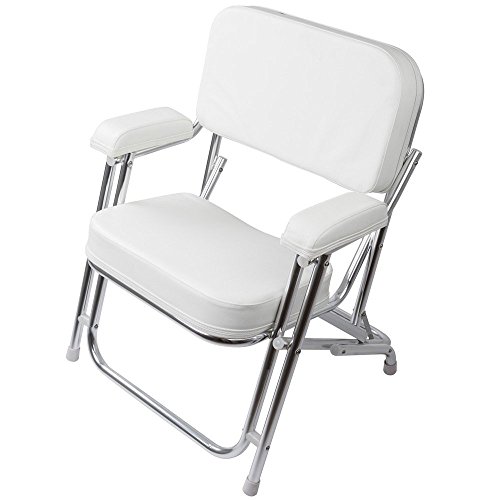
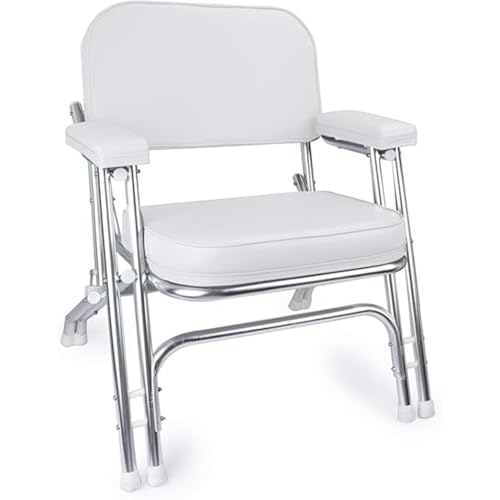
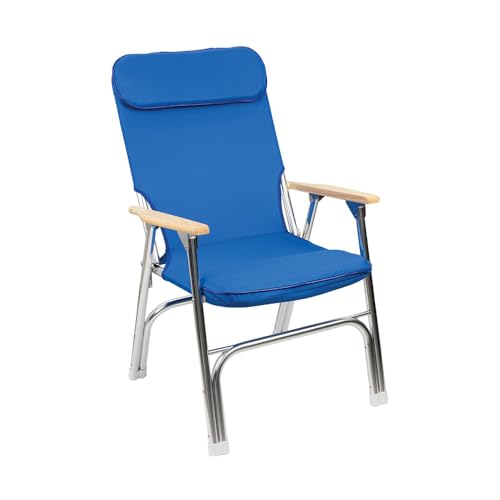
This is the most common type: a metal frame, a padded seat and back, and legs that fold flat for storage. Padding makes long anchorages far more pleasant, and armrests help guests stand on a moving deck. Expect to pay about $80 to $200. For a deeper look at this style alone, see our guide to the best folding boat deck chairs.
Teak Frame Chairs for a Classic Look
Teak frame chairs pair wood with fabric or vinyl slings, and they suit owners who care about traditional looks. Teak resists rot naturally and feels solid, but the frames weigh and cost more, often about $150 to $400. The wood needs occasional cleaning and oiling to keep its warm color, or it can weather to a silver gray finish.
Fabric Sling Chairs That Stow in a Locker
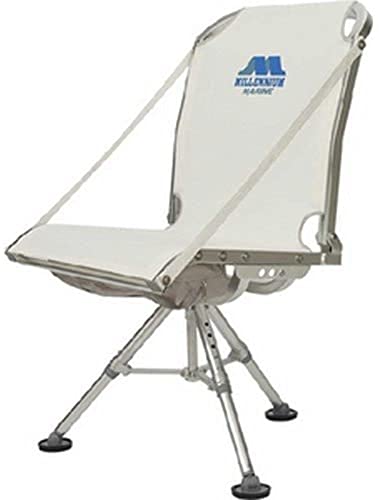
Sling chairs hang a single sheet of fabric between frame rails, with no padding at all. They weigh as little as about 6 to 8 pounds, fold very flat and dry fast after spray, so they make ideal spare guest seating. The trade off is support: thin fabric sags and offers little for your lower back on long sits. Prices run about $40 to $90.
Compact Low Chairs for Small Open Boats
Compact chairs sit lower, with shorter legs and a smaller seat, so they fit small open boats where tall chairs would block sight lines. Their low center of gravity feels reassuring when the boat rocks at anchor. They suit stiff knees poorly, since rising takes more leg strength. Most cost about $50 to $120.
Key Features to Compare
Once you know your type, compare these five factors in order. They decide how a chair feels on day one and how it looks after two seasons outside.
Frame Materials That Survive Salt Air
Salt air attacks metal every day your boat sits in its slip, so frame material is the first thing to check. Anodized aluminum resists corrosion well and stays light, which suits chairs carried on and off the boat. Stainless steel feels stiffer but costs and weighs more. Painted steel is the budget route, yet one deep chip lets rust start and spread under the paint. Teak avoids rust entirely, though its hardware still needs watching.
Fabric and Vinyl That Handle Sun and Spray
Sunlight fades and weakens fabric, while spray soaks anything absorbent. Vinyl covered padding wipes dry in seconds and shrugs off sunscreen, but it can feel hot on bare legs at midday. Woven polyester breathes better, though it dries more slowly. Mesh panels drain and dry fastest, a real plus on open boats. Look for UV resistance and mildew resistance stated by the maker, since both decide how the seat looks next season.
Feet That Grip the Deck and Leave No Marks
A deck chair must stay put on fiberglass without scarring it. Look for wide rubber feet that spread the load, grip when wet and leave no dark marks on white gelcoat. Feet shaped as short bars steady a chair on a slightly crowned deck better than four small points. A frame that locks open matters too, because a chair that starts to fold as a guest shifts weight feels unsafe. Pairing steady chairs with the best boat deck shoes keeps both sitter and seat planted.
Folded Size, Chair Weight and Stowage
Measure the locker or bench box where the chairs will live, then compare those numbers with the folded length and thickness, not the open size. Most folding chairs fold to about 30 to 40 inches long. Weight runs from about 6 pounds for a sling chair to about 15 pounds for a padded model. A carry handle helps on the dock. If storage is truly tight, our guide to the best deck chairs covers land based designs some owners use on docks.
Seat Height, Width and Weight Capacity
Seat height shapes how easily guests get up and down. Most boat deck chairs place the seat about 15 to 18 inches above the deck, and taller guests or older knees do better at the upper end. Seat widths run about 19 to 24 inches. Weight capacity is commonly rated around 225 to 300 pounds. Choose a rating with a margin for the person plus anything held on a lap.
Common Mistakes to Avoid
- Buying chairs by open size alone leaves you with seats that fit no locker when folded.
- Choosing painted steel for a saltwater slip invites rust that stains the deck under every foot.
- Setting a portable chair on a raised deck while underway risks it sliding overboard.
- Ignoring the weight rating overloads joints and fabric, so the chair loosens and sags within a season.
- Leaving padded chairs closed and wet after trips grows mildew inside the foam and seams.
How to Make Your Boat Deck Chair Last Longer
Rinse chairs with fresh water after saltwater outings, paying attention to joints, hinges and the undersides of feet where salt crystals collect. Open each chair fully and let it dry in shade before folding it away, since trapped moisture feeds mildew and corrodes hidden hardware. A quick wipe of vinyl with mild soap removes sunscreen and grime.
Every few months, check screws and locking parts for looseness, and replace worn foot caps before they crack and expose bare metal to the deck. Store chairs indoors during long layups. Fixed seating needs different care, so if your boat relies on built in bench seats instead, see our guide to the best boat chairs.
Boat Deck Chairs: Your Questions Answered
Can a boat deck chair stay on deck all season?
A boat deck chair can stay outside for a season, but it will age faster than one stored under cover. Constant sun fades fabric and dries vinyl until it cracks, and standing water in a folded chair feeds mildew. If yours must live outside, stand it open so rain drains off and bring it in during storms. A breathable cover helps, provided the chair goes under it fully dry.
How do I stop a boat deck chair sliding on a wet deck?
Start with the feet: clean rubber caps grip far better than worn or sandy ones, so rinse grit off the caps and the deck spot first. Place the chair on the flattest area you have, away from sloped bow sections. A thin rubber mat under the feet adds grip on smooth fiberglass. Even so, treat portable chairs as seating for anchor or dock, and use fixed seats whenever the boat moves at speed.
What seat height suits a boat deck chair for older guests?
A seat around 17 to 18 inches high suits most older guests, since it lets them rise with help from the armrests instead of pulling on a rail. Test the chair at home on a hard floor first. If the guest must rock forward twice to stand, the seat is too low or too soft. Firm padding helps, because a seat that sinks adds hidden inches to the climb.
How long should a good boat deck chair last?
A good boat deck chair should last about three to five seasons of regular use, and longer with indoor winter storage. Frames usually outlast fabric, so sun faded or torn slings end a chair long before the metal does. When fabric tears at a stress point or a hinge will not lock firmly, replacement is safer than repair.
Wrapping Up
Decide by type first, then check the frame against salt air, the feet against your deck and the folded size against your locker. Those three checks remove most bad choices before price enters the picture. Use the product table above to confirm dimensions, weight and ratings for the styles that fit your crew.
Shopped this way, the best boat deck chairs for your boat are the ones your guests can sit in, stand from and stow without a second thought.