
Best Bluetooth Meat Thermometer for 2026: A Guide That Fits Real Homes
Disclosure: We may earn a commission when you buy through links on this page, at no extra cost to you. As an Amazon Associate I earn from qualifying purchases. Learn more

Choose the best bluetooth meat thermometer by range, probes, accuracy and budget, with simple advice for roasts, grills and long smokes.
A roast is in the oven, guests are in the living room, and you do not want to keep opening the door to check on dinner. That is the exact moment a best bluetooth meat thermometer earns its place in your kitchen, because it sends the temperature to your phone while the food keeps cooking undisturbed. The right choice depends on your home, your household size, and how far you sit from the grill or oven.
This guide helps you choose by space, routine, and budget rather than by the longest feature list. You will see how range, probe count, app alerts, and cleaning needs differ, and the comparison table below sums up the main types so you can shortlist with confidence.


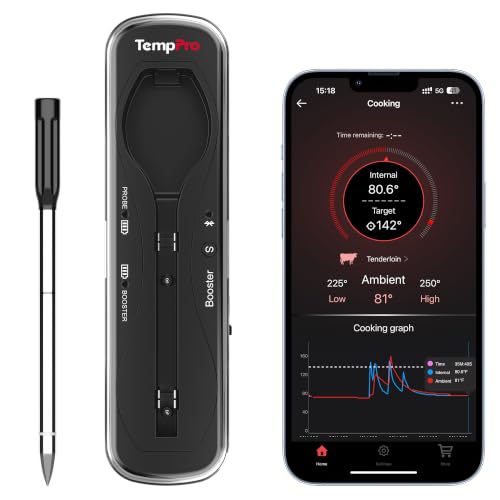


Quick Answer: Three Buying Profiles in 30 Seconds
If you cook one roast or a few chicken breasts at a time, a single probe model with a simple app and clear alerts covers most weeknight meals. If you cook for a larger household, two to four probes let you track a turkey and a side dish, or thick and thin cuts, at the same time. If your grill or smoker sits far from your kitchen, range and a strong signal matter more than extra app charts.
None of these profiles needs every feature on the box. Match the profile to your home first, then check accuracy, probe durability, and battery type.
Before You Buy: A Quick Checklist for Choosing
Which Type Fits Your Routine
A bluetooth meat thermometer is a leave in probe system: the probe stays in the food, a transmitter sits outside the oven or grill, and your phone shows the reading. It suits long cooks where opening the lid loses heat. By contrast, the best instant read meat thermometer suits quick spot checks on steaks and burgers, and many homes own both styles for different jobs.
Other types solve other problems, and our guide to the best meat thermometer walks through the full range. WiFi models reach your phone from anywhere with internet, which helps on long smokes away from home. Plain digital probe models with a base display cost less and need no phone at all. Infrared guns read surface heat only, so they cannot tell you the center temperature of a roast.
Features Worth Paying For and Ones to Skip
Pay for accuracy you can trust, stated as within about 1 to 2 degrees, and for alarms you can set by target temperature rather than only by preset meat types. Multiple probes, a loud alarm plus phone alerts, and a backlit base display all help in real kitchens. A booster or a wired probe design that keeps the transmitter away from direct heat can also protect the electronics over time.
Skip elaborate recipe libraries, social sharing, and color screens if you will not use them, because they raise the price without improving the reading. Voice alerts sound handy, yet many cooks turn them off after the first noisy cook, so treat them as a bonus, not a reason to buy.
Materials and Food Safety
Look for probes made from stainless steel with a cable or a fully sealed body rated for the heat of your grill or oven, and check the stated limit for both the probe tip and the cable or handle. The part that enters food should be smooth, without deep grooves where juices can hide. A thin tip reaches the center of thin cuts without tearing them and gives a faster, more honest reading.
Placement matters as much as material, so push the probe into the thickest part, away from bone, fat pockets, and the pan. Bone can push the reading up, which risks serving meat that is underdone at the center. Keep the raw meat probe away from cooked food until it is clean.
Which Parts Can Go in the Dishwasher
Most transmitters, charging cases, and probe handles should never go in the dishwasher, and many should never sit in water at all. Some stainless steel probes tolerate a dishwasher rack, yet hand washing protects the cable joint and any seals from harsh heat and detergent. Always check the care notes for the exact parts before the first wash, because water damage to the electronics is rarely covered and rarely reversible.
Dry each probe fully before storage, since moisture left in a drawer can corrode the tip. Coil cables loosely rather than wrapping them tight, because sharp bends stress the inner wires.
Realistic Budget Ranges
Under $20 usually buys a basic single probe unit with a modest range and a simple app, fine for occasional oven roasts. About $20 to $50 is the busy home sweet spot, with better range, two probes on many models, and clearer alerts. About $50 to $100 tends to add stronger signals, more probes, and tougher probes and cases.
Above about $100, you are mostly paying for greater range, premium build, and refined apps rather than a different result on the plate. Save the higher spend for long smokes, big yards, or cooking for a crowd every week.
Three Buying Profiles and What to Prioritize
Profile One: Small Households and Weeknight Cooking
You cook for one to four people, mostly in a kitchen oven or on a small patio grill, and your phone stays within a room or two of the food. Prioritize a single probe or two probe setup, fast pairing, and an app that shows one big clear number. A rechargeable case is convenient, but replaceable batteries are fine at this size and keep the cost down.
Skip paying for extreme range you will never use in a flat or a compact house. Instead, value a probe that cleans fast and an alarm that cuts through television noise. This profile is also the easiest place to learn the basics, and the steps in how to use a meat thermometer will help you place the probe well from the first cook.
Profile Two: Family Roasts and Holiday Meals
You cook whole birds, large roasts, and several cuts at once, often with the oven full and people moving around the kitchen. Prioritize three or four probes, each with its own target and alarm, so one cut does not hide another that is racing ahead. A base unit with its own display helps here, because the cook nearest the oven can glance at it without asking who holds the phone.
Look for longer cables or robust wireless probes that survive a crowded oven, and for app screens that label each probe clearly. If you host often, this profile saves the most stress, since it replaces repeated door opening with one calm check of every item.
Profile Three: Backyard Grilling and Long Smokes
You cook outside, sometimes for hours, and you move between the smoker, the kitchen, and a seat across the yard. Prioritize the strongest honest range you can afford, plus alerts that repeat until you respond, because a brisket does not wait politely. A transmitter built to resist splashes and light rain suits this life better than a delicate kitchen only design.
Consider whether bluetooth alone reaches your favorite chair, since walls, metal smoker bodies, and distance all shrink real range. If your yard is large, compare this profile with the options in our guide to the best wireless meat thermometer, where WiFi systems trade simplicity for reach.
How We Evaluate These Thermometers
We weigh ease of use, durability, cleaning, design, and value, using maker specifications and patterns in verified buyer feedback rather than invented test claims. Accuracy statements, heat limits, and range figures come from the makers, and we treat range claims with care because every maker measures in open space. A claim that sounds double the norm deserves extra doubt, not extra trust.
We also favor honest ownership costs: replacement probes that are easy to find, batteries you can buy anywhere, and apps that still work without an account. Clear manuals and responsive support count, too, since pairing questions tend to arise an hour before guests arrive.
Bluetooth Compared With Other Meat Thermometers
Bluetooth wins on simplicity: no home network setup, no account, and a direct link between the transmitter and your phone. It loses on distance, because the signal typically fades after about 30 to 100 feet once walls and appliances get in the way. WiFi systems cost more and take longer to set up, but they let you check a long cook from the store or the school run.
Instant read tools answer a different question, giving you one fast reading when you poke the food, with nothing left in the oven. Leave in wired probe models are the budget champions and never lose a connection, though the cable can fray at the door seal over time.
Your home layout settles the argument better than any spec sheet. A flat with the kitchen beside the living room makes bluetooth feel limitless, while a basement smoker will expose its limits on the first long cook.
Common Buying Mistakes to Avoid
- Believing the box range figure, then finding the signal drops through two walls or a metal grill lid.
- Buying four probes for a household that cooks one item at a time, then facing a tangle of unused cables.
- Ignoring the heat limit of the cable or probe handle and ruining it on a hot searing station.
- Choosing by app extras while skipping the stated accuracy, which is the one number that decides doneness.
- Forgetting replacement probe prices, so a cheap set becomes costly after the first probe fails.
Cost of Ownership and Care
The purchase price is only part of the cost, because probes wear out, batteries die, and cables suffer near hot doors. Budget for one replacement probe over a few years of weekly use, and check that spares are sold singly rather than only in full sets. Rechargeable models save battery purchases but need a charging habit, while battery models ask for a spare set in the drawer.
Day to day care is simple, and the full routine in how to clean a meat thermometer covers the details. Wipe probes right after use, keep transmitters dry, and store probes where the tips cannot bend.
Your Questions, Answered
What should you look for in a reliable bluetooth meat thermometer brand?
Reliability shows up as published accuracy figures, clear heat limits, spare probes in stock, and app updates that continue after launch. A maker that lists a real support address and a warranty of at least a year signals confidence. Check recent buyer comments for pairing complaints, because software neglect, not hardware, is the most common reason owners abandon a set.
How do you clean a bluetooth meat thermometer probe?
Wipe the probe with hot soapy water right after use, scrubbing the tip and shaft where juices collect, then rinse and dry it fully. For cooks that involved poultry, follow with a food safe sanitizing wipe or a cloth dipped in a mild sanitizing solution, because salmonella can linger in scratches. Never soak a wireless probe body unless the maker states a waterproof rating for that exact part.
Is a meat thermometer worth buying for a home kitchen?
Yes, a meat thermometer is worth buying because it removes the guesswork that leads to dry chicken and underdone pork. It also helps you cook to safe internal temperatures set by food safety guidance, which matters most for poultry and ground meats. Even confident cooks find that carryover heat during resting adds about 5 degrees, and a thermometer makes that rise easy to plan for.
How long does a bluetooth meat thermometer last?
The base unit and transmitter often last many years, while probes are the wear item and may need replacing after one to three years of heavy use. A probe that reads room temperature far from the actual air temperature, or that jumps wildly, is telling you it is done. Storing probes in a case rather than loose in a drawer is the simplest way to reach the long end of that range.
Are bluetooth meat thermometers worth the extra cost?
Bluetooth models are worth the extra cost when you cook long roasts, turkeys, or smokers that punish repeated lid opening. The phone alerts free you to host, work, or watch the game while the cook stays on track. If you mostly grill thin steaks and chops for a few minutes per side, a simple instant read tool gives you the same confidence for less money.
What is the best bluetooth meat thermometer setup for a beginner?
The best setup for a beginner is one or two probes, a clear app with loud alarms, and a base display as a backup to the phone. Start with forgiving cooks like a whole chicken or a pork shoulder, where a few degrees either way still taste great. Keep a printed list of your target temperatures on the fridge until they become second nature.
Final Thoughts
The right best bluetooth meat thermometer is the one that matches your rooms, your household size, and the way you actually cook, not the one with the longest feature list. Use the product table above to compare profiles, favor proven accuracy and available spare probes, and let range claims bow to the layout of your home. Choose calmly, and your next roast can cook itself while you enjoy the people you invited.


