Best Bluetooth Kitchen Scales (2026): Apps, Size and Care
Disclosure: We may earn a commission when you buy through links on this page, at no extra cost to you. As an Amazon Associate I earn from qualifying purchases. Learn more

App, capacity and care advice for choosing the best bluetooth kitchen scale, from compact flat scales to nutrition tracking models.
Picture a Sunday morning in a busy family kitchen. One person portions oats for the week, another weighs flour for pancakes, and the counter is already crowded with bowls. In a home like this, the best bluetooth kitchen scale is the one that fits your counter, serves everyone who cooks, and sends each weight to your phone without slowing breakfast down.
This guide helps you choose by room, household size, and budget rather than by the longest feature list. If you want a plain model with no phone link, start with our guide to the best kitchen scale instead. If a connected scale sounds right, use the product table below to compare real models first.


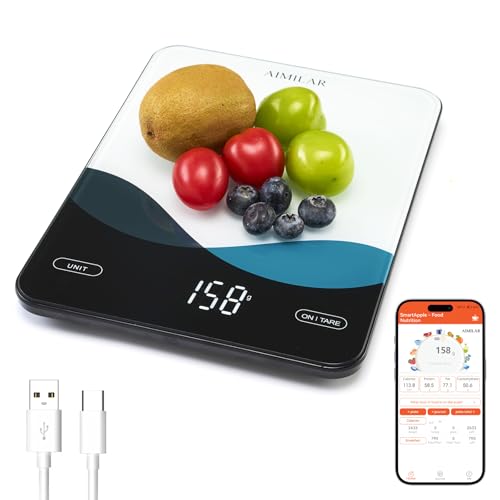
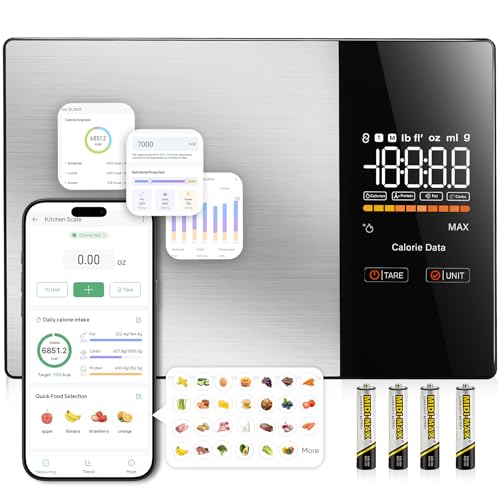


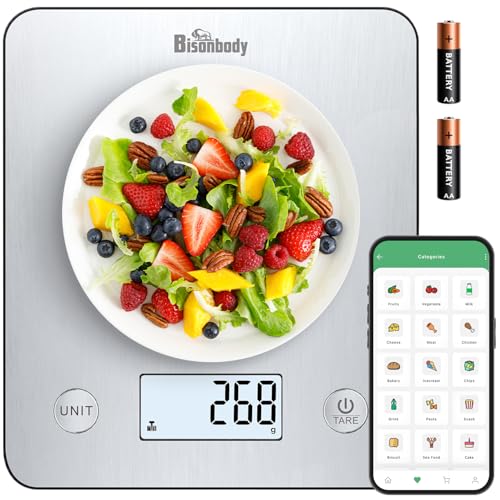
Quick Answer: Three Styles to Know First
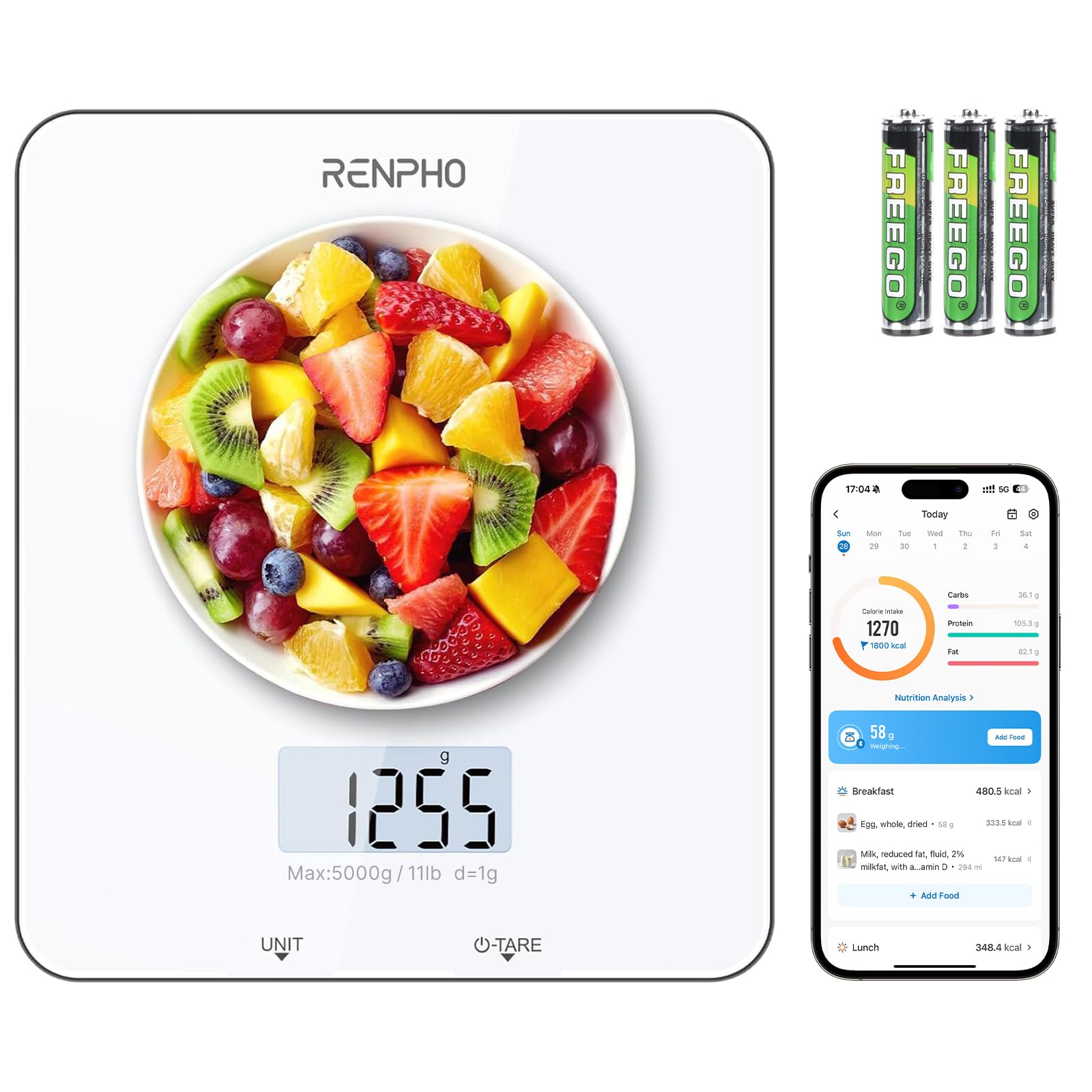
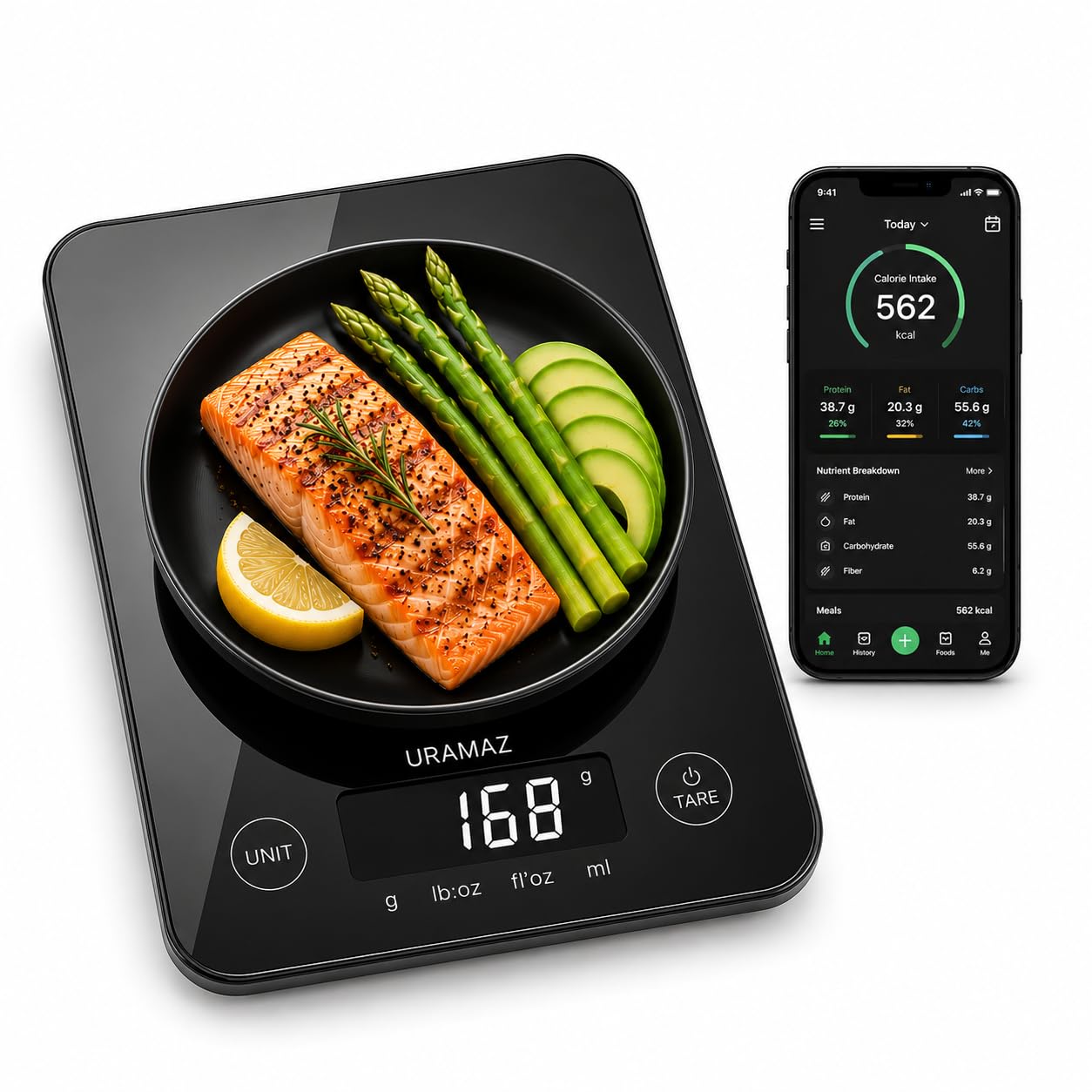
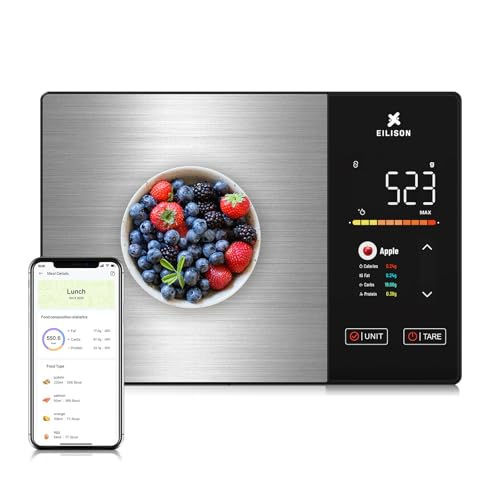
Most bluetooth scales fall into three styles. A compact flat scale suits a small counter and daily weighing. A larger platform scale suits family cooking, big bowls, and batch prep. A nutrition focused smart scale pairs with an app that estimates calories and nutrients for each food you log. Start with the style that matches your routine, then check the details below.
Before You Buy: A Quick Checklist for Choosing a Kitchen Scale
Which Type Fits Your Routine
A basic bluetooth scale weighs food and sends the number to an app, where you can save entries and build a history over weeks. A smart nutrition scale goes further, because its app matches foods to a database and adds up calories, protein, carbs, and fat for a meal or a day. A high precision scale reads in smaller steps, often a tenth of a gram, which matters for coffee, spices, and yeast.
Features Worth It, and Ones to Skip
An app earns its place when it does work you would otherwise do yourself. Useful tools include automatic logging each time you weigh, running totals for a recipe as you add ingredients, and saved foods you eat often. A built in timer helps with pour over coffee, because you can watch time and weight together. A pull out display is worth paying for if your largest bowls are wide, since a bowl hanging over the front edge can hide a fixed screen.
Some extras add cost without adding much. A large recipe library matters little if you already keep recipes elsewhere. Voice readouts help few cooks, and unit modes beyond grams, ounces, and pounds rarely get used. Spend on the display and the app tools you will open weekly.
Materials and Food Safety
Most platforms are stainless steel, glass, or plastic. Stainless steel resists stains from berries, tomato, and spices and wipes clean fast, though it shows fingerprints. Glass wipes smooth, but a hard knock from a heavy pot can chip an edge, and chips can trap residue, so a damaged glass platform should be retired. Wet, sticky, or raw food should sit in a bowl or on parchment, not directly on the platform.
One washing rule shapes your choice too. Almost every scale base is wipe only, never dishwasher safe and never under a running tap, because water inside can reach the sensors. A removable bowl is different, and if the maker says that bowl can go in the dishwasher, it can, which is a real plus for homes that weigh sticky dough or raw meat often.
Realistic Budget Ranges
Most homes end up spending about $25 to $50 for a connected scale they keep for years. Each step up should buy you something you can name.
- Under $15 usually buys a small basic scale with a simple app or none at all.
- About $15 to $25 is where dependable bluetooth models with a working logging app become common.
- About $25 to $50 tends to add a larger platform, a clearer display, and a fuller nutrition database.
- About $50 to $100 often brings high precision readings, metal construction, and rechargeable power.
- About $100 to $200 is the top end, where you pay for very fine precision and premium materials.
Three Styles Compared: Which One Suits Your Home
Read these styles as home profiles.
Compact Flat Scale for Small Counters and Single Cooks
A slim scale that slides into a drawer suits apartments, small kitchens, and one or two person homes. Capacity often tops out at about 11 pounds, which covers portions, produce, and most baking bowls. The trade off is platform room, since a wide pot or your largest salad bowl may crowd the edges and hide the screen. If counter space is your main limit, this style gives you app logging without giving up work room.
Larger Platform Scale for Family Cooking and Batch Prep
Families who cook in volume need a platform that holds a big mixing bowl or a tray of chicken pieces with room to spare. Look for capacity around 22 pounds and a wide, stable base that does not rock when a heavy bowl lands off center. This style lives out on the counter, so a screen you can read from standing height matters. It takes more room, but it ends the juggling of oversized bowls on a tiny platform.
Nutrition Focused Smart Scale for Tracked Meals
If your goal is steady tracking, the app matters as much as the platform. This style pairs each weighing with a food database, so a portion of rice or yogurt becomes a line in your daily totals. Our guide to the best kitchen scale for weight loss goes deeper on tracking habits. Check whether the database covers the brands and basic foods you eat most, since a database that misses your staples means slow manual entry.
Key Features to Compare on Any Listing
Capacity and Smallest Step
Capacity is the most the scale can weigh, and the smallest step is the tiniest change it can show. Most home cooks do well with steps of 1 gram, fine for flour, sugar, and portions. Coffee and small amounts of yeast or salt call for steps of a tenth of a gram, usually on a smaller platform with lower capacity. A bowl counts toward capacity, so a heavy ceramic bowl plus a full load of dough can push a small scale past its limit.
The App Itself: Pairing, Profiles, and Data
Bluetooth only helps if the app fits your phone and your habits. Check that the app supports your phone system, and look at how pairing works, since a scale that connects on its own when you open the app saves time daily. Homes with more than one cook benefit from separate profiles, so each person keeps their own log. Also check whether you can export your data, because a scale tied to an app that later shuts down can lose its smart features.
Power Source and Battery Life
Scales run on disposable cells, often coin cells or AAA batteries, or on a built in battery you charge with a cable. Disposable cells are easy to swap when they fade, but you need spares in a drawer. A charged battery removes the spare hunt, though the scale sits idle while it charges. If charging appeals to you, compare the options in our guide to the best rechargeable kitchen scale. An automatic shut off timer saves power either way.
Display, Tare, and Unit Switching
Tare returns the reading to zero with an empty bowl on the platform, so you weigh only the food you add. The button should respond to a light touch even with damp hands, and unit switching between grams and ounces should take one press. For bakers, our guide to the best kitchen scale for baking explains why gram mode matters for consistent loaves.
Bluetooth Compared With a Plain Digital Scale
A connected scale gives you memory. A plain scale shows a number and forgets it, while a bluetooth model builds a record you can review and compare across weeks. That record is the whole reason to pay more, and it shines for meal prep and nutrition tracking. The reading itself is no more accurate just because a phone is involved, so do not pay extra for connection alone if you never plan to open the log.
The plain scale fights back on speed. It starts at once, needs no phone nearby, and never asks for an update. A bluetooth scale can take a few extra seconds to connect. If you weigh flour twice a month, that friction is real. If you log food daily, the record outweighs the small wait.
Common Buying Mistakes to Avoid
- Buying a platform too large for the drawer or counter corner where it must live, so it ends up buried and unused.
- Forgetting that your widest bowl can cover the display, which makes each weighing a guessing game.
- Assuming the app works on any phone, then finding it does not support your phone system after delivery.
- Ignoring the cost of replacement batteries when you compare prices.
- Paying for nutrition tracking when you only ever weigh baking ingredients, so the database never gets opened.
Cost of Ownership and Care
Owning a scale costs a little beyond the purchase. Budget for batteries a few times a year on cell powered models, or keep the charging cable in a known spot. Some apps charge for premium features such as larger databases or longer history, so check what the free version covers first. An optional calibration weight lets you confirm accuracy at home if readings ever seem off.
Care is mostly about storage. Store the scale flat with nothing heavy on the platform, because constant load can strain the sensors. Keep it dry and wipe spills promptly so sugary liquids do not creep under the platform edge. For safe cleaning steps in full, see our guide on how to clean a kitchen scale.
Your Questions, Answered
How do you clean a bluetooth kitchen scale after weighing raw meat?
Wipe the platform right away with a cloth dampened with warm water and dish soap, then wipe again with a cloth dampened with plain water so no soap film stays behind. Dry it fully, including the seam where the platform meets the body, because moisture left there can cause odors. Never spray cleaner directly onto the scale, since liquid can run inside.
Are bluetooth kitchen scales worth it for most homes?
They are worth it when the saved record changes what you do, such as hitting a protein target or keeping prep portions even across the week. They are harder to justify when you weigh rarely and would open the app out of duty rather than need. Ask whether you kept any food record in the past month. If you did, a connected scale removes the typing step. If you did not, the connection may go unused.
How long does a kitchen scale last with daily use?
Many home scales give several years of daily service before accuracy or parts begin to slip. End of life signs include readings that drift while a bowl sits still, buttons that need a hard press, or a platform that rocks on its feet. A scale that still misbehaves after a fresh battery change should be replaced rather than trusted.
Is a kitchen scale worth it if you already own measuring cups?
For many cooks, yes, because weighing removes the packing problem that makes a cup of flour vary depending on how it was scooped. A scale also means fewer tools to wash, since you add each ingredient to the same bowl and reset to zero between additions. Cups still serve well for liquids and for recipes written only in volume.
What is the best bluetooth kitchen scale choice for baking at home?
For baking, favor 1 gram steps, a platform that fits your main mixing bowl with the display still visible, and a tare button that responds fast between additions. A reading that holds for a few seconds helps when a tall bowl blocks your view as you pour. If you are new to weighing ingredients, our walkthrough on how to use a kitchen scale covers the basic routine.
Final Thoughts
The right choice comes back to your home: the room you have, the people you feed, and the record you want to keep. A compact scale serves a small counter, a wide platform serves a family, and a nutrition focused model serves tracked meals. Whichever style you pick from the product table near the top, the best bluetooth kitchen scale for you is the one that fits your bowls and pairs with your phone without fuss.