
Best Bluetooth Bookshelf Speakers: A First Time Buyer's Guide for 2026
Disclosure: We may earn a commission when you buy through links on this page, at no extra cost to you. As an Amazon Associate I earn from qualifying purchases. Learn more

Pick the best bluetooth bookshelf speakers by drivers, inputs and tuning so a first pair suits your room, your devices and your budget.
A pair of bookshelf speakers with Bluetooth gives you wireless music from your phone with far better sound than a small portable speaker. If this is your first pair, the spec lists can feel confusing, so this guide explains what matters in plain terms. Choosing the best bluetooth bookshelf speakers comes down to the room, the inputs you need and the amount of bass you expect.
The product table below shows current options. Read the sections here first so you know which features to look for before you compare prices.



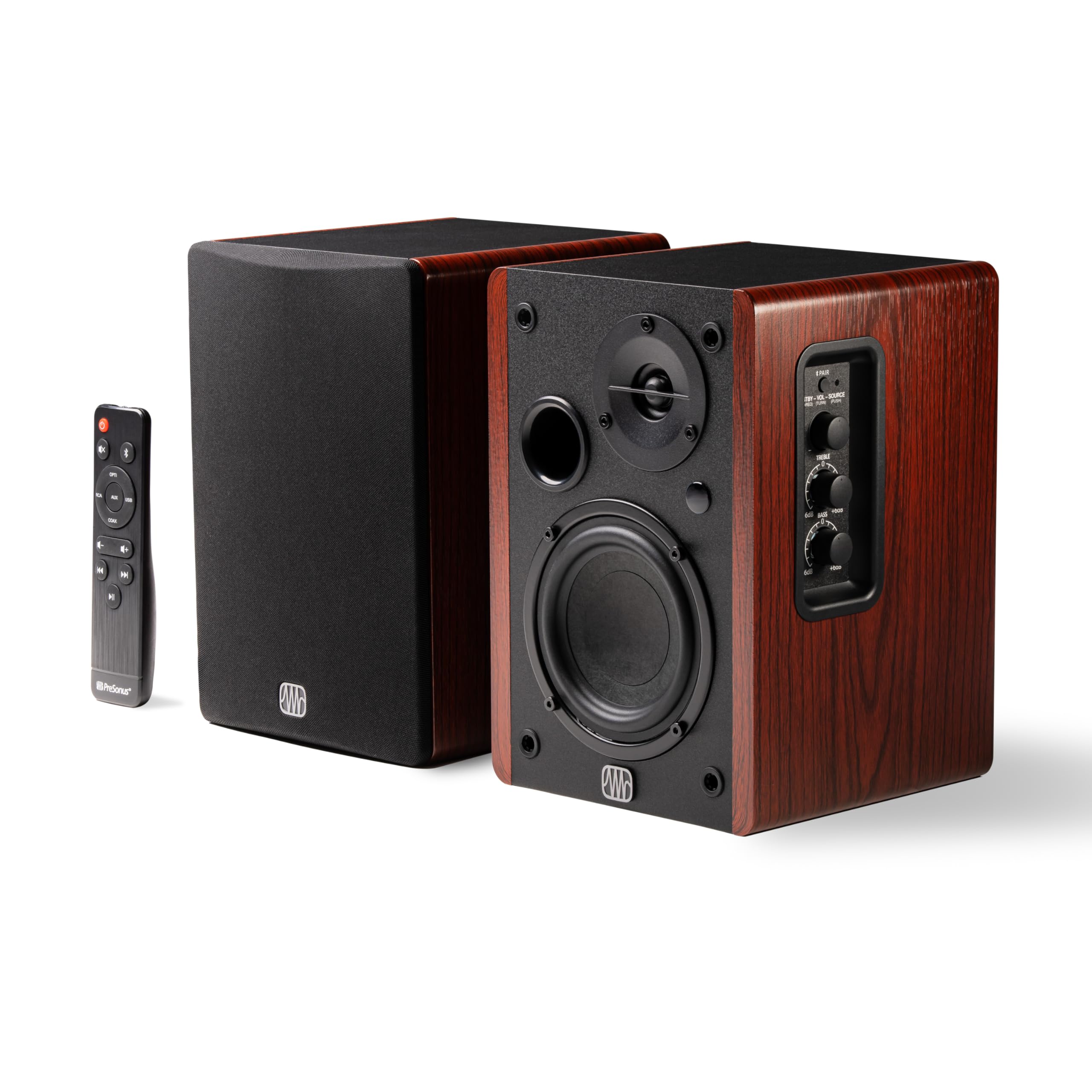
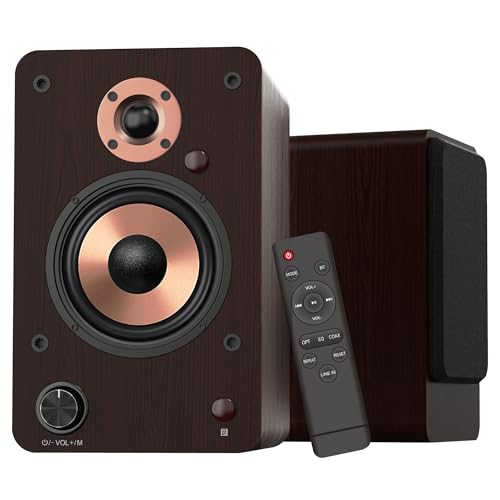
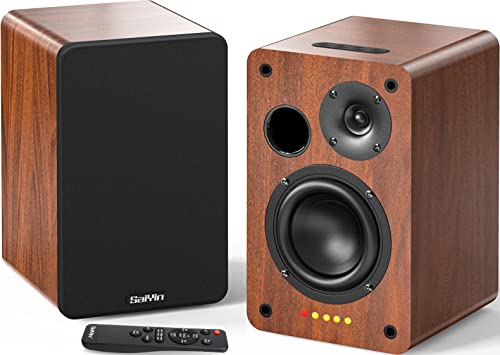
Bluetooth Bookshelf Speakers 101: The Basics
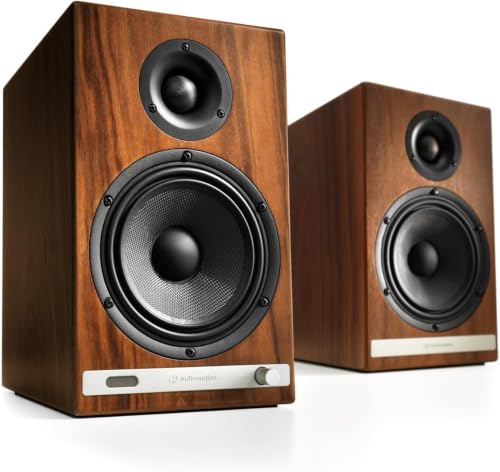
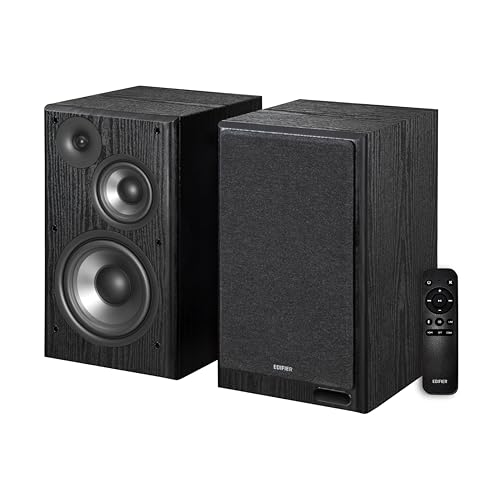
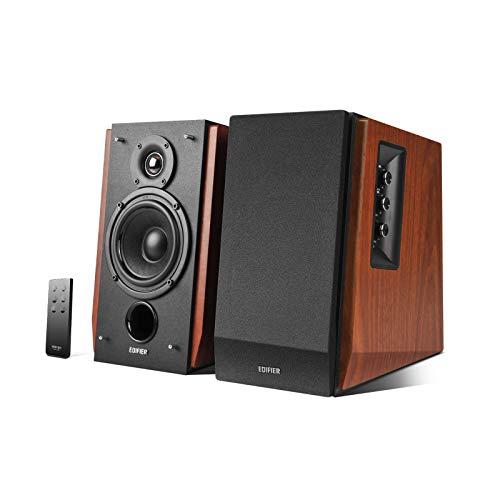
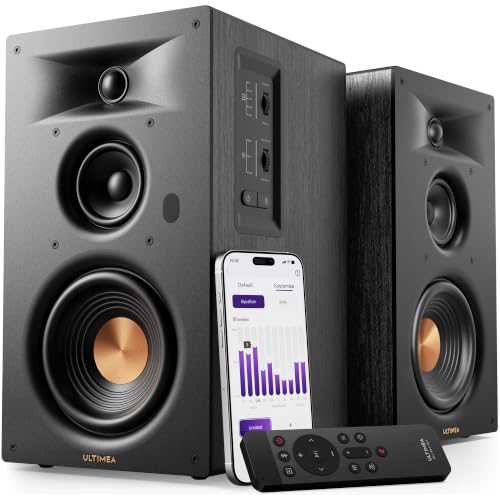
Bookshelf speakers are compact speakers meant for a shelf, desk or stand. Most Bluetooth pairs are powered, which means the amplifier is built into one speaker and a cable links it to the second. You plug one speaker into the wall, connect the pair together, and stream from your phone, tablet or computer.
Each speaker has drivers: a woofer for low and middle notes and a tweeter for high notes. Larger woofers usually reach lower notes, and two drivers per cabinet generally sound clearer than one. Because the speakers plug into power, they do not have batteries, so they can play all day at steady volume.
Who Should Buy Bluetooth Bookshelf Speakers
Desk and Home Office Users
For a desk you sit close to, a compact pair with 3 to 4 inch woofers is plenty. Look for a headphone output, a wired input for your computer and clear mid-range for calls and podcasts.
TV and Movie Fans
If the speakers will serve a TV, check for an optical or RCA input so you are not relying on Bluetooth, which can lag behind video. A subwoofer output lets you add deeper bass later.
Music Listeners and Turntable Owners
Larger woofers and good tuning matter most. If you play records, make sure your turntable has a built-in preamp or add one, and confirm the speakers have the right input.
Key Specs Explained in Plain English
Sound Quality and Tuning
Driver size and cabinet build shape the sound. A neutral tuning keeps voices and instruments balanced, while heavy bass boost can sound exciting at first but muddy over time. Frequency response tells you the range the speaker can play, and a low end near 55 to 70 Hz is realistic for most shelf pairs.
Connectivity and Inputs
Look for Bluetooth 5.0 or newer for a stable link. AAC suits iPhones, while aptX helps some Android phones. Wired inputs such as AUX, RCA, optical or USB make the speakers useful beyond your phone, and they remove wireless delay for video.
Power and Room Size
Watt numbers on boxes can mislead. A pair with more power can play louder, but driver quality and tuning decide how clean it sounds. Small rooms need little power, while a large living room benefits from larger drivers or a subwoofer.
Controls and Remote
A remote is convenient when the speakers sit across the room. Physical knobs on the main speaker are quicker for desk use. Check that switching between Bluetooth and wired inputs is simple.
If you want to compare wired options, see our guides to the best bookshelf speakers and best powered bluetooth bookshelf speakers. For tighter budgets, read about the best bluetooth bookshelf speakers under 200.
Placement and Setup
Place the speakers at ear height when seated and spread them about as far apart as you sit from them, with both aimed toward your seat. Keep them slightly away from walls to avoid boomy bass, and leave space around vents. Connect the speaker wire between the pair, matching positive to positive, then plug in and pair your phone.
Start with low volume and play a song you know well to judge the sound. Small placement changes often improve the sound more than a new purchase.
Common Mistakes to Avoid
- Buying by watt numbers alone instead of checking driver size and tuning.
- Forgetting to check that the speaker has the inputs your TV or computer needs.
- Placing speakers inside a closed cabinet, which traps sound and heat.
- Expecting deep movie bass from small woofers without a subwoofer.
- Skipping a measurement of the shelf or desk, so the pair does not fit.
Care and Maintenance
Dust the cabinets with a dry cloth and keep drinks away from the tops. Leave ventilation slots clear and check speaker wire connections now and then. Update firmware if your model supports updates through an app.
Frequently Asked Questions
Do bookshelf speakers need an amplifier?
Powered pairs have the amplifier built in, so you only need the speakers and a power outlet. Passive pairs need a separate amplifier or receiver.
Is wired or wireless better?
Wired is slightly cleaner and has no delay, which suits video and computer use. Bluetooth is more convenient for streaming music from a phone. A good pair offers both.
Do I need a special Bluetooth codec?
No. Standard Bluetooth sounds good for most listening. AAC and aptX are bonuses if your phone supports them, but inputs and tuning matter more.
How big should the speakers be?
For a desk, small woofers are enough. For a living room, choose larger woofers or add a subwoofer. Pick the size that fits your shelf with a little space around it.
Can I use bookshelf speakers with my TV?
Yes, if the speakers have an input your TV can output, such as optical, RCA or AUX. Wired connections avoid the delay that Bluetooth can add to video.
Final Thoughts
Focus on driver size, inputs and tuning, then check that the pair fits your space and your devices. When you match the best bluetooth bookshelf speakers to how you listen, a modest pair can sound far bigger than its size. Compare the options in the product table above with your short list before you order.


