Best Bidet for RV in 2026: Water, Power and Fit Compared
Disclosure: We may earn a commission when you buy through links on this page, at no extra cost to you. As an Amazon Associate I earn from qualifying purchases. Learn more
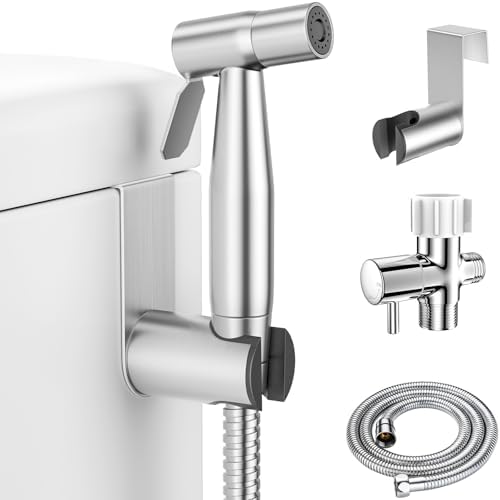
Pressure powered sprayers and attachments compared for tanks, power and toilet fit, to help you choose the best bidet for rv for your camper or motorhome.
An RV bathroom runs on tight limits. Your fresh water tank holds only so much, your black tank fills at its own pace, and your water pump delivers pressure that changes from park to park. A bidet that works beautifully in a house can strain all three systems on the road. Finding the best bidet for rv use means matching the format to your tanks, your power supply, and the small toilet your rig already has, and the product table below lays out the main types side by side so you can start there.
This guide explains how each bidet type behaves in a moving vehicle, what to measure before you order, and which comforts are realistic without shore power. It focuses on the criteria that separate a setup you enjoy from one you remove after a single trip.




Who Should Buy Which Type of Bidet for an RV?
Weekend Campers With Hookups
If most of your nights are spent at full hookup sites, your water and power limits are loose, so a simple cold water attachment is usually the smart buy. It adds almost no draw on your tanks, installs in minutes, and gives a thorough wash at campgrounds where you can refill and dump freely. Travelers comparing home style options as well can start with our broader guide to the best bidet to see how RV choices differ from household ones.
Dry Campers and Boondockers
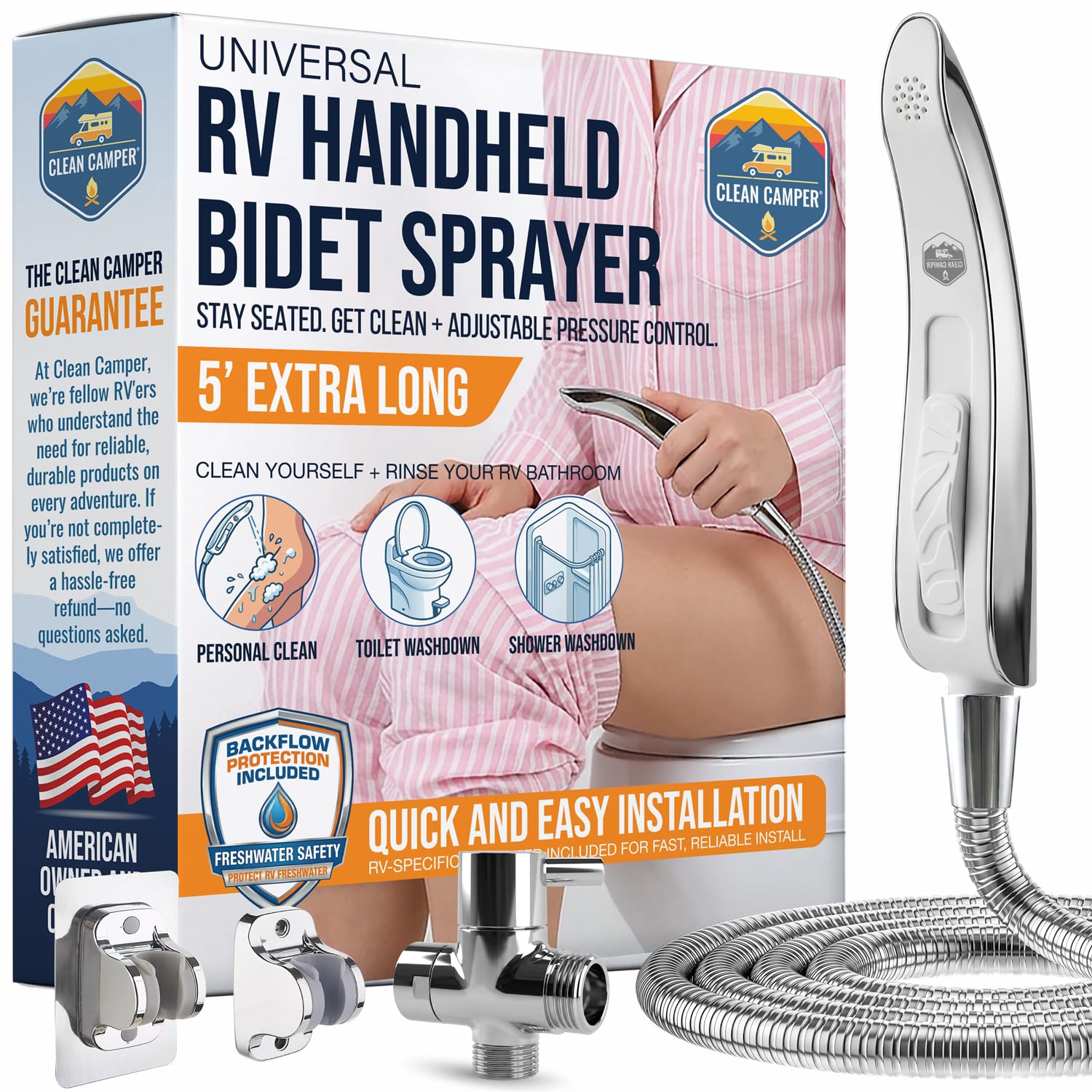
Off grid nights change the math. Every gallon you spray comes out of your fresh tank and lands in your black tank, so a low flow attachment or a handheld sprayer you control second by second protects both capacities. Electric seats are poor fits here because they sip power from your house batteries all day to keep water and seats warm. A squeeze bottle style option also travels well, and our guide to the best portable bidet covers those no install choices in depth.
Full Timers Who Want Comfort
If you live in your rig for months at a time, comfort features earn their space. A slim electric seat with warm water and a heated seat can work if you have a household style porcelain toilet, a nearby outlet, and regular hookups. The tradeoff is weight, cost, and steady power draw. Full timers should weigh those comforts honestly against tank size, since a generous spray that feels minor at home adds up across daily use on the road.
Types of Bidets Compared for RV Use
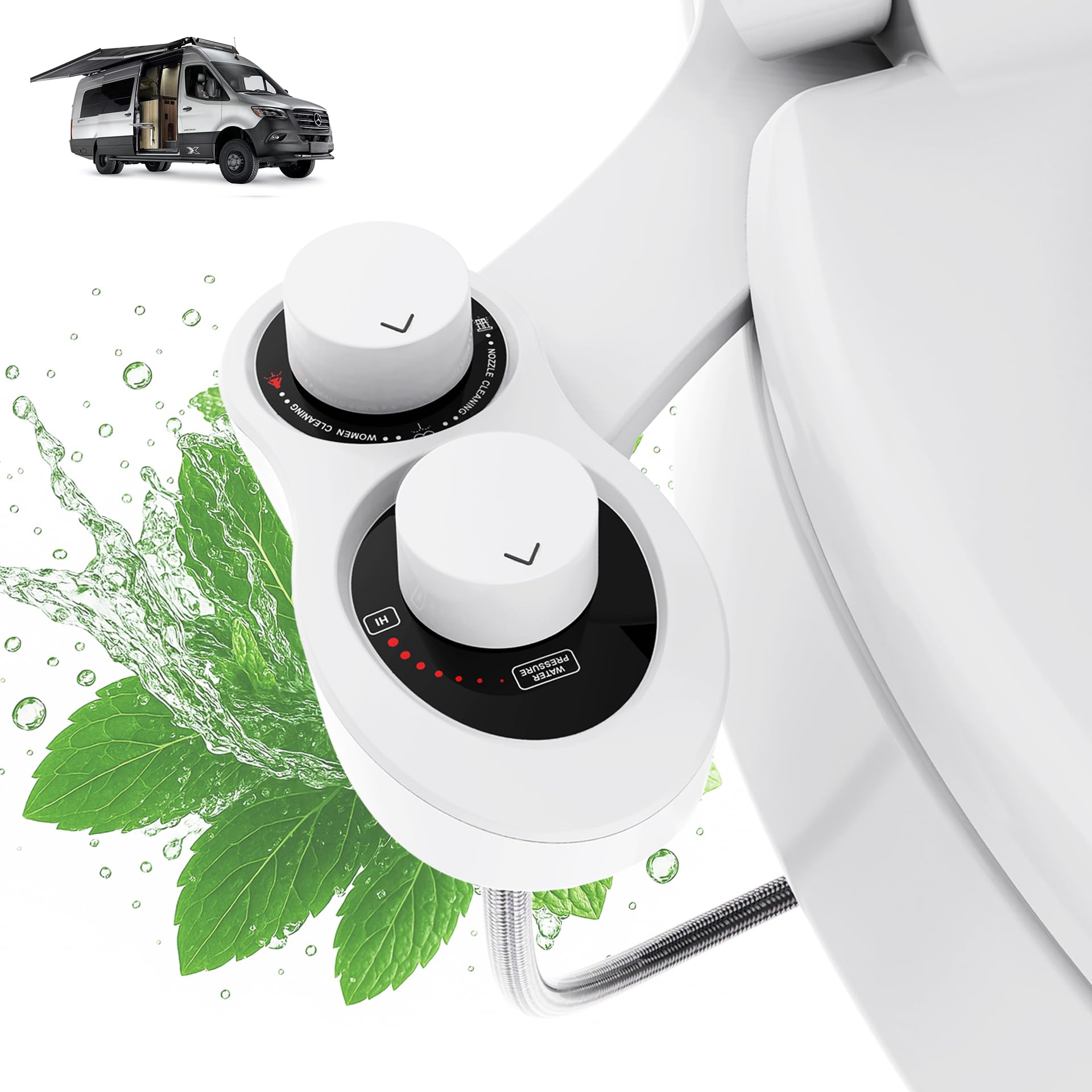
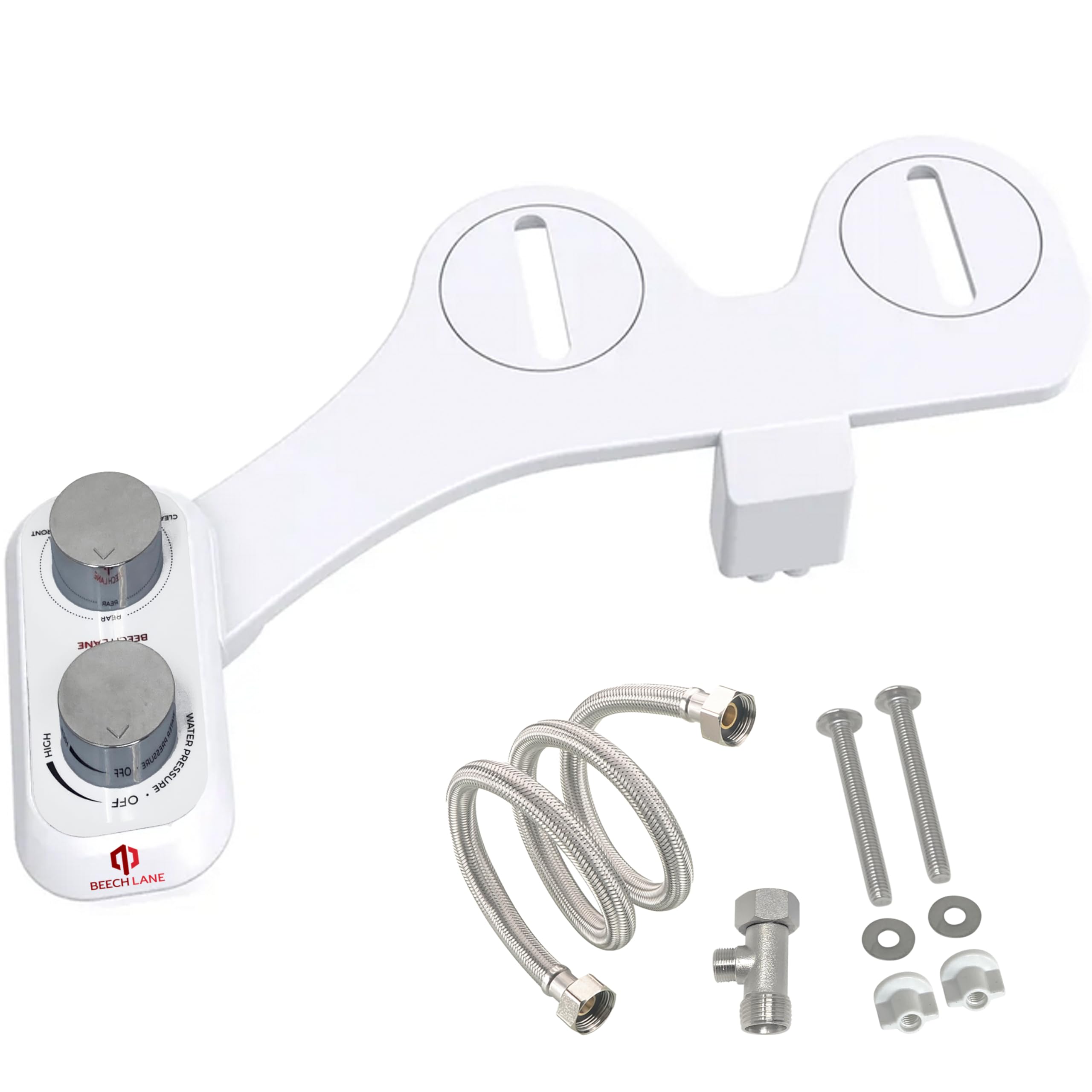
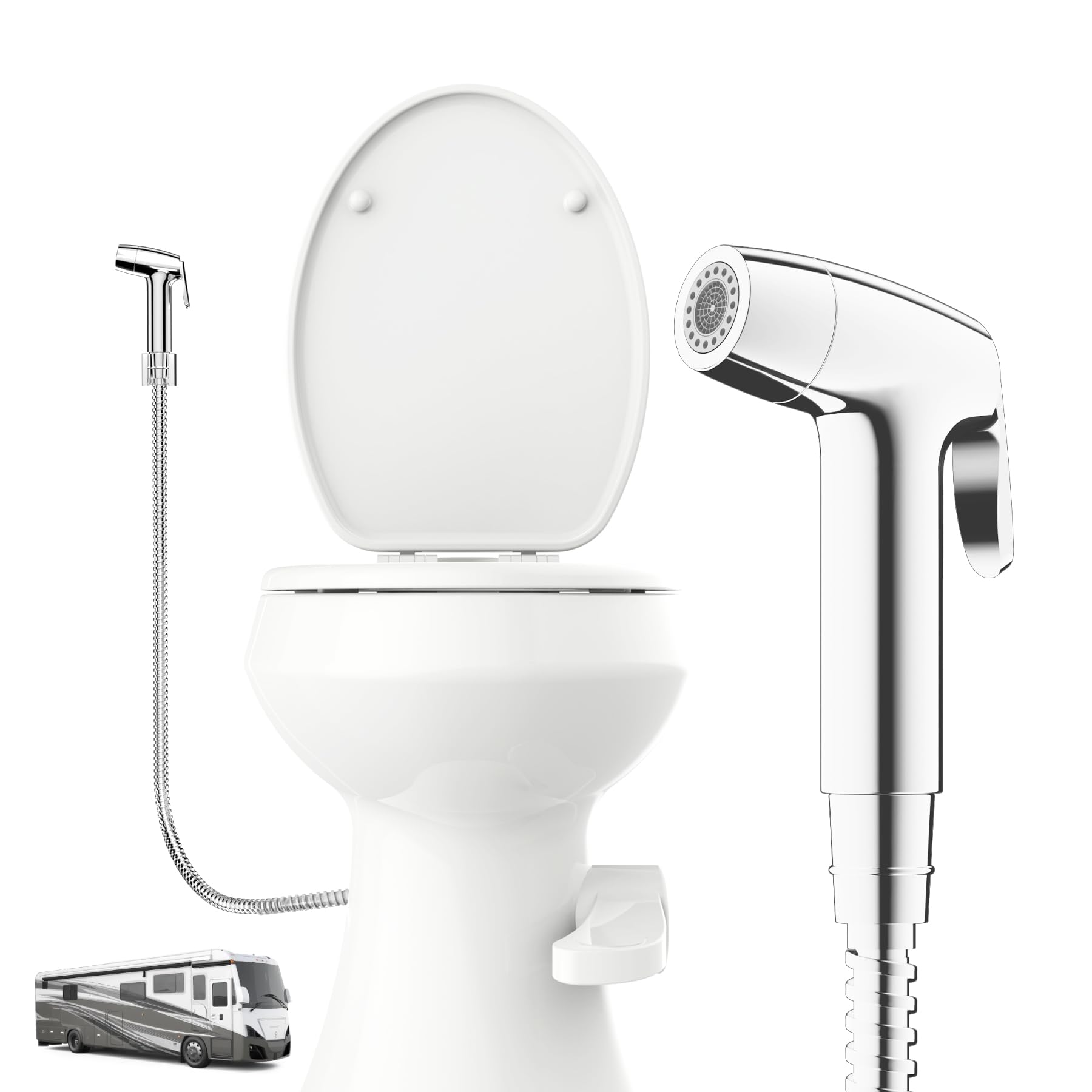
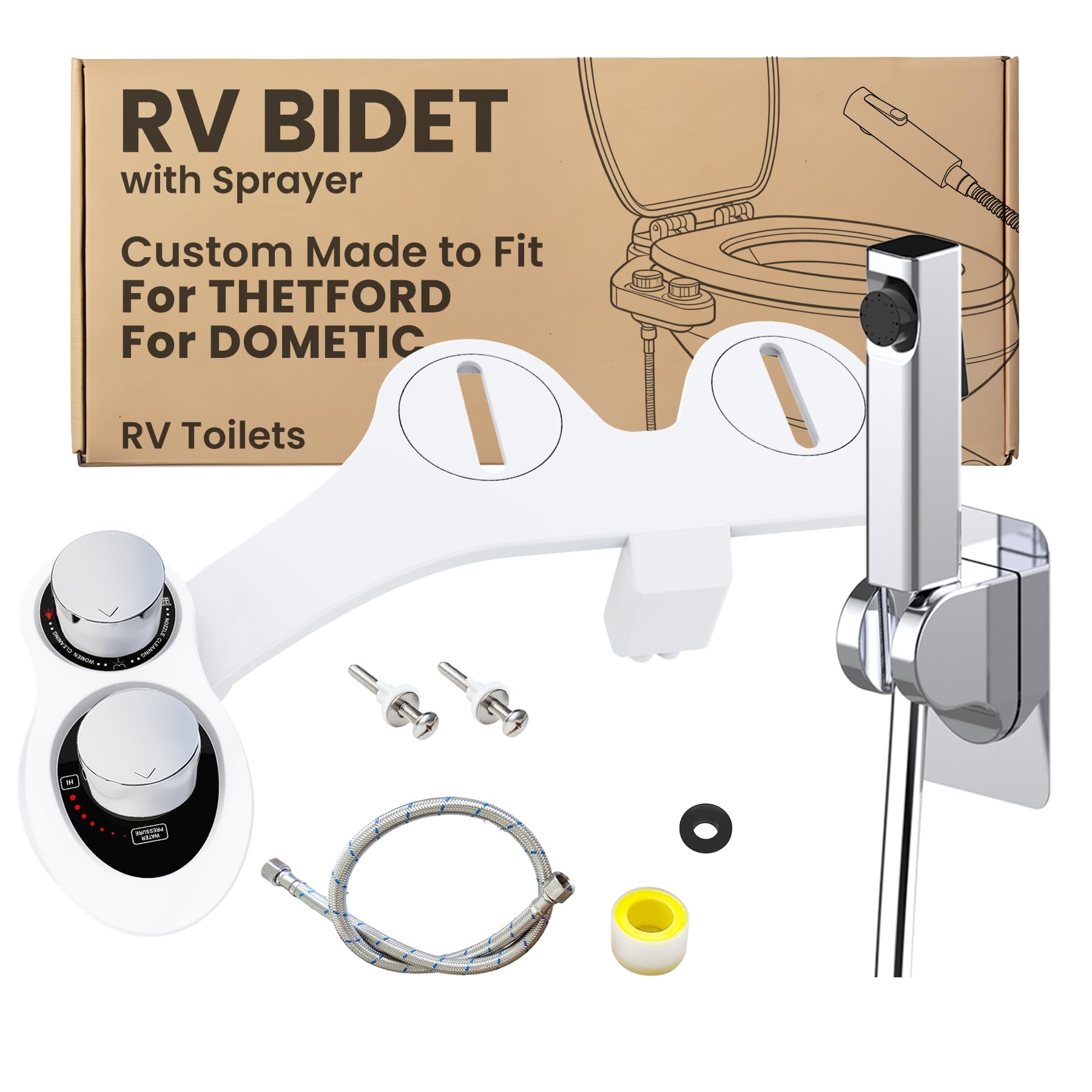
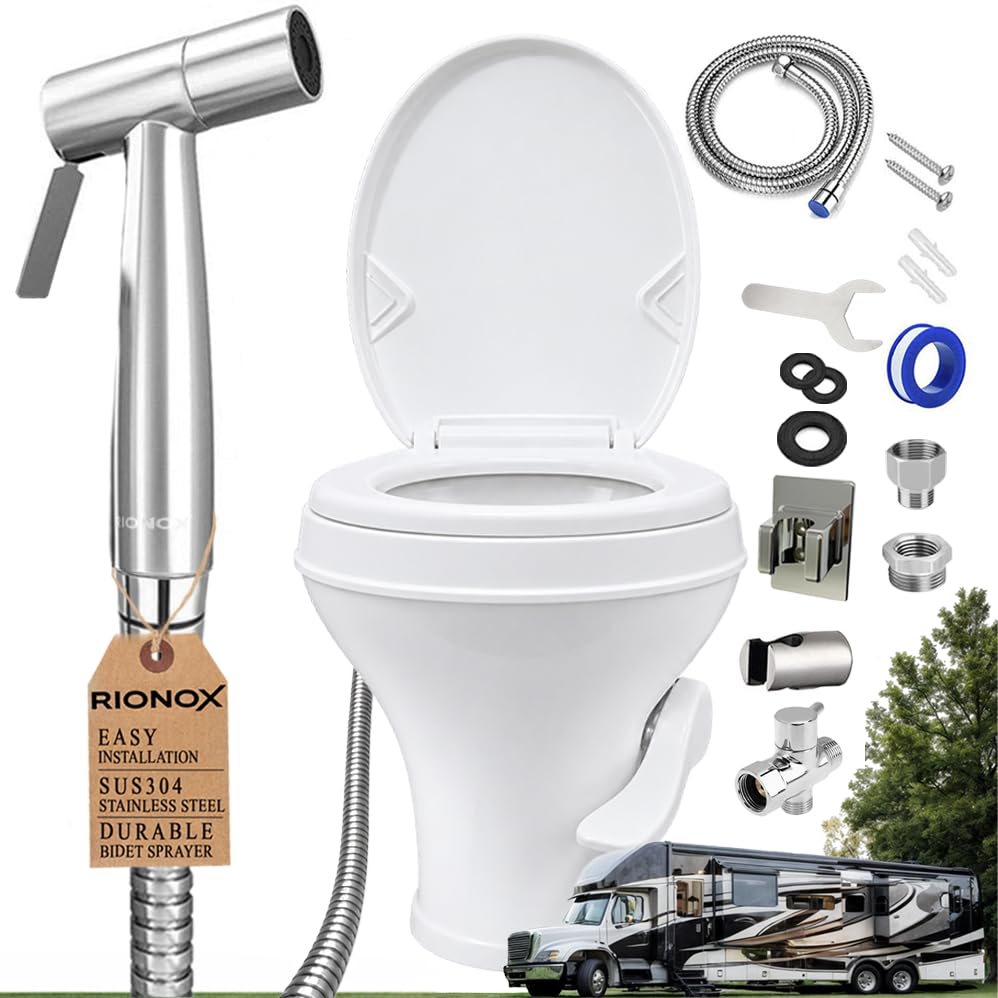
Attachments bolt under your existing seat and run on water pressure alone, which makes them the lightest and cheapest route. Their weakness is cold water only, straight from your fresh tank. Non electric full seats replace your seat and sometimes add a second warm line where a nearby sink can feed it. Electric seats add heating, dryers, and remotes, but they demand an outlet and steady current. Handheld sprayers mount beside the toilet and give you aim control, while portable squeeze bottles need no plumbing at all and suit tiny wet baths where nothing else fits.
How We Chose What Matters for an RV Bidet
We judged every type against the realities of RV plumbing rather than household performance. Water use per wash came first, because tank capacity decides how long you can stay out. Compatibility with RV toilets came second, since many rigs use compact plastic toilets with shapes that differ from home fixtures. We also weighed power draw, build quality in thin plastic and brass fittings, vibration tolerance while driving, and how easily each type drains for winter storage. Warranty terms and published specifications from manufacturers rounded out the picture.
How to Choose the Right Bidet for Your RV
Water Use and Tank Capacity
A typical attachment spray uses well under a cup of water for a short wash, while a long, high pressure rinse can use several cups. Multiply that by every person, every day, and a family on a week of dry camping can move a noticeable share of the fresh tank into the black tank. Look for adjustable pressure dials rather than triggers that jump straight to full force, because a gentle start conserves water and feels better. If your black tank is small, favor brief washes and a sprayer you can pulse in short bursts instead of holding open.
Power Draw and Your Electrical Setup
Most RV bathrooms have no outlet near the toilet, and adding one means wiring work many owners would rather avoid. Electric seats draw heavy power while heating water, often more than a small inverter handles comfortably, and they keep drawing a little power all day in standby. That is why most RV owners land on pressure powered designs, and our guide to the best non electric bidet explains those options in detail. If you do have shore power most nights, our roundup of the best electric bidet shows what the added comfort costs in watts and wiring.
Measurements and Compatibility With Your Setup
RV toilets fall into two broad camps. Many rigs use a compact plastic toilet with a small, rounded bowl and a foot pedal flush, and standard home seats and attachments often do not fit its bolt pattern or rim shape. Others, especially larger fifth wheels and motorhomes, carry a porcelain toilet close to household size, which accepts most seats. Measure the distance between the seat bolts, the space from the bolts to the tank or wall, and the clearance under the rim before ordering. Also confirm your water line size and thread, since RV plumbing often uses fittings that need an adapter at the T valve.
Features Worth Paying For
Adjustable spray pressure matters most, because RV pump pressure swings as the pump cycles and as campground supply varies. A nozzle guard and a retractable nozzle keep things cleaner in a small bath. Brass or metal T valves outlast plastic ones under road vibration. Warm water, heated seats, warm air dryers, night lights, and deodorizers are pleasant, but nearly all of them require an electric seat and a power source near the toilet, so treat them as hookup luxuries rather than core needs. A simple dual temperature attachment fed from a nearby sink line is the middle path for campers who dislike a cold spray.
Certifications and Build Quality
Look for backflow protection, which keeps wash water from ever moving toward your fresh supply, an important safeguard in any plumbing system and doubly so in a closed RV system. Listings that reference NSF or ANSI standards, lead free materials, and WaterSense style flow limits signal careful engineering. In an RV, build quality also means fittings that tolerate vibration. Check that hoses are braided stainless or sturdy reinforced lines, that connections use proper washers, and that the maker states the unit can be drained fully, since trapped water is the enemy during freezing nights.
DIY or Professional Installation, and What It Costs
Most attachments and handheld sprayers install with hand tools in about 15 to 30 minutes, and the general steps in our walkthrough of how to install a bidet apply, with extra care around RV shutoff valves and line sizes. A seat swap on a porcelain RV toilet is similar. Paying an RV technician makes sense when lines are hidden, when your toilet model is unusual, or when an outlet must be added for an electric seat. Expect a service visit to cost far more than the bidet itself, so simple pressure powered models keep the whole project cheap.
How Much Should You Spend?
Basic squeeze bottles and the simplest attachments cost around $30 or less and suit renters and small rigs. Solid attachments and handheld sprayers with metal valves fall around $50 to $100 and are the sweet spot for most owners. Non electric seats with warm water options run about $100 to $300. Full electric seats with dryers and remotes often cost about $300 to $500 or more, plus any wiring work, and they only make sense for rigs with household style toilets and dependable power. Spend first on fit and water control, not on features your electrical system cannot support.
What Matters Most in a Bidet for RV Life
The modifier here is the vehicle itself. A house bidet assumes endless water, steady pressure, and a grounded outlet. Your RV offers none of those reliably, so the winning design is the one that respects your tanks. Conservative water use stretches both fresh supply and dump intervals. Pressure powered operation keeps your batteries out of the equation. Compact hardware suits the tight bathroom, and parts that drain fully protect you when temperatures drop. Compared with carrying extra toilet paper alone, a modest attachment cuts paper use sharply, which also slows how fast solids build up in the black tank. Our comparison of bidet vs toilet paper walks through that tradeoff in full.
FAQ
Do bidets need electricity to work in an RV?
No. Attachments, handheld sprayers, and non electric seats run purely on water pressure from your pump or a campground connection, so they draw nothing from your batteries. Only heated water, heated seats, dryers, and remote controls need household current. If your bathroom lacks an outlet near the toilet, a pressure powered model is not a compromise, it is the practical default for nearly every rig on the road today.
Can an RV water pump run a bidet properly?
Yes, in most cases. RV pumps typically deliver enough pressure for a comfortable spray, and adjustable dials let you soften the stream when the pump cycles and pressure pulses. If your spray feels weak, check for a clogged inlet filter screen and confirm your pump accumulator is working. Very low pressure systems may favor a handheld sprayer, which feels stronger at the same supply because the nozzle is smaller and closer to the target.
Will a bidet fill my black tank too fast?
A short wash adds only a small amount of water, far less than a single flush in many toilets, so normal use rarely changes your dump schedule. Long rinses at full pressure are the real culprit. Keep washes brief, start on low pressure, and your tank levels will barely notice. Some owners even find the small added water helps the black tank break down contents and drain more completely at the dump station.
How do I winterize a bidet in an RV?
Shut off the supply, open the spray control to drain the line, and remove the attachment or seat if the maker advises it, since trapped water in a valve body can crack plastic when it freezes. Run your usual winterizing routine so antifreeze reaches the toilet valve, and store a removed attachment indoors with your other plumbing parts. In spring, flush the lines well before reconnecting, and inspect washers and hoses for cracks before the first trip.
Can I use a bidet in an RV while driving?
You should not ride in the bathroom area of a moving motorhome, and towable trailers must never carry passengers at all, so plan to use the bidet only when parked. The practical point for travel days is securing the hardware. Close the supply valve before driving so road vibration and pressure changes cannot work a fitting loose, and confirm sprayer holsters hold the wand firmly so it does not bounce free and leak onto the floor.
Final Thoughts
Start with your toilet shape, your tank sizes, and your power reality, and the right format almost chooses itself. Most owners will be happiest with a pressure powered attachment or sprayer that sips water and installs with hand tools. Keep the product table above in mind as you compare types, and choose the best bidet for rv setup that fits your rig rather than the one with the longest feature list. If you are new to the whole idea, a little practice with pressure settings at home base will make the first wash on the road feel routine.