Best Beverage Mini Fridge: Types and Buying Tips (2026)
Disclosure: We may earn a commission when you buy through links on this page, at no extra cost to you. As an Amazon Associate I earn from qualifying purchases. Learn more

Capacity, cooling style and ventilation decide the fit. Compare three layouts to find the best beverage mini fridge for your room and household.
Picture a weeknight dinner where the main fridge is packed with groceries, and every cold soda, juice box, and sparkling water is buried behind leftovers and produce. A separate drink fridge solves that daily squeeze, keeps beverages at a steady chill, and frees shelf space where food belongs. If you are shopping for the best beverage mini fridge for your home, this guide helps you choose by room, household size, and budget, and the comparison table below sums up the main types at a glance.
The sections ahead walk through capacity, cooling style, door choices, and running costs, so you can match a layout to a single person, a busy family kitchen, or a den where guests help themselves.


Quick Answer: Three Layouts in 30 Seconds
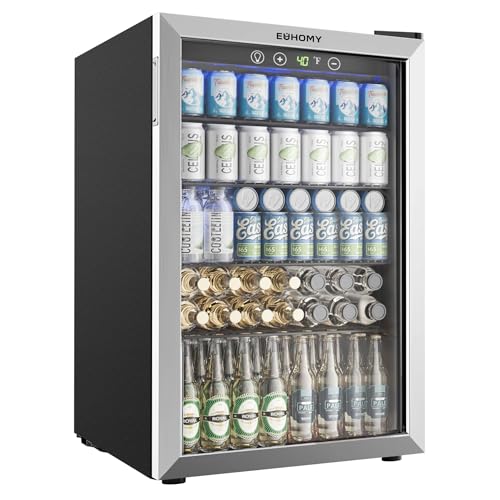
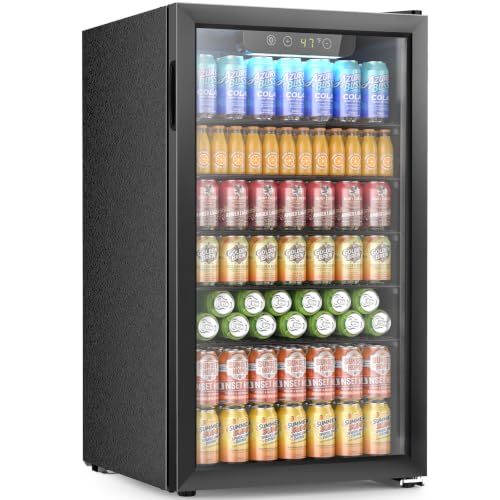
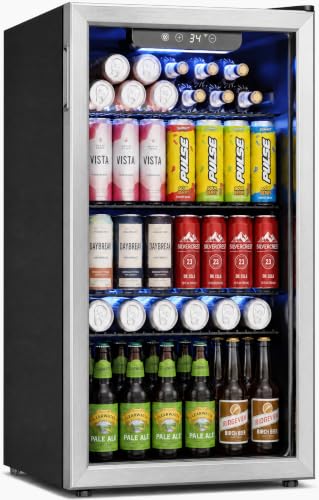
Most buyers land on one of three layouts. A compact solid door model holds a modest stash and tucks into a corner. A glass door model shows contents at a glance, which suits hosting and shared family use. A larger model holds drinks for a bigger household. Match the layout to how many drinks you chill at once, and the checklist below becomes much simpler.
- Compact solid door: smallest footprint, lowest price, best for one or two people.
- Glass door: clear view of stock, adjustable shelves, best for hosts and families.
- Larger family size: highest capacity, best for garages, dens, and party ready homes.
Before You Buy: A Quick Checklist for Choosing a Mini Fridge
Start with the room and the routine, not the shelf styling. For the broader picture, see our guide to the best mini fridge, then return here for drink specific details.
Size: Match It to Your Space
Capacity is listed in cubic feet, and beverage models run from about 1.7 cu ft up to about 4.5 cu ft. A 1.7 or 2.7 cu ft unit fits a dorm, a bedroom corner, or a small apartment. Options around 3.1 or 3.2 cu ft suit a couple or a small family that buys drinks by the case. Larger 4.4 and 4.5 cu ft models fit under a counter or stand alone in a den, and they hold enough for gatherings without constant restocking.
Which Type Fits Your Routine
Cooling style drives both noise and chill power. Compressor models cool fast and hold a steady temperature in a warm room, so they suit kitchens and garages. Thermoelectric models run quieter, but they chill only a set amount below room temperature and struggle in hot spaces. Our explainer on thermoelectric vs compressor mini fridge cooling covers that tradeoff in full. For a bedroom, quiet operation matters most, so check our guide to the best mini fridge for bedroom before you decide.
Features Worth Paying For and Ones to Skip
Adjustable shelves earn their cost, since tall bottles, cans, and juice boxes rarely share one fixed spacing. A reversible door helps where the swing direction is fixed by a wall or a desk. An interior light is worth it on glass door models you open at night, and a lock makes sense for a shared office or a home with young children. Skip novelty extras such as colored lighting and a tiny freezer box you will seldom use, since each adds cost and takes up drink space.
Measurements and Compatibility With Your Setup
Measure the width, depth, and height of the spot, then compare those numbers with the listed size plus room for air flow. Leave a few inches behind and above the unit so heat can escape, and confirm the door opens fully without striking a wall. Check that a grounded outlet sits within cord reach, since extension cords are a poor long term plan for an appliance that runs all day.
Certifications That Matter for a Drink Fridge
Look for a safety listing such as UL or ETL, which shows the unit met recognized electrical safety standards. An Energy Star label, where offered, signals lower electricity use under a federal testing program. A clear warranty on the compressor matters more than unrelated badges.
Placing It Yourself or Hiring Help
Most freestanding models need no professional help. Set the unit in place, level the feet, wait before plugging it in if it traveled on its side, and load it once it reaches temperature. Hiring help only makes sense for a model placed under a counter where cabinet trim must change, or where a new outlet is needed. An electrician visit for a new outlet can add about $150 to $300, so factor that in early.
Realistic Budget Ranges
Prices cluster into clear tiers. Under $100, expect a small unit with fixed shelves and modest capacity, suited to a single user. From about $100 to $200, you gain compressor cooling, adjustable shelves, and mid size capacity that fits most homes. From about $200 to $300, glass doors, better temperature control, and larger interiors appear. Above that range, you pay for capacity, finish, and quieter operation rather than colder drinks. For a work space, our guide to the best mini fridge for office covers shared use and desk side noise.
Three Types Compared in Detail
Compact Solid Door Models for Small Households
A compact solid door model in the 1.7 to 2.7 cu ft range is the simplest route into a dedicated drink fridge. The solid door insulates well, shelves hold cans in neat rows, and the price stays low. It suits a single person, a student, or a couple that keeps a dozen or so drinks cold at a time. Tall bottles may need to lie down or go on the door rack, and capacity fills fast when guests arrive.
Glass Door Models for Frequent Entertaining
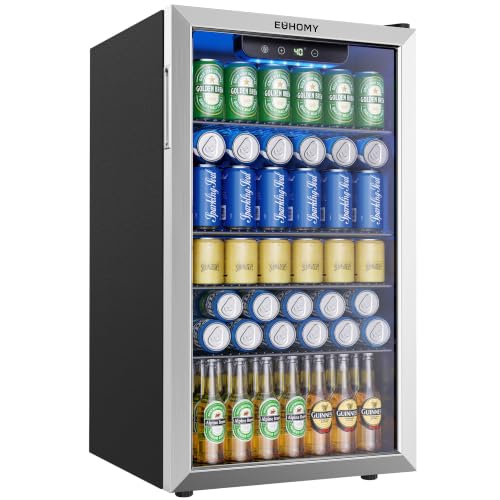
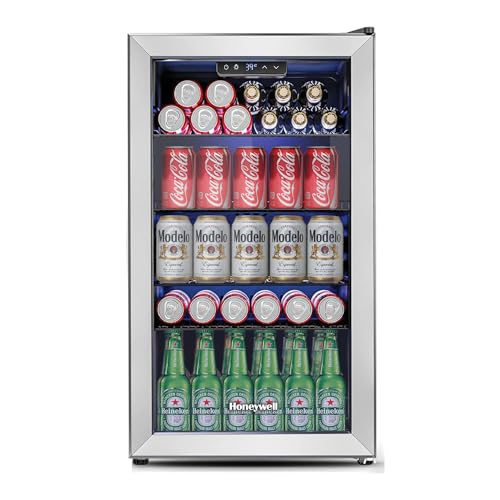
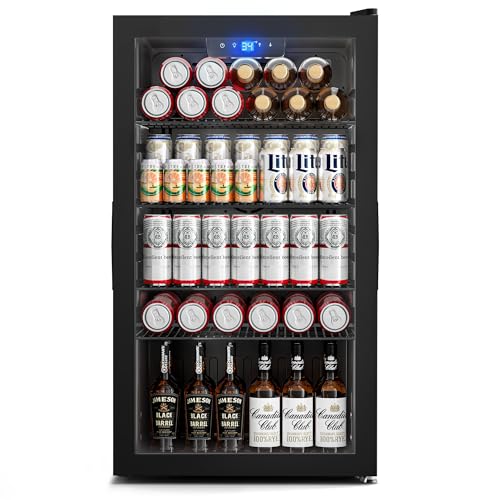
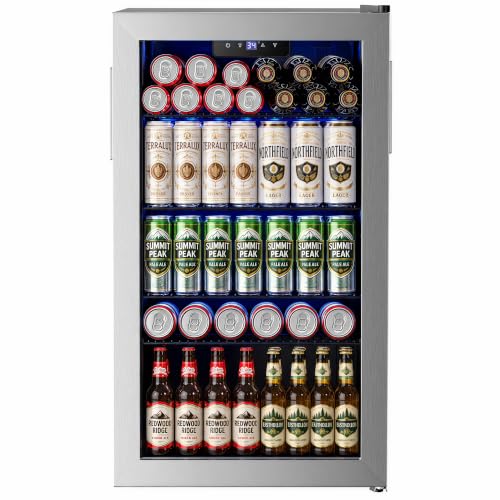
A glass door model, often around 3.1 to 3.2 cu ft, lets you see stock levels without opening the door, which keeps cold air inside during a party. Shelves usually adjust, so you can mix cans, bottles, and cartons in one load. Hosts like this layout for a den, and families like it for quick after school drinks. The tradeoff is light and heat: a sunny spot warms the interior through the glass, and contents stay on display.
Larger Beverage Models for Shared Family Use
A larger model around 4.4 to 4.5 cu ft serves a family that buys drinks in bulk or a home that hosts often. Dedicate one shelf to cans, one to bottles, and the door racks to small cartons, which ends the dig through a crowded main fridge. Compressor cooling is the norm at this size and handles a warm garage or busy kitchen well. The costs are space and electricity, since the unit needs ventilation room and uses more power than a compact model.
Our Selection Process for the Best Beverage Mini Fridges
We judge beverage models on fit with real homes rather than on spec sheets alone. The criteria are capacity matched to household size, cooling style matched to room temperature, shelf flexibility, door swing and ventilation needs, safety listings, warranty terms, and ease of loading and cleaning. We draw on manufacturer specifications and patterns in verified buyer feedback, and favor traits that hold up over years of use.
What We Like and What We Do Not Like About Beverage Models Versus Other Mini Fridges
Beverage models shape their interiors around drinks. Shelves space cans and bottles neatly, door racks grip bottles upright, and the temperature range centers on chilled drinks rather than frozen food. That focus is the strength and the limit. A general mini fridge with flat shelves handles leftovers, lunch boxes, and odd shaped food containers far better, and a model with a freezer section stores ice cream or ice packs, which a drink only unit cannot do. If one small fridge must hold food and drinks together, a general model is the smarter buy.
Common Mistakes to Avoid
- Buying by exterior size alone, so the interior cannot hold your usual bottles upright and you waste a full shelf.
- Pushing the unit flush against a wall, so trapped heat makes the compressor run longer and drinks cool unevenly.
- Choosing a thermoelectric model for a hot garage, so drinks never reach a satisfying chill on warm days.
- Paying for a glass door and then placing it in direct sun, so the interior warms each afternoon.
- Loading warm drinks in one large batch before a party, so the temperature climbs and everything cools slowly.
Cost of Ownership and Care
Running costs stay modest but real. A unit in a warm room or with a worn door seal works harder and uses more electricity. Keep the seal clean, the coils free of dust, and the interior loose enough for air to move. Lifespan depends on that upkeep, and our overview of how long does a mini fridge last explains the main wear points. For upkeep steps, see our guide on how to clean a mini fridge.
Budget a little for small extras over the years. A cracked shelf or door bin, or a seal that no longer grips, can often be swapped without replacing the whole unit, and catching those fixes early costs far less than running a fridge that leaks cold air.
Your Questions, Answered
What is the most reliable beverage mini fridge brand?
No single brand earns that title for every home, and reliability claims without service data behind them mean little. A better check is the warranty length on the compressor, the availability of replacement shelves and seals, and whether local repair shops will service the brand. A model with common parts and clear support channels will serve you better than a label alone, whatever name sits on the door.
How do you clean a beverage mini fridge?
Unplug the unit, empty it, and remove the shelves and bins. Wash the removable parts in warm water with mild soap, wipe the interior with a soft cloth, and dry everything fully before reloading. One point many owners miss: clean the door seal folds as well, since sticky drink residue gathers there and weakens the seal over time. Leave the door open for a short air out if odors linger, then restart the unit and let it chill before drinks go back in.
Is a beverage mini fridge worth it for a small apartment?
It can be, if drinks crowd your main fridge every week. The gain is order: groceries get the main shelves, and drinks stop toppling out each time the door opens. The cost is floor space and a second appliance to run, so measure the corner and count your weekly drink volume first. If you buy only a few cans at a time, the main fridge door rack may serve you just as well.
How long does a beverage mini fridge last?
Many units run for about 8 to 12 years with basic care, though heavy use in a hot garage can shorten that span. The compressor and the door seal usually decide the end of life, since a failed compressor costs close to a new unit while a tired seal is a cheap swap. A useful early warning sign is a motor that runs almost without stopping, which points to heat, dust, or seal trouble worth checking before a full breakdown.
Can a beverage mini fridge go in a garage?
Yes, with the right cooling style and a realistic view of your climate. Choose a compressor model, since thermoelectric units cannot keep pace when garage air turns hot. Place it away from direct sun and heaters, with room at the back and top to shed heat. In very cold winters an unheated garage can also confuse a basic thermostat, so a unit rated for garage use is safer where winters bite.
Final Thoughts
Start with the room, count the drinks your household goes through each week, and let those two facts pick the size and door style. Compact solid door models serve small homes, glass door models serve hosts, and larger models serve families that buy in bulk. Use the product table above to compare the layouts side by side, and you will land on the best beverage mini fridge for your home without paying for capacity or features you will never use.