
Best Beach Tent Sun Shelter: A First Time Buyer's Guide for 2026
Disclosure: We may earn a commission when you buy through links on this page, at no extra cost to you. As an Amazon Associate I earn from qualifying purchases. Learn more

Choose the best beach tent sun shelter for shade, wind, and easy setup. Compare size, fabric, anchors, and ventilation before your beach day.
Shopping for the best beach tent sun shelter for the first time is easier when you focus on shade, wind, and setup. A good shelter gives you a cool place to rest, keeps sand out of your food and gear, and packs down small enough to carry. The product table can help you compare size, weight, and wind features side by side.
This guide starts with the basics, then explains each feature in plain language. You will learn how to judge shade coverage, anchor a shelter in soft sand, and avoid the rookie mistakes that lead to a flapping roof or a long setup. By the end, you will know which style suits your group and your beach routine.
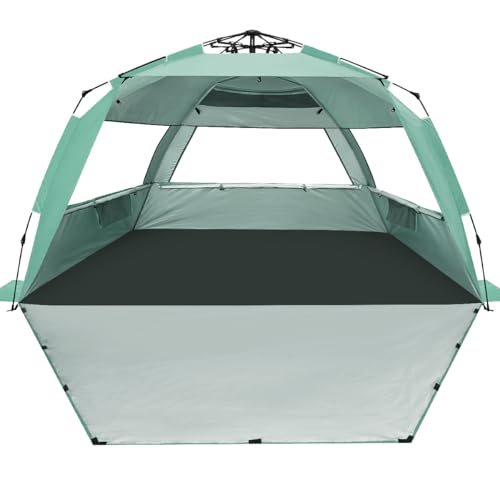
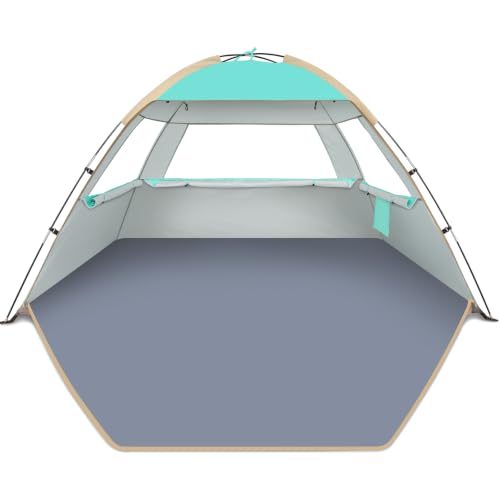

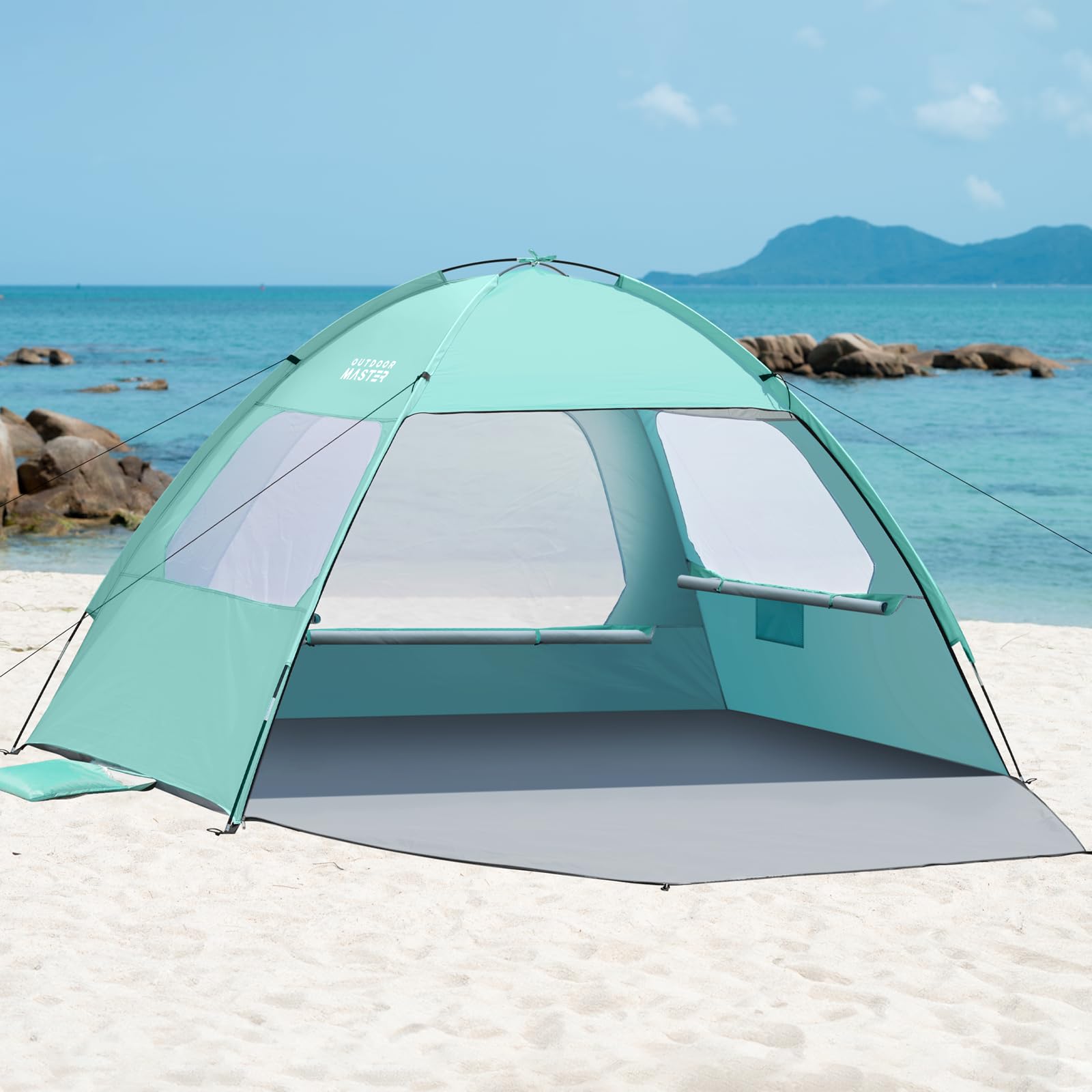

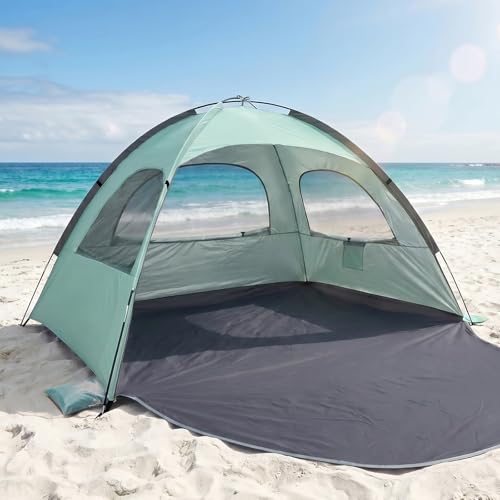



Beach Tent Sun Shelters 101: The Basics
A beach tent sun shelter is a light, open sided shelter made for shade at the shore. It usually has a fabric roof, poles or a pop up frame, and anchors for sand. Unlike a camping tent, it is not made for sleeping or for storms. Its job is to block direct sun while letting breeze flow through.
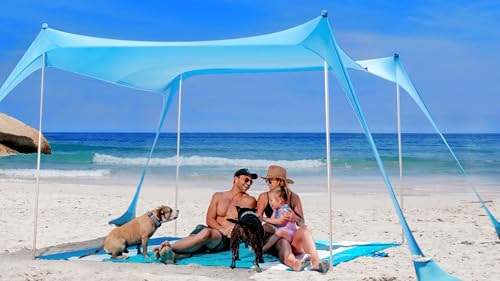
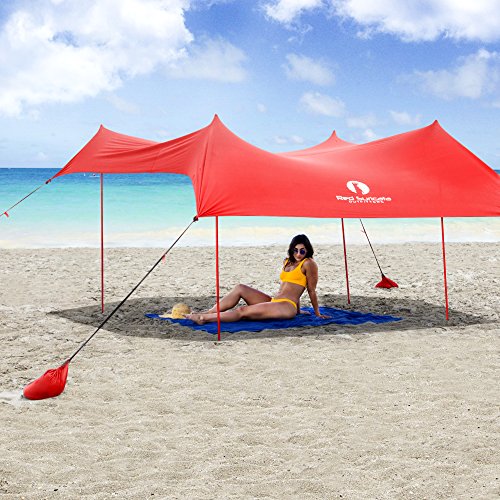
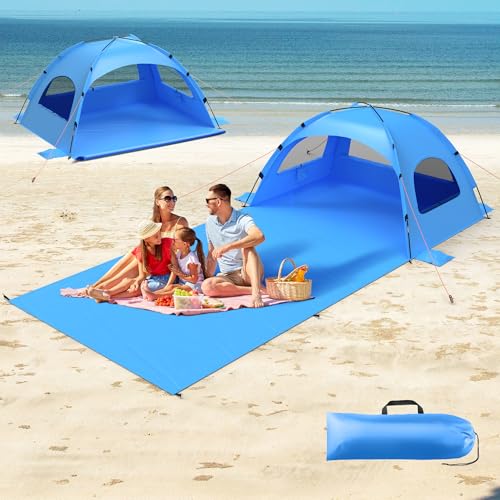
Common styles include pop up shelters, canopy style shelters with four legs, and beach cabanas with a curved roof and side walls. Pop up shelters set up fastest and suit solo visitors, canopy shelters give more headroom for groups, and cabanas give more side shade when the sun moves low in the afternoon.
Shade moves during the day, so a shelter with adjustable walls or a shape you can angle toward the sun handles that shift better. If you plan to pair shade with seating, see our guide to the best beach chairs with sun shade for chairs that work well under a beach roof. For bigger groups, our family beach tents guide covers larger options.
Key Specs Explained in Plain English
Listings for beach shelters borrow words from camping gear, so the sections below translate the main features into beach terms. Use them with the product table to compare shelters that fit your group, your car, and your wind conditions.
Weight and Packed Size
Weight matters most if you walk from a parking lot to the sand. A shelter around 5 to 10 pounds is easy for one adult to carry with a bag and a cooler, while heavier shelters suit beach days where you unload close to your spot and value headroom over portability. Check the packed length too, since a long bag may not fit a small trunk.
A compact bag leaves room for chairs, towels, and food, while a bulky bag can force a second trip. If you travel on foot, favor a short, narrow bag with a carry strap, and if you drive and set up near the car, a larger packed size is a fair trade for more shade.
Setup and Ease of Use
Setup time shapes the whole beach day, especially with children or on a windy shore. Pop up shelters often open in under a minute, while pole shelters may take five to ten minutes with two people, so practice at home first to learn the steps without sand and wind.
Look for color coded poles, simple clips, and a frame that does not need force to lock. A good check is whether one adult can set it up alone in a light breeze, since a chore at home will feel harder on a busy beach.
Weather and Water Resistance
Beach shelters need to handle sun, wind, and light spray, not heavy rain. A fabric with a water resistant coating sheds a passing shower and dries fast, and a sealed roof seam still helps in a drizzle.
Wind resistance matters more than rain ratings at the beach. Look for sand pockets, stakes made for soft ground, and guy lines that spread the load, and always anchor every corner, even on a calm morning, since coastal wind can rise fast.
Shade Coverage and Ventilation
Shade coverage depends on roof size, roof angle, and side walls. A roof around 8 by 8 feet shades two adults and a cooler, while a larger roof suits a family group, and side walls add shade when the sun drops but can trap heat if they block the breeze. A roof with vents near the top lets hot air escape and reduces lift in gusts.
Open sides and mesh panels let breeze flow while keeping the roof stable, while a fully enclosed shelter may feel cooler at first and then grow stuffy as heat builds inside. For most beach days, a wide roof with open sides and a vented peak gives the best balance of shade and airflow.
Packability and Accessories
Useful accessories include a carry bag, sand stakes, guy lines, and sand pockets that you fill on site. A bag with a wide opening makes packing easier when the fabric is sandy or damp, and a repair patch and a spare stake can save a beach day.
If the bag has a shoulder strap, you can keep your hands free for chairs and a cooler, and if it packs into a round bag, check that it fits your car trunk or roof box. A shelter that is easy to pack is more likely to be used often.
Materials and Durability
Common fabrics include polyester and nylon with a sun protective coating. Polyester holds its shape well and resists stretching when wet, while nylon is lighter but may sag slightly in damp air. A higher sun protection rating blocks more rays, which is useful on long beach days.
Frames range from fiberglass poles to aluminum and steel. Fiberglass is light and low cost but can splinter if bent too far. Aluminum is light and resists rust, which suits salt air. Steel is strong but heavier and needs care to avoid rust at joints, so rinse metal parts with fresh water after a beach trip and dry the fabric fully before storage to extend the shelter life.
Rookie Mistakes to Avoid
- Skipping anchors: an unanchored shelter can lift in a gust, so fill sand pockets and set every stake before you unpack chairs.
- Choosing size from photos alone: a shelter that looks roomy online may crowd your group, so check roof size and headroom in feet.
- Ignoring wind direction: facing the open side into the wind turns the roof into a sail, so angle the back toward the prevailing breeze.
- Packing wet fabric: damp fabric can smell and weaken over time, so dry the shelter fully before storing it.
- Forgetting local rules: some beaches limit shelter size or ban stakes, so check local beach rules before you buy or set up.
Getting Started: Setup and First Use
Try the shelter at home before your trip, and time the setup so you know what to expect. Lay out the parts, check that stakes and lines are complete, and practice folding it back into the bag. A home trial also shows whether one person can manage it alone.
At the beach, pick a flat spot away from the waterline and foot traffic. Set the anchors first, then raise the roof and adjust the angle for shade. Follow the manufacturer's instructions, keep small parts away from children during setup, and store the shelter dry and uncompressed when you get home. A dry, loose fold protects the coating better than a tight, damp pack.
Frequently Asked Questions
How much shade coverage do I need at the beach?
Shade needs depend on your group size and how long you stay. Two adults with a cooler usually need a roof around 8 by 8 feet, while a family with children and chairs needs a larger roof or a second shelter. Add side shade if you stay into the afternoon, since a roof alone leaves legs and bags exposed when the sun angle changes.
Can I set up a beach shelter alone?
Yes, many pop up shelters are made for solo setup, and most canopy shelters can be managed alone with practice. The key is a frame that opens in clear steps and anchors that you can set before raising the roof. Practice at home, and start with the windward side anchored so the fabric does not catch a gust mid setup.
How do I keep a beach shelter stable in wind?
Stability comes from anchors, angle, and roof shape, not from weight alone. Fill every sand pocket, use stakes made for soft sand, and tension guy lines evenly so no corner pulls loose first. Angle the back of the shelter toward the wind, and if the fabric starts to lift hard, lower the roof or take the shelter down, since a flying frame can injure people nearby.
How do I clean sand and salt from a beach shelter?
Shake the fabric outdoors, brush sand from seams and zippers, and wipe the frame with fresh water after a beach trip. For stuck sand, use a soft brush and mild soap, then rinse lightly and let the shelter dry fully in shade before packing. Avoid harsh cleaners unless the manufacturer allows them, since strong chemicals can damage sun protective coatings.
Can I use a beach shelter beyond the beach?
Yes, a beach shelter works well in parks, at sports fields, and in large yards where shade and breeze matter. The same features that help at the shore, such as light weight, fast setup, and vented shade, help at a picnic or an outdoor event. Check the ground before you set up, since grass stakes differ from sand stakes, and keep the shelter out of storms.
Wrapping Up
The best choice balances shade size, wind stability, and easy setup. Pick a roof that covers your group with room to move, anchor it well in sand, and practice setup at home before a beach day. Those three habits matter more than any single fabric rating.
When you are ready, use the product table to compare shelters that fit your group and your transport. A shelter that goes up fast and stays put will make beach days calmer and cooler, and the best beach tent sun shelter is worth judging by that real beach use.


