
Best Family Beach Tents: A Complete Buying Guide
Packing up the car for a beach day with kids takes enough planning without your shade collapsing an hour in. A shelter that looked roomy in the product photos can feel cramped the moment two adults, three kids, a cooler, and a beach bag all try to fit under it. Finding the best family beach tents means looking past the marketing capacity number and focusing on the things that actually hold up on real sand: usable floor space, wind stability, and sun protection that lasts the whole afternoon. In this guide, you'll learn what to check before you buy, how to judge real family-size space, how to keep a tent from blowing away, and how setup and takedown work when you're also watching kids.
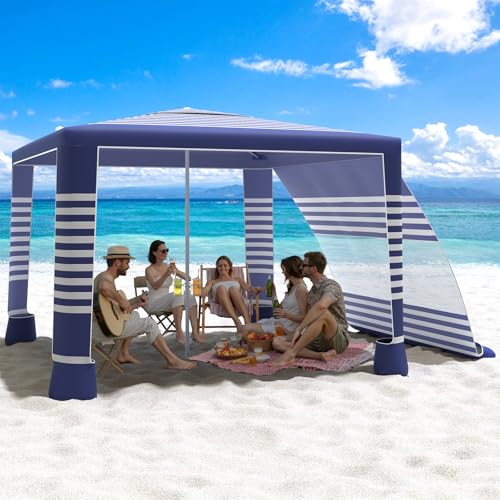

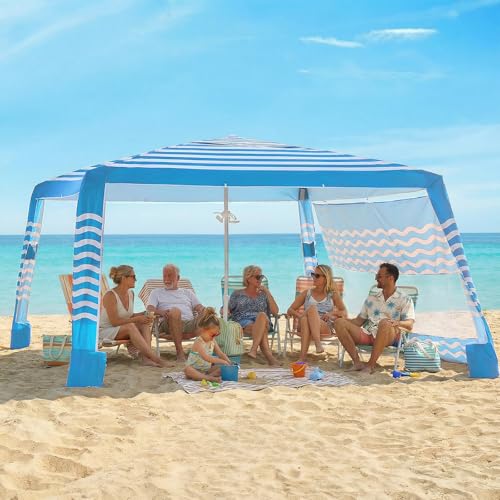
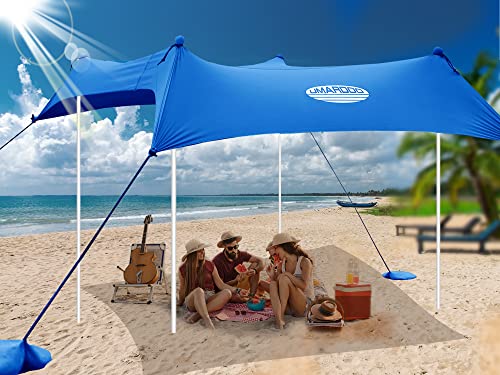
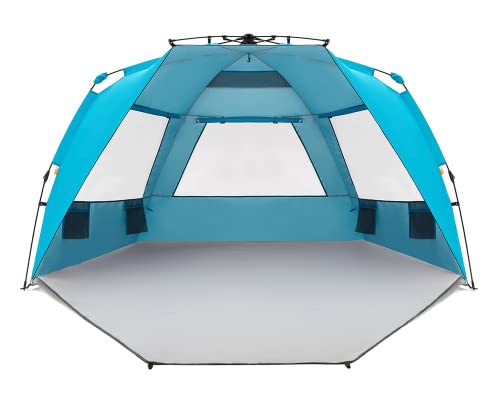
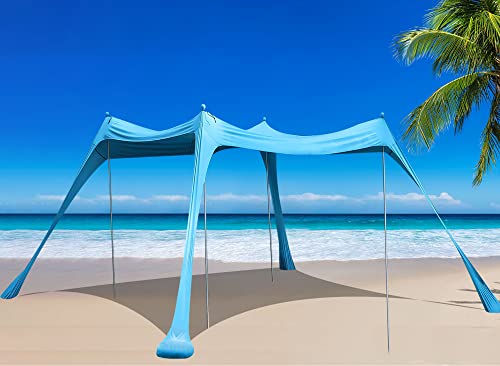
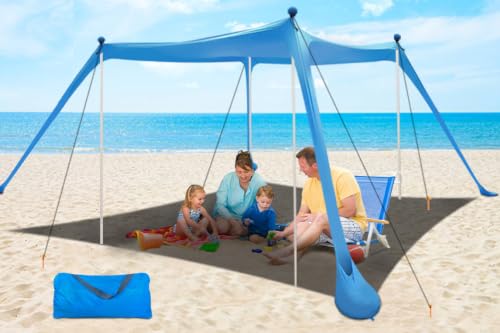
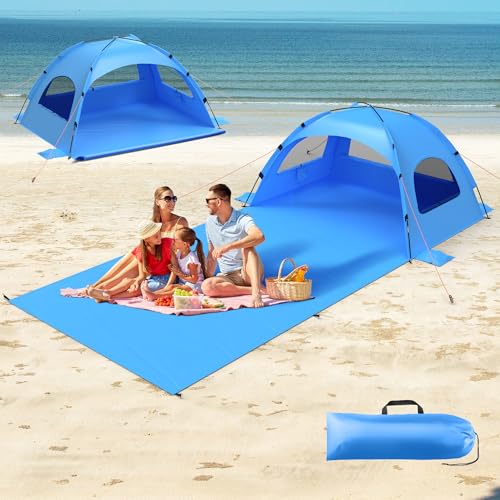
What to Check Before You Buy a Family Beach Tent
Most of the best family beach tents look fairly similar in photos, but the details that matter show up once you're actually using one on a windy, sandy shoreline. A few specs are worth checking closely before you commit.
Sun Protection and UPF Rating
Look for a UPF rating of 50+ on the fabric itself, not just the tagline on the box. That rating blocks roughly 98% of UV rays, which matters far more for young kids than for adults since their skin burns faster. Check that the rating applies to the whole canopy, including the roof panel where the sun hits hardest, not just the side walls.
Fabric and Ventilation Balance
Fabric that blocks UV rays well can also trap heat if it doesn't breathe. Mesh windows or vented side panels help air move through without cutting into shade coverage. If a tent has no mesh at all, it will likely feel noticeably hotter inside by midday, especially with several people packed in.
Frame Type: Pop-Up vs. Pole-Frame
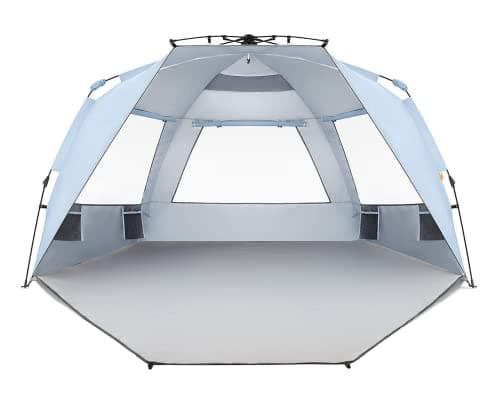
Pop-up designs open in seconds and pack down small, which is convenient for a quick trip. Pole-frame tents take a bit longer to set up but tend to hold their shape better in steady wind because the poles lock into a rigid structure rather than a spring-loaded hub. If you're deciding between a beach-specific shelter and a general-purpose pop-up canopy tent, keep in mind that beach models are built for sand anchoring and salt exposure in a way that yard canopies usually aren't.
How Much Space Your Family Actually Needs
Even among the best family beach tents, the number printed on the box rarely matches how the tent feels in use. A listing that says "fits 4" is usually describing four people sitting shoulder to shoulder, not lying down or spreading out gear.
Rated Capacity vs. Usable Floor Space
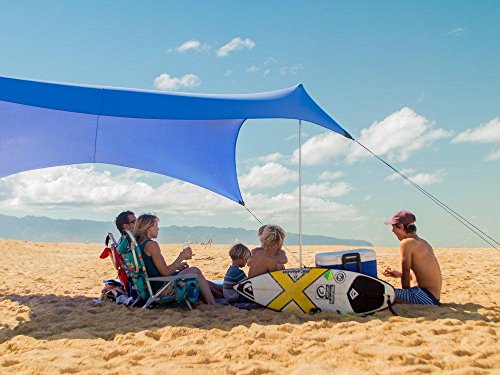
If you want room to actually stretch out with kids, size up from what the tent claims to sleep or seat. A shelter rated for four adults is a more realistic fit for two adults and two or three kids once everyone wants some breathing room. Checking the actual floor dimensions in square feet, not just the "fits X people" claim, gives you a much more honest picture.
Room for Gear, Not Just Bodies
Beach days come with a cooler, bags, towels, and toys, and all of that needs to fit somewhere too. A tent with a bit of extra depth lets you keep gear inside the shade instead of leaving it baking in direct sun. If you're also bringing along extras like a waterproof picnic blanket for snack time, factor that footprint into the space you'll need as well.
Wind and Anchoring: What Keeps a Beach Tent in Place
Wind is the single biggest reason even the best family beach tents fail, and it catches a lot of first-time buyers off guard.
Why "Beach Tent" Doesn't Automatically Mean Windproof
A lightweight design that's easy to carry is also easier for wind to grab. Open, unobstructed shorelines can generate steady gusts that a backyard canopy would rarely see, and a tent built mainly for portability can tumble or collapse if it isn't properly secured. Don't assume light and packable also means stable in a stiff breeze.
Sand Pockets, Stakes, and Guy Lines
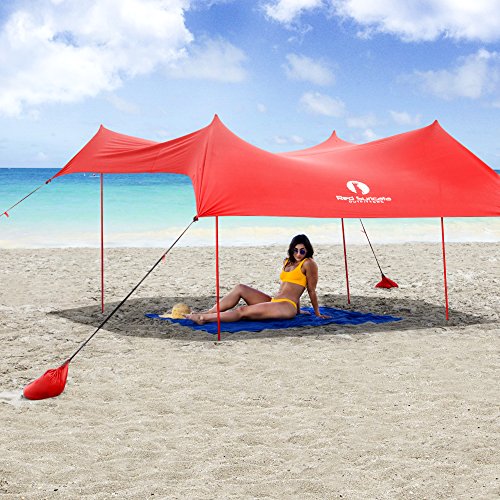
Built-in sand pockets are a good starting point, but on breezier days they usually need backup. Fill sand pockets completely rather than halfway, drive stakes in at roughly a 45-degree angle away from the tent, and add guy lines in a V shape for extra hold. Checking that everything is still snug after the first gust or two of a session catches problems before they become a chase down the beach.
Setup and Takedown for a Busy Family
How a tent goes up and comes down matters just as much as how it performs once it's standing, especially when you're the only adult free to deal with it. This is one area where the best family beach tents tend to separate themselves from cheaper, fussier designs.
One-Person Setup When You're Also Watching Kids
Pop-up frames are the easiest option for solo setup since they open with one motion rather than requiring you to thread and connect several poles. If kids are already asking to run toward the water, a tent that goes from bag to standing in under a minute makes a real difference. Compare that convenience against a full-size family camping tent, which offers more space overall but takes noticeably longer to pitch and isn't built for a quick beach setup.
Folding It Back Down Without a Fight
Packing a pop-up shelter back into its bag is often harder than putting it up, and it's the step most people underestimate before buying. Look for reviews or product notes that specifically mention takedown, not just setup speed. A tent that folds back cleanly on the first or second try will save you a frustrating end to an already tiring day.
Frequently Asked Questions
What should you look for in a family beach tent?
The best family beach tents share a few traits: a UPF 50+ rating, realistic floor space for everyone in your group, and solid wind stability with sand pockets plus stakes or guy lines. Ventilation and how easily one person can set it up alone are also worth checking before you buy.
How do you keep a beach tent from blowing away?
Fill every sand pocket completely, drive stakes in at an angle away from the tent, and use guy lines in a V shape for added hold. Check the anchoring again after the first gusts of your session, since sand can shift and loosen a stake over time.
How many people fit in a family-size beach tent?
It depends on the model, but treat the "fits X people" number as a seated estimate, not a lying-down one. For two adults and two or three kids with room to actually relax, look for a tent rated for a couple more people than your group size.
Is a beach tent better than a beach umbrella for families?
A tent generally offers more consistent shade and some wind or privacy protection on more sides, which suits families managing young kids and gear. An umbrella is lighter and quicker to move, but it covers less area and needs to be repositioned as the sun shifts.
What UPF rating should a beach tent have?
Look for UPF 50+, which blocks about 98% of UV rays. Confirm the rating covers the entire canopy, including the roof, since that's the panel taking the most direct sun exposure.
Do beach tents get too hot inside?
They can, especially fully enclosed designs with little airflow. Mesh windows or vented panels help air circulate without giving up much shade, so it's worth checking for ventilation features if you plan to spend hours inside on hot days.
Making Your Decision
The best family beach tents balance three things well: honest usable space, sun protection that covers the whole canopy, and enough wind stability to stay put once it's anchored. A tent that nails those basics will hold up far better over a full beach season than one chosen on packed size or price alone. Take a few extra minutes at the store or online to check specs against your actual group size and the conditions at your usual beach, and you'll end up with a shelter that earns its spot in the trunk.