
Best Beach Chairs for Obese in 2026: Which Type Is Right for You?
Disclosure: We may earn a commission when you buy through links on this page, at no extra cost to you. As an Amazon Associate I earn from qualifying purchases. Learn more

Compare beach chair types for larger bodies by seat width, weight capacity, frame strength, sand stability and carry weight, plus a clear sizing checklist.
Many beach chairs look roomy in photos, then feel narrow, low and wobbly once you sit on sand. The best beach chairs for obese adults solve three problems at once: a seat wide enough to sit in without squeezing, a frame rated well above your weight, and a height that lets you stand without a struggle. This guide compares types so you can read the product table below with clear priorities in mind.
Start with your hardest moment of the day. For most larger beachgoers that moment is not sitting, it is lowering onto a low seat and pushing back up on soft ground. Keep that test in mind as you weigh width, height and frame strength below.


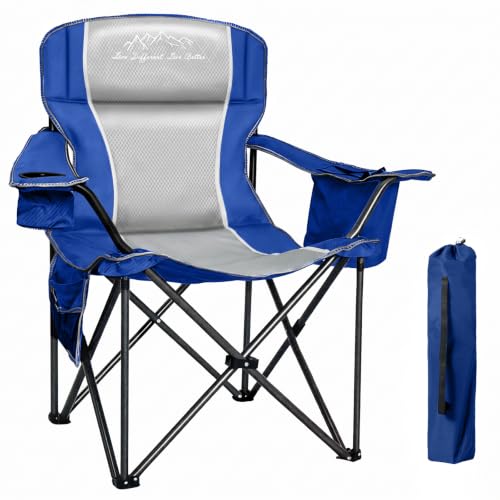


Types of Beach Chairs Compared
Beach chairs for larger bodies fall into four broad types, differing mainly in support, padding and portability. For the wider category view first, see our guide to the best beach chairs.
Premium Padded Reclining Models
These are the roomiest type, with wide padded seats, tall backs, a headrest and several recline positions, sometimes with a leg rest that lifts your feet off hot sand. Ratings often reach about 400 to 500 pounds. You gain the most comfort for long days, but the chair is heavier and costs the most, often about $120 to $200.
Compact Folding Models for Easy Carrying
Compact models fold flatter and weigh less, often about 9 to 13 pounds, and many carry on your back or over one shoulder. That ease has tradeoffs: seats sit lower and run narrower, and ratings often top out near about 300 pounds. A compact chair can still work if the width and rating truly fit, so check both numbers first.
Contoured Support Models for Long Sitting
Support focused models shape the seat and back to spread your weight instead of letting fabric sag into one low point. Look for a firm seat panel, a back that reaches your shoulder blades, and mesh that keeps air moving in heat. Prices usually sit around $80 to $150.
Budget Oversized Models for Occasional Beach Days
Budget models keep the essentials: a wider than standard seat, a simple folding frame and one upright position, with little padding. Ratings vary widely, so a low price means nothing if the limit sits close to your weight. Expect to pay under $60, and expect a shorter life with weekly use.
Padded Reclining Models vs Compact Folding Models: Which Should You Choose?
Compare these two types on four points. For seat room and rating, the padded reclining type wins clearly. For carry weight and folded size, the compact type wins just as clearly. For standing up, a taller reclining chair with solid arms beats a low compact seat. Your walk decides the tie: park close or use a cart and the bigger chair wins, while a long walk on foot favors the compact chair you will actually bring.
How to Choose the Right Beach Chair for a Larger Body
When you shop for best beach chairs for obese options, judge every model in the same order: rating, seat size, arms and feet, fabric and back support, then return terms.
Weight Capacity and Frame Strength
The rating is the highest total load the maker allows on the seat, and it should sit well above your body weight because sitting down adds force beyond your still weight. A margin of at least 75 to 100 pounds gives the frame room to handle movement on uneven sand. Steel weighs more and can rust at chipped spots, while aluminum weighs less and resists rust better. Either way, look for cross bracing under the seat and thick tubing at the joints.
Seat Width, Seat Depth and Seat Height
Measure your hips at the widest point while seated, then add about 2 to 4 inches of clear space; many oversized seats run about 24 to 30 inches wide. Height is the factor many buyers miss: standard beach chairs can sit as low as about 8 to 12 inches off the sand, which makes standing hard. A taller seat of about 16 to 20 inches suits most larger adults far better.
Solid Arms and Feet That Stay Steady on Sand
Solid arms give you a firm place to push as you stand, and they should sit wide enough that your hands rest flat on them. At ground level, wide feet or bar style feet spread your load and sink less into soft sand than narrow points do. Set the chair on level sand and press each foot down before you sit.
Fabric, Back Support and Recline
Seat fabric takes your full weight at every seam, so look for strong polyester with double stitching at stress points and a panel that feels taut when you press it. Mesh sections dry fast and let heat escape. A back that follows your lower back curve and reaches high enough to rest your head changes how long you can sit. If you feel new numbness in your legs, lasting hip or back pain, or swelling that does not ease after rest, talk with your clinician about personal needs rather than treating a chair change as the fix.
Warranty and Return Policy for a Beach Chair
Read what the warranty actually covers, since some brands cover the frame for a year or more but treat fabric and rust as wear. Returns matter just as much, because you cannot judge seat height or arm strength from a photo. Favor sellers that let you sit in the chair at home on a hard floor and send it back if standing from it feels unsafe.
Choosing Beach Chairs for Your Situation
Your setting changes which numbers matter most.
Beach Days With Older Family Members
If grandparents join your beach days, their standing test is even stricter than yours: a tall seat and solid arms matter more than recline. For readers shopping mainly for an older adult, see our guide to the best beach chairs for seniors.
Common Mistakes to Avoid
- Buying by seat width alone leaves you with a wide chair whose rating is still too close to your weight.
- Choosing a very low beach seat makes standing on soft sand slow, shaky and hard on your knees.
- Trusting a photo instead of the folded size leaves you with a chair that will not fit your trunk.
- Resting a full cooler on one chair arm bends the joint and can crack the arm over time.
- Setting up on a slope lets the back feet sink and tips the chair as you lean back.
- Packing the chair away damp grinds the fabric and speeds rust at the joints.
Care and Maintenance for Beach Chairs on Sand and Salt Water
Shake the chair out before you fold it, since trapped sand works into hinges and fabric folds on the drive home. At home, rinse the frame and feet with plain water to clear salt, then open the chair in shade until every seam feels dry. Never store a chair that still feels damp.
Every few outings, check rivets, bolts and recline locks for looseness, grit or rust. Tighten a loose bolt until it feels snug, and stop using a chair with a bent leg or torn seat seam. Store the folded chair indoors, out of direct sun.
FAQ
What features matter most in beach chairs for obese adults?
The rating, seat width and seat height matter most, in that order. Beyond those three, a cup holder set low and close to the frame is worth more than it sounds, since reaching far to the side shifts your weight and can start a slow tip on sand.
What should obese adults look for in a beach chair for long hours of sitting?
For long hours, look for a back you can change during the day. Two or three recline angles let you shift pressure from your lower back to your shoulders and back again, which a fixed upright seat cannot do. A short walk each hour also keeps stiffness from building.
How do obese adults choose the right beach chair size?
Choose size by measuring, not by the word oversized on the box. Sit on a firm kitchen chair, measure across your hips and thighs, and note the seat height that lets your feet rest flat. Match those two numbers to the listing. If you fall between sizes, take the wider and taller one, since extra room is easy to live with and a tight seat is not.
Is an expensive beach chair worth it for a larger adult?
An expensive beach chair is worth it only when the extra money buys a higher rating, a stronger frame or a taller seat you truly need. Price alone does not prove strength, and some costly chairs spend the budget on coolers and canopies instead. If a mid priced chair matches the rating and tubing numbers, the premium model adds comfort extras rather than safety.
How long should a good beach chair for obese adults last?
A good beach chair for a larger adult should last about three to five seasons of regular use. Watch for warning signs: fabric stretched enough to change how you sit, a frame that rocks on flat ground, or a recline lock that slips under your weight. Retire the chair at those signs, not after a failure.
The Bottom Line
Put the rating first, seat width and height second, and solid arms third, and most listings sort themselves quickly. For a general adult shortlist, see our guide to the best beach chairs for adults, then check your final choice against the product table above.
With those checks done, choosing the best beach chairs for obese adults gets simpler: pick the chair that fits your body, holds you with room to spare, and lets you stand up on sand without a second thought.


