Best Bass Studio Monitors: What Actually Matters Before You Buy for 2026
Disclosure: We may earn a commission when you buy through links on this page, at no extra cost to you. As an Amazon Associate I earn from qualifying purchases. Learn more

Choose the best bass studio monitors by comparing woofer size, port design, room fit, and placement for accurate low end.
Choosing best bass studio monitors is less about chasing the deepest spec on a box and more about matching low frequency output to your room, your desk, and the music you make. A monitor that sounds huge in a treated studio can overwhelm a small bedroom setup and hide balance problems instead of revealing them.
This guide walks through woofer size, tuning controls, port design, power, and placement so you can judge any model with the same checklist. Start with the comparison table below for sizes and core specs, then use the sections that follow to decide what those numbers will actually mean at your listening position.


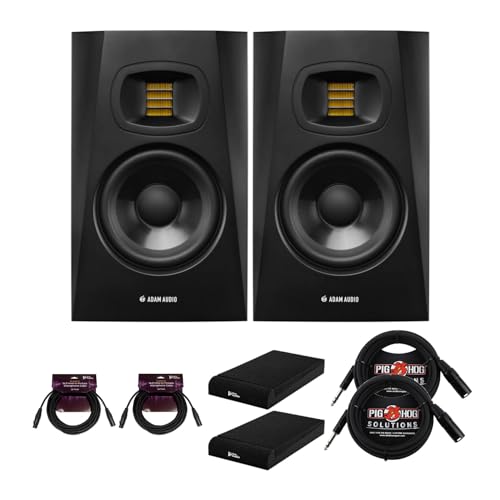
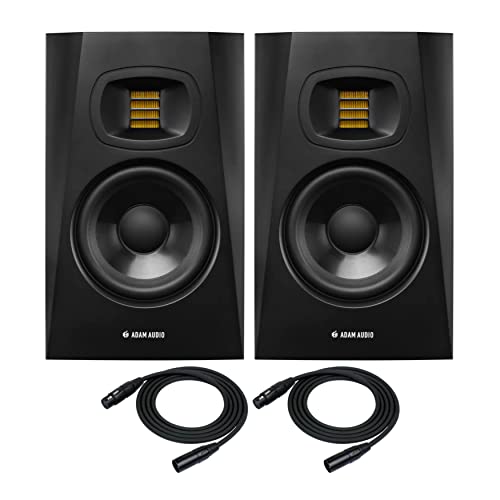


Who Should Buy Bass Focused Studio Monitors?
Different listeners need low end information for different jobs. The right choice depends on whether you create the bass, play it, or simply need mixes that translate well to cars, clubs, and home systems.
Electronic and Hip Hop Producers
You need to hear kick drums, sub bass lines, and low synth layers as separate elements, not as one blended rumble. Look for honest extension down to the range your tracks actually use, plus tuning controls that help tame a desk or a corner. If your productions rely on notes below what a compact woofer can reproduce cleanly, plan for a matched subwoofer rather than forcing a small monitor to play louder than it should.
Bass Guitar Players Who Record at Home
When you track bass guitar through an interface, your monitors are how you judge finger noise, fret buzz, pickup balance, and how a part sits against drums. A clear midrange matters as much as deep output, because most bass guitar character lives above the lowest fundamentals. If your setup doubles for practice and recording, see our guide to the best studio monitors for bass guitar for placement ideas aimed at players.
Mixers Working on Dance and Pop Music
Your main risk is overcorrecting. If monitors exaggerate low frequencies, you will mix bass too quietly and your work will sound thin everywhere else. You need a presentation that stays consistent at modest volume, since most balance decisions happen at conversation level or a little above. Producers comparing options for rhythm driven work can also see our guide to the best studio monitors for bass music, which focuses on genre specific listening needs.
Key Features to Compare
Use the product table above as a starting list, then test each candidate against the factors below. These are the points that separate a monitor that merely plays low notes from one that helps you judge them accurately.
Woofer Size and Low Frequency Extension
Woofer diameter is the simplest guide to bass reach. Compact woofers around 5 inches suit small desks but usually roll off before the lowest sub bass notes, while woofers around 6.5 inches add useful reach and woofers around 8 inches move more air and suit larger rooms. Always read the frequency response range with its tolerance, since a claim of 40 Hz means little without knowing how far the level has dropped at that point.
Port Design and Placement Flexibility
Most monitors in this class use a port to extend low output. Ports on the front face let you place the cabinet closer to a wall, because the air movement and much of the port sound project toward you. Ports on the back need more space behind the cabinet, often a foot or more, or the wall reinforces bass unevenly and blurs notes. In a tight room, port location can matter more than a small difference in woofer size.
Power, Headroom, and Distortion
Amplifier power in a powered monitor is split between woofer and tweeter, so compare the woofer rating rather than the combined total. Headroom is what keeps kick drum hits clean at your normal listening level instead of compressing or distorting on peaks. A monitor that stays composed a little louder than you usually listen will sound more relaxed and consistent day to day. If a listing hides separate driver ratings, treat that as missing information, not a minor detail.
Frequency Response Honesty and Tuning Controls
A flat response on paper is only a starting point, because your room changes what you hear. Useful controls include a low shelf adjustment for placement near walls, a bass roll off switch for use with a subwoofer, and a modest high frequency trim for bright or dull rooms. Small steps of 2 dB are easier to work with than broad tone knobs. Readers who care most about overall tonal balance can also see our guide to the best sounding studio monitors for a wider view of accuracy.
Cabinet Build and Driver Materials
A stiff, well braced cabinet keeps energy going into the music instead of into panel vibration, which can smear low notes and add a boxy color. Woofer cones in woven composite, treated paper, and coated materials can all work well, so judge by response, distortion figures, and build quality rather than material fashion. Check that cabinets are sold and matched as a pair in behavior, with controls in the same positions and no rattles at moderate volume.
Connectivity and Subwoofer Integration
Balanced inputs such as XLR and quarter inch TRS help reject hum from interfaces and long cable runs, while RCA inputs suit short runs from consumer gear. If you expect to add a subwoofer later, look for a monitor with a bass roll off option and a subwoofer with an adjustable crossover and level control, so the handoff between them can be set cleanly. A footswitch bypass on the subwoofer is a practical bonus, because it lets you check a mix without deep bass in seconds.
Room Fit, Placement, and Subwoofer Decisions
Room size sets a practical ceiling on useful bass. In a small untreated room, an 8 inch woofer can excite strong standing waves that make some notes boom and others vanish as you move your head. A smaller monitor placed well often gives a clearer picture than a larger one placed badly. Measure the distance to the wall behind the speakers, note any corners close to the desk, and be honest about whether treatment panels or bass traps are realistic for your space.
Placement basics apply to every model. Form a triangle between the two monitors and your head, with tweeters near ear height and both cabinets angled toward your listening position. Keep the pair symmetrical in the room where you can, since a speaker near a side wall will reflect differently from one in open space. Start with the monitors on stands or isolation pads rather than directly on a resonant desk, and adjust in small steps while listening to tracks you know well.
A subwoofer makes sense when your music uses content below your monitors useful range, when you have space to place it properly, and when you can set its crossover and level with care. It makes less sense as a fix for a boomy room, because adding more low energy usually worsens the problem. If you are unsure, choose monitors that work well alone now and leave a clear upgrade path. General background on cabinet formats is covered in our guide to the best studio monitor speakers, which is a useful companion when comparing shapes and sizes.
Quick Buyer Checklist
Before you order any of the best bass studio monitors on your short list, answer each question honestly. A no answer does not always rule a model out, but it should point you to the feature or accessory that closes the gap.
- Does the woofer size match your room size and your usual listening distance?
- Is the stated low frequency limit given with a clear tolerance in decibels?
- Does the port location suit the space you actually have behind each cabinet?
- Are tuning controls included for wall placement and for pairing with a subwoofer?
- Does your interface output match the monitor inputs without adapters that invite hum?
- Can you place both monitors at ear height and at equal distance from your seat?
- Is the return window long enough for you to test familiar tracks in your own room?
- Does the total cost leave room in your budget for stands, pads, and cables?
Red Flags to Watch For
Some warning signs are easy to spot once you compare listings side by side in the product table above. Keep an eye out for the following patterns.
- A bass extension claim with no tolerance figure, which makes the number impossible to compare fairly.
- A combined power rating with no separate woofer figure, which can hide a weak amplifier section.
- Marketing language about club level bass with no response graph, which suggests excitement over accuracy.
- A very short warranty on the amplifier section, which is the part most likely to need service.
- Reviews that praise huge bass but never mention room size, which suggests the writer ignored placement.
How to Make Your Bass Studio Monitors Last Longer
Powered monitors dislike heat and dust. Leave ventilation space around the amplifier panel, keep cabinets out of direct sun, and avoid covering the back panel with curtains or foam. Dust the enclosures with a dry soft cloth and keep liquids away from cones and ports. If a driver needs cleaning, use a soft brush with no pressure on the surround or the dust cap.
Protect the electronics with sensible habits. Turn monitors on last and off first in your signal chain so switch on thumps from other gear do not reach the drivers at full level. Avoid running the input so hot that the clip indicator flashes on normal material, since repeated clipping stresses both amplifier and woofer. Keep listening levels moderate and take regular breaks, and if you ever notice persistent ringing in your ears after sessions, lower your levels and talk with a clinician about your hearing.
Frequently Asked Questions
What size bass studio monitors suit a small bedroom studio?
For most small bedrooms, woofers around 5 to 6.5 inches give the clearest picture at close distance. They produce enough low output for balance checks without overwhelming corners and walls. Reserve larger woofers for rooms where you can sit farther back and keep space behind the cabinets, or pair a compact set with a carefully placed subwoofer when your music truly needs sub bass reach.
Do bass studio monitors need a subwoofer to sound complete?
No, bass studio monitors do not always need a subwoofer. Many mixes translate well from monitors alone once you learn their low end limits and check results on headphones and in a car. A subwoofer helps mainly when your tracks contain important notes below the monitor range. Adding one without proper crossover setup, though, can create a bump where the two overlap and mislead your decisions.
How far from a wall should bass studio monitors sit?
As a starting point, place bass studio monitors at least 8 to 12 inches from the wall behind them, and more for rear ported designs. Then use the low shelf or boundary control to fine tune the result at your seat. Small movements of a few inches change bass balance noticeably in small rooms, so adjust one step at a time and recheck with familiar recordings before moving again.
Can bass studio monitors work for normal music listening too?
Yes, bass studio monitors work well for everyday listening once you accept their honest presentation. They will not flatter a poor recording, but good recordings sound detailed and spacious at a desk or in a small room. Their limited sweet spot is the main trade off, since sound is aimed at one seat. Angle them toward your usual chair and you will get the best of both uses.
How long do bass studio monitors usually last?
Well cared for bass studio monitors often serve for many years of daily home studio use. The amplifier section is usually the first part to age, while drivers last longer when they are kept dry, dust free, and away from repeated clipping. Keeping the original boxes helps if service is ever needed, and registering the warranty at purchase makes any later claim far simpler to process.
Final Thoughts
The right purchase is a match between woofer size, port design, and the room you actually work in, not a race for the lowest number on a spec sheet. Use the checklist above, confirm that tuning controls and inputs fit your setup, and revisit the product table above to compare the short list you built. Chosen with care, best bass studio monitors will tell you the truth about your low end, and that honesty is what makes every mix decision easier.