
Best Barbecue Grills to Buy: A Buyer Checklist for 2026
Disclosure: We may earn a commission when you buy through links on this page, at no extra cost to you. As an Amazon Associate I earn from qualifying purchases. Learn more

Before you buy, run this checklist over the best barbecue grills to buy: fuel class, cooking area, fire safety, running costs, and red flags to skip.
Grill listings throw BTU numbers, cooking areas, and feature badges at you all at once, which makes honest comparing hard. This guide works the other way: it hands you one checklist and walks every class of grill through it, so the best barbecue grills to buy for your yard are the ones that pass on fuel, heat, size, and safety, not the ones with the loudest box copy. Work down the list in order, because the early answers change what the later ones should be.
The checklist comes first. After it, three budget bands show what the same checklist finds at each price, and a short red flag list covers the listings worth skipping entirely. The product table gathers current options side by side; keep it open beside the checklist as you read.
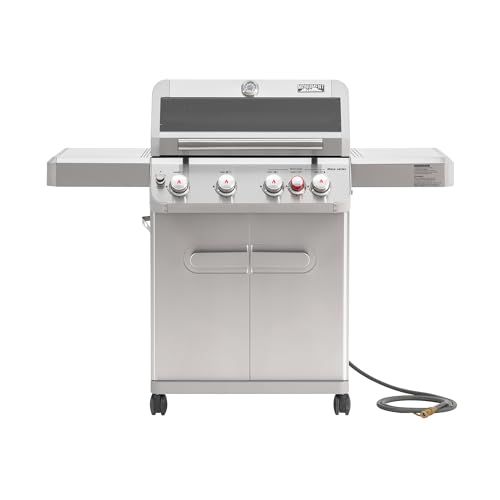

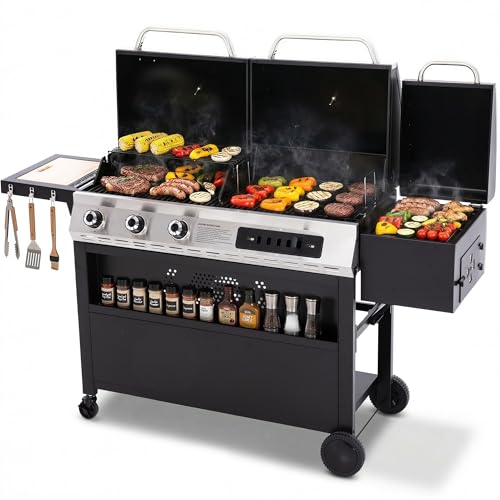


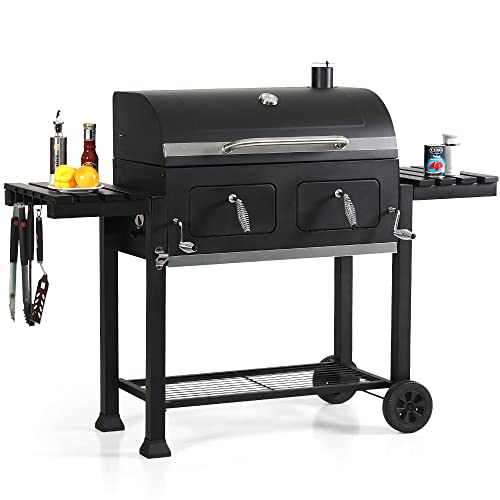

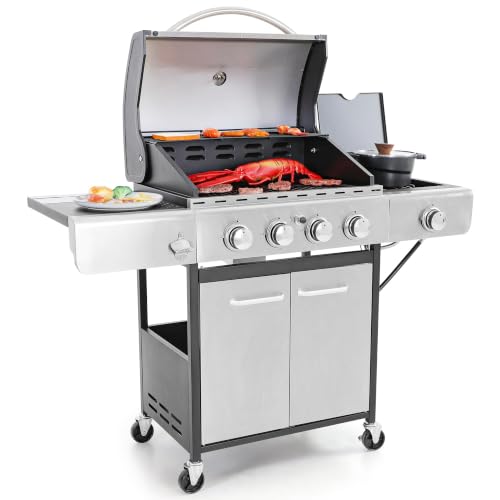
The Buyer Checklist: What to Check Before You Buy
The fuel class decides the work. Charcoal asks for patience and gives the deepest smoke flavor, gas lights in minutes and suits weeknight cooking, pellets hold a steady low heat for hours, and electric fits where open flame is banned. Each class also carries its own fire rules, fuel storage habits, and cleanup load, so choose the fuel first and let every later question follow from that answer.
Fuel Type: Gas, Charcoal, Pellet, Electric
Charcoal rewards patience with flavor and high searing heat, and our guide to best charcoal barbecue grills covers kettle and barrel styles in depth. Gas trades some of that flavor for push button starts and fine heat control; if gas wins, our guide to best barbecue grills propane walks through burner counts and tank options. Pellet grills burn wood pellets under automatic control and sit between the two, while electric grills give up smoke flavor almost entirely in exchange for permission to cook where flame is banned.
Placement and Fire Safety
Every grill is an open fire appliance, whatever the fuel. Keep it well away from house siding, deck rails, fences, and any overhang, on a level and clear surface that cannot catch a stray ember. Grease is the flare class to respect: dripping fat over open flame is what turns a cookout into a fire, so a working drip tray and space around the grill matter as much as any cooking feature. Most classes belong outside with open airflow, and best outdoor barbecue grills are built around exactly that clearance and ventilation.
Heat Output and Temperature Range
Read heat as BTU per square inch of cooking area, not the headline BTU figure, because a big number spread over a big box can cook weaker than a smaller grill. What you really need is range: high heat that sears steaks and burgers, and a low end that can hold near 225 degrees for ribs and brisket without constant tending. Two burners or a two zone charcoal setup give you that range; a single burner grill mostly does not.
Cooking Area and Capacity
Cooking area figures are class figures, so translate them into food before trusting them. A rough guide is about 70 square inches per burger with elbow room, which puts a family of four near 300 square inches of primary grate and a party of ten nearer 500. Warming racks add holding space, not cooking space, and should not be counted as equal. The usual crowd you feed decides the size: buy for your regular Saturday, not the one big gathering a year, which a borrowed grill or two batches of cooking can cover.
Fuel Cost and Availability
Price the fuel by the cook, not by the bag. A bag of charcoal at about $10 to $20 covers several cooks, propane refills run about $15 to $25 a tank and last many hours, and pellets at about $15 to $25 a bag burn roughly a pound or two per hour at smoking heat. Just as important is supply: buy the class whose fuel your nearest store stocks year round, because a grill you cannot feed in January is furniture.
Temperature Control and Smart Features
Control is where pellet grills earn their price: a PID controller holds a set temperature the way an oven does, and meat probes report the food instead of the air. On gas and charcoal, control means sturdy dampers, responsive burner valves, and a lid thermometer that reads close to true. WiFi alerts and app timers are conveniences layered on top of those basics. Pay for them only after the basics pass, because no app fixes a grill that cannot hold heat.
Ash, Grease Management, and Cleanup
Cleanup design decides whether you grill weekly or monthly. Charcoal grills should sweep ash into a catcher you can lift out cold, and gas and pellet grills need a grease tray that slides free without a fight. Cast iron grates hold heat and sear well but ask for seasoning and rust care; coated steel grates forgive neglect and give up some sear. Whatever the class, a grill that takes ten minutes to clean gets cleaned, and a clean grill flares less and lasts longer.
What the Checklist Finds at Three Budgets
Run the same checklist over the product table above and the best barbecue grills to buy at each price separate into three bands. The bands below describe classes of grill, not specific products, and the same fuel and safety checks apply at every price.
The Entry Band: Under About $200
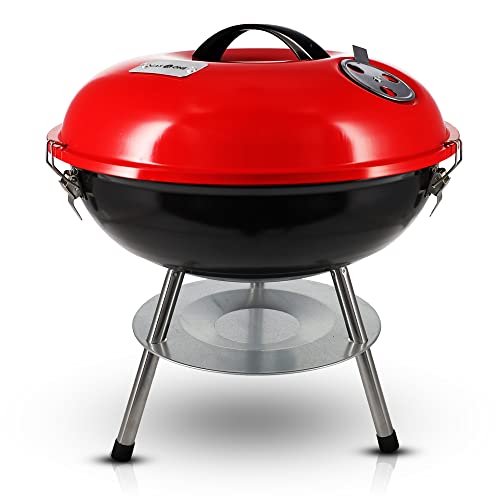
This band holds kettle charcoal grills, small two burner gas grills, and tabletop models. Expect thinner steel, basic grates, and shorter warranties, but honest cooking: a kettle at this price sears and smokes better than many grills at three times the cost. What you give up is capacity, fine temperature control, and weather resistance, so a cover and dry storage matter more here than anywhere.
The Middle Band: About $200 to $500
The middle band is where build quality jumps: thicker lids that hold heat, cast iron grates, enclosed carts, and grease systems that actually work. Gas grills here add a third or fourth burner, and pellet grills enter with real controllers. For most households this is the band where the checklist stops failing items, and a grill bought here can reasonably serve for a decade of regular use.
The Upper Band: About $500 to $900 and Beyond
Upper band money buys size, stainless steel parts, and automation. Large pellet grills with full PID control, big gas grills with rotisserie burners, and heavy ceramic charcoal cookers live here. The cooking does not scale with the price, but capacity, convenience, and corrosion resistance do. Buy into this band when you cook for crowds often or want the grill to run a long smoke with almost no attention from you.
Quick Buyer Checklist
Answer these before you order, and let any no stop the purchase until it is fixed:
- Is the fuel class settled, and can I buy that fuel nearby all year?
- Does the spot I have in mind give the grill clear space from walls, rails, and overhangs?
- Is the primary cooking area big enough for my usual crowd, counted in food rather than square inches alone?
- Can it sear at high heat and hold a low heat near 225 degrees?
- Does it have a grease tray or ash system I can empty without tools?
- Is the warranty at least a year on parts, with burners or firebox covered longer?
- Will it fit through my gate, door, or balcony space once assembled?
- Do I have a cover and a dry storage plan for wet months?
Red Flags to Watch For
- Headline BTU with no area figure. Heat claims mean nothing until they are divided by the cooking area; a listing that hides the area is hiding the answer.
- Paper thin lids and doors. Thin metal leaks heat, warps near the fire, and makes low temperature control nearly impossible on charcoal and pellet grills.
- No grease management. A grill with no drip tray or a tray you cannot remove is a flare risk and a cleaning chore that will shorten its life.
- Warranty under a year. Short coverage on a product that lives outdoors near fire tells you what the maker expects of its own build.
- No stated clearance guidance. A manual that never says how far the grill must sit from a wall is leaving the most important safety number unwritten.
Choosing the Best Barbecue Grills to Buy for Your Situation
Setting a Budget First
Fix a budget figure first, say about $300, and then compare only the grills clustered around it, because near priced grills differ in a few telling places: grate material, lid weight, and warranty length. At any fixed budget, the charcoal class usually returns the most cooking ability per dollar, while gas returns the most convenience. The check that matters is which of those you are actually short of.
Tips to Get the Most From Your Barbecue Grill
Preheat for 10 to 15 minutes before food goes on, so the grates are hot enough to sear and release food cleanly. Brush the grates while they are still warm after cooking, when residue comes off with a fraction of the effort. Empty ash only when it is fully cold, keep the grease tray from filling, and cover the grill between uses. Once a season, check burners, dampers, and hinges for rust and blockages, because small fixes done early are what turn a five year grill into a ten year one.
FAQs
How big of a barbecue grill do I need?
Size it for your biggest regular cook, not your average one and not your largest party ever. Count the food that must fit at once: burgers and dogs for eight need roughly 450 to 500 square inches of primary grate, while a family of four fits near 300. Remember that whole items, like a spatchcocked chicken or a full rack of ribs, claim space in one block, so a long unobstructed grate often beats a larger but divided one.
What type of barbecue grill gives the best flavor?
Charcoal gives the strongest classic barbecue flavor, because the fuel itself is part of the smoke. Pellet grills come close, with a cleaner wood smoke that suits long cooks, and adding a chunk of hardwood to charcoal deepens either one. Gas grills taste mildest, though a smoker box of wood chips narrows the gap. Flavor also depends on fat dripping onto a hot surface, which is why a hot sear matters on every fuel.
Can I use a barbecue grill on a balcony?
Often only the electric class, and only where your building and local fire rules allow any grill at all. Many buildings ban charcoal and propane on balconies outright, because open flame sits too close to rails and siding. True indoor cooking belongs to best indoor barbecue grills, the countertop electric class, while best electric barbecue grills also cover balcony sized outdoor models. Read your lease and building rules before you buy, not after the grill arrives.
Is a pellet grill worth it?
A pellet grill is worth it if you cook low and slow often and value sleep over tending a fire. The controller holds temperature for hours, and a large hopper, around 18 pounds or more, can carry an overnight cook without refilling. The trade offs are price, moving parts that can fail, and pellets that must stay dry to feed properly. If you mostly sear weeknight burgers, a simpler class serves you as well for far less money.
How long should a good barbecue grill last?
A well built grill should last about 8 to 12 years of regular use, and longer with a cover and dry storage. Burners, grates, and igniters are wear parts on gas grills, so a maker that sells replacements is quietly promising a longer life than one that does not. Rust at the firebox or a warped lid is the usual end point. When a replacement part costs more than a third of a new grill, the old one has earned its retirement.
Final Thoughts
Fuel first, size second, safety always: that order does most of the work. Decide how you want to cook, confirm the grill fits your crowd and your space with safe clearance, and let the budget bands set your expectations for build quality. Do that, and the best barbecue grills to buy narrow to a short list you can trust. Cross check your finalists against the product table above, and pick the one that passes every line of the checklist.


