Best Barbecue Grills Propane: Buying Guide for 2026
Disclosure: We may earn a commission when you buy through links on this page, at no extra cost to you. As an Amazon Associate I earn from qualifying purchases. Learn more

Best barbecue grills propane explained: burner count, cooking area, grates, grease cleanup, safety, and budget advice.
Propane grills light at the turn of a dial, heat evenly, and need no ash cleanup, which is why they dominate backyard cooking. This guide to the best barbecue grills propane buyers choose explains burner count, grate material, cooking area, and build quality, so you can pick a grill that cooks well for years instead of rusting out after a few seasons.
The product table lists propane grills from compact tabletop models to full-size three-burner grills. Use the sections below to decide how big a grill you need and which features are worth paying for, then compare the table against your shortlist.





How Propane Grills Work
A propane grill burns gas from a refillable 20-pound tank, which is the same size used for most home grills. Burners under the grates heat metal bars or ceramic plates that spread the heat. Because you control the flame with a dial, you can hold steady temperatures for burgers, chicken, vegetables, and fish.
The flavor is cleaner than charcoal, with less smoke character, but you can add smoke with a smoker box or wood chips. Propane also lets you cook in minutes after lighting, which suits weeknights and short cooks.
Key Features to Compare
Burner Count and Heat Zones
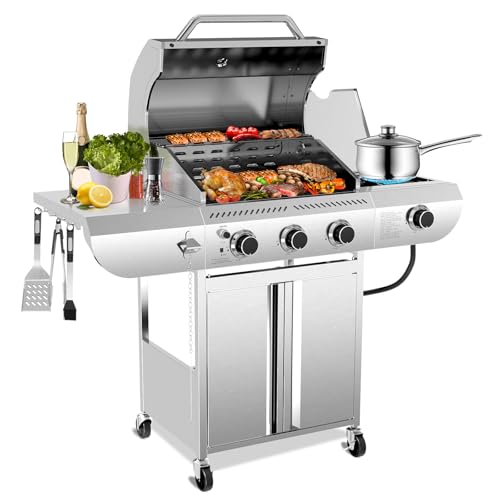
Two burners suit small patios and couples. Three burners are the standard for families and give you a hot side and a cooler side for indirect cooking. Four or more burners add a side burner or a sear zone, and they suit people who cook for groups. More burners help only if the grill also has enough cooking area and good heat distribution.
BTUs and Cooking Area
BTUs measure heat output, but cooking area matters just as much. A rough guide is 80 to 100 BTU per square inch of primary cooking area. A grill with 30,000 to 40,000 BTU and 450 to 600 square inches of cooking area handles most family cooking. Very high BTU numbers on a small grill often reflect burner count and not better performance.
Grates and Burner Materials
Cast iron and porcelain-coated grates hold heat and leave strong sear marks, while stainless steel grates resist rust and clean easily. Stainless steel burners usually outlast cheaper coated steel ones. Check the warranty, since it signals how long the maker expects the burners and firebox to last.
Ignition and Controls
A reliable electronic igniter saves frustration, and a battery or push-button ignition is easier than a manual match light. Look for smooth knobs, a lid thermometer you can read, and a tank scale or gauge so you do not run out of gas in the middle of a cook.
Grease Management and Cleanup
A sloped firebox and a removable grease tray reduce flare-ups and make cleanup quick. Removable grates and a drip pan that slides out for emptying help you keep the grill clean and prevent grease fires.
Side Tables and Storage
Folding side shelves give you somewhere to place tools and plates. A closed cabinet below keeps the tank hidden and holds accessories. Wheels or locking casters make the grill easier to move.
Best Barbecue Grills Propane by Size and Budget
Compact and Tabletop Grills
Tabletop grills with 1 to 3 burners suit balconies, camping, and tailgating, though local rules may restrict gas grills on apartment balconies. They heat quickly and pack away easily but offer limited cooking area.
Mid-Size Three-Burner Grills ($200 to $500)
This is the sweet spot. You get enough cooking area for a family, a hot-and-cool layout, and side tables, often with cast iron or stainless grates. Quality varies, so look at the thickness of the lid and firebox and the length of the warranty.
Premium Grills ($500 and above)
More expensive grills offer heavier stainless steel, longer warranties, better heat distribution, and refinements such as sear stations. They are worth it if you grill several times a week and want a unit that lasts a decade.
Safety and Setup
Use propane grills outdoors only, in a well-ventilated space away from walls, railings, and overhangs. Check hoses and connections for leaks with soapy water before each season, and never light a grill with the lid closed. Keep children and pets away, store tanks upright and outdoors, and follow the manufacturer's instructions for tank connection and transport. Keep a way to extinguish a grease fire nearby and never leave a lit grill unattended.
Assembly typically takes one to three hours, so clear a space, sort the hardware, and keep the manual open. Season new grates by wiping them with oil and running the grill hot for a few minutes.
Care and Maintenance
Brush the grates while warm after each cook and empty the grease tray regularly. Burn off residue by running the grill on high for a few minutes. Cover the grill when it is not in use, check burners for blocked ports each season, and replace worn parts rather than the entire grill when possible.
Common Mistakes to Avoid
The most common mistake is buying more burners than you need, which raises the price and propane use. Another is ignoring lid height, which limits roasts and whole chickens. Others include skipping a check of tank storage rules, choosing thin sheet-metal construction, and neglecting the cover and cleaning routine.
Frequently Asked Questions
What features matter most in a propane grill?
Cooking area, burner quality, build materials, and a reliable igniter matter most. Then consider grease management, side tables, and warranty length.
How long does a propane tank last?
A 20-pound tank typically lasts about 18 to 20 hours of cooking on medium heat, depending on the grill and how hot you cook.
How many burners do I need?
Two burners for small households, three for most families, and four or more if you cook for groups or want a side burner.
Propane or natural gas?
Propane is portable and available at many stores. Natural gas suits permanent installations connected to a home line, and some grills can be converted with a kit.
How long should a propane grill last?
A well-made grill with regular cleaning and a cover can last 8 to 12 years or more. Cheap grills may last only a few seasons.
Can I use a propane grill on a balcony?
Only if your building rules and local fire codes allow it. Many apartments ban gas grills, so check before buying.
Final Thoughts
Pick a grill size that matches your household, choose sturdy materials, and keep the cleaning routine simple. Compare options in the product table above, and keep in mind that the best barbecue grills propane are not the ones with the highest BTU number but the ones with solid construction and even heat. For more ideas, see our guides to the best charcoal barbecue grills and the best outdoor barbecue grills.