Best Banana Clips for Speakers: Which One Fits the Way You Use It in 2026?
Disclosure: We may earn a commission when you buy through links on this page, at no extra cost to you. As an Amazon Associate I earn from qualifying purchases. Learn more

Discover the best banana clips for speakers for your needs. We match features to real use cases so you avoid overpaying and get the right fit the first time.
Banana clips, the plug and clip style connectors that finish the ends of speaker wire, look almost identical in photos, yet the wrong set can mean loose connections, crackling channels, or plugs that simply do not fit your binding posts. The best banana clips for speakers in your system depend on your wire gauge, your post spacing, and how often you move or reconfigure your gear. There is no single winner for every rack and room.
Start with the comparison table below to line up connector styles, wire gauge ranges, and pack counts. Then use the sections that follow to match a connector type to your receiver, your speakers, and your habits, so your wire ends stay secure for years instead of weeks.


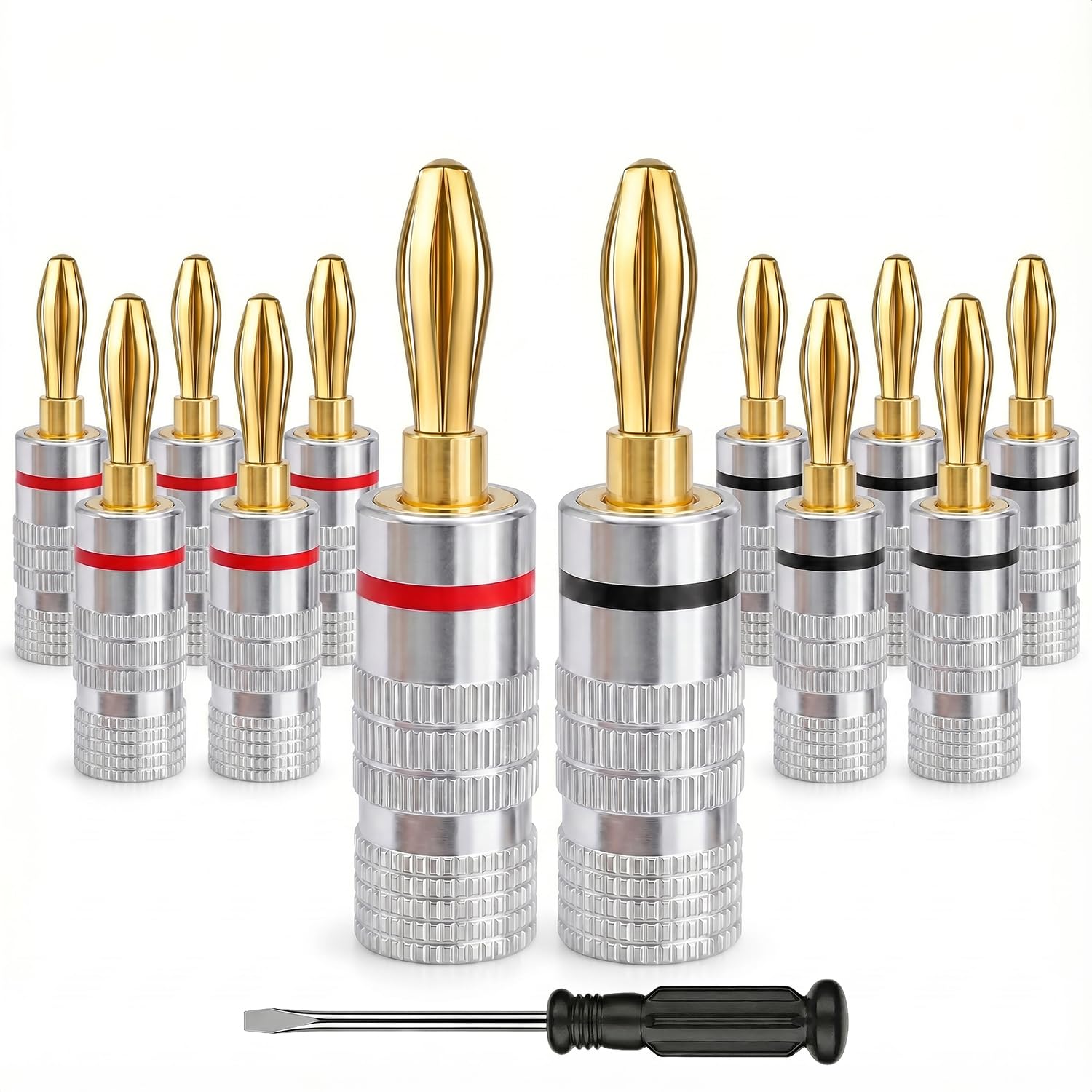
Who Should Buy Which Banana Clips?
For Home Theater Owners Who Swap Gear Often
If you upgrade receivers, test speakers, or rearrange your room a few times a year, standard banana plugs with a firm spring grip are your best friend. They push in and pull out in seconds, protect wire ends from fraying, and keep polarity consistent across five, seven, or more channels. Choose plugs with color coded insulation so surround channels never get crossed during a rushed setup. Dual plugs with fixed spacing suit many speaker binding posts, but measure your post spacing first, because some compact speakers and receivers use tighter layouts that need single plugs instead.
For Stereo Listeners With One Fixed Setup
A two channel system that stays put for years has different needs: maximum contact and zero movement. Screw down or soldered banana plugs, tightened once and left alone, give a gas tight joint that resists oxidation and never works loose. Spade connectors are another fixed setup option where posts allow them, but bananas win when rear access is tight. Spend a little more per plug here, since you need only four plugs total. Good plating matters more than fancy shells in a system that will not be touched until the next big upgrade.
For Installers and Multi Room Projects
Wiring a whole home or a media room with wall plates changes the math completely. You may terminate dozens of ends, so cost per plug, fast assembly, and clear labeling dominate. Tool free screw type plugs speed up ladder work, and bulk packs bring the price per end down sharply. Keep wire gauge consistent across runs so one plug size fits everywhere, and stock a few spares for dropped or cross threaded pieces. For ceiling and outdoor zones, favor corrosion resistant plating and sealed wall plates, because humidity attacks bare copper and cheap plating first.
Key Features to Compare
Compatibility and Post Fit
Compatibility is the first filter, because a plug that does not fit is worthless however well it is made. Standard banana plugs fit 4 mm binding post openings found on most receivers and speakers sold in North America and Europe. Check that your posts are true binding posts with a center hole, since some budget speakers use spring clip terminals that accept only bare wire or pin connectors. If your speakers use spring clips, a pin style adapter or bare wire is the honest answer. Readers comparing connector families can see our guide to the best banana plugs for speakers for a deeper look at plug only designs.
Features That Matter for Speakers
Speaker wire work is low voltage but high current, so contact area and grip decide performance far more than exotic materials. Choose plugs rated for your wire gauge, commonly 12 to 18 AWG in home systems, with an entry hole that accepts the full conductor without stray strands. A secure clamping method, whether twin set screws, a compression crimp, or solder, keeps resistance low and stable. Wide, springy contact leaves grip the post firmly along its length. Insulated shells prevent the short circuits that happen when bare metal plugs touch behind a crowded receiver.
Contact Metal and Plating
Gold plating on banana clips is about corrosion, not magic sound. Gold does not tarnish, so the contact surface stays clean through years of humid summers and dusty racks, which keeps the connection quiet and consistent. The base metal underneath matters as well: brass and copper bodies conduct well and machine cleanly, while very cheap zinc bodies can crack when over tightened. Nickel plating is a reasonable budget alternative indoors. Whichever finish you pick, avoid unplated bare metal plugs in basements, garages, and coastal homes, where oxidation builds fast and causes intermittent crackle.
Connection Method and Tools
How the plug grips your wire affects both reliability and your Saturday afternoon. Set screw designs need only a small screwdriver and can be redone in minutes, which suits beginners and frequent changers. Crimp styles need a proper crimp tool but give a very strong, compact joint for permanent installs. Solder gives the most durable bond if you already own an iron and have the skill, though it is overkill for most living rooms. Side entry plugs route wire downward neatly behind low cabinets, while rear entry plugs keep a straight line into deep racks.
Insulation, Strain Relief, and Safety
Good insulation does quiet but vital work. Full length insulating sleeves or heat shrink over the joint stop stray wire strands from touching the neighboring terminal, a short that can shut down or damage an amplifier. Strain relief, whether a rubber boot or a firm cable grip, stops the wire flexing at the joint every time you dust behind the rack. Keep positive and negative ends clearly marked with red and black coding, because reversed polarity on one speaker thins the bass and blurs imaging in a way that is easy to misdiagnose as bad speakers.
Common Mistakes to Avoid When Buying Banana Clips
- Buying plugs before checking your terminals. Spring clip terminals and some European posts will not accept standard bananas at all.
- Ignoring wire gauge. A plug sized for thin wire will not clamp 12 AWG cable securely, and forcing it damages strands.
- Counting channels wrong. Each speaker needs two plugs per end, so a five channel system with both ends terminated needs twenty plugs.
- Leaving bare metal shells uninsulated. Metal bodied plugs that touch each other behind a receiver can short the amplifier output.
- Skipping the warranty and return check. Cheap castings sometimes arrive cracked, and easy returns matter more than a tiny price saving.
Care and Maintenance Tips
Banana connections need very little care, which is part of their appeal. Once a year, or whenever you move gear, pull each plug, check for green or dull oxidation, and wipe the contact surfaces with a dry cloth. Reseat plugs with a firm push and a slight twist so the contact leaves make fresh contact. Inspect wire ends for frayed strands whenever a plug is off, and retrim damaged ends back to bright copper before reterminating. Keep spare plugs, a small screwdriver, and wire strippers in one drawer near your system, and label both ends of every cable with tape flags so future changes take minutes, not guesswork.
Banana Clips: Your Questions Answered
What features matter most in banana clips for speakers?
Fit, wire gauge range, and grip matter most, in that order. The plug must match your binding posts, accept your full wire gauge without stray strands, and hold with firm spring pressure after dozens of insertions. Plating quality comes next for long-term corrosion resistance.
Do banana clips improve sound quality?
They do not change the sound by themselves. What they do is keep a clean, stable connection that does not work loose or oxidize, which prevents crackle and dropouts.
Can I use banana clips outdoors?
Banana clips are made for indoor use and carry no weather rating. For a patio setup, keep connections under cover with a drip loop in the cable, choose corrosion-resistant plating, and inspect them each season.
How many banana plugs do I need for a surround system?
Each speaker needs two plugs per end of wire, so a five-channel system with both ends terminated needs twenty plugs. Buy a few spares for dropped or cross-threaded pieces.
How long do banana clips last?
A well made set can serve for a decade or longer. Longevity depends on plating and handling: avoid yanking cables out by the wire, and if a channel ever crackles, reseating and cleaning the plug usually restores it in under a minute.
Final Thoughts
Buy for fit first, wire gauge second, and plating third, and banana connectors become a one time purchase you forget about. Match the style to how often you change gear, count your channels carefully, and use the product table above to compare pack sizes and prices. Done right, the best banana clips for speakers quietly remove a whole class of crackles, shorts, and setup headaches from your system.