
Best Banana Plugs for Speakers 2026: Everything to Know Before Your First Purchase
Disclosure: We may earn a commission when you buy through links on this page, at no extra cost to you. As an Amazon Associate I earn from qualifying purchases. Learn more

New to banana plugs? This first purchase guide explains the best banana plugs for speakers in plain terms, from binding post fit and wire gauge to safe setup.
If your speaker wire ends in bare strands twisted around a post, you already know the annoyance: stray strands, loose contact, and a full disconnect every time you move a speaker. The best banana plugs for speakers turn each wire end into a solid plug that pushes in and pulls out cleanly. This first purchase guide starts with the basics, then covers fit, wire gauge, and safe setup in plain English.
Here you will learn how to check whether your posts accept plugs at all, how to match a plug to your wire, and which rookie mistakes shorten the life of a connection. The product table lines up common sets so you can compare them as you read. Most sets cost about $10 to $25, so the real cost of a wrong choice is frustration, not money.




Banana Plugs 101: The Basics
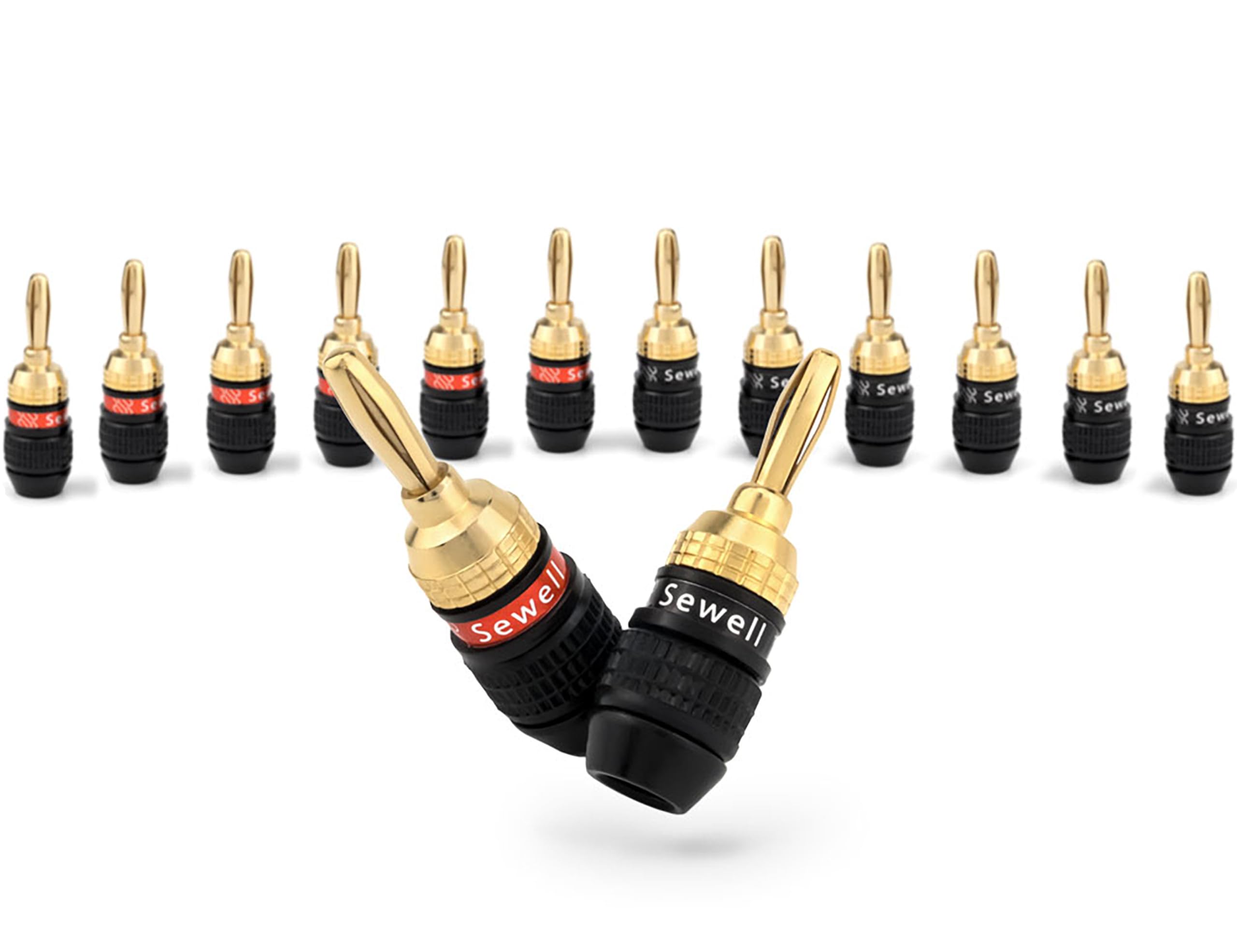
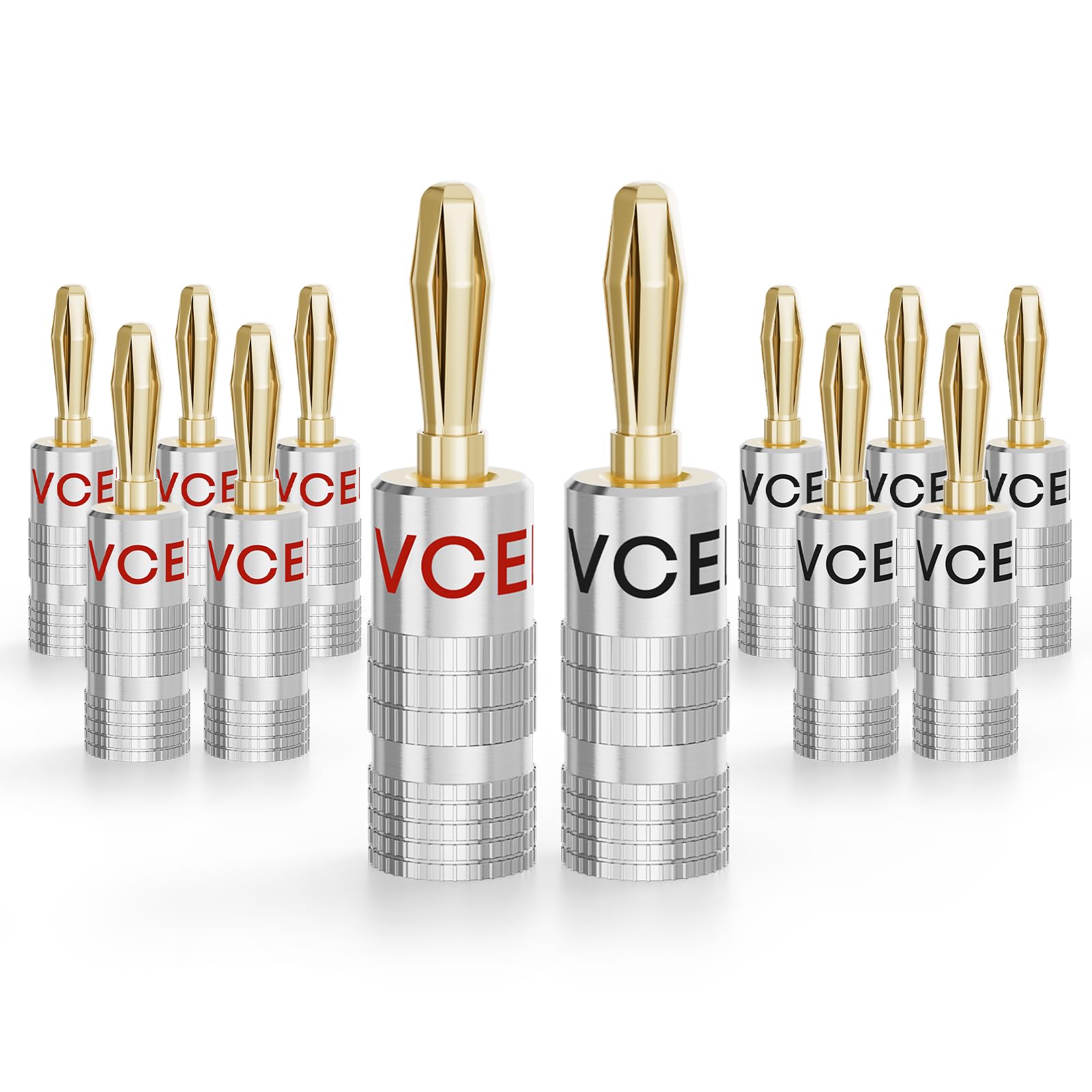
The best banana plugs for speakers start with the basics. A banana plug is a single pin connector, usually 4 mm across, fixed onto the end of a speaker wire. The pin carries springy ridges that grip the inside of a binding post hole, so contact stays firm while the plug can still be pulled free by hand. Each conductor, positive and negative, gets its own plug, and the name comes from the slight bulge of those spring ridges. Once fitted, plugging in a speaker takes seconds instead of a fiddly session with bare wire.
Plugs only belong on passive speakers wired to a separate amplifier or receiver. Self powered designs skip speaker wire entirely, which is why best bt speakers need no plugs at all. The same holds for best portable speakers, which carry their amplifier inside the cabinet. And best mobile speakers connect by signal cable or wireless link, never by bare wire to binding posts.
Key Specs Explained in Plain English
Fit First: Your Binding Posts Decide
A banana plug is a connector class, and like every connector it only works where the other half accepts it. Your binding post must accept a plug, which means the end of the post needs a round hole sized for a 4 mm pin. Look at the back of your speakers and receiver: five way binding posts accept plugs, while simple spring clips and captive screw terminals do not. If there is no hole to be found, stop there, because no plug choice can fix a terminal built for bare wire only.
Wire Gauge and Plug Fit
Wire gauge governs plug fit, because the barrel of the plug is sized for a certain thickness of wire. Most plugs accept wire from about 18 gauge to about 12 gauge, and your wire has its gauge printed along the jacket. Wire that is too thick will not enter the barrel at all, while wire that is too thin slips loose under a set screw. Longer cable runs usually call for thicker wire, so buy the wire first and match the plugs to it, not the other way around.
How the Wire Attaches: Set Screw, Crimp, or Solder
Set screw plugs grip the wire with one or two small screws and need nothing more than a small screwdriver, which makes them the friendly first purchase. Solder plugs form the most permanent joint but ask for a soldering iron and some practice. Crimp plugs need a crimping tool and give a firm joint when the tool matches the barrel size. Also note the entry style: rear entry plugs keep the wire in line behind the receiver, while side entry plugs suit tight spaces where cables must bend away quickly.
Contact Plating and Insulated Bodies
Most plug pins are brass with a plating over the top, and gold plating is common because it resists corrosion for years. Be clear about what plating does: it protects the contact surface, and it is not a sound upgrade by itself. Nickel plating is a plainer, cheaper finish that still serves well indoors. The body around the barrel matters too, since an insulated plastic or rubber body keeps the metal of one plug from touching its neighbor when plugs sit close together on a crowded receiver panel.
Other Connector Types: Pins, Spades, and Clips
Banana plugs are one member of a small connector family, and the others exist for terminals that plugs cannot serve. Pin connectors are thinner pins shaped for spring clip terminals, while spade lugs are flat forked ends that slide under a post cap that unscrews. Shoppers comparing best banana clips for speakers are looking at a clamp style relative that grips wire for quick test setups. Powered models in our guide to best speakers to plug into laptop take a line level signal cable instead, so speaker wire connectors never enter the picture.
Rookie Mistakes to Avoid
- Buying plugs before checking for plug holes, which leaves you with parts your terminals cannot accept.
- Stripping far too much insulation, so bare wire sticks out past the barrel where it can touch the next post.
- Swapping plugs with the amplifier still switched on, which risks a short the moment two metal ends meet.
- Crossing positive and negative on one speaker, which puts that speaker out of phase and thins the bass.
- Forcing a 4 mm plug toward a spring clip terminal, which bends the pin and still makes poor contact.
Getting Started: Setup and First Use
Switch the amplifier or receiver off before you touch any wire, and keep it off until every plug is seated. Strip about half an inch of insulation from each wire end, twist the strands tight so none escape, and slide the wire fully into the barrel. A bare strand that touches a second post can short the amplifier, so hold each finished plug up to the light and check for strays before connecting anything. Tighten the set screws, then tug the wire gently: a good grip does not move at all.
Push each plug straight into its post until it seats with firm resistance, keeping positive to positive and negative to negative at both ends. Leave a little slack in the cable so the plugs are not pulled sideways, since a constant side pull slowly loosens spring contact. The first time you power up, start at low volume and confirm both speakers play evenly. After a week of use, recheck the set screws once, because freshly compressed strands can settle slightly.
Your Banana Plug Questions Answered
Do banana plugs make speakers sound better?
No plug adds sound quality by itself, and any seller promising a dramatic lift from plugs alone is overselling. What plugs do provide is firm, repeatable contact and fast, tidy changes when you move or swap speakers. There is one honest exception: replacing a loose, oxidized bare wire joint with a clean plug can restore contact that was quietly degrading the sound. That improvement comes from fixing a bad connection, not from the plug being special.
How many banana plugs does a pair of speakers need?
A pair of speakers needs eight plugs to finish both ends of both cables, because each cable carries two conductors and has two ends. If you only plug the speaker ends and clamp bare wire at the receiver, four plugs cover the pair. Many buyers start with the speaker ends, where disconnects happen most often during cleaning and rearranging. Count again if you run a second pair of speakers or a center channel, since each extra cable adds four more plugs for both ends.
Why is there a plastic cap inside my binding post hole?
That cap is a small plug many makers press into the hole to keep dust out or to cover the opening for regions with strict electrical rules. It usually pops out with a fingernail or the tip of a small screwdriver, with the power off, revealing the standard hole beneath. If the cap will not budge, do not drill or force it, because a few posts are sealed designs that were never meant to take plugs. Check the manual wording for your model class of speaker before applying any force.
Can banana plugs be moved to new speaker wire later?
Set screw plugs can, because loosening the screws frees the old wire and the barrel is ready for the next run. Crimp plugs are effectively single use, since the crushed barrel cannot grip a second time with the same force. Solder plugs sit between the two: the joint must be melted or cut free, and the pin usually survives for one careful reuse. If you rewire often, choose set screw plugs from the start and the question answers itself.
Do banana plugs work with in wall speaker wire?
Yes, the ends terminate exactly like any other speaker wire once the run reaches the wall plate or the equipment. The special part of an in wall run is the wire itself, which should carry an in wall rating such as a CL2 or CL3 jacket for code compliance inside walls. The plug never enters the wall, so its rating is not part of that requirement. Local electrical codes govern in wall wiring, so check your local rules before running cable through studs.
The Bottom Line
Three checks cover nearly every first purchase: confirm your posts have plug holes, match the plug barrel to your wire gauge, and keep every strand contained inside the barrel. The product table above lines up the plug types against those checks so you can compare at a glance. Get those right and the best banana plugs for speakers become a quiet, permanent fix for the fiddliest part of a stereo. Choosing the best banana plugs for speakers is a small decision, so take your time on fit. Prices and availability can change, so check the product page before ordering.


