
Best Baking Sheet for Bacon: Types and Buying Tips (2026)
Disclosure: We may earn a commission when you buy through links on this page, at no extra cost to you. As an Amazon Associate I earn from qualifying purchases. Learn more

Raised rims, a fitted rack and the right size keep oven bacon crisp and tidy. Compare three types to find the best baking sheet for bacon.
Sunday breakfast in a small kitchen can turn messy fast when bacon cooks in a skillet, splatters the stove, and leaves you washing two pans before anyone sits down. A good best baking sheet for bacon choice solves that by moving the whole batch into the oven at once. This guide helps you choose by the space you have, the number of people you feed, and the budget you want to keep, and the comparison table below sums up the main types side by side.
If you are still comparing sheet pans in general, our guide to the best baking sheet covers the wider category. Here the focus stays narrow, because bacon brings grease and browning needs that a pan for cookies never faces in the same way.




Quick Answer: What Bacon Needs From a Sheet
Bacon releases a lot of fat as it cooks, so the sheet has to contain that fat safely from the moment the slices go in until the pan comes out of the oven. A raised rim on all four sides is the single most important trait, because a rimless pan lets hot grease slide toward the edge every time you tilt the pan even slightly.
Bacon also cooks best in a single layer with a little room between slices. When strips overlap, the covered parts steam and stay pale while the exposed parts brown. A sheet that looks large on paper can still cook a small batch once you leave space between strips, so size and rim come first.
Before You Buy: A Quick Checklist for Choosing a Baking Sheet for Bacon
Size: Match It to Your Space
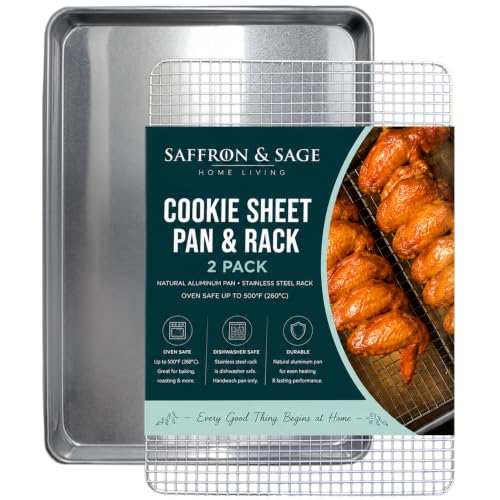
The half sheet, about 13 by 18 inches, is the size most home ovens and most households settle on, and it holds a family batch in one layer for many families. A quarter sheet, about 9 by 13 inches, suits one or two people and fits in many toaster ovens and small ovens where a half sheet will not slide in at all. A full sheet is a commercial size that most home ovens cannot take, so skip it unless your oven manual confirms the fit. Measure the oven interior and your cabinet or drawer before ordering, and leave a little clearance on each side so air can move and the pan is easy to grip with mitts.
Which Type Fits Your Routine
Plain aluminum spreads heat evenly and responds quickly, which helps bacon brown at a steady pace from edge to center. Stainless steel is heavier and tougher, heats a bit less evenly on its own, and often costs more, as our look at the best stainless steel baking sheet explains in more depth. Carbon steel is thick and durable and holds heat well, but it needs drying after washing to protect the surface. Nonstick sheets release food with very little effort, though the coating sets limits on heat and on the tools you can use. The comparison in aluminum vs stainless steel baking sheet can help if you are torn between the two most common metals.
Features Worth Paying For, and Ones to Skip
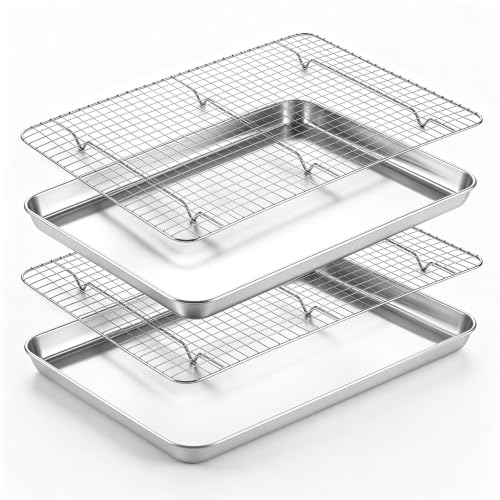
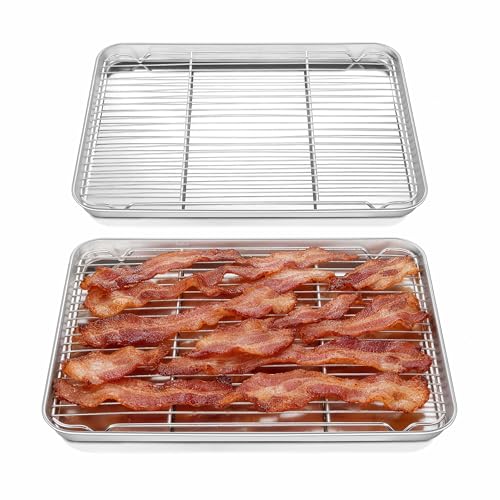
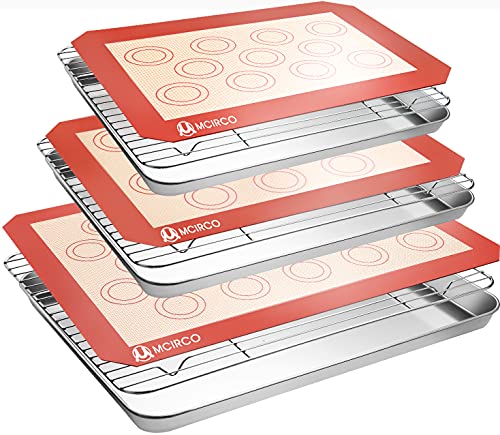
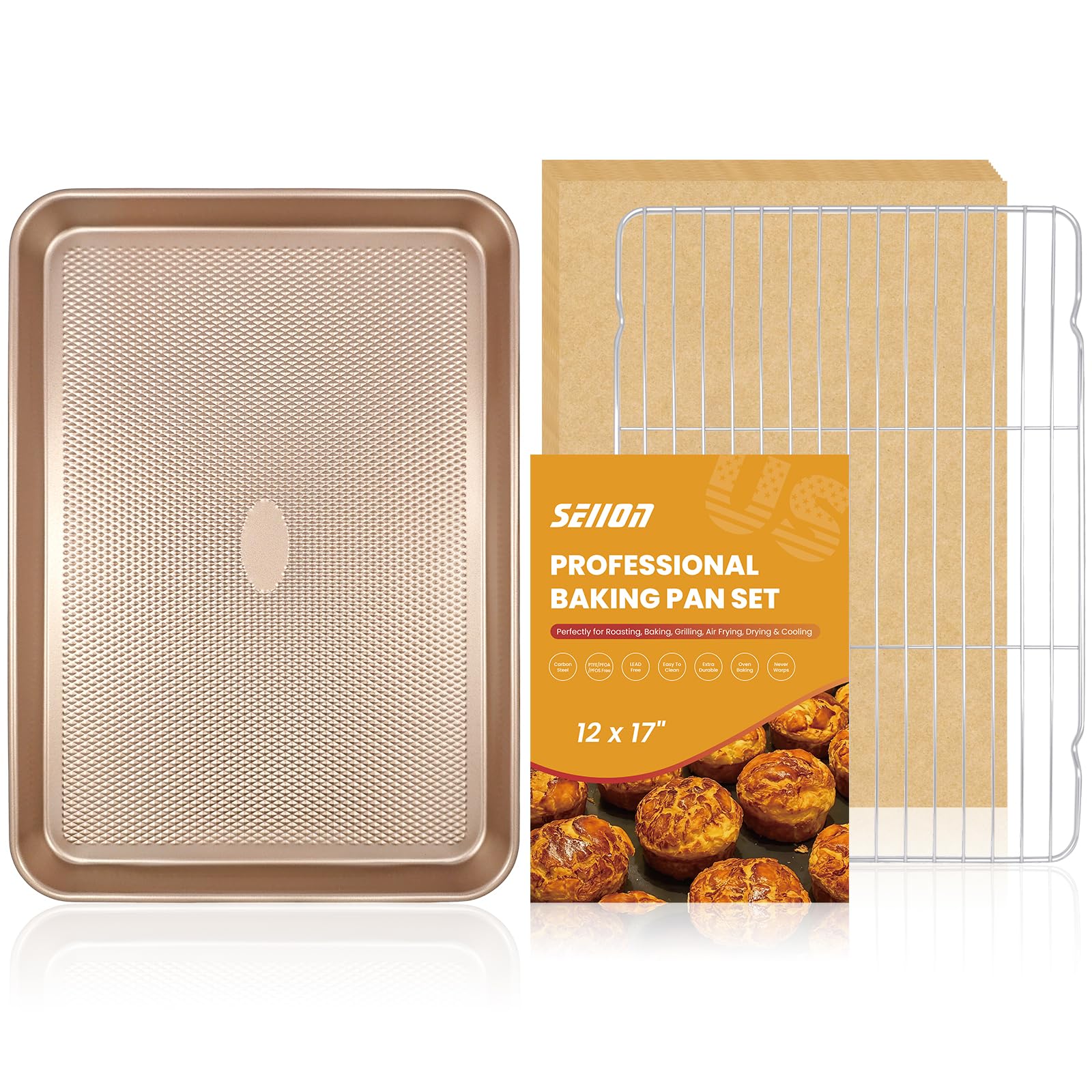
A fitted rack is the feature most worth considering for bacon. It lifts the strips above the rendered fat, so the bottoms crisp instead of sitting in grease, and the fat below stays cleaner if you save it for cooking. A silicone mat can ease cleanup under other foods, but under bacon it collects fat and adds a layer you still have to wash. A lid is rarely useful here, since bacon needs open heat to brown. Spend first on the sheet itself, then add a rack only if you like crisper results.
Finish, Oven Heat, and Coating Choices
A light finish browns bacon gently and gives you more working time before the edges darken, while a dark finish absorbs more heat and can push thin slices from crisp to scorched with little warning. Check the stated oven limit before you buy, and make sure it covers the moderate heat most oven bacon methods use, with room to spare. If coating safety is your top concern, our guide to the best non toxic baking sheet looks at uncoated options, and an uncoated sheet is a sound default because bacon brings its own fat and seldom sticks hard to bare metal.
Realistic Budget Ranges
Under about $20, expect a basic aluminum sheet that cooks well but may feel thin when you lift it full of grease. From about $20 to $30, sheets usually get thicker, flatter, and less prone to twisting in the heat. From about $30 to $50, you tend to gain heavier construction, a stainless or carbon steel build, or a sheet sold with a fitted rack. Above that, you are mostly paying for premium materials and finish rather than better bacon.
Types Compared: Three Routes to the Right Sheet
Rather than chase a single winner, it helps to match the type of sheet to your home. The three routes below cover most kitchens, and each one can be the right best baking sheet for bacon for a different household.
For Most Homes: The Rimmed Aluminum Half Sheet
This is the default choice for a reason. Aluminum keeps browning even, the half sheet size feeds a family without crowding, and the weight stays manageable when the pan is full of hot fat. It also pulls double duty for vegetables, cookies, and sheet pan dinners, so it earns its storage space in a busy kitchen. Look for a pan that feels stiff when you press the center and has a rolled edge that helps it hold its shape.
For Small Households: The Quarter Sheet
A quarter sheet suits couples, single cooks, and anyone reheating or cooking small portions. It heats fast, washes in a small sink, and stores in a drawer where a half sheet would never fit. The trade off is batch size, since a big family breakfast means cooking in rounds. Some households keep two quarter sheets instead, letting one batch cook while the next waits, already loaded.
For Long Term Use: Stainless Steel or Carbon Steel
If you cook bacon often and want a sheet that shrugs off years of use, a heavier steel pan is worth the higher price. Steel tolerates metal tools better than coated pans and will not need a coating replaced down the road. Browning can run slightly less even than on aluminum, so rotate the pan once if your oven has a hot side. For weekly bacon cooks, that small habit is a fair trade for a pan that lasts.
How Sheets Are Judged for Bacon
Five criteria matter most for this job. Heat distribution decides whether slices at the edge and center finish together. Food release decides how much scrubbing waits for you afterward. Warp resistance matters because a pan that pops and twists in the heat can send grease pooling into one corner. Material safety covers coatings and their heat limits, and cleaning covers how the sheet handles baked on fat. These points come from maker specifications and patterns in verified buyer reports.
Living With It: What Really Matters Day to Day
The daily reality of oven bacon is grease management. Let the pan rest a few minutes after it leaves the oven so the fat settles, then move the slices to a plate lined with paper towels. Pour saved fat into a heat safe container while it is still liquid, and let fat you plan to discard cool until it firms up before it goes in the trash, never down the sink drain.
Storage shapes the choice more than many buyers expect. A half sheet that fits your oven may still refuse to fit a shallow cabinet, and a sheet stored on its side is far easier to grab than one buried under heavier pans. Crowd sized households may also want a second sheet, because two quick rounds beat crowding slices and waiting on uneven cooking.
Common Buying Mistakes to Avoid
- Buying a rimless cookie sheet for bacon, so hot grease can run off the edge when you lift the pan.
- Choosing a full sheet size that fits the listing photo but not the inside of a home oven.
- Paying for a nonstick coating and then using it at heat above the limit the maker states.
- Judging thickness by looks alone, and ending up with a thin pan that warps and pools grease.
- Forgetting storage, so the new sheet has no flat place to live in the kitchen.
- Buying a sheet and rack set without checking that the rack sits flat and fits inside the rim.
Cost of Ownership and Care
A baking sheet has no running costs, so ownership cost comes down to replacement and small supplies, such as parchment if you line the pan and a rack if you add one later. Uncoated metal usually outlasts coated metal, because there is no surface layer to wear thin over time. Our guide on how to clean a baking sheet walks through removing baked on buildup without harsh damage.
For daily care, soak the sheet in hot soapy water while you eat, since bacon fat loosens far more easily before it hardens. Wash, dry fully, and store it dry. Dry carbon steel right away and give it a light wipe of oil if the maker advises it.
FAQ
Can you cook bacon on a baking sheet lined with parchment?
Yes, and parchment makes cleanup much lighter because the fat lands on the paper instead of baking onto the metal. Use parchment rated for your oven heat, keep it flat under the slices, and let it extend no further than the pan so loose corners do not drift toward a heating element. Foil works too, though it can tear when you lift the slices, and crumpled foil leaves ridges that cook uneven stripes into the bacon.
Should bacon start in a cold oven or a hot one?
Both methods work, and they give slightly different results. Starting in a cold oven lets the fat render slowly as the heat climbs, which many cooks find gives flatter slices and gentle, even browning. A preheated oven starts crisping right away and usually finishes a little sooner. Pick one method and stay with it for a few batches, because switching methods each time makes it hard to learn how your own oven and sheet behave together.
Do you need to flip bacon halfway through oven cooking?
No, oven heat surrounds the slices well enough that flipping is optional. Many cooks never turn their bacon and still get even results, especially on a rack where hot air reaches the underside. Flipping can help if the tops are browning much faster than the bottoms on a flat sheet, but each flip risks tearing a soft slice and splashing grease. If your bacon cooks unevenly, rotating the whole pan is usually the safer fix.
Can a baking sheet used for bacon go under the broiler?
Only if the maker rates that exact sheet for broiler use, and many sheets are not rated for it. Broiler heat is far more intense than normal baking heat and can warp thin pans, damage coatings, and ignite pooled bacon fat. Bacon also splatters heavily at that distance from the element. If you want a darker finish, a few extra minutes at baking heat gets you there with far less risk to the pan and the meal.
Why does bacon curl on a baking sheet, and how do you limit it?
Curling happens because the fat and the lean parts of a slice shrink at different rates as they cook. Thicker slices curl less than very thin ones, and a slow, moderate heat curls bacon less than fierce heat. Pressing slices flat for the first minute is awkward in an oven, so instead lay strips straight and uncrossed, leave them a little space, and let a rack hold them level if curling bothers you often.
Final Thoughts
For most homes, a rimmed aluminum half sheet in a thickness that feels stiff is the safest place to start, with a quarter sheet for small households and a heavier steel pan for frequent cooks. Match the size to your oven and your storage first, then weigh coating, finish, and price. The product table above pulls those trade offs together. Choose the best baking sheet for bacon for the way your household cooks, and weekend breakfasts get calmer and cleaner.


