Best Baby Safety Gates: A Complete Buying Guide
A buying guide to choosing the best baby safety gates: pressure vs hardware mounting, height, materials, JPMA/ASTM safety standards, and installation tips.
Choosing among the best baby safety gates starts with the space you actually need to block, not the gate that looks sturdiest on a shelf. A kitchen entrance, a wide opening between the living room and hallway, and a doorway to a home office each call for different mounting styles, widths, and features. This guide focuses on general-purpose gates for doorways, open rooms, and freestanding barriers rather than stair-top hardware, so you can match the right gate to each threshold in your home. You will also find sizing tips for oddly shaped openings, the safety details worth checking before checkout, and answers to the questions parents ask most often. By the end, you should be able to walk into any doorway in your house and know exactly what kind of gate belongs there.

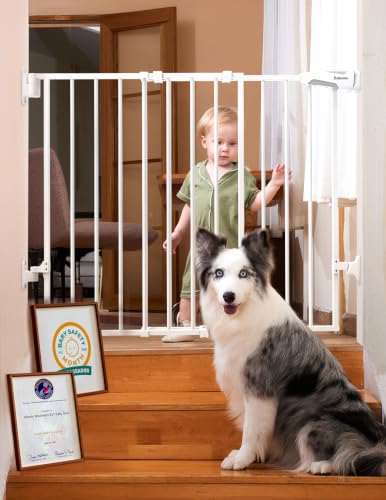
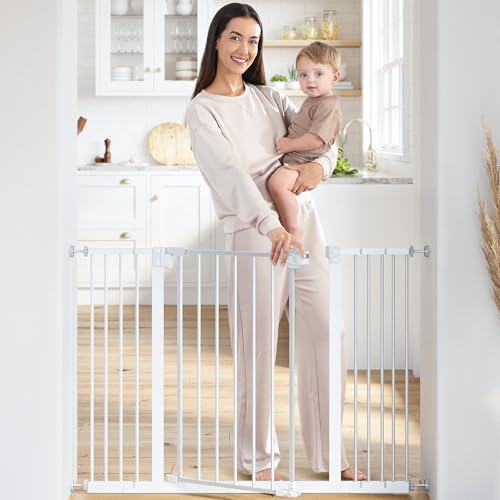
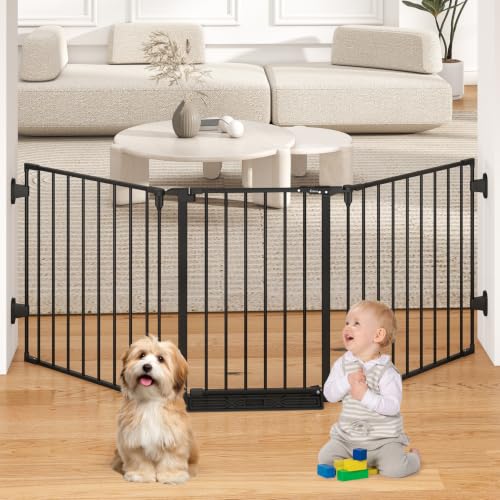
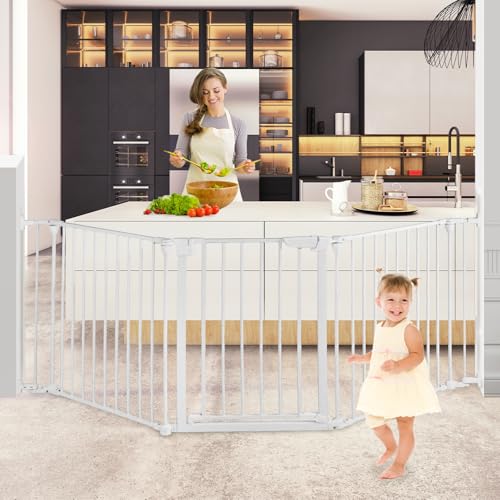

Pressure-Mount or Hardware-Mount: Picking the Right Fit for Doorways and Rooms
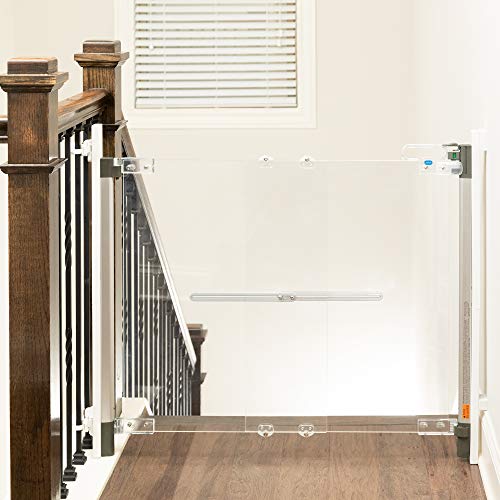
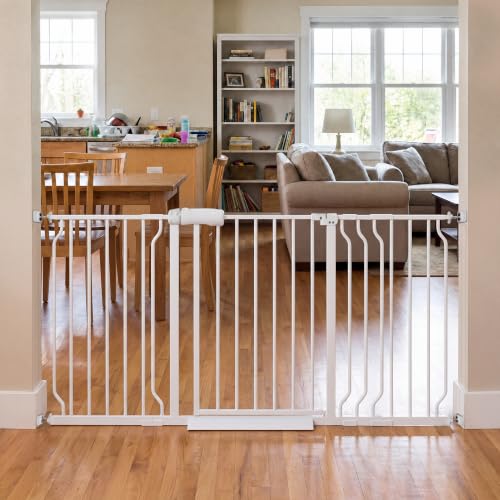
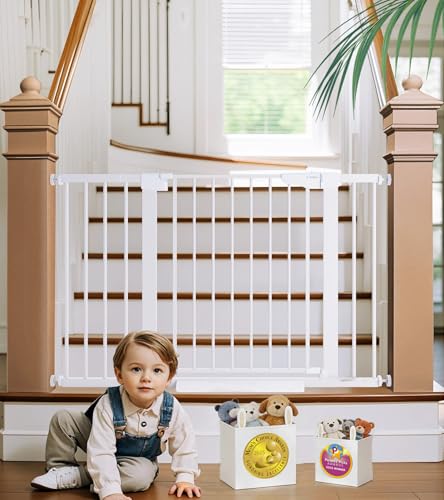
Most everyday doorway gates come in two mounting styles, and the choice matters more than color or brand. Pressure-mounted gates rely on tension between two wall cups to hold themselves in place. They install without tools, leave no permanent marks, and work well in standard doorways, hallways, and between rooms where there is no drop-off on the other side. Because they are not physically anchored, they are not recommended anywhere a determined push could send the gate, and a child, tumbling backward down stairs.
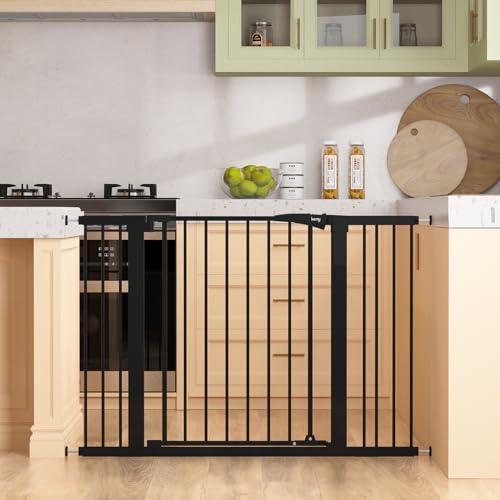
Hardware-mounted gates screw directly into the doorframe or wall studs, so they hold firm against real force. Many parents choose hardware mounting for kitchen entrances or family rooms where an older sibling might lean or climb on the gate repeatedly. If your home also has a stairway to secure, our guide to choosing a stair-top gate covers the hardware and swing-gate details unique to that job in more depth than a general room gate needs.
Whichever style you pick, look for a walk-through door built into the panel. Stepping over a gate while holding a toddler or a laundry basket gets old fast, and a one-handed latch saves real frustration multiple times a day.
Doorway Gates, Wide-Opening Panels, and Freestanding Play Yards Compared
Standard Doorway Gates
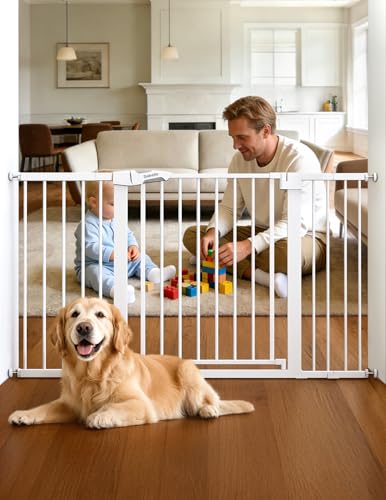
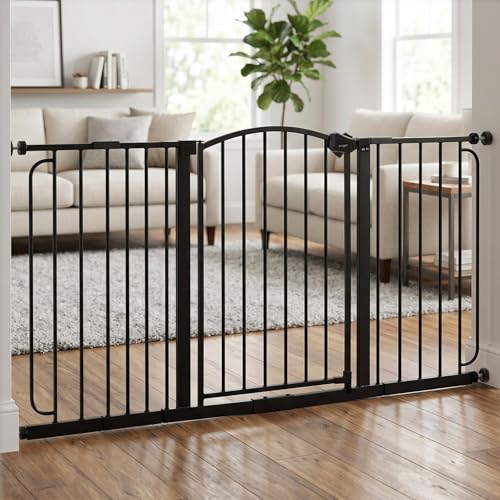
These are built for openings roughly 28 to 40 inches wide and fit most interior doorways without extra hardware. They are usually the lightest, easiest to install, and most affordable option, which makes them a sensible starting point if you only need to block one or two doorways.
Extra-Wide and Multi-Panel Gates for Open Layouts
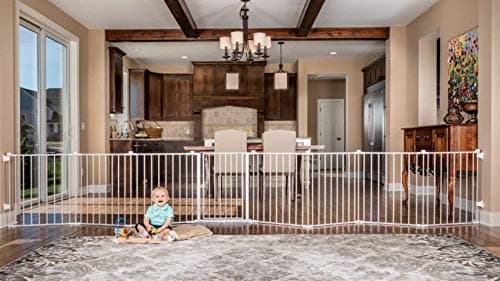
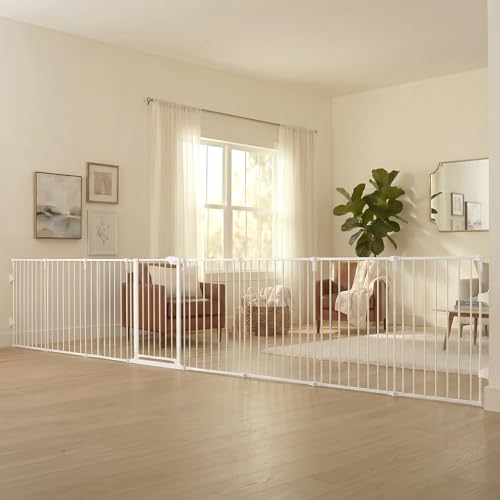
Open-concept kitchens and great rooms often have openings well beyond a standard doorway. Multi-panel gates and retractable-style gates solve this by using accordion mesh, hinged panels, or slide-out fabric that can stretch to cover ten feet or more. If your main obstacle is a wide kitchen threshold rather than a narrow hallway, this rundown of retractable gate options is worth reading before you commit to a bulky panel gate.
Freestanding Play-Yard and Pet-and-Baby Gates
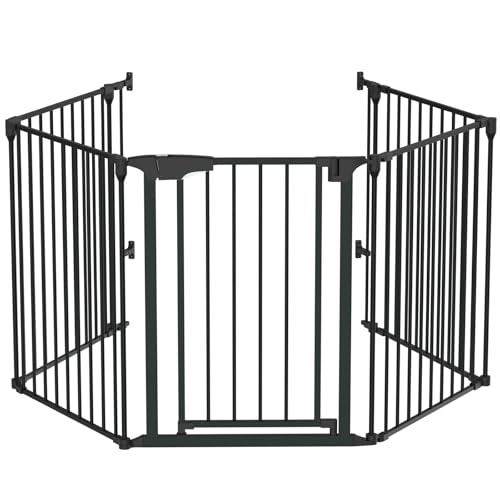
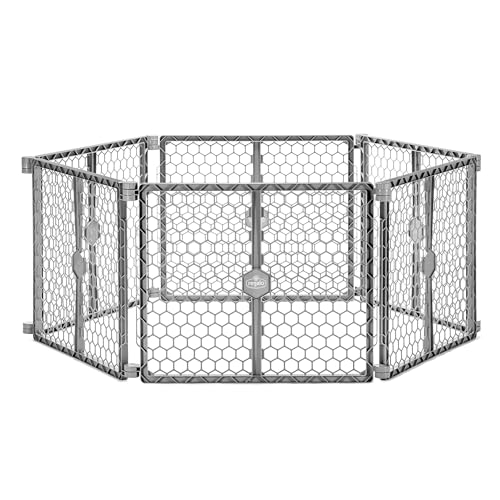
Freestanding gates do not attach to walls at all. Instead, several hinged panels fold into a self-supporting enclosure you can set up around a fireplace hearth, a Christmas tree, or a play area in the middle of a room. They also double well in households with dogs, since many are marketed as pet-and-baby gates with tighter bar spacing than typical pet-only fencing.
Measuring Your Space Before You Buy
Grab a tape measure before you shop, not after a gate arrives that does not fit. Measure the opening at its narrowest point and its widest point, since trim, baseboards, and door hinges rarely leave a perfectly even gap. Write down both numbers and compare them against the gate's stated minimum and maximum width rather than a single listed size.
If your opening is wider than a standard gate covers, look for models sold with optional extension kits rather than trying to stretch a gate beyond its rated range. Angled walls, staircase newel posts, and thick crown molding can also throw off a fit, so check whether the gate includes angle-mount brackets or pivoting wall cups for those situations. Finally, confirm there is enough clearance for the gate to swing open fully without hitting furniture, a wall corner, or another door in a tight hallway.
Safety Details Worth Checking Beyond the Price Tag
A handful of details separate the best baby safety gates from models that only look secure on a store shelf. None of them cost extra to check for, but skipping them is how gates end up returned or replaced within a year.
Bar Spacing and Climb Resistance
Vertical bars or slats should sit no more than about three inches apart so a curious head or limb cannot get wedged between them. Gate height matters too: a gate that only reaches your toddler's chest becomes a climbing challenge rather than a barrier once they figure out how to hook a foot over the top rail.
Avoiding Accordion-Style Entrapment Risk
Older accordion-style wooden gates with wide diamond or V-shaped openings have a well-documented history of trapping small fingers, hands, and even necks, and most safety organizations now advise against them entirely. Choose a gate with a mesh panel, vertical slats, or solid construction instead. A gap of more than about two inches between the bottom of the gate and the floor can also let a small child slide underneath, so check that measurement on any model you are considering.
Look for a JPMA certification seal or a note that the gate meets current ASTM safety standards. That seal means an independent lab tested the gate against the same benchmarks regulators use, which takes some of the guesswork out of comparing models.
Frequently Asked Questions
How tall should a baby safety gate be?
Most safety organizations recommend a gate at least 22 to 24 inches tall, though taller toddlers or strong climbers often do better with a model closer to 30 inches to reduce the temptation to scale it.
Can a pressure-mounted gate work in a kitchen doorway?
Yes, as long as there is no stairway or drop-off directly on the other side. For high-traffic kitchen entrances where older kids might lean on it, many parents still prefer hardware mounting for extra stability.
What is the real difference between a doorway gate and a play-yard gate?
A doorway gate mounts between two fixed surfaces and blocks a single opening. A play-yard gate is freestanding and folds into an enclosure, so it can section off an area in the middle of a room with no walls involved.
Are accordion-style gates still considered safe?
No. Older wooden accordion gates with large diamond-shaped gaps are widely discouraged because of entrapment risk. Newer mesh or vertical-slat gates address this problem and are the safer modern choice.
How do I mount a gate on an angled wall or thick trim?
Look for a gate that ships with angle-mount or pivoting wall cups, which let the panel sit flush even when the two mounting surfaces are not perfectly parallel. Some brands sell these adapters separately if your model does not include them.
Do I need different gates for different rooms in the same house?
Often, yes. A narrow hallway doorway, a wide kitchen opening, and a freestanding barrier around a fireplace each tend to call for a different style, so many households end up mixing gate types room by room.
When can I stop using a baby safety gate?
Most manufacturers rate gates for children up to about 24 months or once a child can climb over or unlatch the gate on their own, whichever comes first. Watch your child's specific abilities rather than relying only on the age printed on the box.
Getting the Most Out of Your Gate Setup
The right combination of gate styles usually beats a single one-size-fits-all purchase, especially in homes with more than one opening to manage. Reassess your setup every few months as your child grows taller and more mobile, since a gate that felt secure at twelve months may need a height check or a swap by eighteen. Choosing among the best baby safety gates is less about finding one perfect product and more about matching each opening in your home to the mount, width, and safety features it actually needs.