Best Retractable Baby Gate: A Complete Buying Guide

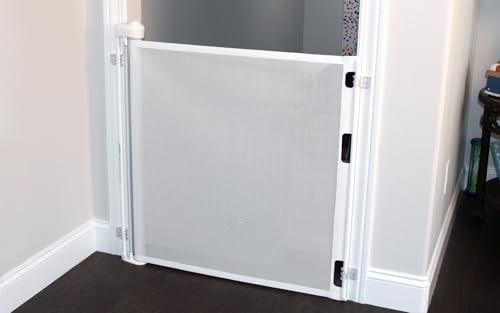
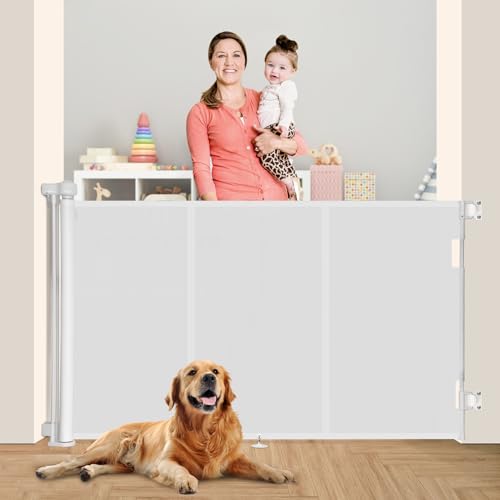
A retractable baby gate solves a problem that swinging panel gates struggle with: wide openings, open-concept living rooms, and hallways where a rigid frame feels like a hurdle every time someone walks through. Instead of a hinged panel, mesh fabric pulls across the opening from a slim post and locks into a receiver on the opposite side. When nobody needs the barrier, one hand retracts it into a housing no wider than a doorframe, clearing the path completely. For households juggling toddlers, pets, and constant foot traffic, that walk-through convenience without lifting or unlatching a panel makes a real difference day to day. This guide walks through mounting styles, sizing, safety checks, and upkeep so you can tell a gate built to last from one that sags within a season.


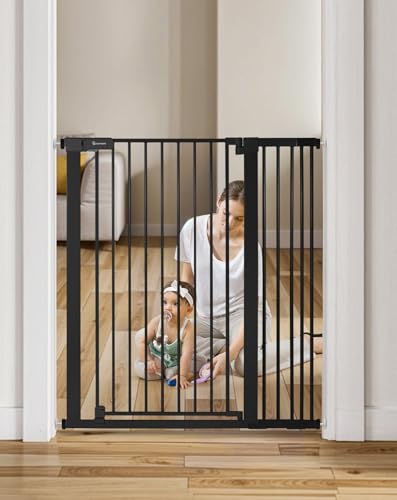

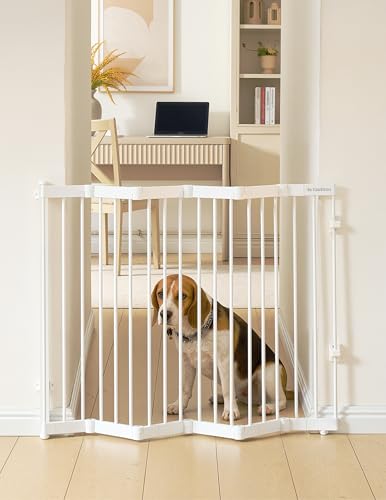
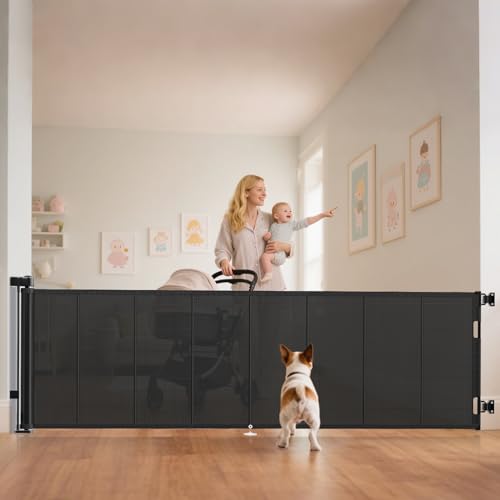

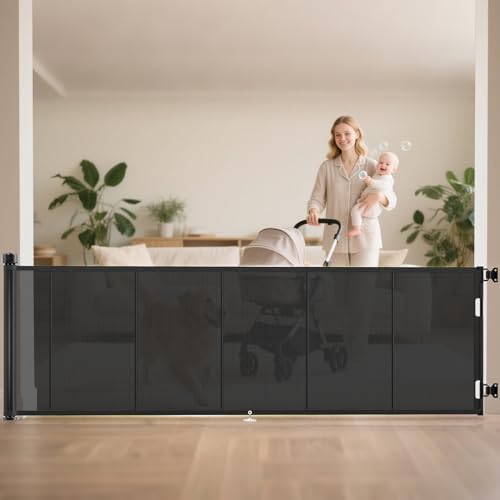


What Sets a Retractable Design Apart From a Swinging Gate
A swinging gate needs floor clearance to arc open and a frame sturdy enough to hold its own hinges. A retracting mesh gate skips both problems. The fabric stores inside a compact post, so the opening stays completely clear when the gate is not deployed, which matters in a hallway people cross dozens of times a day.
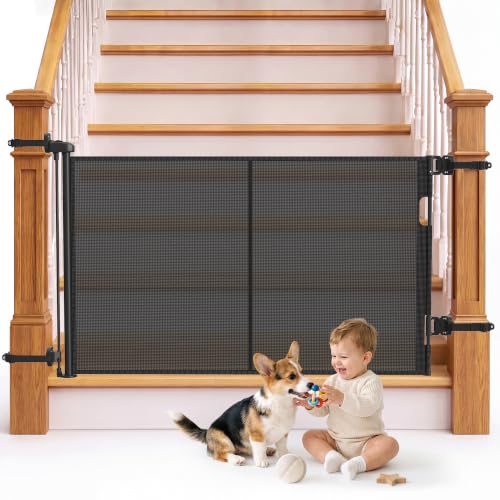
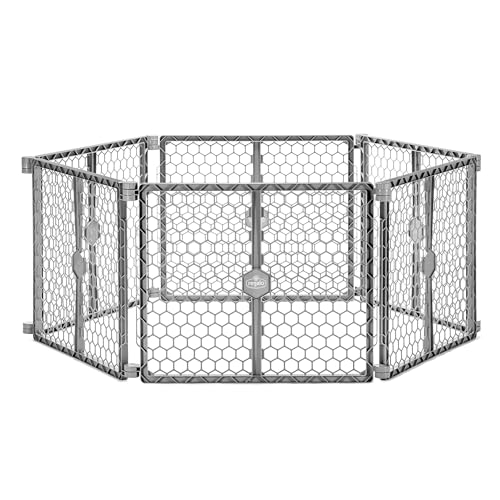
This style also tends to suit mixed households better. A single retractable barrier can hold back a toddler and a large dog at the same time, since the mesh spans floor to bar without gaps a determined pet could squeeze through. If pets are the bigger concern in your home, it is worth comparing how a retracting mesh panel stacks up against dedicated dog gates built specifically around chewing and clawing resistance.
Pressure-Mounted or Wall-Mounted: Two Distinct Styles
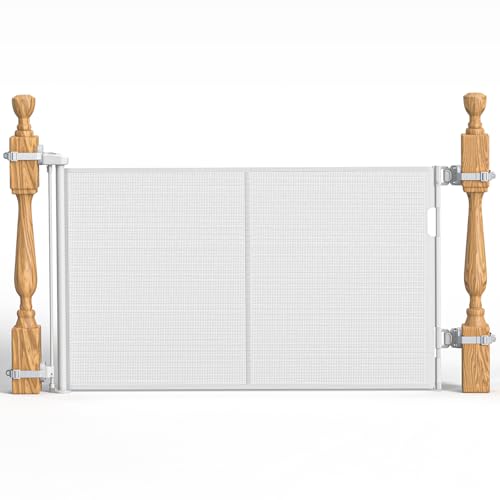
Retractable gates come in two mounting types, and the difference matters more than most shoppers expect. Pressure-mounted versions brace against the wall using tension, similar to a spring-loaded curtain rod, and can be moved without leaving marks. Wall-mounted, or hardware-mounted, versions anchor into studs or the door frame with screws, giving a fixed, unmovable connection.
The safety distinction shows up at stairs. A pressure-mounted retractable gate should never sit at the top of a staircase, because enough force from a toddler or pet leaning against it can push the whole unit loose. A wall-mounted retractable gate is the only responsible choice there. For a closer look at hardware, brackets, and stair-specific installation, see our guide to the best baby gate for stairs.
Measuring the Opening Before You Buy
Retractable gates are sold with an extension range rather than one fixed width, and most models on the market stretch somewhere between roughly four and fifteen feet depending on the line. Measure the opening at its widest point, including any trim or molding the gate needs to clear, and add a couple of inches of buffer since fabric gates lose a small amount of tension over time.
Height matters just as much as width. A gate should reach at least three-quarters of your child's height to discourage climbing, and most reviewers recommend nothing shorter than about 22 inches even for younger babies. If your opening is unusually tall, such as a cased archway between a kitchen and living room, confirm the fabric panel extends high enough before ordering.
Locking Mechanisms and Safety Checks Worth Doing
Look for a dual-action lock, meaning it takes two separate motions, such as pressing a button while lifting a latch, to release the gate. Single-motion locks are easier for an older toddler to figure out by watching a parent use them a few times. A gate that clicks audibly when it engages gives useful confirmation that it actually caught, rather than just resting against the receiver.
Check for independent safety testing rather than taking marketing claims at face value. Reputable gates reference compliance with recognized juvenile-product safety standards covering structural strength, locking reliability, and gaps a small limb could get caught in. An anti-crawl strip along the bottom edge is also worth checking for, since it stops a determined baby from pushing under the mesh rather than through it.
Everyday Use, Cleaning, and Keeping the Track Reliable
The mesh on a retractable baby gate collects dust, pet hair, and handprints faster than a solid panel simply because it gets touched more often. A damp cloth handles most daily grime, and many fabric panels are machine washable if the manufacturer allows it. Avoid harsh solvents, which can weaken the fibers over months of exposure.
Check the tension periodically, since fabric can loosen slightly as it breaks in. Retighten pressure mounts on a regular schedule, and inspect the receiver bracket on wall-mounted units for any wobble. A little maintenance goes a long way toward keeping the retracting mechanism smooth instead of sticky or slow to catch.
Budgeting for a Retractable Gate That Actually Lasts
A retractable baby gate spans a wide range of build quality, and the cheapest option in a search result is rarely the one that survives daily use for a full year. Entry-level gates tend to use thinner fabric and simpler single-action locks, which can work fine for a calm household but wear out faster with a large dog or an especially persistent toddler leaning on the mesh.
Mid-range and premium gates generally add a metal-reinforced bottom bar, a smoother retracting mechanism, and hardware rated for wider openings. If you are still comparing styles beyond retractable designs, our roundup of the best baby gates covers swinging and freestanding options side by side for context.
Frequently Asked Questions
Are retractable baby gates as safe as traditional gates?
Yes, when installed correctly and matched to the right location. Wall-mounted versions at stair openings and pressure-mounted versions in flat hallways both meet recognized safety standards when used as intended.
Can a retractable gate work at the top of stairs?
Only a wall-mounted, hardware-secured version should go at the top of stairs. Pressure-mounted retractable gates are not rated for that location because a hard push can dislodge them.
Will a retractable gate hold back a large dog?
Many models are rated for pets up to a moderate weight range, but a determined large breed can put more strain on the mesh than a toddler does. Check the manufacturer's weight and pull-strength rating first.
How wide can a retractable gate stretch?
Extension ranges vary widely by model, from narrow doorway sizes up to openings well over ten feet. Always measure your specific opening before ordering rather than assuming a "standard" width fits.
Do retractable gates leave marks on walls?
Pressure-mounted versions generally do not damage walls since they rely on tension rather than screws. Wall-mounted versions require small holes for anchors, which is a fair trade for the added stability at stairs.
How do I stop the mesh from sagging over time?
Periodically retighten the pressure mount or check the wall anchors, avoid leaning heavy weight against the fabric, and keep the track clear of dust so the mechanism retracts fully each time.
What age is a retractable gate appropriate for?
Most are designed for babies who are mobile but not yet strong enough to push through mesh or climb the frame, roughly six months through the toddler years, though every household situation differs.
Choosing the Right Fit for Your Home
A retractable gate earns its keep in the spots where a swinging panel would be awkward: wide archways, open floor plans, and hallways with heavy daily traffic. Match the mounting style to the location first, since that decision affects safety more than any other feature on the spec sheet. From there, prioritize a dual-action lock, a tested safety standard, and a fabric weight that suits both your child and any pets sharing the space. Take the time to measure carefully, and the gate you choose should handle years of one-handed use without becoming the thing you dread dealing with every time you walk through the house.