Best Automatic Wine Opener: Formats and Buying Tips (2026)
Disclosure: We may earn a commission when you buy through links on this page, at no extra cost to you. As an Amazon Associate I earn from qualifying purchases. Learn more

Compare rechargeable, battery operated and slim cordless formats to find the best automatic wine opener for your counter and routine.
Dinner is ready, guests are settling in, and the cork in the first bottle starts to crumble under a basic corkscrew. Moments like that are why many households switch to the best automatic wine opener they can find for their counter or drawer. A motor does the twisting and pulling, so opening a bottle takes seconds and very little grip strength.
This guide helps you choose by the things that matter at home: how much counter space you can spare, how many people you pour for, how often you open wine, and what you want to spend. Start with the comparison table below, then use the checklist that follows to match a format to your routine.


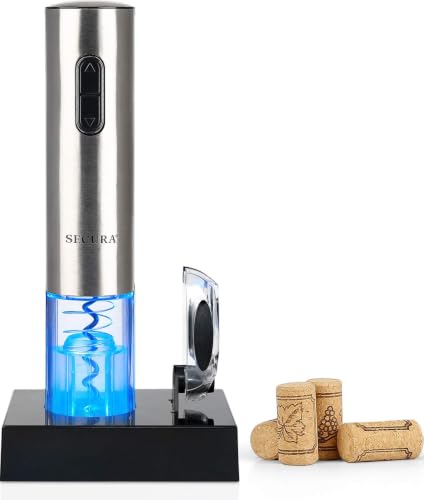

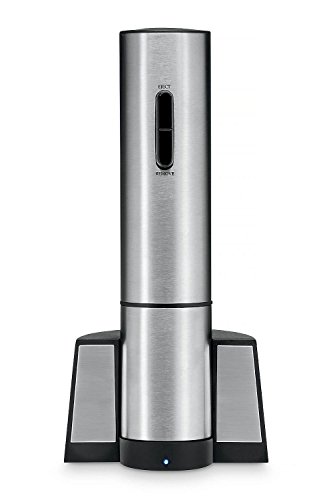


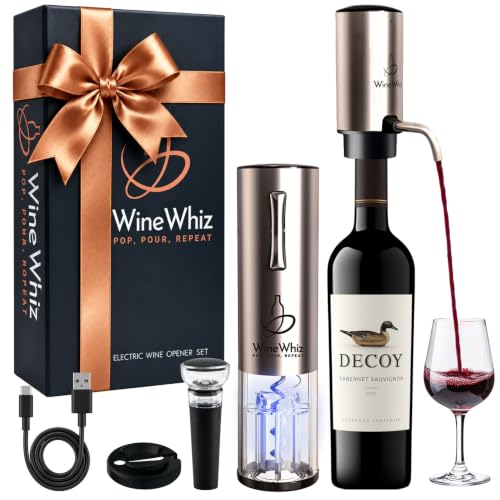
Quick Answer: How an Automatic Opener Earns Its Place at Home
An automatic opener centers a motor driven worm over the cork, drives it in at the press of a button, then reverses to lift the cork out and eject it. You hold the bottle steady and guide the opener straight, and the motor supplies the force a manual screw would demand from your wrist. For most homes the real choice is simple: a rechargeable model that lives on a charging base, or a battery operated model that hides in a drawer.
Before You Buy: A Quick Checklist for Choosing a Wine Opener
A few minutes spent on the points below will narrow the field far better than star ratings alone.
Which Type Fits Your Routine
Automatic openers overlap with several other styles you will see in stores, including waiters corkscrews, lever models, wing openers, and air pressure pumps, but only the motorized ones remove the pulling effort entirely. If you open wine several nights a week, a rechargeable model on its base is always ready and always in the same spot. If you open a bottle or two a month, a battery operated model stored in a drawer keeps your counters clear. Our guide to the best rechargeable wine opener goes deeper on charge times and base sizes for that first group.
Features Worth Paying For and Ones to Skip
Pay for a foil cutter that stores on the base or the body, because a cutter you cannot find is a cutter you will not use. A clear window or open frame near the worm helps you watch the screw enter the cork dead center. A simple charge indicator matters too, since it warns you before a dinner party rather than during one. Skip bundles stuffed with extras you already own, such as a second aerator, spare stoppers, or a large gift box that only adds storage bulk. Those extras raise the price without making a single cork come out more cleanly.
Materials and Food Safety
The worm is the only part that touches your wine, so look for smooth stainless steel or an intact coated finish with no flaking, bends, or sharp burrs. A damaged coating belongs in the trash, not in a bottle. Housing materials matter for durability rather than safety: metal shells shrug off counter knocks better than thin plastic, and seams should sit tight with no gaps that trap sticky residue. The foil cutter blade should feel guarded, with the edge recessed so fingers stay clear while it rides the bottle lip.
Dishwasher Safe or Hand Wash
Almost every automatic opener is hand wash only, because the motor and battery cannot go under water. Treat the housing like a small appliance: wipe it with a damp cloth, brush dried cork crumbs off the worm, and let everything air dry before it goes back on the base. Only loose accessories, such as a separate foil cutter or a drip ring, should go in the dishwasher, and only when the manual for that piece says it can. When in doubt, hand wash the accessory too.
Realistic Budget Ranges
Models priced under $20 are usually basic battery operated openers with a plastic shell and few extras, fine for occasional use. The crowded middle, about $20 to $50, is where rechargeable models with a foil cutter and a charging base are common, and where most homes should shop. Spending about $50 to $100 tends to buy a sturdier shell, a longer lasting charge, and tidier storage. Past that point you are mostly paying for gift sets, premium finishes, and bundled accessories rather than a stronger pull.
Three Formats Compared: Pick a Style, Not Just a Price
Format decides where the opener lives, how often you think about its battery, and how it feels in your hand. Compare the three formats below before you compare individual models.
Rechargeable models with a charging base. These stand upright on the counter or a bar cart, always visible and always topped up. They suit couples and families who open wine often and entertain without much planning. The trade off is footprint: the base needs a permanent spot near an outlet, and a small kitchen may resent giving it up. Measure your counter depth and the gap under your cabinets before you commit, because some bases stand tall.
Battery operated models. These run on replaceable batteries, usually AA cells, and they store flat in a drawer or upright in a cabinet. They suit smaller homes, second homes, and anyone who opens wine only on weekends. You trade the convenience of a base for the chore of keeping spare batteries around. A set of fresh cells also makes a thoughtful pairing when you give one as a gift, since the opener works the moment the box opens.
Slim cordless models without a base. A third group charges by cable and skips the stand entirely. These are the easiest to tuck into a packed drawer, a picnic basket, or a holiday home kitchen. The catch is habit: with no base as a visual reminder, the opener only gets charged when you remember, so pick a regular charging spot, such as next to the phone charger, and stick with it.
What Counts When You Compare Automatic Openers
Judge any model on five things: how steadily it pulls without tilting, how completely it ejects the cork, how the grip fits an average hand, how many bottles the maker claims per charge, and how easy the worm is to wipe clean. Treat bottles per charge claims with care, because a soft synthetic cork asks far less of a motor than a long, tight natural cork. A balanced model also stays centered with less effort from you.
Automatic Openers Compared With Other Styles
If you are still deciding between motorized and manual, think about effort and storage. A best lever wine opener uses a handle and gearing to multiply your strength, and it opens bottles quickly once you learn the motion, but it is bulky and needs two hands. A best rabbit wine opener follows the same lever idea in a more sculptural shape that many people leave on display. Automatic models beat both on effort, since a button press replaces the squeeze and pull, yet they add charging to your life and cost more than a simple waiters corkscrew. Choose manual for simplicity and travel, and automatic for comfort, speed, and guests who may not know your kitchen tools.
Getting a Clean Pull Every Time
Technique matters more than motor power. Follow these steps and most corks come out whole.
- Cut the foil below the bottle lip with the foil cutter, then peel the foil away fully so nothing blocks the worm.
- Set the bottle upright on a flat surface and hold it steady with one hand around the neck.
- Lower the opener straight onto the cork, centered, and keep gentle downward pressure as you press the button.
- Let the motor stop on its own before you lift, then reverse the button to drop the cork off the worm.
If your first attempts wobble, our step by step guide on how to use a wine opener walks through grip and alignment for manual styles as well.
Common Mistakes to Avoid
- Letting the opener tilt as the worm starts, which sends the screw in at an angle and can snap the cork in half.
- Skipping the foil cut, so foil shreds get dragged into the bottle neck and onto the worm.
- Leaving the battery flat for weeks, then discovering the opener is dead minutes before guests arrive.
- Forcing a stubborn, dry, or very old cork with repeated motor runs instead of switching to a gentler manual tool.
- Buying the largest gift set for a small kitchen, then losing the opener itself in a drawer of accessories.
- Storing the opener loose in a utensil drawer, where the worm coating gets nicked by knives and other metal tools.
Cost of Ownership and Care
Running costs stay low. A battery operated model needs fresh cells a few times a year with regular use, and a rechargeable model uses a negligible amount of electricity per charge. The real costs are replacement foil cutters once the blade dulls and, eventually, a rechargeable battery that holds less charge than it once did. Store the opener upright on its base or in its own drawer slot, away from steamy spots above the stove. Charge rechargeable models after a big party rather than letting them sit empty.
Your Questions, Answered
Are automatic wine openers worth it for a home that opens wine rarely?
For a bottle a month, honestly, a simple waiters corkscrew may serve you just as well and never needs charging. An automatic opener earns its cost when wine shows up weekly, when you host often, or when twisting and pulling hurt your hands. One middle path is a battery operated model: it costs less than most rechargeable versions, asks for no counter space, and waits in a drawer without a base or a cable to manage.
Can an automatic wine opener handle synthetic corks and old natural corks?
Most automatic openers handle synthetic corks well, because those corks are uniform and the worm grips them evenly. Very old natural corks are the risky case: they can be dry, brittle, and ready to crumble under any tool. Slow, steady pressure helps, but if a prized old bottle matters to you, a two prong puller or a careful manual screw gives you more feel and a better chance of lifting the cork in one piece.
Do automatic wine openers help people with arthritis or a weak grip?
They remove the two hardest motions, twisting the screw in and pulling the cork out, and replace them with a button press. You still need to hold the bottle steady and keep the opener upright, so look for a lighter model with a wide grip and a large button you can press with a thumb or palm. If hand pain is a regular concern, talk with your clinician about what grip aids suit your situation, and test the hold in a store when you can.
Will an automatic wine opener fit in a kitchen drawer?
Many battery operated and slim cordless models will, but measure before you buy. Check the opener length against your drawer depth and confirm the drawer closes with the foil cutter stored alongside. Charging base models rarely fit a drawer, and forcing one in invites a cracked base. If your drawers are shallow, a cabinet shelf near your glasses often works better than the utensil drawer you first had in mind.
Does an automatic wine opener remove the foil too?
Not by itself. Foil cutting is a separate step done with the small round cutter that most sets include, either stored on the charging base or clipped to the body. A few seconds of turning the cutter around the bottle lip gives a clean edge and keeps foil out of the wine. If a listing shows no cutter at all, budget a small amount for a separate one, because tearing foil by hand leaves sharp edges and a messy pour.
Final Thoughts
The right choice comes down to your home: a charging base model for the counter of a household that pours often, a battery operated model for a small kitchen, and a slim cordless model when storage is tightest. Whichever format you pick from the product table above, the best automatic wine opener for you is the one that stays charged, stays clean, and is easy to grab when friends walk in. For a wider look at manual and lever styles, start with our guide to the best wine opener and compare the trade offs side by side.